
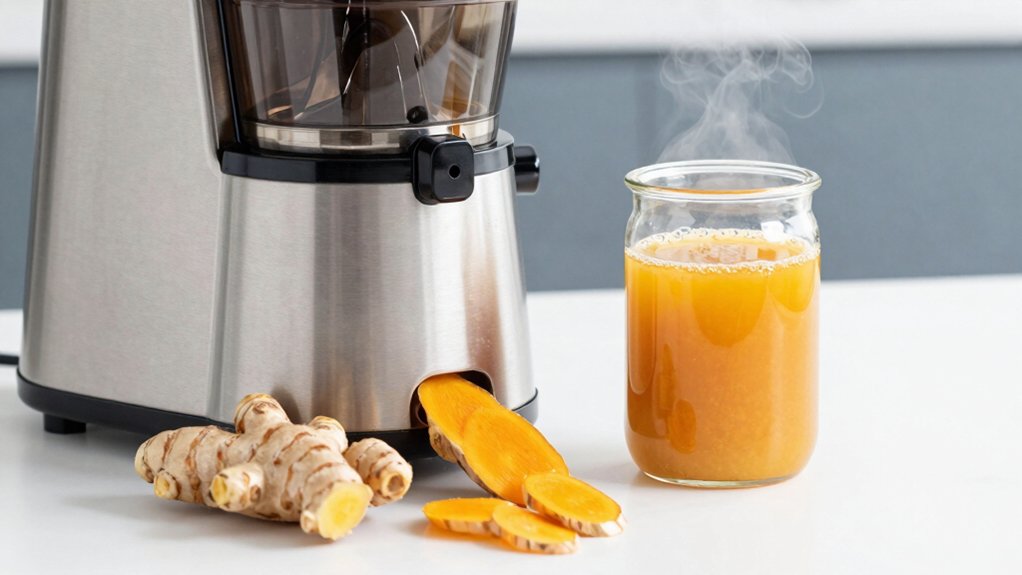
To juice ginger and turmeric without clogging your machine, start with fresh, firm roots and rinse them well. Cut into 1–2 inch pieces or 1-inch chunks to boost surface area, keeping peels on when possible to preserve nutrients. Layer pieces so bigger, harder bits sit on top, and use the machine’s reverse function at first resistance for 5–10 seconds. If needed, switch to a blender and strain. Curious what else helps maintain steady throughput?
Choosing Fresh Ginger and Turmeric
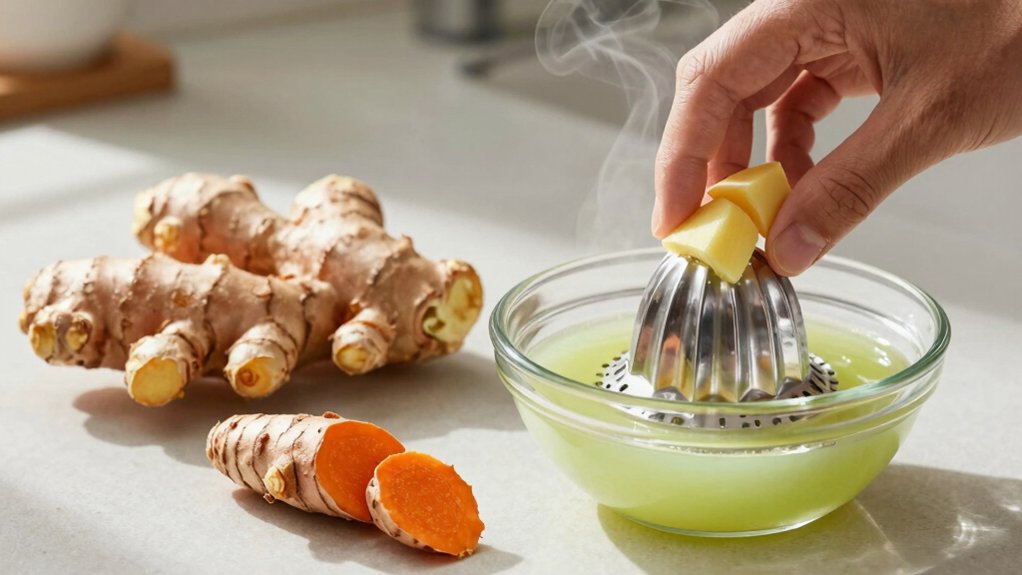
Start by selecting plump, heavy roots, since size and weight correlate with juiciness and easier extraction. You’ll want fresh ginger and organic turmeric that feel firm and solid when you press gently. Look for fibrous, juicy interiors, signaling efficient juicing, and avoid older, dried roots that resist extraction.
Check for firmness throughout; skip roots with shriveling or soft spots, as these indicate moisture loss. Favor roots with smooth, unblemished skin and vibrant color, which reflect freshness and flavor potential.
When you handle turmeric, notice its tight, dense texture—juicing turmeric benefits from freshness. For ginger, prioritize plump sections that yield readily to pressure.
Tools You Need for Juicing
Equipping your juicer properly makes all the difference: use a wide-mouthed juicer or blender to prevent clogging and guarantee smooth ingredient flow. For ginger and turmeric, select tools with sharp blades or screens designed to handle fibrous roots.
A wide-mouthed juicer reduces prep time and minimizes pulp buildup, while sharp blades cut fibers efficiently, improving yield. Layer ingredients properly by placing larger or harder pieces on top to help push smaller pieces through the machine.
Incorporate a mesh strainer when needed to polish the juice and remove excess pulp without sacrificing nutrients. Regularly inspect and clean your tools to prevent blockages, and consider using a reverse function if available to loosen lodged fibers during juicing.
Preparation: Cleaning and Peeling
After choosing the right equipment, you’re ready to prep ginger and turmeric by cleaning and peeling as needed. You begin with root cleaning: scrub under running water with a vegetable brush to remove surface dirt, then rinse promptly.
If you’re using organic ginger and turmeric, peeling isn’t always required; wash thoroughly to minimize the need for removal. When peeling becomes necessary, use a spoon or a vegetable peeler for thin, even strips, especially for non-organic ginger.
Handle turmeric with gloves to prevent staining and peel only if the skin feels waxy or dirty. Wash roots immediately after purchase or harvest to suppress mold growth and maintain juice quality.
This approach aligns with turmeric preparation and ginger peeling best practices.
Whole vs. Chopped: Quick Cut Guidelines
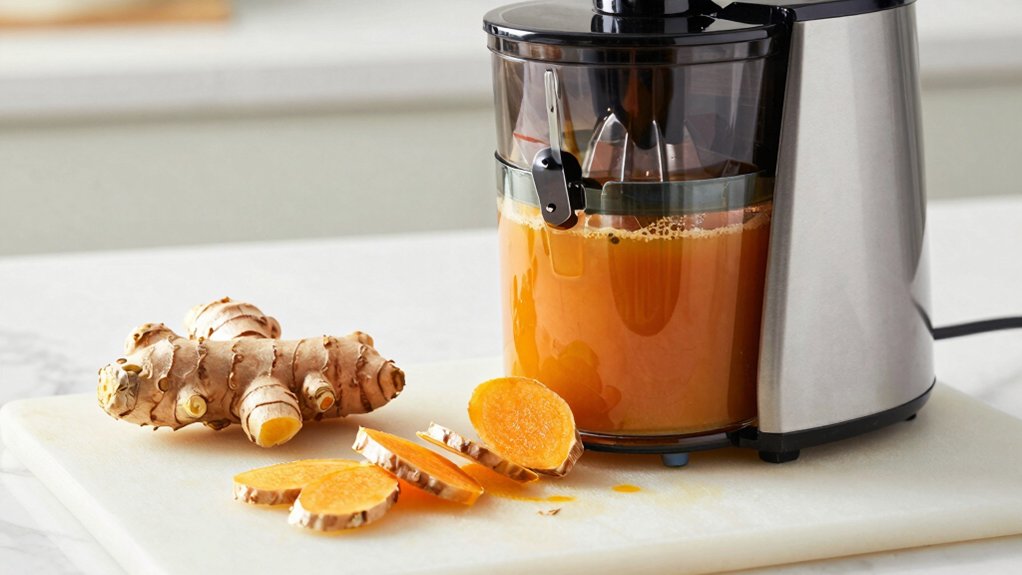
You’ll maximize efficiency by choosing whole versus chopped based on fiber load and juicer capacity, aiming for steady flow and minimal clogging.
For ginger, 1–2 inch pieces strike a balance between surface area and manageable fiber, while turmeric benefits from smaller, uniform cuts to prevent blockages.
Consider cutting direction—slice along peel lines for smoother separation and consistent pressure, then avoid large chunks that disrupt throughput.



Whole vs. Chopped Efficiency
When juicing small amounts of ginger or turmeric, whole roots can be faster to process because no chopping steps are needed.
However, for larger quantities, chopping boosts efficiency by increasing surface area. You’ll notice whole roots minimize prep time and reduce clogging risk in quick batches.
For larger batches, chopping improves efficiency by exposing more fiber and juice pathways, especially when you follow the root’s natural fiber direction.
Turmeric generally demands less chopping than ginger, yet 1–2 inch pieces can help you maintain steady flow if roots are fibrous or tough.
The chopping method should align with the peel lines to break fibers without creating unnecessary resistance, maximizing overall efficiency.

1–2 Inch Ginger Pieces
To juice efficiently, aim for 1–2 inch ginger pieces that fit your juicer’s feed chute; this size balances flow and fiber breakage. You’ll find that horizontal cuts along the peel lines crack fibrous tissue, easing juice extraction without overtaxing the motor.
Small, whole pieces may juice, but chopping improves flow and reduces strain on the machine. For maximum efficiency, target pieces around 1 inch to align with most feed chutes, ensuring consistent pressure and smoother operation.
Avoid feeding large roots whole; pre-chop to prevent clogging and uneven extraction. This approach keeps ginger and turmeric moving through the system, preserving juice yield and reducing heat buildup.
Consistent sizing also helps you compare results, calibrate pressure, and maintain steady throughput. Precision chopping supports cleaner juice and longer-lasting equipment.
Cutting Direction Tips
Cutting direction matters for efficient juicing, whether you’re working with whole pieces or pre-chopped bits. You should observe the root’s fibrous pattern to choose the most effective cutting direction for your juicer.
For ginger, slice horizontally along the peel lines to break up vertical fibers and facilitate better juicing. Then chop into 1–2 inch pieces in the same direction to aid fiber separation.
For turmeric, avoid crossing the grain to prevent clogging and ensure smoother extraction. Always align your cuts with the natural fiber orientation to maximize juicing efficiency.
Use a deliberate slicing technique that maintains consistent pressure and avoids jagged edges, which can hinder flow. In practice, this reduces resistance and improves throughput, especially when processing bulky or fibrous pieces.
Peel Decisions: Why Leaves Peel On
Peel decisions matter in ginger and turmeric juicing, and the leaves-on approach offers clear benefits. You preserve beneficial polyphenols, antioxidants, and anti-inflammatory compounds concentrated just beneath the skins, so leaving peels on supports nutrient preservation.
The peels also guide your chopping, indicating fiber orientation and helping you cut in the correct direction for efficient juicing. Thin peels generally won’t harm the juicer or cause clogging; they can even shield blades and screens during processing.
Peeling is unnecessary because skins hold valuable nutrients and handling them reduces prep time, especially with irregularly shaped roots. Use a spoon to remove ginger peels or gloves for turmeric to limit staining while keeping peels intact.
This approach aligns with precision, speed, and maximal nutrient retention.
Juicing Turmeric With Lemon to Prevent Staining
Juicing turmeric with lemon prevents staining by leveraging lemon’s acidity to bleach and neutralize turmeric pigments. You combine turmeric with lemon juice in the juicing process to minimize orange or yellow residues on your juicer parts.
The citric acid in lemon effectively breaks down turmeric stains, making cleanup easier and preserving your equipment’s appearance. When you run turmeric alone, you risk orange or greenish-blue marks, but adding lemon neutralizes these colors through its bleaching properties.
For best results, include lemon juice directly with turmeric during juicing to keep your machine clean and staining-free. This approach also reduces pigment transfer to other components, supporting a consistently tidy setup and reliable extraction.
turmeric, lemon juice, staining.
Layering for Optimal Flow
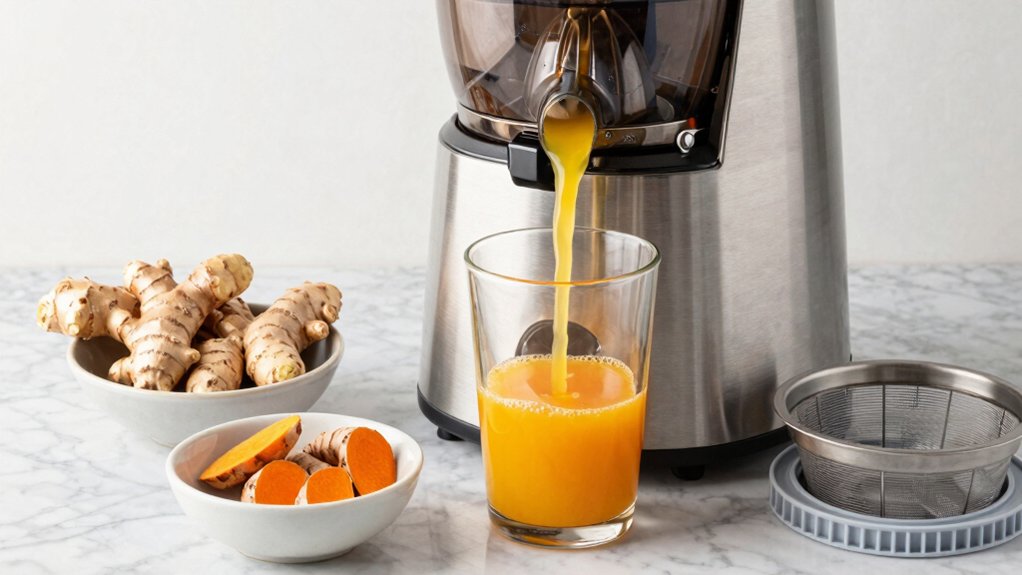
Layering ginger and turmeric properly at the start of juicing guarantees a steady, clog‑free flow. You should place heavier ingredients at the bottom of the hopper to provide pressure and smooth movement, then top with larger, harder pieces to push softer roots through.
This layering strategy, a core part of your juicing technique, guides pulp toward the exit and minimizes blockages. Consistently arranging ingredients in this order enhances flow and reduces the need for stops, improving efficiency.
By maintaining a predictable sequence, you sustain steady extraction and prevent clogging before it starts. Use the reverse function sparingly to restore momentum if pieces stall, but rely on proper layering as your primary flow control.
Maintain discipline in placement to maximize throughput and consistency.
Using the Reverse Button to Unclog
When a clog forms, use the reverse button for 5–10 seconds to loosen stuck ginger or turmeric without stressing the motor.
You should act at the first sign of resistance during juicing to prevent pulp buildup and maintain consistent flow.
Holding the reverse function engages back‑spin that dislodges fibers without forcing additional strain on gears or bearings.
After the clog loosens, switch back to forward to resume juicing smoothly and keep throughput steady.
Regular use of the reverse button reduces clogs and improves overall efficiency, so integrate brief reversals into your routine rather than waiting for a full blockage.
This approach ensures you maintain steady juicing performance, minimizes downtime, and preserves machine longevity while preserving nutrient extraction.
Blender Alternative: Smoothie Method and Straining
If you’re using a blender as a smoother alternative, start by chopping ginger and turmeric into 1-inch pieces to guarantee even processing.
You’ll add 1 cup of water per pound of roots to facilitate blending and achieve a fluid consistency.
Pulse or blend for 1–2 minutes until the mixture is smooth and well-pureed.
Then strain the blended mixture through a fine mesh sieve, a nut milk bag, or cheesecloth, pressing gently to extract as much juice as possible.
Collect the liquid, and squeeze or press the pulp to recover any remaining liquid.
Discard or reuse the fiber in smoothies or baking.
This blender method minimizes clogging while preserving juice yield, enabling efficient extraction and enabling clear separation of juice from pulp.
blender, straining, pulp.
Cleaning and Storing Your Juice and Pulp
After juicing, rinse and clean the juicer parts immediately to prevent pulp from drying and clogging the machine.
You should use a brush or sponge with dish soap, baking soda, or vinegar to thoroughly remove pulp residues from all components.
For stubborn stains or dried pulp, soak parts in lemon juice or a vinegar-water solution before scrubbing.
This prep reduces buildup and guarantees smoother future runs.
After cleaning, inspect and clear the juicer’s filter or mesh screen to avoid residual clogging during the next session.
When you finish, store leftover pulp in airtight containers in the refrigerator or freezer to prevent mold and spoilage.
Proper cleaning and storing optimize freshness and extend your juicer’s life.
Conclusion
You’ll finish with confidence, as if you’ve followed a surgeon’s checklist. In brief, the methodical steps—clean, peel, chop, layer, and monitor flow—prevent clogs and deliver smoother ginger-turmeric juice. Think of a well-titted engine: every part knows its job, and the machine hums. When resistance appears, you reverse, adjust, and proceed. Like a quiet arc in a mythic tale, your routine turns a potential jam into flow, clarity, and steady, bright recall.