

When you aim for a big nutrient boost, you mix greens for steady energy, bright fruits for antioxidants, and fiber for digestion, while adding ginger or lemon to boost absorption. You’ll want to balance flavors, use fresh produce, and juice promptly to preserve nutrients. If you’re curious how to judge a juice’s nutrition, which greens truly power your goals, and how to tailor blends for energy, gut, or skin, keep going to explore practical, evidence-based tips.
How to Judge a Juice for Nutrition: 5 Must-Have Components

To judge a juice for nutrition, start by checking five essential components that influence both health benefits and overall value.
First, assess the ingredient sourcing, ensuring produce comes from trusted farms or transparent suppliers.
Next, compare juice shelf life claims with real storage guidance and freshness indicators.
Third, examine sugar content and its source, favoring natural, unadded options.
Fourth, look for fiber presence, which supports fullness and digestion.
Fifth, verify micronutrients like vitamins and minerals per serving, aligning with your goals.
Use this framework to evaluate variety, balance, and processing level.
Greens-Forward Blends for Steady Energy
If you’re aiming for steady energy, start with Greens Power Mix and Steady Energy Greens to fuel your day without spikes. These greens-focused blends, rich in micronutrients and fiber, support sustained cognition and physical stamina.
Look for Nutrient-Dense Blends that balance greens with fruits and proteins to maximize daily nutrient intake.
Greens Power Mix
To optimize flavor and nutrient delivery, pair with herbal infusions that add gentle sweetness or bright bite, rather than relying on sugar alone. When you juice, choose tools that preserve beta-carotene and vitamin C, and keep blades sharp for smooth extraction.
Juicing tools matter, and so does balance—aim for a final drink that tastes clean, not overwhelmed. This approach respects community needs, inviting you to share tips and support with others seeking steady energy.
Steady Energy Greens
To keep energy stable, choose blends with moderate protein and fiber, paired with nutrient-dense greens like spinach, kale, and chard. Herbal infusions can add gentle alertness without jitters, while whole-food bases maintain fullness between meals.
Look for protein additions such as plant-based powders, seeds, or legumes that complement the greens without overpowering flavor.
Practical serving tips: drink with a balanced breakfast, snack on a fruit or nut during the afternoon slump, and rotate greens to prevent nutrient plateaus.
These blends promote belonging through shared routines, reliability, and consistently wholesome choices.
Nutrient-Dense Blends
Nutrient-dense greens-forward blends deliver a concentrated set of vitamins, minerals, and phytonutrients in a single, easy-to-digest format to support steady energy throughout the day. You’ll feel clear, sustained crucial when you choose blends that emphasize greens and mindful add-ins, not just sweetness.
- Flavor pairing: balance bitter greens with fruit accents and light herbs for palate appeal
- Ingredient sourcing: prioritize organic greens, locally grown options, and seasonal produce
- Practical prep: rinse, chop, and store in ready-to-blend portions to save time
- Evidence-based picks: rotate greens (spinach, kale) with crucifers and celery for varied nutrient profiles
These blends promote belonging by aligning taste with health goals, making steady energy feel accessible and intentional.
Colorful Fruit-Veg Combos for Antioxidants
Colorful fruit-veg combos maximize antioxidant intake by pairing vitamins like C and A with polyphenols from berries and leafy greens.
You’ll see that bright fruits provide quick energy while colorful vegetables contribute lasting protection against oxidative stress.
Together, these blends support daily resilience and practical, evidence-based flavor in your juicing routine.
Bright Fruit Antioxidants
- fruit pairing tips for maximal absorption
- evidence-backed antioxidant sources in everyday produce
- practical combos that taste great and feel nourishing
- mindful intake patterns to support consistent benefits
This approach is practical and evidence-based: you’ll notice stronger flavor, better satiety, and a clear connection between colorful fruit and protection against oxidative stress. Keep portions balanced, rotate fruits, and savor the texture and color.
Your juice becomes a reliable habit that supports belonging to a health-conscious community while delivering real nutritional value.
Colorful Veggie Boosts
Pairing colorful vegetables with complementary fruits can boost antioxidant intake without sacrificing flavor. You’ll notice vibrant blends like carrots with oranges, spinach with mango, or beet with apple, delivering polyphenols and vitamin C in every sip.
Choose produce in peak seasons to maximize nutrients and taste, then enjoy a concise, practical juice routine: rinse, rotate colors, and blend raw with a squeeze of lemon for brightness.
Seasonal variations keep routine interesting and help you stay consistent without feeling overwhelmed.
For best juice presentation, serve immediately or chill briefly and layer colors in a clear glass to highlight the rainbow.
This approach supports a sense of belonging to a health-conscious community, where simple, evidence-based choices add up over time.
Fiber-First Juices That Aid Digestion
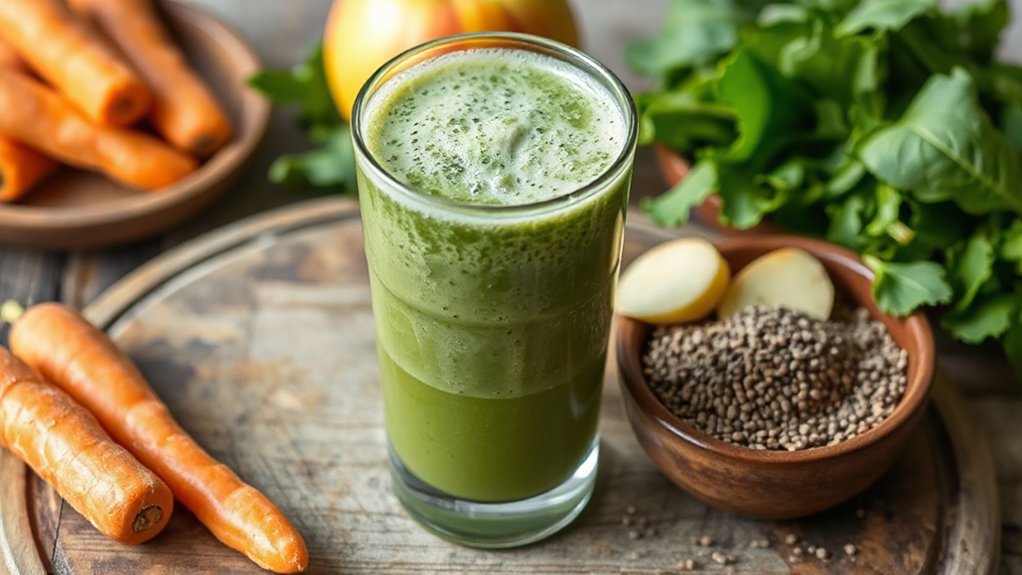
Fiber-focused juices support digestion by boosting fiber intake even when you don’t eat enough whole fruits and vegetables. You’ll feel steadier energy as these blends support regularity without heavy cooking. Think of them as practical foundations you can sip daily.
- Use cucumber, kale, and apple for a light, fiber-rich base
- Add chia or flax for soluble fiber and a silky texture
- Include pear or berries for natural sweetness and more soluble fiber
- Finish with herbal infusions to enhance digestion and juice presentation
These juices prioritize evidence-based ingredients that promote gut-friendly microbes and smoother transit. Keep portions modest, vary greens, and hydrate after. You’re building a consistent habit, not chasing a miracle cure.
Immunity-Boosting Juice Pairings and Flavor Layering
To boost immunity through juicing, focus on deliberate pairings that enhance nutrient uptake and flavor without overloading on sugar. You’ll notice that flavor layering, when done right, boosts appeal and adherence.
Choose ingredient pairing that supports absorption; for example, vitamin C-rich citrus with iron-packed greens improves uptake. Add a small pinch of ginger or turmeric to modulate inflammation, not overwhelm sweetness.
Balance sweetness with bitter greens and peppers to sustain blood sugar stability. Include cruciferous veggies subtly to diversify phytonutrients.
Pair herbs like parsley or cilantro for detox signals without muddling taste. Keep portions practical, favoring whole-food ingredients over concentrates.
This approach creates a shared, approachable habit—recipes feel doable, not “specialty.” You belong in a community pursuing vibrant health through thoughtful, evidence-informed juice pairings.
Skin-Glow Juices Rich in Vitamins
If you’re aiming for a skin-boosting juice routine, focus on high‑vitamin-content ingredients that support cell turnover, hydration, and antioxidant protection.
- Spinach and kale for vitamin C, folate, and hydration
- Carrot and orange for beta‑carotene and brightening
- Red pepper and kiwi for extra vitamin C and collagen support
- Berries and pomegranate for antioxidants and skin-plumping polyphenols
These skin-glow combos fit into everyday Skincare routines and pair well with gentle Beauty supplements.
You’ll notice more radiant, hydrated skin when you drink consistently and combine with balanced meals. Keep portions moderate and varied to avoid overload. Prioritize whole foods, limit added sugars, and listen to your skin’s signals.
Consistency beats intensity for lasting results.
How to Tailor Juices to Your Goals (Energy, Gut, Complexion)
To tailor juices to specific goals, start by identifying your priority—energy, gut health, or complexion—and then choose ingredients that directly support that aim.
For energy, favor bright flavors like citrus with a hint of ginger, and pair with dark leafy greens for sustained nutrients. Flavor pairing matters, so keep sweet and zippy notes balanced.
For gut health, prioritize fiber-rich vegetables, plus a touch of probiotic-lean foods such as yogurt or kefir, and use gentle, soothing combinations to reduce irritation.
For complexion, lean into antioxidant-rich berries and carrot family roots, pairing citrus to aid absorption.
If a favorite ingredient isn’t ideal, consider ingredient substitutions to maintain balance without sacrificing taste or texture.
Keep experiments small, track outcomes, and adjust based on how you feel.
Practical Tips to Customize and Store Juices for Daily Use
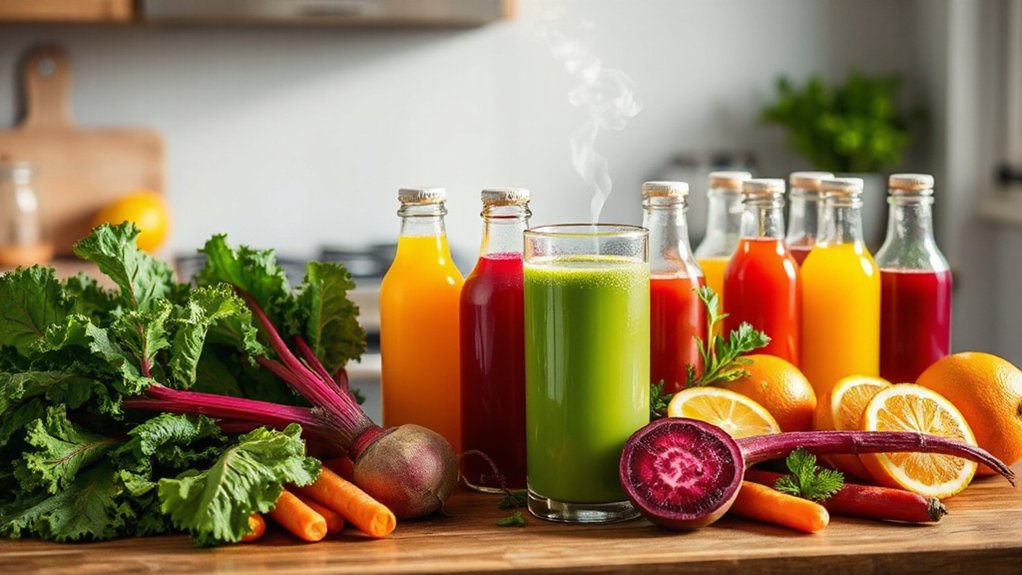
Storing and customizing juices for daily use starts with practical prep and quick adjustments that keep flavor and nutrition intact. You’ll gain consistency when you plan batch tweaks, store properly, and tailor flavor to your routine.
- Use airtight bottles and keep them in the fridge to preserve juice storage and nutrients.
- Label blends with date, and add small amounts of herbs or citrus for flavor customization.
- Separate components that oxidize quickly, reblend before drinking.
- Freeze excess portions in ice-cube trays for quick, fresh-trozen juice boosts.
Tips are evidence-based: limit air exposure, chill promptly, and taste-test as you go.
Belonging grows as you share flavors, routines, and results with a community of juicing enthusiasts.
Frequently Asked Questions
Do Juicing and Whole Fruit Intake Compare for Fiber?
Juicing reduces fiber compared to whole fruit, but you still get some fiber; whole fruit offers higher fiber and better nutrient retention overall. If you juice, prioritize pulp, and balance with whole fruits to optimize fiber comparison and nutrient retention.
Which Juices Best Support Post-Workout Recovery?
Post-workout, you’ll want citrus-ginger or beet-orange blends for quick carbs and antioxidants. About 60% of athletes recover faster with electrolytes. You’ll enjoy flavor combinations and ingredient sourcing that support recovery, hydration, and a sense of belonging.
Can Juice Calories Impact Weight Management Significantly?
Yes, juice calories can influence weight management, especially with frequent intake. Track with calorie counting, watch portions, and note weight fluctuation. You’ll gain clarity, feel purposeful, and stay connected with a practical, evidence-based approach.
Are There Risks With High-Sugar Vegetable Juices?
Yes, there are risks with high-sugar vegetable juices. You should monitor sugar content and weigh potential Health risks, especially if you have diabetes or insulin resistance; moderate portions help you feel confident, supported, and less overwhelmed by added sugars.
How to Test Juice Nutrient Stability After Blending?
Juice nutrient stability fades from light and air like a shy forest, so you test by sampling at intervals, tracking vitamins and antioxidants. Oxidation effects rise; use proper Storage methods, keep cold, and seal tightly for accuracy.
Conclusion
You can craft juices that power your day with greens, berries, and citrus all in one sip. Focus on greens-first blends for steady energy, colorful fruit-veg combos for antioxidants, and a fiber-first option to support digestion. Pair immunity boosters with flavor layers you actually enjoy, and tailor blends to your goals—energy, gut, or complexion. Practical tips: use fresh produce, minimize air exposure, drink soon, and store smartly to keep nutrients alive like a well-tedious battery of health glory.