

Choosing a juicer starts with your goals and budget. If you want fast juice from soft fruits or citrus, a centrifugal model is fine, but it blades through greens less efficiently. For nutrient-rich juice and greens, a slow masticating juicer or even a twin-gear option delivers higher yields with less oxidation. Consider noise, cleanup, and warranties to match your routine. With the right pick, you’ll gain confidence and consistency as you explore healthier options and batch ideas. You’ll uncover more as you continue.
Why Juicing Matters: Benefits for Beginners
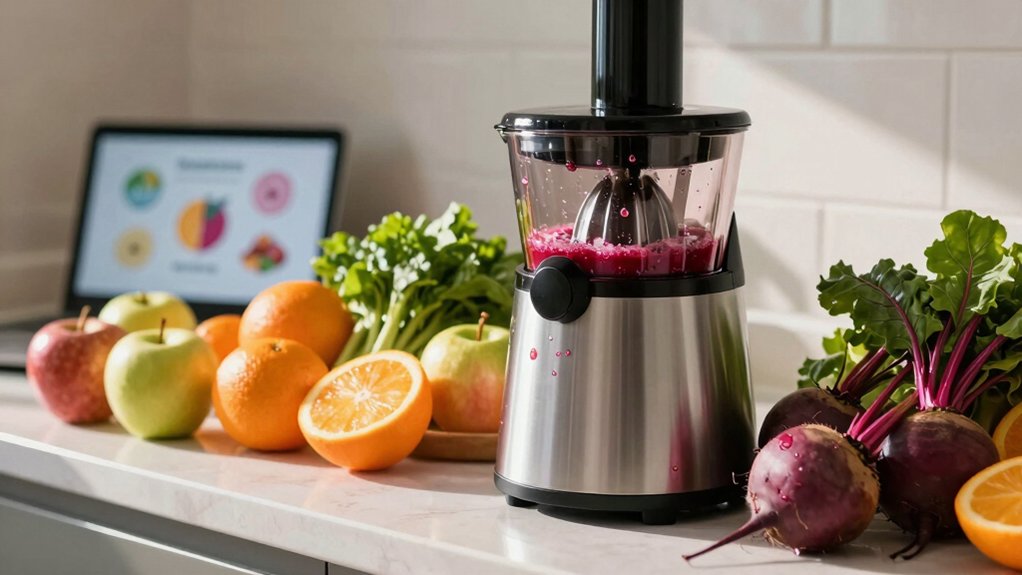
Juicing matters for beginners because it helps you boost your daily intake of fruits and vegetables without added fuss. You’ll notice immediate benefits as fresh juice delivers concentrated nutrients, including vitamins, minerals, and antioxidants, to support your health.
By choosing juicing, you’re prioritizing nutrients that can enhance energy levels and immune function, laying a strong foundation for wellness. This practice also offers clearer control over what enters your cup, avoiding sugars and preservatives found in many store-bought options.
As you establish a routine, the health advantages compound: improved vitality, better weight management, and sustained cravings satisfaction with a low-calorie, nutrient-dense beverage.
Invest in quality equipment to maximize extraction, ensuring ongoing benefits from consistent juicing.




Understanding Juicer Types: Centrifugal, Masticating, Twin Gear
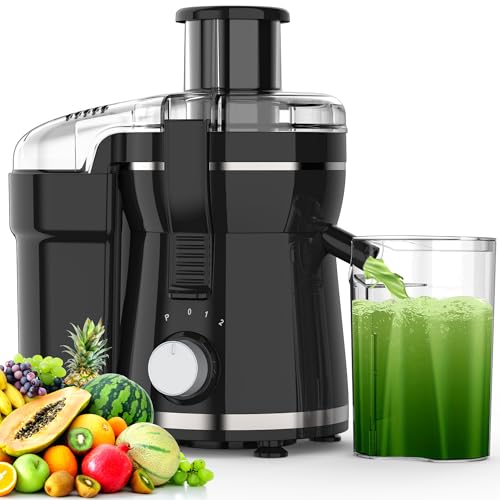
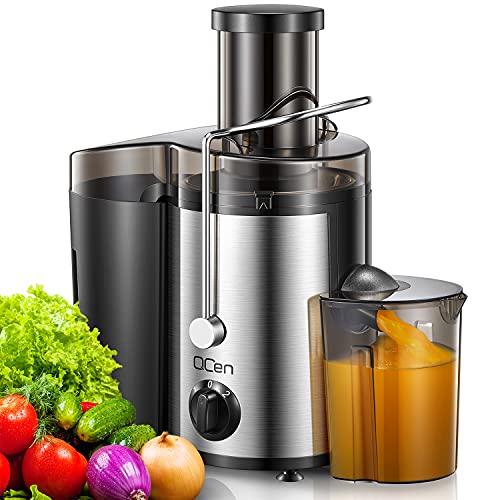
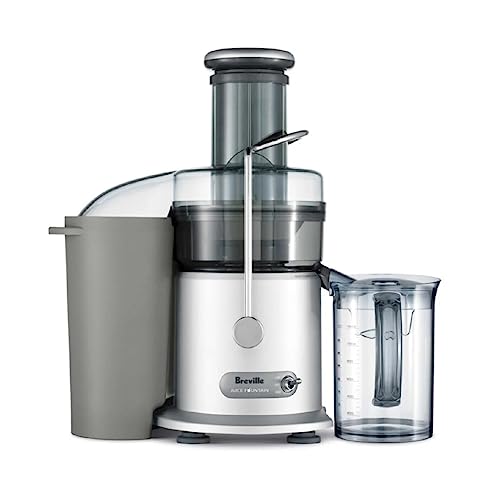
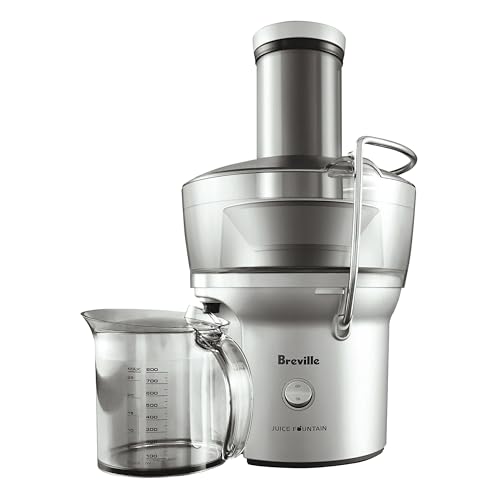
Understanding juicer types helps you pick the right tool for your goals: centrifugal, masticating, and twin gear each trade off speed, nutrient retention, and efficiency differently.
Centrifugal juicers operate at 10,000–16,000 RPM, shredding produce quickly and yielding juice in as little as 20 seconds. However, they’re noisier and oxidize more, which shortens shelf life.
Masticating juicers, or slow/ cold-press models, use an auger at 43–80 RPM to crush produce. They deliver higher nutrient retention and greater juice yields.
Twin gear juicers, or triturating models, grind between interlocking gears at 60–120 RPM. They extract maximum juice with minimal oxidation and have superior efficiency on greens.
If you value speed, centrifugal may suffice; for nutrition and storage life, prefer masticating or twin gear juicers for better juice extraction.




How to Choose Based on Your Goals and Budget
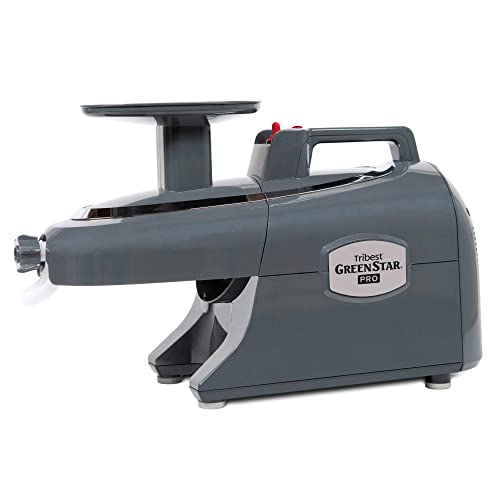
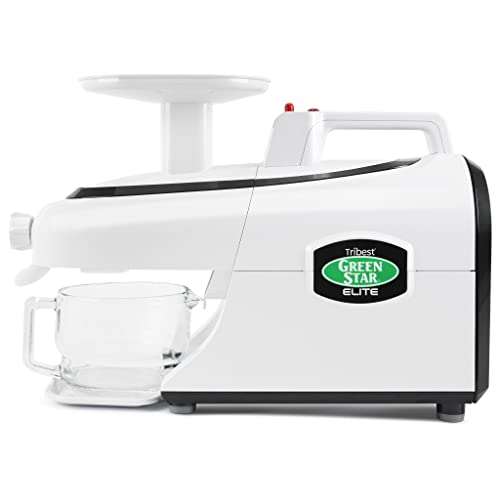
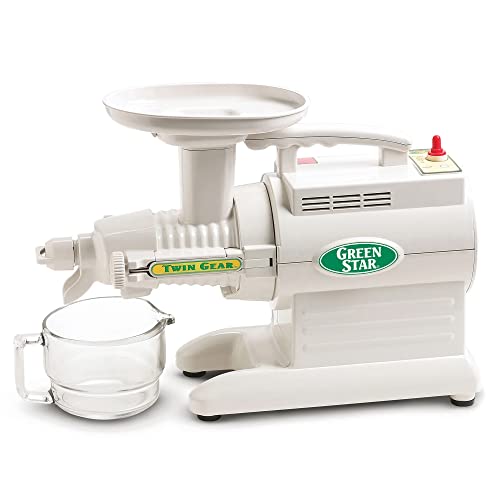
First, align your juicing goals with your budget: decide whether nutrient retention, yield, or convenience matters most, then pick a model that fits what you’re willing to invest.
Next, weigh maintenance needs and life-cycle costs—ease of cleaning, noise, warranty, and durability—to guarantee long-term value.
Finally, match your typical produce and usage frequency to the juicer’s capabilities, so you don’t overpay for features you won’t use.
Budget Alignment
Budget alignment means picking a juicer that fits your goals without overspending, while recognizing how long you plan to use it and how often you’ll juice. Your budget dictates the tier you consider: an affordable manual citrus juicer near $15 fits starter needs for simple citrus tasks, while mid-range centrifugal units from $75–$300 suit occasional use with better speed and convenience.
If you’re aiming for long-term reliability and higher yields, think of investing in high-end masticating or twin-gear models, typically $400–$2000, which often include extended warranties. Factor in potential replacement parts and maintenance costs, especially for budget models prone to more frequent repairs.
Juicing Goals
Choosing a juicer isn’t just about price—it hinges on what you want to achieve with your daily routine. Your juicing goals guide the best machine for you: choose quick convenience for centrifugal models, or prioritize nutrient preservation with masticating or twin gear juicers.
Budget matters: centrifugal typically runs $75–$300, masticating $200–$750, and twin gear can exceed $1,000.
Consider weekly volume—larger families need higher-capacity, longer warranties (10–15 years).
Identify produce types you’ll juice most—greens and wheatgrass favor slow juicers, while soft fruits and citrus suit centrifugal options.
Space and cleanup count too; opt for simpler, dishwasher-safe parts if you want low maintenance within your budget.
Align juicing goals with both yield and ease to maximize your nutrient intake.




Maintenance Considerations
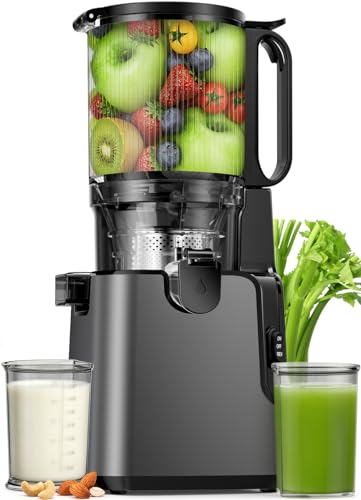
Maintenance considerations should guide your choice by weighing long-term durability against up-front cost and ongoing upkeep. When you pick a higher-end juicer, like twin gear models, you’re investing in efficiency and durability; they often offer 10–15 year warranties, boosting return on investment.
But evaluate replacement parts and maintenance costs over time, since some models demand expensive repairs or frequent part changes. Look for dishwasher-safe components to simplify cleaning, which reduces maintenance time and encourages regular use.
Regular cleaning after each use prevents pulp buildup and preserves performance, especially on slower, more complex machines. Budget-friendly models usually feature simpler designs with fewer parts, easing maintenance and lowering ongoing costs.
Balance goals with budget to maximize long-term efficiency and value.
Key Features to Look For in a Juicer

When selecting a juicer, prioritize models that maximize juice yield and nutrient extraction, especially slow, masticating or twin-gear designs that preserve more goodness from fruits and vegetables.
You’ll want high juice yield, driven by efficient processing and minimal produce waste, so choose machines advertised for superior extraction.
Look for dishwasher-safe parts and minimal components to simplify cleaning, plus a sizeable juice container and pulp bin to handle larger batches without frequent emptying.
Consider noise levels: slow and twin-gear units generally run more quietly, ideal for shared spaces.
Check durability through extended warranties, such as 10–15 years, signaling solid construction and long-term value.
Prioritize features that align with your routine, offering reliable performance and straightforward maintenance across daily uses.
Yield and Efficiency: What to Expect From Each Type
Centrifugal juicers deliver about 60-70% juice from produce, but style matters—greens and fibrous vegetables yield less compared to other types.
Masticating (slow) models boost juice from greens and wheatgrass by roughly 20-30%, while twin-gear systems push efficiency to 90% or more, squeezing maximum yield and nutrients.
Slow juicers also reduce oxidation, preserving nutrients and extending shelf life, so higher-yield machines can lower waste and cost over time.
Yield by Juicer Type
Yield varies markedly by juicer type, with the method of extraction driving the main differences you’ll notice in practice. You’ll see distinct yield patterns across centrifugal, masticating, and twin gear models.
Centrifugal juicers typically produce lower yields from leafy greens and fibrous produce due to high-speed spinning and less efficient extraction.
Masticating (slow) juicers, on the other hand, extract more juice from greens and wheatgrass, often 20-30% more than centrifugal models.
Twin gear (triturating) juicers offer the highest efficiency, extracting up to 50% more juice overall and preserving more nutrients through their low-speed, pressing mechanism.
Faster juicers tend to yield wetter pulp and lower efficiency, while slow juicers yield drier pulp and maximize juice.
Yield depends on produce type, with softer fruits performing best.

Efficiency Vs Greens
Greens respond differently to each juicer type, so understanding efficiency alongside yield helps you pick the right model. You’ll get higher juice yield from greens with slow juicers—masticating and twin gear—than with centrifugal units, and you’ll do so with better nutrient retention thanks to lower speeds around 43-120 RPM.
Centrifugal juicers are faster but less efficient with leafy greens, often extracting only about 30-50% of the juice, leaving wetter pulp.
Twin gear models can deliver up to 30% more juice yield than centrifugal machines, making them more cost-effective over time.
When you prioritize greens, durability and nutrient preservation matter, so slow juicers offer superior efficiency and juice yield, especially for fibrous greens, compared with high-speed alternatives.
Pulp and Juice Ratio
When choosing a juicer, understanding pulp and juice ratio helps you gauge efficiency across different technologies. You’ll notice centrifugal models typically deliver about 60-70% juice yield, leaving wetter pulp behind.
Masticating (slow) juicers raise efficiency to roughly 80-90% juice yield, producing drier, more compact pulp. Twin gear systems push yield even higher, often surpassing 90% with minimal pulp and reduced oxidation.
Pulp characteristics vary by design: centrifugal units produce wetter pulp, while slow and twin gear devices yield drier output.
Noise, Safety, and Convenience Considerations
To choose a juicer that fits your lifestyle, you’ll weigh noise, safety, and convenience as core factors. Slow masticating and twin gear juicers operate at low RPMs (about 43–120), so they’re considerably quieter than centrifugal models that can hit 16,000 RPM.
If you share spaces or crave early-morning juicing, this quieter performance matters, often yielding around 60–70 decibels—roughly a normal conversation.
Safety features matter too: non-slip bases, secure locking, overload protection, interlocks, and auto shut-off reduce risk during busy mornings.
Convenience rounds out the choice: large feed chutes, dishwasher-safe parts, and cord storage shorten setup and cleanup.
When you compare juicers, prioritize noise, safety, and convenience to maximize everyday reliability and enjoyment.
Clearing Up Common Misconceptions About Juicers
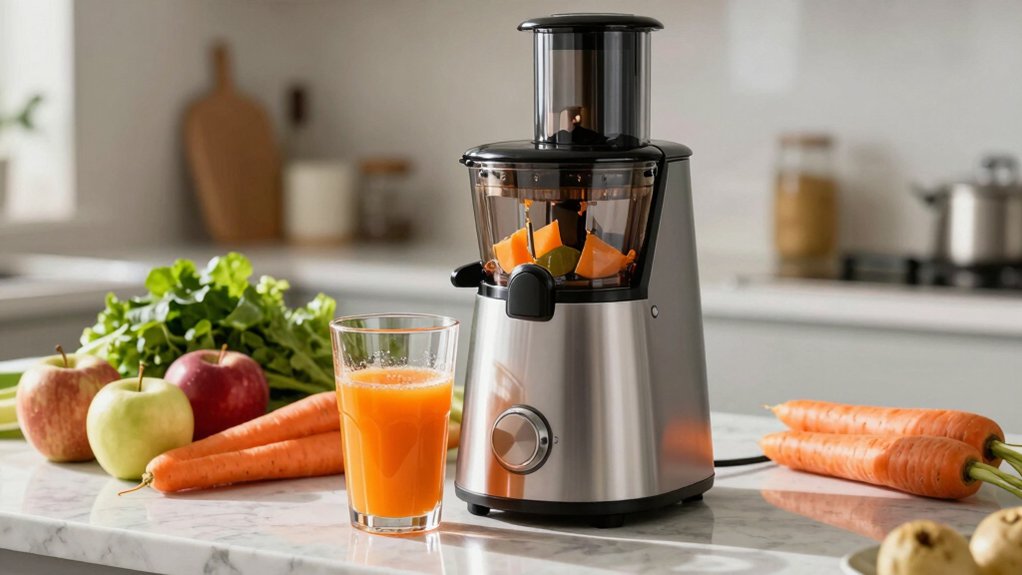
So what many people assume about juicers isn’t always true, and few myths hold up under scrutiny. Here’s the straight talk: many products marketed as juicers are actually blenders with pulp separation, yielding less pure juice than traditional juicers.
High-speed centrifugal models oxidize juice quickly, thinning nutrient retention and shelf life, despite claims they’re healthier. Not every machine handles leafy greens or wheatgrass; some are built for citrus or soft fruits only.
The term “cold-pressed” gets tossed around, but true cold-press juicing uses slow hydraulic extraction, not merely low speed. Cheaper juicers can underperform on yield and nutrition, while still being pitched as equals to premium models.
Know these juicer misconceptions to choose confidently and align expectations with function.
Popular Brands and Price Ranges to Consider
With those realities in mind, here are the brands and price ranges you’ll likely encounter when selecting a juicer. You’ll find popular juicer brands like Omega, Kuvings, Breville, Nama, and Champion, each offering varied features and price points.
For centrifugal juicers, expect price ranges from about $75 up to $300, while masticating models typically run from $200 to $750. Twin gear juicers can start around $300 and exceed $2,000.
The Omega VRT400HD stands out as a widely recommended option, a versatile masticating choice with a 15-year warranty around $300.
Premium models from Nama such as the Nama’s J2 come with long warranties.

High-end brands emphasize slow, multi-functional builds and longer investment returns.
Quick Start Tips for First-Time Juicers
Starting out, focus on simple recipes that pair apples with berries to build confidence with your juicer. You’ll get comfortable quickly by starting small, then expand as you gain control.
Always wash and chop produce into manageable pieces to prevent clogging and assure efficient juicing.
Use a slow, steady pressure when feeding produce to slow juicers to maximize nutrient retention and yield.
Clean your juicer immediately after use to prevent pulp from drying and making cleanup more difficult later.
Experiment with different produce combinations and note which yield the best flavor and highest nutrient content for your preferences.
These quick start tips help you make delicious results fast, while keeping your routine efficient and future-proof through consistent cleaning and mindful feeding.
Maintenance and Cleaning Best Practices
Maintaining your juicer starts the moment you finish juicing: a quick, thorough clean prevents pulp buildup, keeps the machine running smoothly, and extends its life. After each use, disassemble and rinse removable parts to remove debris and prevent bacterial growth.
Use a small brush or toothbrush to reach gears and mesh screens, ensuring ideal performance. Many slow juicers have dishwasher-safe components; you can safely clean them on the top rack to save time.
For stubborn stains or mineral deposits, apply food-grade vinegar or lemon juice during cleaning. Always consult your manufacturer’s manual for specific instructions and maintenance schedules to prolong lifespan.
Regular cleaning, proper disassembly, and mindful maintenance protect your investment and ensure consistent juicing quality.
Juicing for Health: Practical Batch and Storage Tips
When juicing for health, batch planning and smart storage keep your nutrients intact and your routine consistent. For batch juicing, measure ingredients and set a schedule so you have enough juice ready for daily use, reducing waste and inconsistent intake.
Prepare and wash your fresh produce thoroughly to maximize freshness and minimize bacteria before juicing.
Store freshly made juice in airtight containers or glass jars in the refrigerator, ideally consuming it within 24-48 hours to preserve nutrients.
Label stored juice with the date and time to track freshness and prevent spoiled juice.
When you have excess, freeze in small portions using ice cube trays or freezer-safe containers to extend shelf life and simplify future smoothies.
Prioritize these storage tips to maintain nutrients and convenience.
Real-Life Buying Scenarios: Which Juicer Is Right for You
Choosing a juicer depends on how you plan to use it, your budget, and how much effort you’re willing to invest in cleaning.
In real-life buying scenarios, you’ll match your needs to capabilities. If you want quick juice from hard fruits and vegetables with minimal prep, a centrifugal juicer around $75-$150 fits the bill and speeds juice extraction.
For maximum nutrient retention and leafy greens, wheatgrass, and herbs, a masticating juicer in the $200-$400 range is ideal.
If you crave high-yield juice with longer shelf life, consider a twin gear juicer costing $500 or more, acknowledging longer cleaning times.
Budget-conscious beginners can start with manual or citrus juicers under $50 for occasional use, while multi-functional families may opt for models like Nama J2.
Next Steps: Making Your Purchase With Confidence
To purchase with confidence, start by researching each juicer type—centrifugal, masticating, and twin gear—to see which best fits your budget, produce preferences, and desired nutrient retention.
You’ll want to read customer reviews and expert ratings to gauge reliability, ease of cleaning, noise level, and warranty coverage before you decide.
Consider your typical batch size and frequency of juicing to select a model with appropriate capacity and speed features.
Compare brands and models, focusing on long warranties (up to 15 years for some) and available replacement parts to ensure longevity.
Confirm the chosen juicer is easy to assemble, clean, and store, increasing the likelihood you’ll make a healthy habit out of juicing.
Conclusion
Choosing the right juicer starts with honesty about your routine and goals. If you juice daily for greens, a masticating model may save you time and shaft less heat; if you crave quick fruit blends, a centrifugal unit keeps it simple and affordable. Case in point: a busy mom swapped a slow, noisy centrifugal for a compact cold-press model and doubled her batch yield, cutting prep time while preserving nutrients. Invest thoughtfully, and your produce will thank you.