
Table of Contents
Learn how to juice wheatgrass without a dedicated juicer, start by selecting healthy, fresh wheatgrass and chop it into 2–3 inch pieces using a sharp knife. Blends work best with a high-powered blender (≥1500W); add just enough water (about 1.5–2 cups per portion) and blend in short bursts to avoid heat. Strain through a fine mesh sieve, press the pulp to extract as much juice as possible, then enjoy promptly for maximum nutrients. You’ll pick up more tips as you go.
Harvesting and Preparing Fresh Wheatgrass
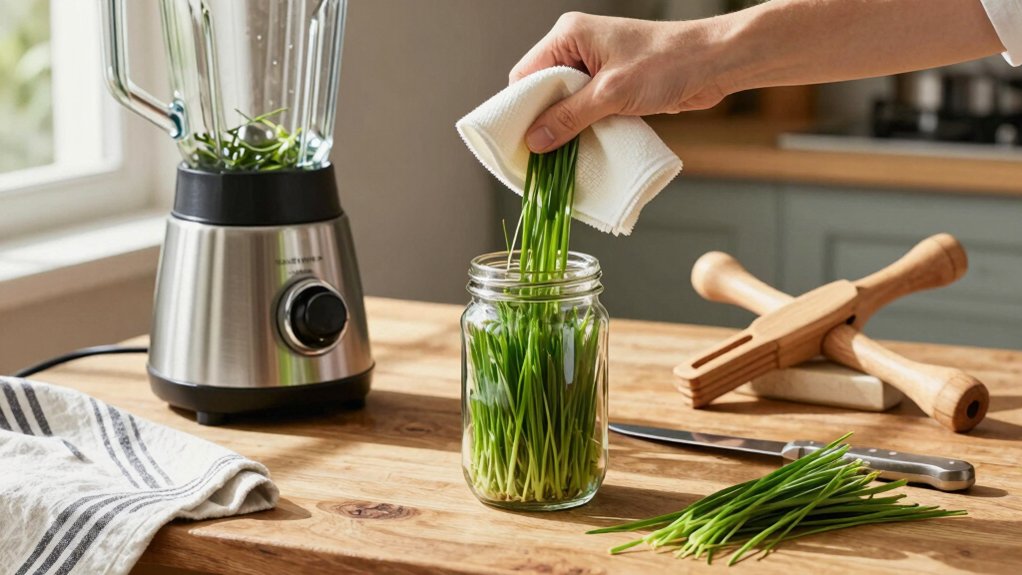
Harvest wheatgrass by cutting the green blades from your container or garden with a sharp knife, avoiding overly fine chopping. You’ll cut the wheatgrass into manageable halves or pieces, about half an inch long, to facilitate blending or chewing.
Rinse the blades thoroughly with clean water to remove dirt, debris, and potential contaminants before processing. Verify the wheatgrass is healthy, vibrant, and freshly harvested to maximize nutrient and chlorophyll content.
Prepare enough wheatgrass for your intended juice quantity, typically about 1 to 2 cups per serving, for maximum freshness. When you’re ready, you can create wheatgrass juice using a blender, followed by straining if desired.
This raw food prep supports quick consumption and nutrient-based benefits.
Chopping Wheatgrass for Blending
To chop wheatgrass for blending, cut it into 1–2 inch pieces with a sharp knife. Keep the pieces large enough to blend smoothly.
Avoid over-chopping, which can turn it mushy and clog the blender. Use just enough cuts to fit your batch.
Start with fresh, green stalks. Wash them thoroughly.
Cut from the container to preserve nutrients and flavor.





Cut Wheatgrass Properly
Cut the wheatgrass with a sharp knife to minimize cell damage while keeping pieces manageable for blending. You should halve the stalks, then cut them into 2-3 inch pieces to aid even blending.
Only harvest healthy, fresh wheatgrass with vibrant green color, free of dirt or damage before cutting. Use clean, sanitized tools to maintain hygiene and prevent contamination.
Avoid tearing or shredding, since excessive rough handling can cause oxidation and nutrient loss. Keep cuts clean and swift to preserve enzymes and flavors.
After chopping, place the pieces in a bowl, rinsed if needed, and be ready to juice with lemon juice or blend directly.
If you’re pursuing health care benefits, plan your batch and check for any need extra preparation steps.
Use Sharp Knife
Using a sharp knife is essential when you chop wheatgrass for blending. You should halve or cut the grass into 2–3 inch pieces to keep blending manageable and avoid overly fine chopping that hinders extraction.
A sharp blade preserves cell integrity, which helps juice release and quality. Proper cuts reduce strain on your blender blades and promote even processing, so you don’t waste energy or overwork the motor.
Use clean, sharp knives to minimize nutrient and chlorophyll loss during prep. Practice good knife safety, keep fingers clear, and control your cuts with deliberate, steady motions.
Focus on cutting techniques that maintain blade sharpness; rinse and dry the knife between batches to sustain edge longevity and consistent results. Sharpness maintenance keeps future prep efficient and safe.
Avoid Over-Chopping
When prepping wheatgrass for blending, you want solid, manageable pieces rather than tiny shreds. Use a sharp knife and gently halve the stalks to preserve cell structure and prevent excessive breakdown. Avoid chopping into tiny bits, as over-processing makes extraction harder and can dull chlorophyll and nutrients.
By sticking to larger, clean cuts, you maintain the plant’s fiber integrity while still achieving smooth blending. The goal is a balanced texture, not a “mush,” so you can easily blend without wasting juice. Proper knife technique supports precise, controlled cuts that keep the ideal chopping size intact.
This approach minimizes damage to cell walls, supports better pulp separation, and yields more potent juice with preserved nutrient content. Preventing over processing leads to clearer juice and easier handling.
Choosing the Right Blender for Wheatgrass
Choose a high-powered blender (at least 1500W, ~30,000 rpm) to reliably process wheatgrass without overheating. Models like Vitamix or Blendtec excel because they handle fibrous greens and maintain a smooth texture.
Use the dedicated juice/puree setting to maximize nutrient retention.
Add 1.5–2 cups of water per portion and blend in short bursts if you’re using a lower-cost unit to minimize pulp.
Blender Power Needs
If you want smooth, juice-rich wheatgrass without a dedicated juicer, start with a high-powered blender. To maximize yield, aim for blender wattage of at least 1500W, with blades rotating around 30,000 rpm for efficient fibrous greens.
Look for models with specialized juice settings, like Vitamix or Blendtec, which help extract more juice from wheatgrass. Cheaper blenders can work, but ensure blade sharpness is high and keep blending times brief to avoid overheating.
A powerful unit lets you process with minimal water and still achieve a smoother juice, without extra equipment. Also confirm the blender can handle fibrous greens and offers variable speeds, which improves control over texture and juice consistency.
Texture and Taste Tips
A high-powered blender is key for texture and taste when processing wheatgrass, so choose models with at least 1500W and blades that spin around 30,000 rpm to break down fibers efficiently.
Use the blender’s juice setting to blend thoroughly without overheating, then add just enough cold water to cover the blades for smooth blending and nutrient preservation.
Blend for no more than 30 seconds to 1 minute to prevent heat buildup that can destroy enzymes.
Strain the mixture through a fine mesh strainer or nut milk bag for a clearer juice and better texture.
Expect a brighter Wheatgrass color with a milder flavor; pair with light flavorings, store in airtight storage containers, and enjoy promptly for best flavor.
Blending Techniques to Preserve Nutrients
When blending wheatgrass without a dedicated juicer, use a high-powered blender like a Vitamix or Blendtec to efficiently process the greens without losing nutrients. You’ll maximize nutrient retention by choosing a gentle approach: blend on a low or juice setting for no more than 30 seconds to prevent overheating.
Add just enough cold water—about 1.5 to 2 cups per serving—to aid blending without overly diluting nutrients. Avoid longer blends; limit total time to under one minute to minimize oxidation and preserve enzyme preservation.
After blending, let the mixture sit for about 10 minutes before straining, which helps extract more nutrients into the juice. This approach balances blending speed with enzyme integrity and overall nutrient retention.
Water Ratios and Blending Time
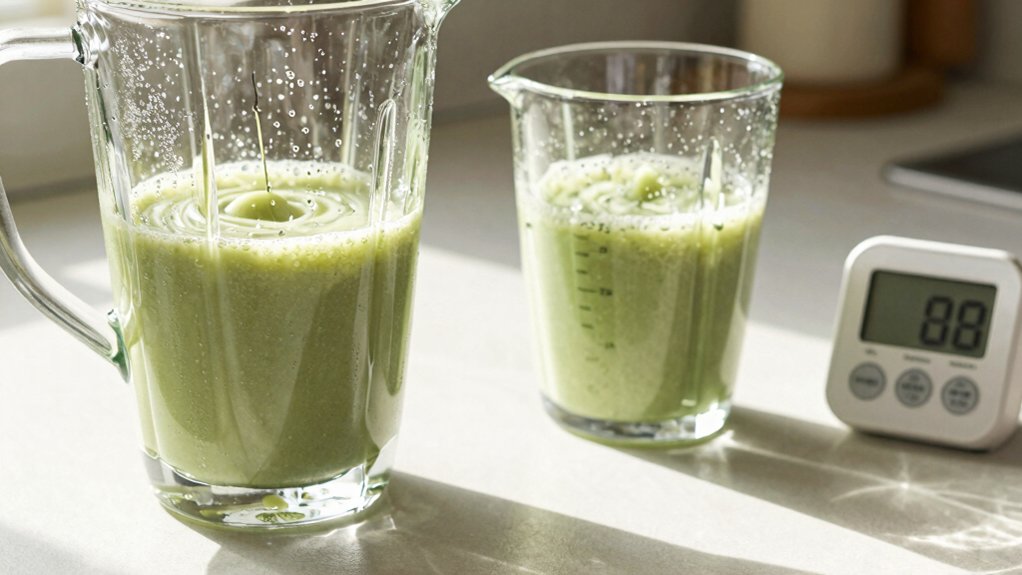
Start with 1.5 to 2 cups of clean water per portion of wheatgrass, just enough to cover the blender blades.
Don’t blend longer than 30 seconds to 1 minute to protect enzymes and minimize oxidation.
Adjust the water amount to taste and concentration, keeping the blend smooth but not dilute.
Water Amount Guidelines
Pour the water in gradually during blending, aiming for enough to just cover the blades with about 1.5 to 2 cups per serving of wheatgrass. You should add water slowly, a few ounces at a time, to avoid over-dilution and keep the flavor balanced.
Target a smooth yet slightly thick texture, dialing in water consistency as you blend. Keep blending duration short—typically no more than 30 seconds to 1 minute—to protect nutrients and enzymes.
If the juice tastes weak, you can increase the concentration rather than pumping in more water upfront. Remember, flavor adjustment comes from small tweaks, not big pours.
Use clean water and monitor the blend to maintain a potent, fresh profile without sacrificing nutrition or mouthfeel.
Blending Time Limits
To blend wheatgrass effectively, use a high-powered blender (at least 1500W and ~30,000 rpm) and mix in about 1.5 to 2 cups of cold, clean water per portion to reach the right dilution.
You should blend for no longer than 30 seconds to 1 minute to prevent overheating and preserve enzymes and nutrients. Keep blending time minimal to avoid oxidation, which can reduce enzyme content.
After blending, let the mixture sit for about 10 minutes to allow nutrients to seep out before straining and extracting the juice.
Focus on blending speed to control heat, choose a container size that fits your batch without overfilling, and use deliberate ingredient layering to promote even processing.
This approach protects nutrients while delivering smooth juice.
Enzyme Preservation Tips
Enzyme preservation hinges on careful water use and timely blending. You should use just enough water, about 1.5-2 cups per serving, to prevent over-dilution and reduce oxidation during blending. Limit blending time to no more than 30 seconds to 1 minute to avoid heat buildup that can destroy enzymes.
Shorter blending intervals help conserve the maximum amount of delicate enzymes and nutrients in the wheatgrass juice. Adding water in moderation ensures a concentrated juice, which can be diluted later if desired, maintaining enzyme integrity.
Avoid blending for extended periods or high speeds continuously, as prolonged blending accelerates enzyme degradation. Consider soil quality, pesticide residues, and crop rotation when sourcing wheatgrass to support overall nutrient preservation and juice quality.
Straining Techniques to Extract Juice
When straining, place a fine-mesh sieve over a bowl or measuring cup and pour the blended wheatgrass through it to separate the juice from the pulp.
Use a spatula or the back of a spoon to press down on the pulp in the strainer, extracting as much liquid as possible.
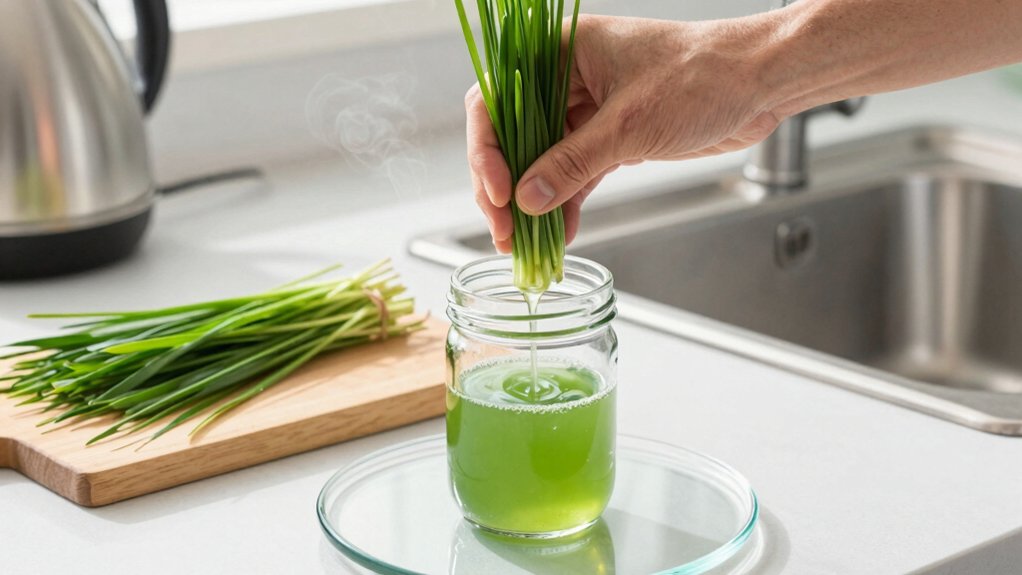
Alternatively, wring out the pulp by placing it in a clean cotton towel or nut milk bag and squeezing to obtain additional juice.
Discard or compost the remaining pulp after straining to minimize waste and maximize juice extraction.
Confirm the strainer has very small holes to effectively filter out pulp and foam, resulting in a clearer wheatgrass juice.
This approach supports nutrient retention, minimizes pulp disposal concerns, and can subtly influence taste enhancement.
Flavor Enhancers and Taste Adjustments
If you want wheatgrass juice to taste less grassy, start with small flavor tweaks and adjust to your palate. Flavor pairing matters: pair wheatgrass with cucumber or celery to dilute the chlorophyll bite, creating a smoother baseline.
For sweetness, explore sweetening options like honey or agave syrup in modest amounts so you don’t mute health benefits. Blending with sweet berries, such as strawberries or blueberries, yields a more palatable green smoothie without masking nutrients.
Consider herbal enhancements or flavored green powders in tiny quantities to complement flavor without overpowering the grass’s character. A splash of lemon juice can brighten and mask grassy notes effectively.
Experiment gradually, log results, and tailor adjustments to your taste while preserving the drink’s nutrition.
Serving Size and Quick Consumption Tips

Small servings work best: aim for shot-sized portions of 1 to 2 ounces to make wheatgrass juice easier to swallow given its strong chlorophyll flavor. You’ll maximize Wheatgrass health benefits by consuming these compact servings quickly, which also helps preserve nutritional content.
When deciding between juicing vs blending, note that blending creates a thicker mix you can dilute with water or juice, then sip in small amounts to avoid overwhelm. Drinking the juice immediately after blending preserves enzymes and nutrients that degrade over time, so plan to consume soon after prep.
A splash of lemon juice or blending with berries can boost taste, encouraging rapid consumption in these small portions. Using a high-powered blender supports concentrated juice in manageable, regular doses.
Pulp Uses and Nutritional Benefits
Wheatgrass pulp, rich in dietary fiber, supports digestion and helps clean the intestines, making it a practical addition for waste-friendly uses. You can leverage its fiber by adding pulp to smoothies or baked goods to boost nutrient intake without spotlighting it as a primary ingredient.
The pulp also carries residual chlorophyll and nutrients that support gut health when used as a soil amendment or in compost, making it a practical Pulp as fertilizer option.
For non-dietary benefits, consider gentle, topical applications: pulp skincare uses can help introduce nourishing compounds to the skin, though keep expectations realistic.
Remember to avoid large quantities directly in salads, since its fibrous texture can be tough to digest; integrate modestly for best results. Wheatgrass pulp benefits are best realized through balanced use.
Storage, Freshness, and Waste Reduction
From here, you can keep wheatgrass fresh and waste-free by focusing on smart harvesting, proper storage, and thoughtful handling of pulp.
Store fresh wheatgrass in a sealed container in the refrigerator to maintain moisture and nutrients for up to a week.
Use clean, sharp scissors or a knife to cut only the amount you need, minimizing waste.
Harvest early in the morning when nutrient levels peak for maximum freshness.
Rinse thoroughly under cold water before processing to remove dirt and contaminants, reducing spoilage.
Reuse or compost leftover pulp after juicing to prevent waste and enrich soil for future growth.
These steps support storage tips, freshness preservation, and waste management without sacrificing quality.
Conclusion
If you don’t have a dedicated juicer, you can still harvest, chop, and blend wheatgrass to capture its nutrients. Use a high-powered blender, add minimal water, and blend in quick bursts to prevent heat buildup. Strain or press the pulp if you want smoother juice, then drink immediately or store short-term. The result is nutrient-dense, fresher-than-fresh juice you can make anytime—it’s practically a health revolution in a glass, and you’ll feel amazing afterward.