

Table of Contents
Juicer attachments extend and refine every squeeze, letting you switch from smooth juice to sorbet, control pulp texture, and tailor output to each ingredient with precision. They include citrus squeezers, pulp strainers, greens/auger sets, and sorbet makers, expanding what your machine can do beyond basic extraction. Compatibility matters, so verify model specs before buying. Use multifunctional parts to reduce clutter, and clean all pieces promptly after use. If you continue, you’ll uncover how to choose and use them efficiently.
What Juicer Attachments Do and Why They Matter
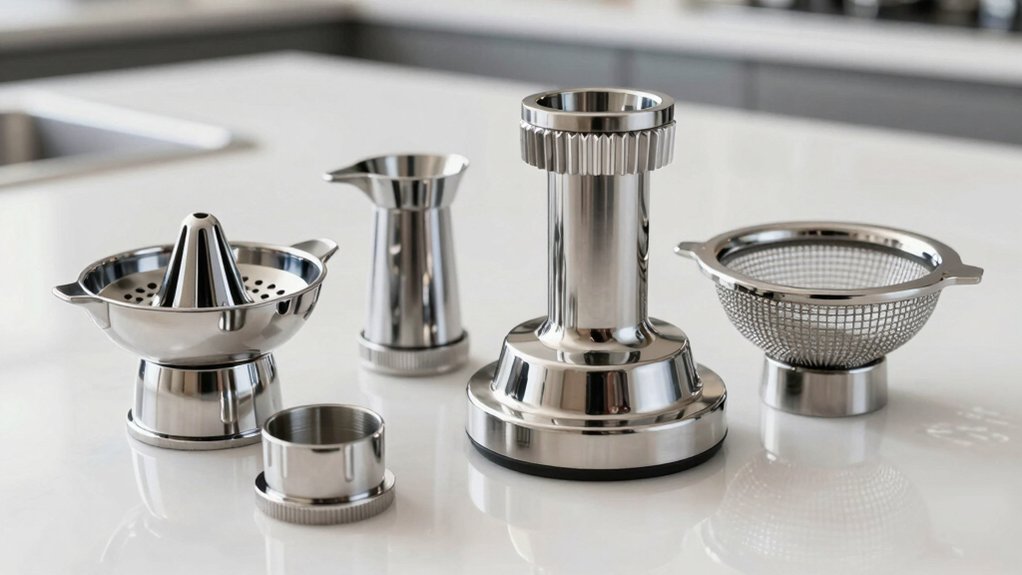
Juicer attachments extend what your machine can do beyond basic extraction. You’ll choose specialty pieces to tailor texture, flavor, and form, expanding what’s possible in one appliance. Attachments like pulp strainers and citrus presses streamline extracting, boosting juice yield by directing pulp and solids where you want them.
They aren’t just add-ons; they’re precision tools that adapt your juicer to diverse ingredients and recipes, from sorbet bases to nut butters. With the right accessory, you gain versatility—you can switch from smooth juice to thicker blends without swapping appliances.
Properly matched attachments ensure compatibility and efficiency, reducing waste and effort. Investing in the right set prolongs your device’s life and unlocks a broader range of healthy drinks and desserts you can confidently produce.
Common Attachments and Their Practical Uses
Understanding accessory compatibility, practical uses, and clutter reduction helps you predict which attachments fit your model and how they streamline your workflow. You’ll see how pulp strainers adjust pulp content, citrus squeezers maximize yield, and oversized pitchers simplify bulk batches, all while keeping storage clean and organized.
This starts the practical map for choosing attachments that minimize clutter and maximize efficiency.


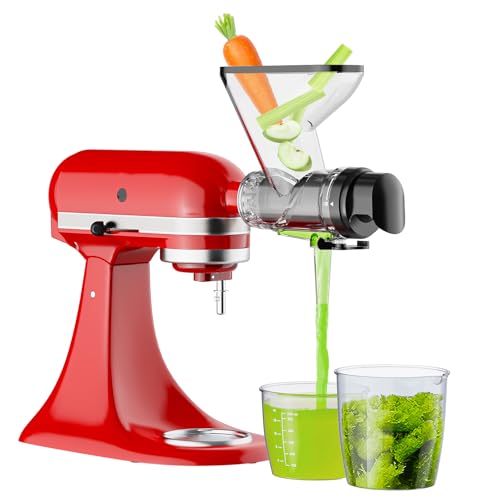


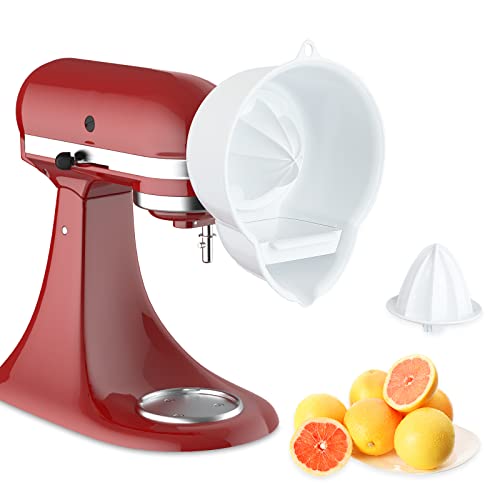
Accessory Compatibility Guide
Choosing the right attachments depends on brand and model, so always verify manufacturer specs before you buy. In this guide, you map compatibility like a schematic. You’ll find common accessories—citrus squeezers, pulp strainers, sorbet makers, larger pitchers—each aligned to specific juicing tasks.
Some universal items, such as cleaning kits and storage bottles, boost maintenance across multiple juicers. Specialized options, like wheatgrass or sugarcane juicers, fit only certain models, so confirm fit before purchasing.
Using incompatible attachments reduces efficiency, risks damage, or can void your warranty, undermining performance. Treat attachments as modular components: verify model-specific interfaces, rotor diameters, and seal types.
When in doubt, reference the manufacturer’s compatibility list and note any required adapters or step-downs for optimal operation.
Practical Uses Overview
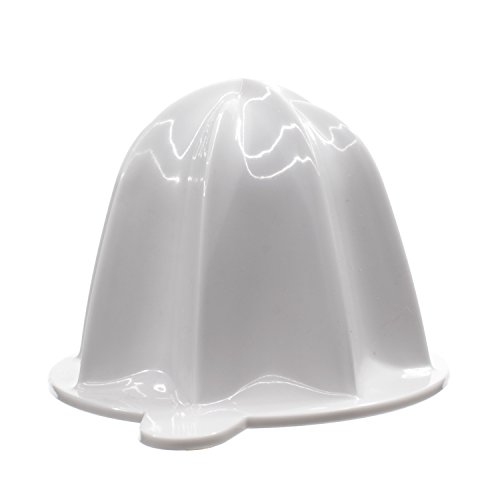
To get the most from your setup, start by matching attachments to the task at hand. Your citrus juicer accelerates juice extraction from lemons, limes, and oranges by halving fruit and pressing against a ridged cone, delivering maximum yield with minimal effort.
Attach the pulp strainer to tune texture—clear juice for cocktails or smoothies with added thickness when you prefer more body.
When heat-free desserts appeal, the sorbet maker converts frozen fruit into dairy-free treats, expanding use beyond simple juice extraction.
For efficiency, deploy larger pitchers and glass bottles to support batch juicing, storing fresh batches for later.
This toolkit emphasizes practical versatility over novelty, enabling predictable results with minimal setup.
Reduction of Clutter Risk
Are you keeping clutter at bay by sticking to essential attachments that deliver concrete benefits? You focus on practical choices, not excess gear. Use common attachments like pulp strainers and citrus squeezers to add function without crowding storage space.
By selecting versatile accessories, you reduce the need for multiple devices, saving both storage and money. When you store attachments in designated areas, you gain quick access and lower the risk of losing parts.
Avoiding unnecessary accessories trims the clutter from your juicing station, making organization straightforward. With a lean setup, your workflow stays efficient and predictable.
Precision in what you keep—coupled with tidy storage—protects your counter space and improves overall kitchen organization.
Are Attachments Worth It for a Versatile Kitchen
Attachments can considerably expand a juicer’s usefulness, turning it into a multi-purpose tool for sorbets, citrus juice, and pulp textures. You’ll find versatile attachments permit new modes, boosting efficiency without extra appliances.
A multi-purpose setup saves counter space while keeping tasks consolidated in one device. High-quality accessories, like glass bottles and pulp strainers, improve storage and customization for your juice or smoothies.
You don’t need every attachment; select only those aligning with your juicing preferences to avoid clutter and overspending. Properly chosen tools streamline cleaning and maintenance, reducing downtime between uses.
With the right add-ons, you gain broader recipe options and smoother workflows. In practical terms, attachments extend capability, practicality, and value, reinforcing a disciplined, schematics-driven approach to kitchen versatility.

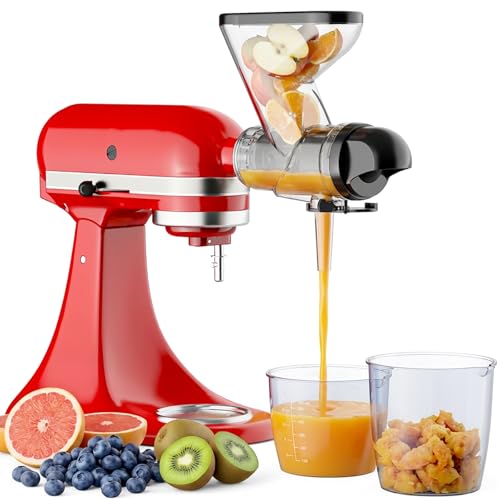
Matching Attachments to Your Juicer Model
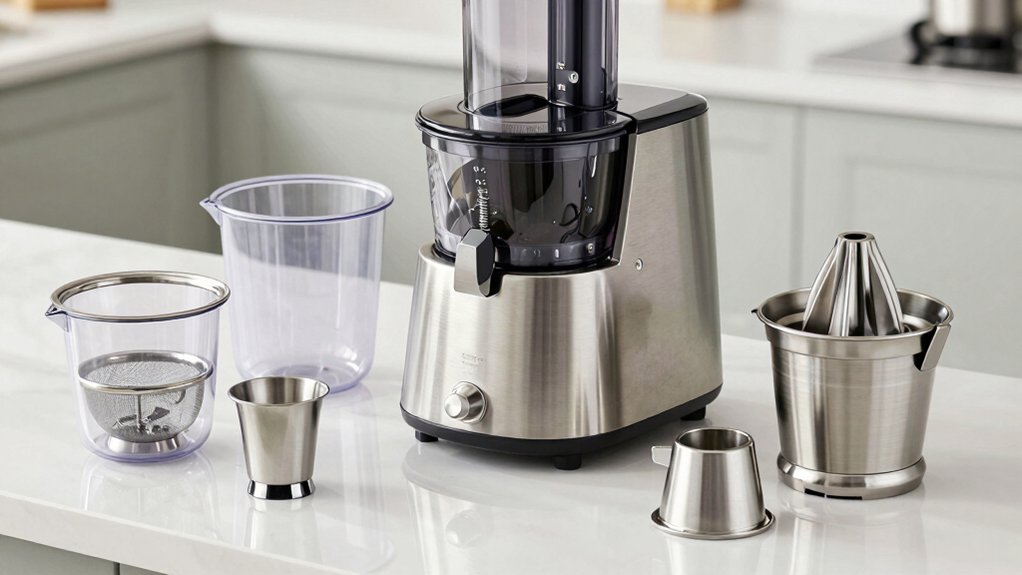
Matching attachments to your juicer model starts with a compatibility check: always verify that the accessory fits your specific juicer, since designs and sizes vary across brands. You must confirm compatibility before purchasing, because proprietary attachments can lock you into a single manufacturer.
Check the model and connection type—feed chute size, locking mechanism, and mounting interface—so you avoid misfit or waste. Some attachments are universal, but they offer limited functionality or require adapters, reducing efficiency.
Read manufacturer specifications and product descriptions carefully to ensure a proper fit. See how the attachment aligns with your model’s airflow and pulp path, then review user feedback for real-world fit.
When in doubt, contact the manufacturer to confirm compatibility and necessities.
How Attachments Enhance Texture and Pulp Control
You’ll tune texture with pulp-focused attachments, choosing strainer options to control pulp content and consistency. This setup lets you switch between smoother, thicker, or clearer juices by filtering foam and solids as you like.
Pulp Texture Control
Curious how pulp texture is controlled in juicing? You adjust this with pulp control gear and precise filtering paths. Pulp strainer and filters let you dial from smooth to thick, depending on your target juice consistency.
Some attachments, like pulp control screens, enable you to customize pulp levels during juicing, so you can hit your preferred texture without stops. Using a pulp strainer reduces foam and clarifies juice, which suits recipes calling for a clean, smooth baseline.
Thicker pulp attachments retain more fiber, boosting nutrition and creating a heartier mouthfeel. Incorporate different pulp control accessories to explore texture adjustment, mouthfeel, and flavor balance, ensuring you achieve the exact juice consistency you want for each recipe.
Attachment Variety Benefits
Attachment variety directly shapes texture and pulp control, expanding what you can achieve with the same juicer. You tailor pulp levels with pulp strainers, producing a clear, smooth juice or a thicker, smoothie-like consistency.
Different attachments, such as pulp separators and strainers, refine texture by removing excess pulp or retaining more for added fiber. Using a pulp strainer can extend shelf life by reducing pulp content, slowing oxidation and spoilage.
Attachments like enlarged pitchers and glass bottles enable batch processing and convenient storage of your preferred textures. The right combination of attachments enhances versatility, letting you create a range of textures and beverage styles from one machine.
Your setup becomes precise, practical, and schematically efficient in everyday use.
Tips for Choosing the Right Citrus, Wheatgrass, and Sorbet Tools
Choosing the right citrus, wheatgrass, and sorbet tools starts with compatibility and purpose: confirm your juicer model, then pick attachments designed for that system to maximize juice yield and versatility.
You focus on citrus tools for lemons, limes, and oranges to extract juice without peeling, saving steps.
For greens, wheatgrass attachments with specialized augers prevent clogging and boost yield from kale or spinach.
Sorbet maker options turn frozen fruit into creamy desserts, expanding use beyond liquids.
Always verify compatibility to prevent fit issues and performance loss.
Invest in dedicated wheatgrass tools and sorbet makers to improve juice quality and flavor consistency.
Prioritize purpose-built citrus tools and attachments that align with your juicer’s design for reliable, efficient operation.
Maintenance and Cleaning for Attachment Parts
Maintenance and cleaning of attachment parts keeps residue from building up, prevents mold, and preserves hygiene. You should disassemble all removable parts immediately after use and wash them with warm, soapy water or as recommended by the manufacturer.
Target crevices, screens, and difficult-to-clean areas with soft brushes or specialized tools to guarantee complete removal of residues. Don’t submerge the motor base or electrical components; wipe these areas with a damp, wrung-out cloth to avoid water damage.
After cleaning, dry all attachment parts thoroughly before reassembly. Regular maintenance extends the lifespan of components and sustains ideal juicing performance.
Keep a routine: inspect seals, re-seat parts correctly, and replace worn pieces as needed to maintain efficiency and hygiene. Consistency here minimizes downtime and supports reliable results.
Cost, Storage, and Avoiding Kitchen Clutter

Effective cost management starts with compact, stackable storage and multipurpose accessories that reduce the item count. You optimize storage by choosing compact containers and wall-mounted hooks or dedicated drawers for juicer parts, freeing counter space and improving access.
Avoid kitchen clutter with organization strategies that group related attachments together and minimize duplicates. Select multi-purpose attachments that serve various functions to cut the number of individual items stored, enhancing efficiency without sacrificing capability.
Prioritize dishwasher-safe accessories to simplify cleaning and maintenance, preserving order over time. Regularly declutter and donate unused attachments to prevent buildup and false economy.
Consistent inventory practices help you track what you own, reduce waste, and keep your culinary workspace neat, focused, and ready for daily juicing.
Quick Start Tips to Maximize Attachment Fun
Maximize attachment fun by learning the basics fast and putting theory to work. You start by reading the manufacturer’s instructions to understand how each attachment fits and functions properly.
Use the correct attachment for specific tasks, such as a sorbet maker for frozen desserts or a pulp strainer for adjusting juice pulp levels.
Pre-chill or prepare ingredients as recommended to improve the efficiency and results of attachments like the sorbet maker.
Regularly cleaning attachments after use prevents residue buildup and maintains ideal performance.
Experiment with different recipes and techniques to discover the full versatility of your juicer attachments and enhance your juicing experience.
Focus on quick, practical steps that boost overall performance, and track results for future refinements in recipes and techniques.
Conclusion
Attachments aren’t extras; they’re the switches and dials that unlock your juicer’s full potential. Each tool is a compass, guiding texture, pulp, and taste—symbolic seeds growing into your kitchen’s best routines. When you match, maintain, and store them well, you’re wiring a compact system for daily clarity: faster prep, cleaner cleanup, consistent results. So choose wisely, care deeply, and let the right attachments transform a simple ride into a precise, dependable workflow—the quiet power behind every glass.