
Table of Contents
To juice hard veggies safely, start with thorough cleaning: rinse carrots and beets under cold water, scrub skins, and trim tops. Peel thick skins if needed, chop into small pieces, and use a sharp, sturdy juicer. Feed gradually, alternating hard and soft produce, and use a pusher. Stop to clear jams, unplug first, and disassemble as required. Rinse and dry parts, strain juice for smoothness, and store cold. With these steps, you’ll master safe, efficient juicing—and you’ll uncover more practical tips as you continue.
Cleaning and Preparing Your Produce

To start, rinse carrots and beets thoroughly under cold running water to remove dirt and bacteria before peeling or chopping. You’ll maximize cleanliness by using a vegetable brush to scrub the skin, ensuring all soil and debris are eliminated.
Remove green tops and stems from beets and carrots to prevent spoilage and prepare for juicing, a simple step that extends freshness.
Peel beets and carrots if desired, especially when skin is thick or blemished, to improve juice flavor and texture without risking bitterness.
Cut the vegetables into small, uniform pieces that fit easily into your juicer’s feed chute, promoting safe, efficient processing and consistent extraction.
Carrots and Beets respond best to this careful preps, delivering cleaner, smoother juice.
Tools and Equipment You’ll Need
Here’s what you’ll need for efficient juicing of hard veggies like carrots and beets: a sturdy, high-quality juicer (preferably a masticating or centrifugal model) with a wide chute or sharp blades to handle tougher produce without clogging.
Choose a juicer that can process hard vegetables consistently, minimizing heat buildup and pulp. Ensure it comes with a wide-feed option or robust blades to reduce prep time.
Prepare produce by washing thoroughly, peeling if needed, and chopping into smaller pieces to prevent strain on the machine and improve juice extraction.
Always follow the manufacturer’s instructions for assembling, operating, and cleaning your juicer to maintain safety and ideal performance.
Consider using a pusher tool to guide hard vegetables into the chute, reducing injury risk and ensuring steady processing. juicer, hard vegetables.



Safe Knife Handling for Juicing
When you’re juicing hard veggies, safe knife handling starts with a sharp, stable blade and a solid cutting board.
You reduce slips by using a sharp, stable knife and cutting on a sturdy surface.
Cut hard vegetables like carrots and beets into smaller, uniform pieces to guarantee safe and efficient feeding into the juicer.
Keep your fingers curled inward and away from the blade edge while chopping to avoid accidental cuts.
Use a vegetable peeler or a paring knife to remove tough or dirty skins before chopping for safer handling.
Maintain focus and avoid distractions during knife use to minimize injury risk when preparing hard vegetables.
This is essential knife safety and efficient vegetable prep for juicing.
Choosing Between Juicer and Blender

Juicers excel at extracting juice from hard vegetables like carrots and beets, delivering a clear liquid with minimal pulp and quick processing—typically about 30 seconds to a minute per batch.
You’ll choose based on goal: nutrition and clarity favor juicers, especially masticating ones that preserve nutrients and enzymes.
If you want a smooth, vegetable-forward beverage, a blender can handle hard veg, but you’ll need straining to separate juice from pulp, adding steps and time.
Blenders offer versatility for mixed textures and require added liquids to improve extraction.
For speed and consistency with minimal cleanup, juicers win for hard veggies; for versatility and recipe flexibility, blenders do the job—with extra effort.
Base your pick on desired texture, nutrient retention, and workflow. juicers, blenders.
Washing and Drying Produce Thoroughly
Rinse your carrots and beets thoroughly under cold running water to remove dirt, pesticides, and bacteria. Using a vegetable brush on unpeeled roots can help lift residues effectively.
Dry the produce completely with a clean towel or salad spinner to prevent moisture from compromising juicing performance.
Remove any visible dirt, bruises, or damaged areas before juicing to guarantee safety and ideal flavor.
Rinse Thoroughly Now
Start by rinsing carrots and beets under cold, running water for at least 30 seconds to remove dirt, bacteria, and pesticide residues; use a vegetable brush to scrub crevices and indentations thoroughly. You’ll maximize surface cleanliness, reducing contaminants before juicing. Rinse applies to all involved vegetables, ensuring consistent safety standards across produce.
After scrubbing, consider a brief vinegar soak (1:3) for enhanced microbial reduction, then rinse again to remove acidity. Inspect each piece for surface damage or mold; trim any questionable areas. Dry thoroughly with a clean cloth or paper towels to minimize moisture that fosters storage bacteria.
Remember to store rinsed vegetables properly, ready for juicing, and avoid cross-contamination by keeping wash water separate from storage areas. This approach emphasizes rinsing, vegetables, and evidence-based prep for safer juicing outcomes.
Dry Before Juicing
Before juicing, make sure produce is completely dry. You should thoroughly wash carrots and beets under cold running water to remove dirt, pesticides, and bacteria, then scrub the surface with a vegetable brush, especially if unpeeled.
Pat the produce dry with a clean towel or paper towels to prevent excess moisture, which can cause splattering during juicing.
Dry produce reduces the risk of clogging the juicer and minimizes mess, keeping your setup safer. Removing moisture also improves juice extraction efficiency, delivering a higher yield from hard vegetables.
By ensuring dryness, you avoid unnecessary downtime between batches and maintain consistent juice texture.
This dry-before-juicing step is a simple, evidence-based practice that supports safer, cleaner, and more efficient juicing results.
Cutting Techniques for Hard Vegetables
When cutting hard vegetables, aim for small, uniform pieces to prevent strain on blades and guarantee consistent processing. You’ll reduce resistance by using a sharp chef’s knife to slice evenly, lowering slip risk and ensuring uniform size for smoother processing.
For efficiency, chop carrots and beets into 1–2 inch chunks that fit comfortably into the feed chute or blender jar. Maintain steady, controlled pressure as you cut to stay safe and achieve clean, precise slices.
In practice, prioritize consistency: uniform pieces cut down processing time and improve juicer performance. Alternate adding soft ingredients like cucumber or lemon with hard vegetables when using a juicer, helping the machine process smoothly.
This approach reflects proven cutting techniques for hard vegetables.
Storing Fresh Produce for Juicing
To keep juicing fresh produce at peak quality, store carrots and beets in a cool, dark place or the refrigerator crisper to preserve freshness and prevent sprouting. You should use perforated plastic bags or breathable containers to allow airflow and reduce moisture buildup that can cause spoilage.
Aim to consume or process carrots and beets within 1–2 weeks of purchase for ideal nutrient content and flavor. Avoid washing produce until just before juicing, since excess moisture speeds decay during storage.
Regularly check stored vegetables for signs of mold, soft spots, or sprouting, and discard any deteriorated items promptly. This practice supports reliable, high-quality juice and minimizes waste through better storage of fresh produce.
How to Feed Produce Through the Juicer

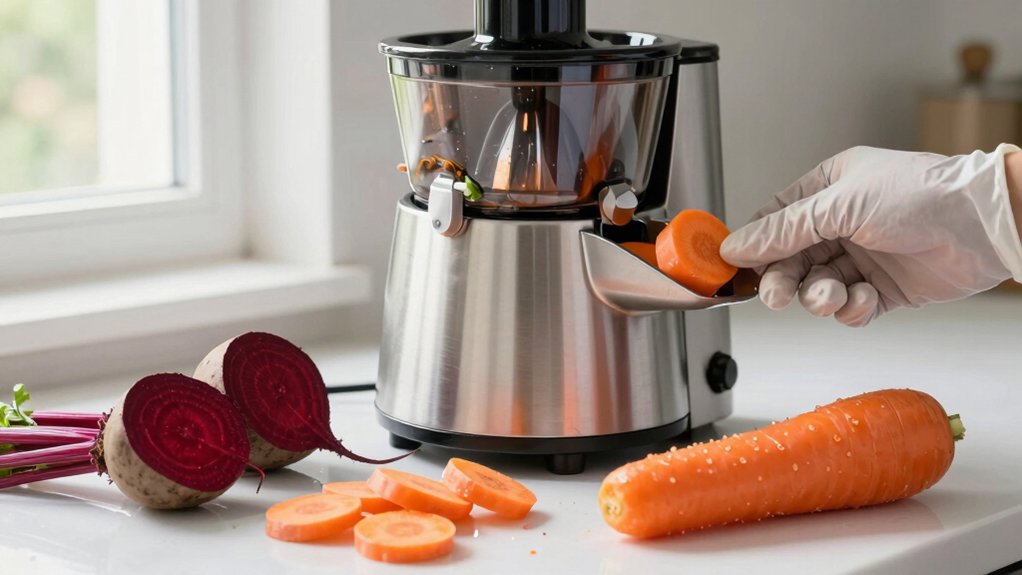
Feeding produce through the juicer efficiently starts with prep and technique. You’ll cut hard vegetables like carrots and beets into smaller, uniform pieces to prevent blockages and guarantee smooth feeding through the juicer chute.
Alternate feeding hard vegetables with softer ingredients to facilitate easier processing and reduce strain on the juicer. Use the pusher tool to gently guide produce into the juicer, applying steady pressure without forcing or jamming the machine.
Always feed the produce vertically into the chute, ensuring the pieces are aligned for even extraction and to avoid jamming. Clean the juicer regularly during use, especially after juicing dense vegetables, to prevent pulp buildup and maintain ideal feed flow.
This approach supports efficient, safe extraction of hard vegetables and feeding produce.
Managing Juicer Jams and Blockages
To prevent jams, start with small carrot and beet pieces and feed them gradually, not in big chunks. An adjustable-speed juicer helps you control the flow, so use a slower setting for tougher produce and pause to clear pulp as needed.
Alternate hard veggies with softer ingredients and routinely stop to clean the chute, ensuring you prep produce—washed, peeled if needed, and cut to manageable sizes—before juicing.
Clearing Juicer Jams Quick
When a jam from hard veggies like carrots or beets happens, shut off and unplug the juicer first to prevent injury.
You then gently disassemble accessible parts, like the feed chute and blade assembly, to access lodged produce.
Use a plastic or wooden tool, such as a spatula or brush, to carefully dislodge stuck pieces without scratching or bending components.
Run a small amount of warm water through the unit to flush out remaining pulp or blockages.
Reassemble, resume operation, and test with a small batch before full juicing.
Regular post-use cleaning and inspection prevent jams and keep performance consistent.
For best results, incorporate this quick-clearing routine after juicing tough produce, and monitor for any unusual resistance.
Hard Veggie Juicing Tips
Hard veggie juicing can jam a machine if you don’t manage it proactively. To minimize jams, cut carrots and beets into smaller, uniform pieces so the juicer handles them without overloading. Alternate hard vegetable pieces with softer ingredients like cucumbers or leafy greens to help clear blockages and keep the flow steady.
Periodically pause and turn off the juicer to manually clear any stuck fibers or pulp before they form a clog. Clean the pulp chute and blades regularly; buildup here can impede throughput and trigger jams. Use a pusher or tamper carefully to guide hard vegetables through the chute, avoiding excessive force that could damage the machine.
These juicing tips maintain performance and prolong equipment life. hard vegetable, juicing tips
Prevent Blockages Early
Prevent blockages before they start by feeding your juicer in a controlled, methodical way. You’ll minimize strain on the motor and reduce jams by cutting hard vegetables into smaller pieces and feeding gradually. Alternate with softer ingredients—leafy greens or cucumber—to help clear paths and keep operation smooth.
Regularly check and clean the pulp filter and chute to remove buildup that could cause clogs. If a jam forms, use the reverse function to dislodge fibers and restore flow. Avoid forcing large quantities of hard vegetables at once; practice gradual feeding for safer, more efficient juicing.
This approach supports juicing safety and prolongs your juicer’s life while you consistently extract nutrients from hard vegetables.
Straining and Clarifying Your Juice
Straining your juice with a fine mesh or nut milk bag removes pulp and foam, giving you a smoother, clearer drink. You’ll improve texture by using a double layer of cheesecloth or a dedicated strainer to separate fibrous particles from the juice.
For added clarity, let the extracted liquid sit a few minutes so any remaining foam or sediment rise to the surface before pouring. Press or squeeze the pulp gently during straining to maximize juice extraction while reducing excess fibrous material.
Straining is especially important for hard vegetables like carrots and beets, where grit can otherwise mar mouthfeel and appearance. This step directly enhances clarity and visual appeal, supporting a cleaner, more palatable juice.
Flavor Enhancers Without Overdoing Sugar
To amplify flavor without boosting sugar, start with bright acids, herbs, and gentle spice—tools that enhance root-vegetable juice while keeping sweetness in check.
You’ll notice lemon or lime juice lifts brightness without adding natural sugars, and fresh herbs like parsley, mint, or cilantro punch up depth without sweeteners.
Add warmth and dimension with spices such as ginger, cinnamon, or turmeric to mask earthy notes while preserving integrity.
Pairing root veggies with tart apples or cucumbers provides balance, reducing perceived sweetness naturally.
For a smoother profile, strain through a fine mesh or nut milk bag to highlight flavor nuances over sweetness.
These flavor enhancers support more satisfying juice without relying on added sugar, aligning taste with healthier natural sugars.
flavor enhancers, natural sugars.
Storing Your Juice Safely
Storing your juice safely starts with airtight glass containers to prevent oxidation and preserve nutrients. Then, keep everything cold to slow bacterial growth. You should refrigerate at or below 40°F (4°C) and aim to consume within 24 to 48 hours for maximum freshness and safety.
Label each container with the preparation date so you can track freshness. Discard any juice that develops an off smell or unusual appearance. Avoid leaving juice at room temperature for more than 2 hours to minimize bacterial growth.
If you must freeze, use freezer-safe containers. Leave space for expansion, and plan to use the juice within 3 months for best quality. Prioritize airtight glass containers and consistent refrigeration for reliable results.
Cleaning and Maintaining Your Equipment
Clean as you go and implement a deep clean routine to prevent residue buildup and maintain performance.
After juicing, disassemble the parts, rinse with warm, soapy water, and scrub blades and filters regularly to avoid clogs.
Dry all components thoroughly before reassembling or storing to deter mold and bacterial growth.
Clean As You Go
Starting clean as you go keeps your juicer reliable and safe: rinse parts right after use to prevent pulp from drying and sticking, which makes cleaning quicker and less annoying.
You should disassemble the unit carefully per the manufacturer’s instructions so all components stay accessible for cleaning. Use a brush or sponge to scrub juicer screens and blades thoroughly, removing residual carrot and beet fibers that can clog the equipment.
Regularly check and clean the juicer’s filter and pulp container to prevent buildup that could affect juice quality and machine performance.
Dry all parts completely before reassembling or storing to prevent mold growth and extend longevity.
Practice clean as you go and juicer cleaning consistently for best results.
Deep Clean Routine
Keeping your juicer in top shape means more than quick rinses after use. To perform a thorough deep clean, disassemble it and rinse all parts with warm water immediately after each session to prevent residue buildup. Use a brush or sponge to scrub the blades and mesh screens, removing stubborn pulp or fibers, especially from carrots and beets.
Periodically soak removable parts in a 1:1 vinegar-water solution to eliminate mineral deposits and sanitize. Check the manufacturer’s instructions for specific cleaning guidance and avoid abrasive cleaners that can harm components.
Regularly inspect and replace worn filters and seals to maintain performance and prevent contamination. Focus on the mesh strainer during deeper cleaning, ensuring unobstructed flow and consistent juice quality.
Serving Tips and Freshness Checklist
To get the best flavor and nutrient punch, serve freshly juiced hard vegetables like carrots and beets right away.
For maximum freshness, plan portions that match your intake and avoid overproducing waste. If you have leftovers, store juice in airtight glass containers in the refrigerator and consume within 24 to 48 hours to preserve freshness and prevent spoilage.
Before juicing, ensure vegetables are thoroughly washed and scrubbed to remove dirt and pesticides, especially since skins are often left on.
Strain the juice through a fine mesh or nut milk bag to remove pulp and foam, yielding a smoother drink.
Check for a vibrant color and fresh aroma as indicators of quality; dull or off-smelling juice should be discarded.
Conclusion
You’ve got the basics to juice hard veggies like carrots and beets safely and effectively. Stick to clean prep, sharp tools, and thorough washing, then choose a juicer or blender that fits your routine. Use small flavor tweaks instead of sugar spikes, and store promptly to preserve nutrients. Think of your kitchen as a lab: consistent technique, evidence-backed tweaks, and practical testing will keep you juicing confidently for the long haul. Your results will speak for themselves.