

Table of Contents
Beetroot juicer recipes are a quick, tasty way to boost your veggie intake and energy. You’ll get heart-healthy nitrates, antioxidants, and nutrients like iron, folate, and vitamin C in one glass. Start with fresh beets (peel optional) and pair with apples or citrus to balance earthy flavors. Use a masticating or blender method for nutrients, then store in airtight glass containers. You’ll discover flavor tweaks, storage tips, and beginner-friendly ideas as you go.
Why You’ll Love Beetroot Juicer Recipes

Beetroot juicer recipes are a smart choice if you want a quick, tasty way to boost your daily veggie intake. You’ll love how beets deliver a natural energy lift, thanks to iron, vitamin C, and antioxidants that nourish your body.
Each glass of juice supports a healthy lifestyle without extra fuss, because these recipes come together in just a few minutes. The nitrate content can help support cardiovascular health, so you feel steadier throughout the day.
When you blend beets with fruits like apples and oranges, you get a flavor balance that’s both delicious and nutrient-rich, enhancing your juice’s appeal and health benefits.
Fresh, raw beets preserve maximum nutrients and earthy flavor, keeping your routine simple and healthy.
Key Benefits of Beetroot Juice
Beetroot juice supports heart health with natural nitrates that can help lower blood pressure, while its rich antioxidants fight inflammation.
It’s nutrient-dense, delivering folate, potassium, vitamin C, and other essentials in a single glass.
Plus, regular use can boost stamina and energy by enhancing nitric oxide production for better circulation.


Heart Health Boost
If you want a heart-healthy boost, the nitrates in beetroot juice convert to nitric oxide in your body, helping relax blood vessels and lower blood pressure. You’ll likely notice improved endothelial function as you sip regularly, supporting overall heart health.
Beetroot juice delivers antioxidants like betalains that help reduce inflammation linked to cardiovascular disease. That anti-inflammatory effect, paired with better blood flow, can enhance exercise performance by delivering more oxygen to your heart and muscles.
With consistent use, studies show reductions in both systolic and diastolic blood pressure for people with hypertension, reinforcing beetroot juice as a practical addition to a heart-conscious routine.
Prioritize quality juice and balanced meals to maximize heart health benefits.
Nutrient Density
You’ve already seen how beetroot juice supports heart health; now its standout feature is nutrient density. This nutrient density means you get a low-calorie beverage brimming with essential vitamins like vitamin C and folate, plus minerals such as potassium and manganese.
This nutrient density supports immune health and detoxification, making beetroot juice a functional ally beyond flavor. Antioxidants, including betalains, help counter inflammation and oxidative stress, protecting cells as you move through daily activities.
Regular consumption can improve blood circulation and oxygen delivery to tissues, boosting overall energy and performance. In short, you’re drinking a compact nutrient package with meaningful health benefits that extend past taste, reinforcing beetroot juice as a reliable, evidence-based addition to a balanced diet.
Natural Energy Lift
Natural energy lifts start with beetroot juice’s ability to boost nitric oxide in your blood, which improves blood flow and delivers more oxygen to working muscles. You’ll notice a natural energy lift as stamina rises and fatigue fades during workouts.
The high nitrate content enhances athletic performance, especially in endurance activities, helping you sustain effort longer. Regular consumption can also lower blood pressure by relaxing vessels and supporting vascular function, contributing to steady energy throughout the day.
Beetroot juice provides a practical, evidence-based edge for workouts, not just a quick spike. Its antioxidants and anti-inflammatory compounds support faster recovery and reduce exercise-induced muscle soreness, so you stay ready for your next session.
For sustained endurance, reach for beetroot juice whenever you train. beetroot juice, natural energy, endurance.
Beetroot Juice Ingredient Notes
Beetroot juice starts with choosing fresh, firm beets that are unblemished and thoroughly washed to remove dirt and pesticides. You’ll select red, golden, or striped beets for juicing, since each variety brings distinct flavor and color.
You can juice beets with or without their greens; greens are nutritious and can be cooked like Swiss chard if you prefer. There’s no need to peel before juicing—just scrub to remove surface dirt.
If you want a milder, smoother juice, you can strain to mellow earthy compounds. When you list ingredients, include beets as the star, then balance with complementary produce in your juicing playlist.
Fresh water or citrus can brighten flavors, ensuring the final drink stays vibrant and drinkable.
Equipment You’ll Need for Juicing
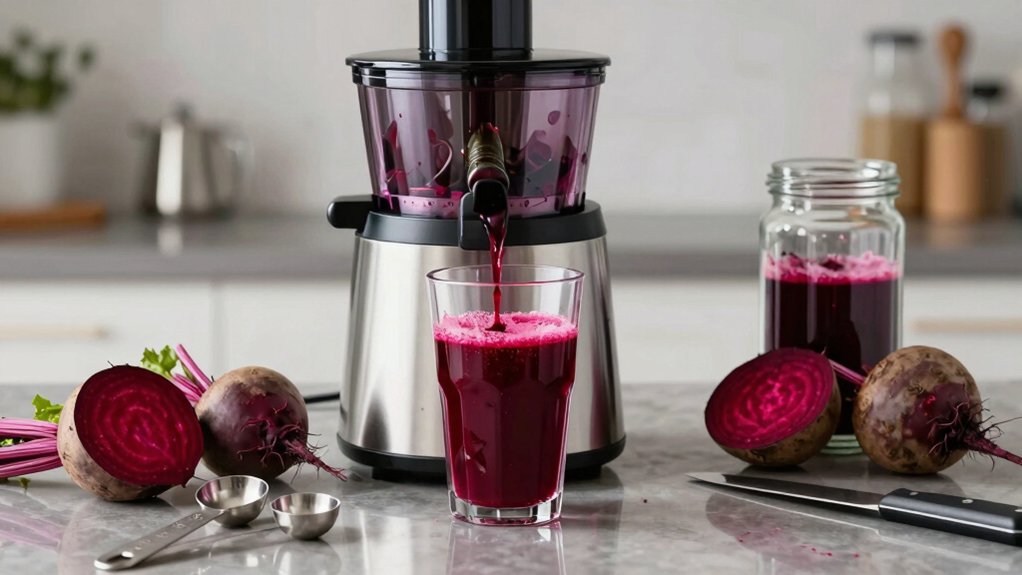
You’ll get the best results by choosing a high-quality cold-press or masticating juicer, since it preserves nutrients and flavor better than centrifugal models.
Look for a wide feeding chute to cut prep time, plus a fine mesh strainer or nut milk bag if you want a smoother juice.
You’ll also want reusable glass bottles for storage and a sharp prep setup (peeler, board, knife) to streamline juicing.
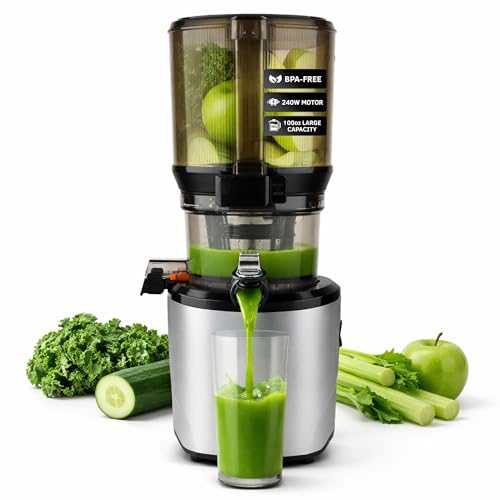


Juicer Types Overview
If you’re new to juicing, start by choosing the right machine for your needs: masticating juicers, also called slow or cold-press juicers, run at low speeds to preserve nutrients and produce pulpless juice.
Centrifugal juicers spin fast to extract juice quickly and affordably—though they may deliver less nutrient-dense juice over time.
In practice, a masticating juicer yields higher juice extraction with greater nutrient retention, making it ideal for regular use.
Centrifugal juicers shine for occasional juicing, offering quick results and lower upfront cost.
Your choice should align with budget, desired juice quality, and frequency of use.
Essential Gear List
Starting with the right tools makes beet juicing smoother and more enjoyable: a high-quality masticating juicer helps preserve nutrients and reduces foam, while a centrifugal model is fine for quick, occasional juice.
For texture control, use a fine mesh stainless steel strainer or a nut milk bag to remove pulp if you prefer smoother Beet juice.
Before you start juicing, prep with a sharp knife and vegetable peeler to handle beets, carrots, and other produce efficiently.
An optional citrus reamer or juicer helps extract juice from lemons or oranges used in blends.
Store your finished juice in reusable bottles, preferably glass, to keep flavor and nutrients intact in the fridge for 2–3 days.
Reusable bottles ensure minimal waste and easy portioning.



Setup & Cleaning Tips
Setting up and cleaning your juicer efficiently starts with choosing the right machine and prepping it for easy maintenance. For beets, use a dedicated cold press or masticating juicer to maximize nutrient retention and smooth operation.
Before you juice, thoroughly wash all produce and disassemble parts as needed to prevent residue buildup and maintain hygiene.
After juicing, clean juicer components immediately with warm water and a brush to remove beet pulp and prevent staining or clogging. Use a small brush or toothbrush to reach the mesh strainer or filter, ensuring ideal performance.
Regularly check and replace worn parts such as gaskets and blades to keep the juicer operating efficiently and extend its lifespan.
Setup, cleaning, juicer.
Preparing Beetroot for Juicing
Before you juice, rinse fresh beets thoroughly under cold water to remove dirt and residues, ensuring you start with clean produce.
When selecting beets, choose firm, unblemished roots with smooth skin, avoiding cuts or soft spots.
Trim the tops and roots, but leave the peel on—it carries nutrients and boosts flavor.
Cut beets into smaller chunks or slices so they feed easily into the juicer or blender, promoting efficient processing.
No boiling or cooking is needed; raw beets maximize nutrient retention for juicing.
Keep beets dry after rinsing to prevent dilution of your juice.
Prep sets the foundation for vibrant, nutrient-dense batches, helping you achieve consistent quality with every combination you prepare for beets, preparing, juicing.
The Juicing Process With a Cold-Press Juicer
A cold-press juicer uses slow, hydraulic pressure to extract juice, preserving more nutrients and enzymes than traditional centrifugal juicers.
You start by washing and trimming beetroot and other ingredients, cutting them into pieces that fit the feed chute. Feed the ingredients gradually, using the pusher to guide them through the auger or pressing mechanism without overloading.
Collect the juice in a container, and if you want a smoother texture, strain through a fine mesh to remove pulp.
The juicing process with a cold press juicer minimizes heat, helping maintain nutrient integrity.
After you’re done, clean the parts thoroughly to prevent residue buildup and guarantee ideal performance for your next batch of beetroot juice.
Blender Method for Beetroot Juice

If you’re using a blender, start by chopping beets, apples, carrots, citrus, cucumber, and ginger for smoother blending.
Use about 1 cup of water and blend on high for 60–90 seconds.
Then strain through a fine-mesh or cheesecloth to extract the juice.
You can re-blend with more water for a lighter consistency or save the pulp for other recipes to reduce waste.
Blender Prep Tips
To blend beetroot juice effectively in a blender, start by chopping raw beets into small pieces so they blend smoothly and don’t overwork the motor.
You’ll improve texture by adding chopped beets with other ingredients like apples, citrus, and ginger, then pour in about 1 cup of water to facilitate blending.
Blend on high speed for 60 to 90 seconds until the mixture is thoroughly liquified and smooth.
For best results, prep everything before you start the blender, and use a sturdy blender with a tight lid to minimize splatter.
Strain the blended mixture through a fine mesh sieve or cheesecloth to separate juice from pulp, pressing gently to extract maximum liquid.
Store or serve immediately, refrigerating up to 48 hours.
beets, blender, prep.
Juice Extraction Steps
To extract beetroot juice with a blender, begin by chopping fresh beets into small pieces to guarantee smooth processing. You’ll combine the chopped beets with other ingredients, such as apples, citrus, ginger, and a cup of water in the blender.
Blend on high speed for 60-90 seconds until the mixture is thoroughly liquified and smooth.
Next, strain the blended mixture through a fine mesh sieve or cheesecloth to separate the juice from the pulp, pressing gently to extract maximum liquid.
Discard or repurpose the pulp, and transfer the strained beet juice to a jar or glass for immediate consumption or storage.
This method emphasizes the blend of produce, effective strain, and practical ingredients for fresh juice.
Flavor Enhancers and Variations
Flavor enhancers can lift beet juice from earthy to bright and balanced, and you have plenty of tasty options to customize your sip. You’ll find that citrus elevates natural sweetness, with lemon or orange sharpening tang and clarity.
Ginger adds a sharp kick and potential health perks, while turmeric offers an earthy, anti-inflammatory note. Sumac provides a lemony brightness and vibrant color, expanding flavor profiles without masking beetnotes.
Greens like lime or grapefruit boost nutrition and introduce subtle, invigorating dimensions. Herbs also play a role, guiding aroma and balance—think fresh cilantro, dill, or parsley to finish a glass.
Combine these elements thoughtfully to craft a tailored beverage that suits your taste and mood, keeping the earthy roots of beets at the center.
Storage and Shelf Life
Now that you’ve explored flavor enhancers, you’ll want your beet juice to stay fresh as long as possible. Storage and shelf life hinge on minimizing air exposure and light.
In the refrigerator, freshly made beet juice lasts about 3 to 5 days when kept in an airtight container; tight sealing helps preserve the freshness. Using glass bottles or jars further protects against oxidation and flavor loss.
For longer storage, freeze beet juice in small, reusable containers for up to 3 months. While refrigeration is best for daily use, freezing preserves nutrients until you’re ready to enjoy.
How to Adjust Tartness and Sweetness
When adjusting tartness and sweetness, start with the basics: sweeter ingredients like apples and carrots add natural sugars, while citrus boosts tartness.
To increase sweetness, add more apples or carrots, then taste test before serving.
For tartness, incorporate extra citrus like lemon or orange, or a small amount of honey or agave syrup if desired.
Straining the juice can mellow earthy and tart flavors, making the drink taste smoother and less tangy.
Balancing tartness and sweetness depends on the ratio of ingredients; typically, a 2:1 ratio of sweet to tart ingredients works well.
Gradually adjust the quantities and taste as you go, since citrus acidity varies and affects overall flavor, ensuring a pleasant sweet-tart balance.
Pulp: To Keep or Strain
If you’re aiming for a smoother, more refined juice, straining out the pulp is often the way to go; a fine mesh or cheesecloth will remove most solids, yielding a clearer beverage. You’ll notice a lighter texture and less earthiness when you strain, which some prefer for everyday sipping.
Leaving pulp in the juice can add fiber and a thicker texture, boosting nutritional content and body. However, pulp may slightly shorten shelf life because enzymes can promote spoilage.
The choice isn’t black and white: it hinges on your texture preference, flavor goals, and how you plan to store the juice. In practice, experiment with half batches to gauge how the pulp affects taste, texture, and your overall enjoyment.
pulp, strain, texture.
Serving Suggestions and Pairings
Beetroot juice pairs beautifully with a range of meals and snacks, making it easy to incorporate into daily eating routines. You’ll find it boosts breakfast balance when paired with protein-rich options like spinach frittatas or egg muffins, supporting steady energy.
For a vibrant snack, serve beet juice alongside smoked salmon sandwiches or veggie wraps, adding freshness and color without sacrificing nutrition. If you want a more filling option, combine beet juice with whole-grain toast topped with avocado or hummus to create a balanced meal.
A splash of lemon or orange juice elevates brightness and widens serving possibilities. You can also blend beet juice with bananas or berries for a nutrient-packed smoothie anytime. beet juice, pairings, serving.
Quick 4-Ingredient Beet Juice Idea
A quick 4-ingredient beet juice is a breeze to make: fresh beets, apples, citrus, and a bit of ginger come together in under 10 minutes. You wash and chop the ingredients, then juice or blend and strain for a smooth beverage.
Using fresh, unblemished beets and sweet apples like Gala or Fuji enhances natural flavor and nutrition. This simple recipe can be prepared in minutes with a juicer or blender, making it ideal for busy mornings.
The resulting beet juice is rich in nitrates, vitamin C, and antioxidants, supporting heart health and sustained energy. For a bright note, squeeze a touch of citrus over the glass, and enjoy a revitalizing beet recipe you can repeat daily. beet juice recipe, beet.
Common Mistakes and How to Avoid Them
Be mindful of over-oxidation by preparing and consuming beet juice promptly, since exposure to air can dull flavor and nutrients. Manage pulp by balancing strain and texture—don’t over-process, and decide if you want a smoother or chunkier finish.
Keep freshness in mind with proper storage and quick use, as warm or reheated juice loses vibrancy and safety.
Avoid Over-oxidation Mistakes
To avoid over-oxidation, act quickly after juicing and minimize air exposure. You reduce oxidation by using a sealed, airtight container immediately, which limits oxygen contact and slows nutrient loss.
Aim to consume the juice quickly; citrus or lemon can act as antioxidants and further slow browning by inhibiting enzymes. Preserve color and nutrients by avoiding prolonged exposure to heat and refraining from blending beet juice, which accelerates oxidation.
Store juice in a cool place, ideally refrigeration, and keep it covered to minimize air contact. When possible, juice in small batches so you can drink it within 24 hours.
This approach helps maintain vibrant color, flavor, and nutritional content without unnecessary waste. oxidation, airtight container, consume quickly.
Proper Pulp Management
Even small pulp mistakes can affect both texture and flavor, so manage pulp wisely to keep beet juice bright and smooth. To start, avoid over-straining the pulp by pressing too hard, which can clog the system and reduce juice yield. Use a fine-mesh strainer rather than a coarse one to remove excess pulp for a smoother juice texture.
If your juicer offers a pulp-removing attachment or setting, enable it to prevent pulp buildup and improve clarity. Remember, leaving too much pulp behind thickens the juice and can mask delicate flavors, so adjust your strainer choice accordingly.
For sustainability, consider repurposing pulp in cakes or soups rather than discarding it. This approach embodies practical pulp management and a cleaner, more enjoyable juice experience.
Freshness and Storage Tips
Freshness and storage mistakes can quickly erode beet juice’s brightness and nutrients, so nailing proper handling matters from the moment you’re done juicing.
To maximize quality, store freshly made beet juice in airtight glass containers to prevent oxidation and nutrient loss. Consume within 3 to 5 days for ideal freshness and maximum nutrient retention.
Avoid plastic bottles, since chemicals can leach into the juice and degrade quality. Keep beet juice refrigerated at or below 40°F (4°C) to slow bacterial growth and preserve flavor.
Don’t leave pulp or juice at room temperature for extended periods, as this increases spoilage risk and diminishes nutritional value.
Prioritize proper refrigeration, and label containers with dates to track freshness and ensure consistent results.
Beet Juice for Beginners: Tips to Get Started
Beet juice is beginner-friendly when you start small and build up. You’ll ease into the earthy flavor by beginning with one medium beet and work up as you like. Thoroughly washing and peeling beets helps prevent dirt and reduces earthiness in the juice.
If you don’t have a dedicated juicer, a blender with a fine mesh strainer is an accessible alternative that still yields smooth juice. To improve palatability for beginners, combine beets with sweeter fruits like apples or carrots.
Fresh juice tastes best when consumed soon, so store it in airtight containers in the refrigerator; it stays fresh for up to 3 days and minimizes nutrient loss.
Beet juice, beginners, juicing beets.
Conclusion
Want healthier habits you can actually stick with? Start with beetroot juicer recipes that delight, energize, and nourish. Begin with simple, clean ingredients, adjust to your taste, and trust your body’s signals. Embrace fresh produce, embrace consistency, embrace curiosity. Mix flavors, experiment with pairings, and track how you feel after each juice. Stay hydrated, stay mindful, stay motivated. Savor the process, savor the results, savor the journey toward vibrant health. You’ve got this—juice on, every day.