
Table of Contents
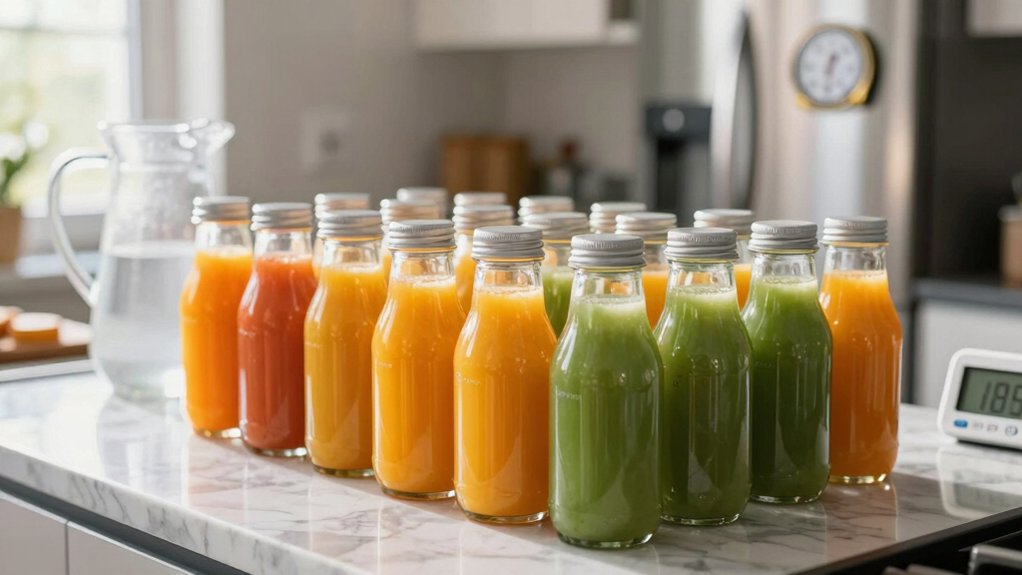
To store juice for 3 days with minimal nutrient loss, choose a cold-press juicer and produce juice with slow squeezing to limit heat and oxidation. Use airtight, opaque glass containers filled to the top, sealing tightly to remove headspace. Keep them in the fridge at 35–40°F (1.6–4.4°C), away from the door. Add a small amount of lemon juice to slow oxidation, and avoid repeated freeze–thaw cycles. If you want more tips, you’ll find practical steps ahead.
Choosing the Right Juicer and Extraction Method
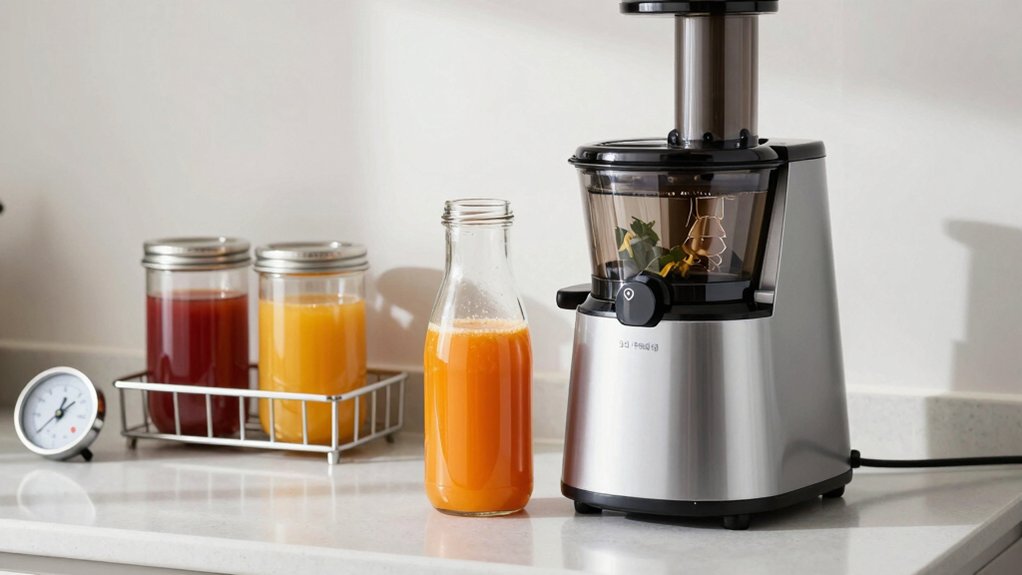
Choosing the right juicer and extraction method matters for nutrient retention. You’ll maximize nutrient preservation by selecting cold-press juicers that use slow squeeze technology, which generates less heat and oxidation. This approach better protects juice nutrients, especially enzyme levels, compared with centrifugal designs.
A masticating or twin-gear juicer extracts juice more efficiently, supporting higher enzyme levels and overall nutrient retention than traditional centrifugal models. When you use a cold-press extraction method, vitamins, minerals, and antioxidants stay intact longer, extending shelf life up to 72 hours if properly stored.
Beware heat generation from rapid spinning, which accelerates nutrient degradation. Selecting high-quality, durable juicers designed for nutrient preservation ensures you consistently preserve juice nutrients, supporting sustained nutrient preservation and clearer, more nutritious results.


Proper Container Selection and Filling Techniques
To preserve nutrients and delay spoilage, choose clean, airtight glass containers and fill them to the top. You minimize oxygen exposure by limiting space in the container, which reduces juice oxidation and preserves nutrients.
Avoid plastic, as it can leach chemicals and allow more oxygen ingress, accelerating spoilage. Use containers with tight, airtight lids and seal them tightly to maintain an airtight environment, supporting nutrient preservation and reducing contamination risk.
Fill to the brim, leaving no headspace, so storage time stays consistent and oxidation stays low. Consider adding citrus (lemon or lime) before sealing, since acidity helps protect nutrients.
Label containers with date to monitor storage time. This approach emphasizes proper container sealing, filling techniques, and minimizing air contact for ideal freshness.
Optimal Storage Conditions in the Refrigerator
Sticking with airtight, glass containers and filling to the brim from the previous step, store juice in the main body of the refrigerator rather than the door to maintain a stable cold environment.
Set refrigerator temperature consistently between 35°F and 40°F (1.6°C–4.4°C), keeping containers toward the back for *ideal* cooled air. This cold storage approach slows nutrient degradation and limits bacterial growth, preserving freshness for up to 72 hours.
Airtight sealing minimizes oxygen exposure, reducing nutrient oxidation and flavor loss. Avoid temperature fluctuations by steering clear of door shelves where warmth and drafts occur.
After each use, reseal containers tightly. For maximum nutrient preservation, consume juice within 24 to 48 hours, and monitor for any off odors or changes in color, discarding if suspicious.
Enhancing Preservation With Additives and Freezing
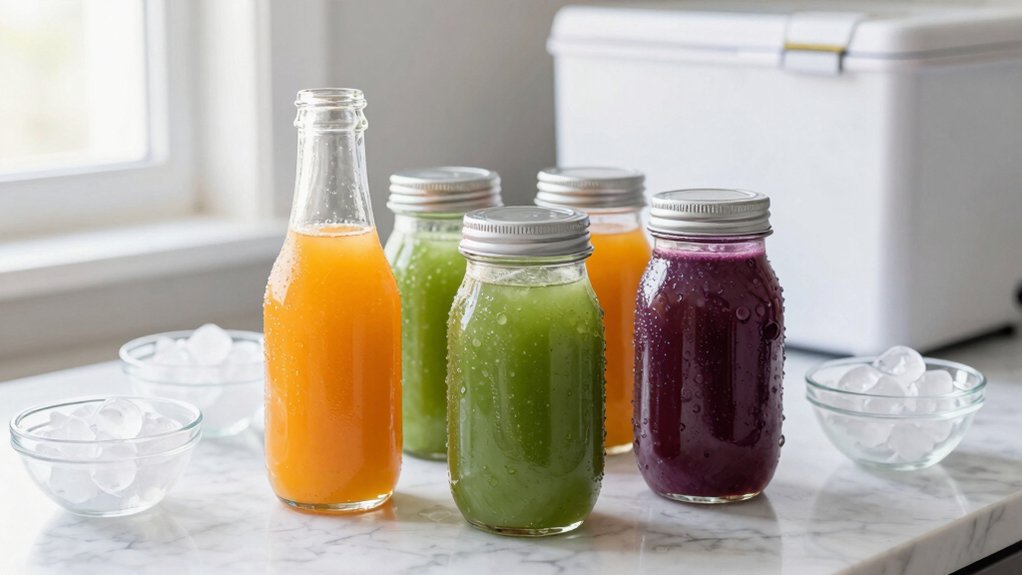
Enhancing preservation starts with practical additives and smart freezing practices. You can extend freshness by using a natural preservative like lemon juice, rich in citric acid and vitamin C, which delays oxidation and browning in fresh juice.
When freezing juice, portion into airtight containers, leaving space for expansion, and opt for glass with tight seals to minimize oxygen exposure and nutrient loss. Frozen cold-pressed juice remains quality-preserving when kept in small amounts, helping preserve vitamin C content and overall nutrient retention for 2–3 months.

Thaw gradually in the refrigerator rather than at room temperature to protect nutritional integrity. Label clearly with dates and avoid repeated freeze-thaw cycles to maximize freshness and prevent spoilage in your cold storage plan.
Minimizing Oxidation and Nutrient Loss
Minimizing oxidation and nutrient loss starts with airtight, opaque glass containers that limit oxygen exposure and slow nutrient degradation. Sealing juice reduces oxygen exposure, slowing oxidation and preserving nutrient preservation. Fill containers to the top to minimize air space, thereby limiting oxygen contact and delaying nutrient degradation.
Keep juice refrigerated at a consistent storage temperature of 35-40°F (1.6-4.4°C) to slow enzymatic activity and oxidation processes.
Add natural antioxidants like lemon juice, rich in vitamin C, to help inhibit oxidation and maintain nutrient levels.
Minimize exposure to light and heat during storage, as light and heat accelerate oxidation and vitamin loss.
Consistent container filling, proper storage temperature, and the use of airtight containers collectively support nutrient preservation and extend freshness.
Conclusion
To keep fresh juice vibrant for 3 days, you’re the gardener tending a fragile organic jewel. Think of your fridge as a greenhouse: lids sealed, containers dark and tight, temperature steady. Oxidation is the pest, so use airtight bottles and chill promptly. Freeze portions for longer keeps, then thaw gently. Additives can help, but lean on rapid chilling and minimal air. Your discipline preserves nutrients; the juice remains a sunlit reservoir you guard until you pour it.