

Table of Contents
To prep fruits and veggies before juicing, start with thorough cleaning to remove dirt and microbes, rinsing under cold, running water and using approved antimicrobial washes if available. Remove large seeds and pits, keep edible peels when appropriate, and cut produce into pieces that fit your juicer for steady, even extraction. Peel citrus and hard-skinned produce only if needed, and handle leafy greens gently. Proper prep boosts yield while limiting bitterness—more tips await.
Thorough Cleaning and Sanitization of Produce

Thorough cleaning and sanitization of produce starts with washing under cold, running water to remove dirt, debris, and surface bacteria before juicing. You then sanitize produce with approved antimicrobial washes, such as vinegar solutions or ECOlabs-certified products, to reduce residual microbes.
When necessary, soak produce in antimicrobial solutions, then air dry completely in a clean, uncovered space in the refrigerator. Remove visible mold, bruises, or damaged areas, and discard large seeds or pits to prevent bitterness and protect your juicer blades.
Rinse leafy greens like kale or spinach multiple times to eliminate dirt and grit, ensuring a clean, safe juice. By following these steps, you improve produce safety, integrity, and overall juice quality.
Keep the Peel When Appropriate
Should you keep the peel on? Yes, when it doesn’t affect juice flavor or appearance. Keep the peel on organic produce if it’s soft and edible, since the skin holds nutrients, fiber, and antioxidants that transfer to juice.
For apples, pears, and cucumbers, leaving the peel on increases juice yield and preserves nutrients.
Peel vegetables like carrots, beets, and zucchinis only if the skin is tough, waxed, or bitter; otherwise, keep it to maximize nutrients and fiber.
Always wash produce thoroughly to remove dirt and pesticides before juicing with the peel.
By choosing to retain the skin on appropriate produce, you boost nutrient intake while producing a cleaner, more exhaustive juice.



Remove Large Seeds and Pits
To minimize bitterness and protect your juicer, remove large seeds and pits from fruits like cherries, apricots, peaches, and avocados before juicing.
Discard pits larger than cherry size, since crushed compounds can create bitter toxins, while grape seeds can stay if they’re small and safe.
This simple step supports blade longevity and yields a smoother juice, guiding you to apply seed removal as a standard practice.
Seed Removal Guidelines
When preparing fruits for juicing, remove large seeds and pits to prevent bitterness and protect your juicer blades. Smaller seeds, like grape seeds, can stay in if they’re safe.
You should discard pits from peaches, plums, and apricots to avoid bitter compounds and equipment wear. For hard seeds, use a spoon or knife to carefully extract and discard before juicing.
This guideline helps reduce bitterness risk and prolongs machine life. Always check for large seeds or pits in stone fruits and melons, removing them consistently.
Grape seeds are generally safe to keep, contributing antioxidants when present in moderation.
Following these steps improves juice quality, flavor balance, and spill-free operation during juicing. Seeds and pits removed, your output remains smoother and more palatable.
Bitterness Prevention Tips
Bitterness in juice often starts with large seeds and pits; removing them upfront prevents bitter compounds from leaching into the liquid and protects your juicer blades.
You should remove large seeds and pits from fruits like peaches, plums, and apricots to minimize bitterness. Grape seeds are generally acceptable and don’t contribute to bitterness, so you can leave them in.
Extracting or discarding large seeds and pits also helps protect juicer blades from damage and prolongs equipment life. This prep step leads to a smoother, more palatable juice.
Blade Protection Measures
Seed and pit handling protects both flavor and equipment. To protect blade performance, remove large seeds and pits before juicing.
For fruits with cherry-sized or larger pits, cut the fruit into manageable pieces and extract or remove the pits to prevent bitterness and blade wear.
Remove large seeds and pits consistently to minimize resistance and improve pulp separation, which supports a smoother juice texture.
Grape seeds may remain because they’re small and less likely to cause issues, but discard any notably large seeds when present.
Pit removal is essential for stone fruits like peaches, plums, and apricots, preventing bitterness and potential blade damage.
Implement seed removal as a standard step to extend blade life and maintain juicing efficiency.
Prepare Fruits for Juicing: Specifics by Type
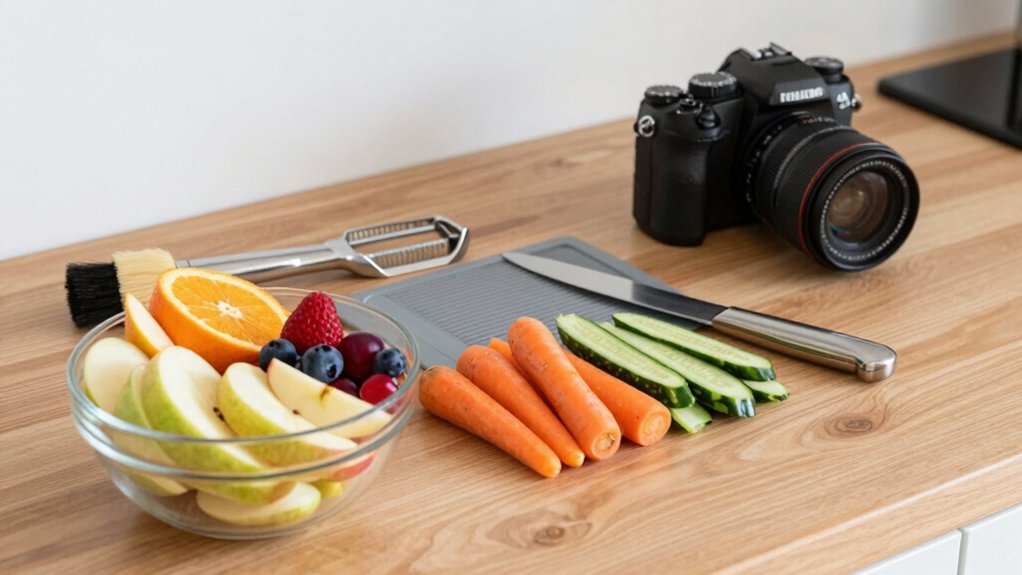
Preparing fruits for juicing varies by type to optimize extraction and flavor while preserving nutrients. You should tailor prep to fruit category for best results.
For apples and pears, keep whole and unpeeled, removing seeds before juicing; this preserves fiber and minimizes waste, while seed removal ensures safety.
Berries get blended into a puree prior to juicing to improve integration and flavor.
Citrus fruits require peeling of the outer pith to prevent bitterness, especially before pressing.


Melons and tropical fruits like mangoes and papayas should be peeled and cut into chunks, with blending helping increase juice yield.
For stone fruits such as peaches and plums, remove the pits and slice into manageable pieces for efficient juicing.
Preparing fruit with these steps supports consistent quality and easy processing.
Prepare Vegetables & Spices for Juicing
When prepping vegetables and spices for juicing, start by removing earthy flavors and tough skins from beets, carrots, and sweet potatoes. Peel, then rinse to reduce grit before juicing.
For large vegetables like broccoli stalks and cauliflower, cut into smaller pieces to ensure smooth processing and maximum juice extraction.
Remove stems from leafy greens such as kale and chard, and rinse thoroughly to eliminate dirt.
For spices like ginger and turmeric, wash and peel if preferred, then chop into small pieces to facilitate easier juicing.
Slice fruits and vegetables into manageable chunks that fit your juicer’s feeding chute, ensuring efficient and even extraction.
Proper preparation reduces clogging, improves yield, and supports consistent texture in your juice.
Cutting and Chopping for Consistent Juicing
Consistent juicing starts with size: cut produce into uniform pieces that match your juicer’s feed chute to prevent jams and guarantee even extraction. Use 2–3 inch chunks when possible and remove stems, seeds, and tough skins to protect blades and improve juice quality.
Sharp, clean cuts support nutrient retention and streamline processing, while experimenting with different techniques aids efficiency for fibrous or dense ingredients.
Size Consistency
Ever wondered how size affects juice yield? When you aim for size consistency, you improve processing time and juice yield.
Cut fruits and vegetables into uniform pieces, roughly 1-2 inches, to guarantee even feeding and extraction in the juicer. Smaller, uniform sizes prevent clogging and reduce processing time, especially with fibrous or dense produce.
For large ingredients like pineapples and carrots, dice into manageable chunks that fit easily into the juicer chute. Maintaining size consistency helps maximize juice yield and ensures all pieces are processed uniformly.
Use a sharp knife to achieve clean, precise cuts that promote smooth operation and reduce strain on the juicer blades. Prioritize uniform pieces for better manageability and consistent cuts throughout your batch.
Fit to Juicer
To guarantee smooth juicing and ideal extraction, cut large fruits and vegetables into small, uniform pieces that fit your juicer’s chute, typically 1–2 inches. This fit to juicer step is core to produce preparation, preventing jams and ensuring consistent flow.
Slice dense produce into manageable chunks, and cut into quarters when needed to align with your model’s intake. Peel the produce to reduce bitterness and improve texture, then remove stems and seeds or pits to protect blades and reduce grit.
For leafy greens, tear or chop into smaller sections to boost processing efficiency and maximize yield. Always tailor cuts to the juicer’s size specifications, avoiding uneven pieces that compromise extraction and overall quality.





Even Sizing Techniques
Building on the idea of fitting produce to the juicer, use uniform cuts to guarantee steady feeding and predictable extraction. Even-sized pieces promote consistent processing, so measure, then standardize piece sizes across batches. Use a sharp knife and stable cutting board to achieve precise, even cuts that facilitate smooth feeding into the juicer chute.
For large produce like pineapples or carrots, slice into manageable pieces that fit easily without damaging the machine or causing blockages. When preparing leafy greens, tear or chop into smaller, even pieces to help them break down uniformly during juicing.
This chopping technique supports a reliable preparation method, improving extraction efficiency and juice quality while reducing waste and inconsistencies.
Choosing Between Centrifugal and Masticating Juicers

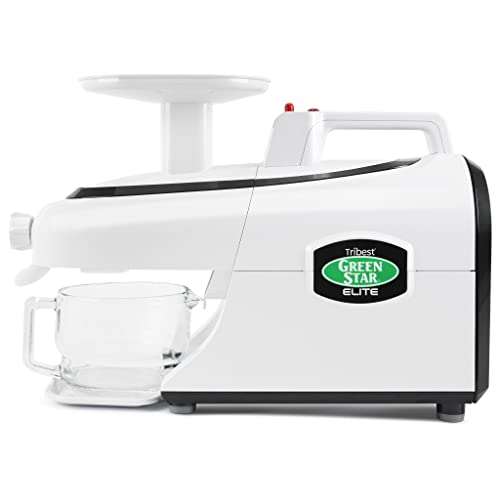
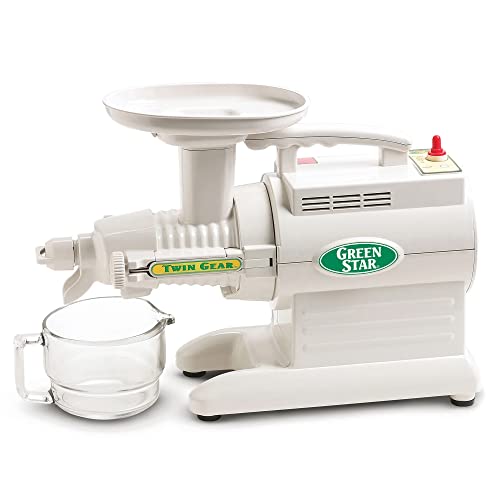
When choosing between centrifugal and masticating juicers, consider how speed, nutrient retention, and typical produce influence your juicing goals.
Centrifugal juicers operate at high speeds, generating heat and oxidation that can reduce nutrient preservation and juice shelf life. However, they’re faster and more affordable for quick fixes.
Masticating juicers turn slowly, around 80 RPM, which helps preserve nutrients, enzymes, and antioxidants, making them better for regular, nutrient-focused juicing. They also extract juice more efficiently from leafy greens, nuts, and wheatgrass.
If you’re prepping fruits and vegetables for routine health benefits, a masticating juicer is advantageous. If you value speed and lower upfront costs, a centrifugal model works but with slightly diminished nutrient preservation.
Consider long-term value, your typical produce, and budget when choosing a masticating juicer or centrifugal juicer.
Water and Cleaning Practices for Equipment
To minimize contamination, rinse produce under cold, running water and sanitize tools with approved agents or a vinegar solution as needed.
Follow strict equipment cleaning protocols, sanitizing juicer parts after each use and using hot water and soap to maintain hygiene.
Be mindful of water usage by rinsing efficiently and air-drying components in the refrigerator to prevent mold and spoilage.
Equipment Cleaning Protocols
After each use, rinse juicing equipment with warm water to remove pulp and residue and prevent bacterial buildup.
You should scrub equipment parts with a dedicated brush or sponge to clear sticky or fibrous debris from blades and screens, then inspect for remaining residues.
For sanitation, soak parts in a solution of ECOlabs-approved sanitizer or diluted vinegar (1:10) for at least 2 minutes before rinsing again.
Dry all equipment completely with a clean towel or air dry to prevent mold growth and corrosion.
Regularly inspect and replace worn or damaged seals and filters to maintain best hygiene and efficiency.
This protocol emphasizes clean handling, proper sanitize steps, and reliable dry time to support safe, high-quality juicing results.
Water Usage Guidelines
Efficient water use is essential for safe, hygienic juicing, so plan your workflow around dedicated wash, rinse, and sanitizing steps.
You should rinse produce under cold, running water using about 3 liters for every 5–10 kg of produce to remove dirt effectively.
Use a three-compartment sink to separate cleaning, rinsing, and sanitizing, with the first compartment dedicated to cleaning produce with water and produce wash solutions.
For equipment and tools, expect 10–20 liters per cleaning cycle, depending on size and complexity.
Employ approved sanitizers, such as ECOlabs solutions or a vinegar bath (1:10).
After cleaning, thoroughly rinse all produce and equipment to remove residual agents, ensuring hygiene and avoiding grit.
This protocol supports consistent hygiene, safety, and reliable juice quality.
Storage Tips to Extend Fresh Juice Life
Proper storage is essential to extend the life of freshly made juice. You should store fresh juice in airtight glass containers filled to the brim to prevent oxidation and maintain freshness.
Keep juice refrigerated at 38°F (5°C) and avoid exposure to direct sunlight to slow nutrient degradation.
Label containers with the date and type of juice to guarantee consumption within 2–3 days for ideal nutrient retention.
For longer storage, freeze juice in portioned containers, and thaw in the refrigerator to preserve flavor and nutrients.
Consume thawed juice promptly within 24 hours to enjoy maximum freshness and health benefits.
These storage tips support accurate tracking of shelf life and help maintain overall nutrient retention in your daily intake.
Special Tips for Hardy and Soft Produce
Hardy produce like carrots, beets, and squash and soft fruits such as berries and mangoes each have different prep needs to optimize juice yield and machine performance.
For hardy items, peel, wash thoroughly, and cut into smaller pieces to ensure smooth juicing and prevent damage to the machine. Thick-skinned vegetables like pumpkins and melons require peeling or thorough scrubbing to remove dirt and tough outer layers, supporting cleaner juice.
For soft produce, gently blend into a puree before juicing to maximize yield and prevent clogging, then strain if needed for a smoother texture.
When handling delicate leafy greens, wash carefully, leave stems intact, and chop moderately to avoid crushing. These steps promote efficiency, nutrient retention, and consistent extraction across produce types.
Handling Citrus, Ginger, and Turmeric
Citrus, ginger, and turmeric each require specific prep steps to optimize juice quality and machine performance.
You should peel citrus fruits to remove bitter outer pith, especially with manual or centrifugal juicers, and slice citrus into halves or smaller sections to fit the feeding chute.
For ginger and turmeric, wash thoroughly and peel if you prefer, though skins can be juiced with a cold-press juicer to maximize nutrient retention.
Remove stems, leaves, or green parts from citrus and herbs to prevent bitterness and off-flavors in your juice.
When juicing turmeric, cut into small pieces to facilitate extraction, and consider wearing gloves to avoid staining.
This prep approach supports consistent juice yield, flavor, and overall dietetics-driven quality.
Batch Juicing: Efficiency and Planning
Batch juicing runs more smoothly when you plan ahead and organize your ingredients. You’ll optimize batch juicing by drafting a clear recipe and shopping list, reducing in-session prep time and interruptions. Planning ensures you have all necessary ingredients, supporting consistent intake and reducing last-minute substitutions.
Bulk purchasing seasonal produce from local markets boosts freshness, cost savings, and juice yield. Prepping ingredients immediately after shopping minimizes handling time and preserves quality. Use airtight containers to store prepped items; this storage prevents spoilage and speeds assembly during juicing sessions.
Scheduling regular batch juicing sessions builds routine, supporting sustained consumption of nutrient-rich juices and lowering daily kitchen workload. Prioritize prepping ingredients efficiently to maximize freshness, flavor, and overall dietary adherence.
Troubleshooting Common Juicing Issues
Are common juicing issues avoidable with proper prep and technique? Yes, when you optimize produce preparation and follow size guidelines.
Overloading the juicer with large or uncut produce can clog the system, reduce juice yield, and strain the motor.
Always perform seed removal; failing to remove large seeds and pits can cause bitterness and potential blade damage.
Cut produce into appropriate sizes to ensure even processing and easy fitting into the chute.
Practice proper washing to prevent grit, dirt, and bacteria from contaminating juice.
Avoid leaving produce at room temperature too long, as spoilage increases and nutrient loss occurs.
Conclusion
You’ll juice with confidence once you respect clean prep and smart input choices. Think of your produce as a well-tuned instrument—cleaned, peeled when appropriate, seeds and pits removed—so the juice sings, not clogs. When you batch and plan, you’re building a well-oiled machine that saves time and preserves nutrients. Keep citrus, ginger, and turmeric balanced to avoid overstimulation. With consistent technique, your daily servings become a reliable, nutrient-dense rainbow that supports steady energy and digestion.