
Table of Contents
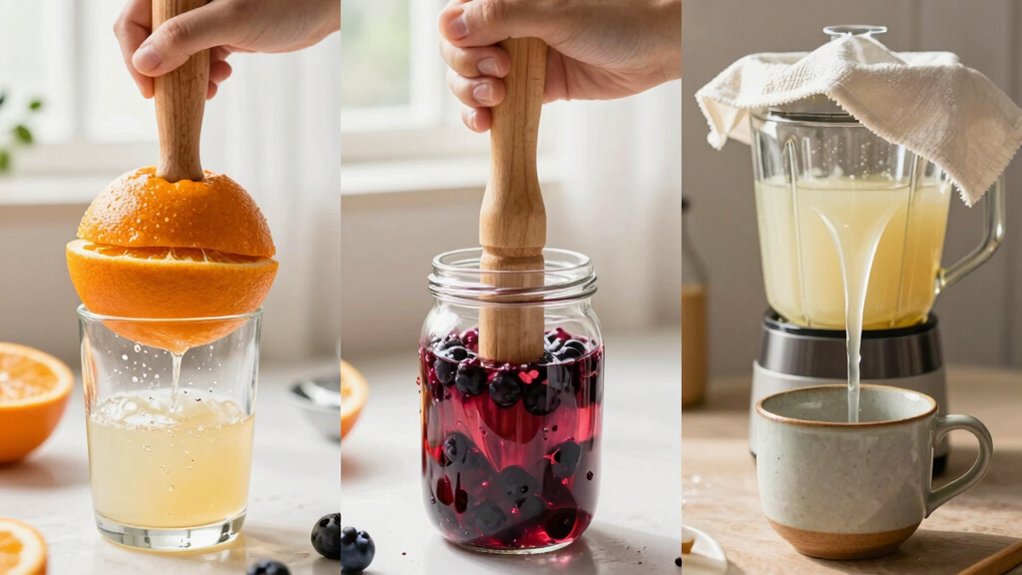
You can juice without a juicer using three easy methods. First, blend produce with enough liquid, then strain through a fine sieve or cheesecloth to separate juice from pulp. Second, use a blender with nut milk bag or clean cloth to squeeze out juice. Third, press softened fruit or vegetables through a sieve with a spatula to extract liquid. Store juice in an airtight container and adjust flavor as needed; there’s more to refine for best results.
Choosing and Preparing Ingredients

When choosing ingredients, aim for fresh, ripe produce that matches your flavor preferences, such as apples, carrots, kale, or pears. You’ll start with washing all produce thoroughly to remove dirt and pesticides before preparation.
Then, cut ingredients into small pieces to ease blending and ensure a smooth mixture. Select a variety of items to create flavorful and nutritious fresh juice blends, balancing sweetness with greens and citrus for brightness.
Keep in mind that adding liquid, like water, almond milk, or citrus juice, helps the blending process and improves texture. Throughout, you’ll prepare ingredients efficiently, making certain each piece is ready for blending and that you’ve prioritized freshness to maximize flavor and nutrient retention.
Blending Process and Initial Straining
Blending your ingredients starts with adding your chosen produce to a high-powered blender and pouring in enough liquid to reach a smooth, thick consistency. You should blend on high speed until fully incorporated and the mixture looks thick and pulpy. Expect some mess, with fibrous pulp and juice mixed together, so you may need to blend longer for uniformity.
Use a high-powered blender capable of handling fibrous ingredients to ensure a smooth texture. After blending, prepare a fine-mesh sieve or strainer lined with cheesecloth or a nut bag to filter out pulp.
Pour the blended mixture into the setup and strain, letting the liquid pass while retaining solids. This initial straining yields clearer juice and a manageable pulp portion for further use.


Finalizing, Serving, and Storage
Now that you’ve strained and separated the pulp, it’s time to finish, serve, and store your juice.
Pour the strained juice into a glass or pitcher for immediate consumption. If you want a touch of balance, adjust the flavor with a bit of sweetener, lemon juice, or fresh herbs before serving.
Serve the juice fresh to maximize flavor and nutrient retention; aim to drink within a few hours.
If you have leftovers, store them in an airtight container in the refrigerator and consume within 24-48 hours to prevent spoilage.
Keep the pulp separate for reuse in smoothies, hummus, or baking to reduce waste and boost overall meals.
Juice stays freshest when you plan ahead and preserve freshness.
Conclusion
Juicing without a juicer is simple, affordable, and surprisingly empowering. You’re squeezing out possibility from ordinary ingredients, turning effort into clarity. When you blend, strain, and taste, you’re mapping patience onto flavor, a small ceremony that honors restraint and release. The final glass isn’t just juice; it’s a reminder that quick fixes aren’t always the fastest route to energy. With each sip, you’re cultivating confidence, one deliberate press at a time, toward healthier, more mindful choices.