
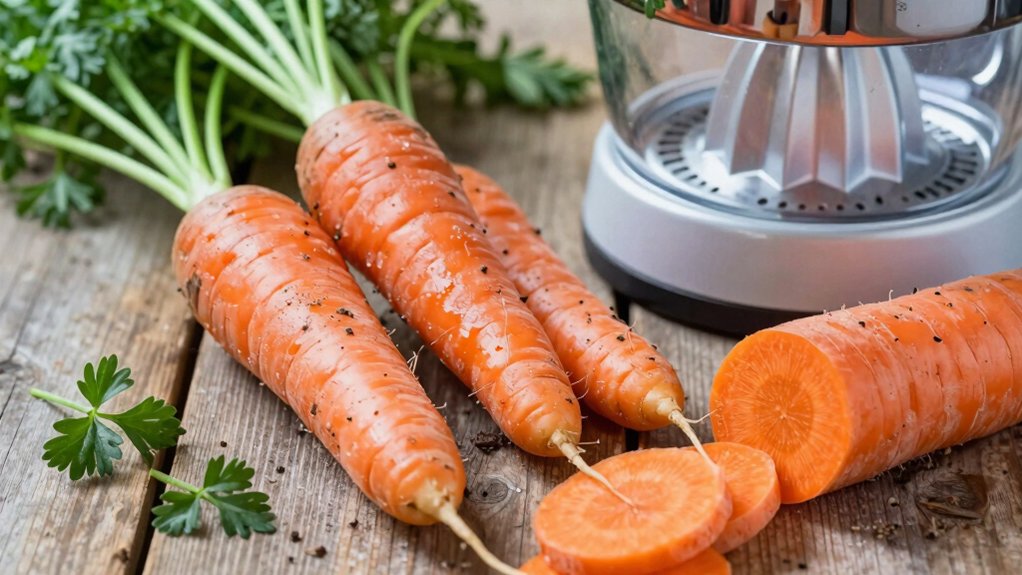
Table of Contents
Should you peel carrots before juicing? If you want a smoother, milder juice with less surface bitterness, peeling helps, and you’ll remove wax coatings or grit. If you aim for maximum nutrient density and a fuller, earthier flavor, skip peeling to retain more polyphenols and fiber. For recipes aimed at kids or delicate blends, peeling can improve flavor consistency. Regularly inspect carrots and consider partial peeling for stringy or fibrous roots; more details follow.
Peel or Not? Why This Choice Matters for Carrot Juice
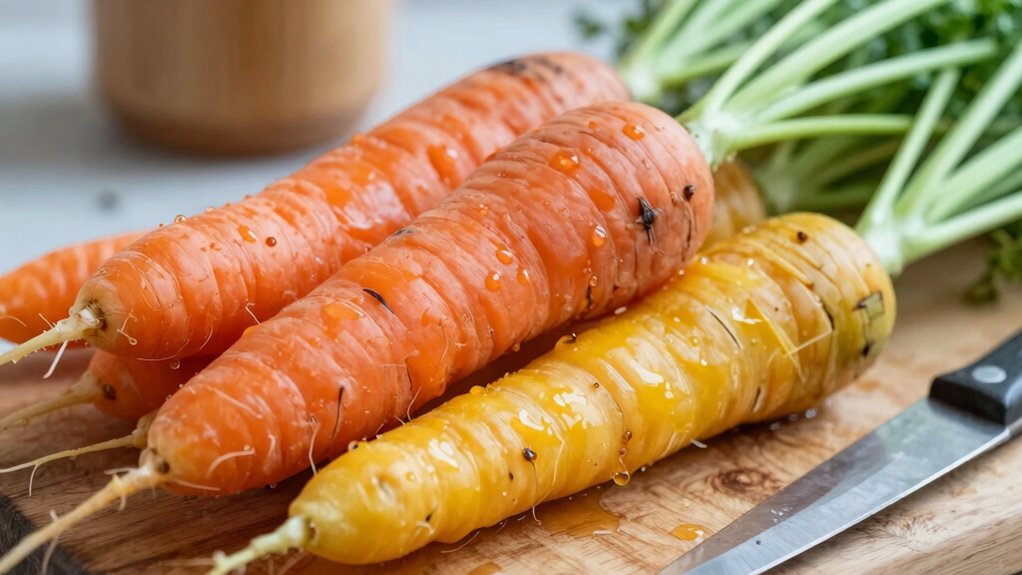
Peeling carrots before juicing isn’t just a texture choice; it directly affects flavor, nutrient retention, and processing efficiency. You evaluate decisions based on carrot flavor implications and skin texture, balancing safety with yield.
Unpeeled carrots preserve polyphenols and certain vitamins, which can slightly shift taste toward earthy notes while maintaining a smoother mouthfeel from the intact skin. If you choose to peel, you reduce potential bitterness from surface compounds and remove dirt-associated fines, improving clarity and filtration.
The skin texture, when left on, may introduce subtle granular sensations and require finer filtration or longer centrifugation to achieve desired clarity. Your choice should align with target flavor profile, juice clarity requirements, and processing speed for batch consistency.
Cleaning and Preparing Carrots for Juicing (Peeled vs. Unpeeled)
Whether you peel or leave the skin on, start with a thorough rinse to remove dirt and residues, then trim off any bruised ends. This step standardizes surface condition before processing and reduces debris that can clog juicers.
When peeling, use a sharp peeler to expose fresh flesh evenly; unpeeled carrots should be scrubbed with a brush to remove dirt from crevices. Peel thickness should be minimal to preserve yield while eliminating potential bitter notes from damaged skin.
Consider carrot storage practices: refrigerate promptly, dry, and use within a week to maintain integrity.
For alternative preparations, you can core large carrots or chop them into uniform pieces to fit your juicer’s feed chute. Consistency guarantees efficient extraction and predictable pulp output without compromising juice clarity.


Nutritional Differences: Does Peeling Affect Fiber and Micronutrients?
When you peel carrots, you remove surface tissues that contain most of the skin’s phenolic compounds and a portion of dietary fiber.
However, the central carrot flesh retains the bulk of fiber and micronutrients. Peeling marginally reduces epidermal polyphenols and lignin-associated fiber, yet core nutrients—vitamin C, potassium, folate, and carotenoids—remain substantially intact in the edible portion.
The protein and mineral profile shows minimal loss, while the remaining fiber continues to support gut motility and glycemic response. Overall micronutrient density is slightly decreased per weight, but the practical effect on daily intake is small for typical servings.
For carrot flavor and juice clarity, peeling can modestly alter surface compounds that influence aroma and haze, without drastically changing nutrient delivery.
Controlling Pulp and Bitterness in Your Juice
To manage pulp and bitterness in carrot juice, start with consistent carrot quality and processing. You’ll control outcomes by tightening variables and applying precise steps.
1) Pick uniform carrots to minimize pulp variation and ensure stable texture control.
2) Use a clean juicer with appropriate auger speed to balance extraction and pulp production.
3) Monitor carrot storage and pre-wash to reduce off-flavors that hinder flavor enhancement.
4) Adjust grind and filtration to tailor mouthfeel without sacrificing nutrient integrity.
A Clear Decision Framework: When to Peel, When to Skip the Peel
Peeling carrots isn’t a one-size-fits-all step; it hinges on carrot quality, usage, and equipment. Use a clear framework to decide: assess carrot texture, intended juice profile, and your juicer’s tolerances.
If carrots are fresh, firm, and clean, you can skip the peel to preserve nutrients and avoid texture loss, especially with high-speed juicers that efficiently separate pulp. If surface defects, wax coatings, or gritty residues exist, peeling reduces contamination risk and reduces bitterness dispersion.
When juicing for kids or delicate blends, peel flavor impacts may be more noticeable, so removing the peel is prudent. For tough, mature carrots with fibrous cores, partial peeling or light abrasion minimizes stringiness without sacrificing flavor.
Apply consistent inspection and document your results to refine your decision over time.
Frequently Asked Questions
Do Carrot Peels Affect Juice Color or Taste?
Carrot peels can subtly affect carrot flavor and juice clarity, especially with thicker skins; you’ll notice earthy notes and a slightly hazier appearance. Peeling reduces color variations, while leaving skins intact preserves nutrients and a cleaner juice.
How Does Peeling Influence Juice Shelf Life?
Yes, peeling can shorten shelf life slightly as exposed surfaces oxidize; you’ll lose carrot peel nutrients if removed. Use peel removal techniques that minimize air exposure to preserve nutrients and delay degradation during storage.
Are There Safety Concerns With Unpeeled Carrots?
Yes, there are mild safety concerns with unpeeled carrots, but risk is low if rinsed. You’ll weigh carrot peel benefits against potential contaminants; use peeling techniques when needed, and prefer organic or well-washed produce for best results.
Which Juicers Optimize Pulp Reduction With Peels?
Yes, select juicers with high pulp control features and integrated peel removal options; look for models offering adjustable pulp extraction, fine mesh strainers, and configurable speeds, ensuring efficient peel removal and maximal juice yield with minimal pulp.
Do Organic Carrots Require Peeling More Than Conventional?
Peel less with organic carrots, since you’ll retain more carrot nutrition; conventional carrots often require more thorough peel removal due to surface residues. In practice, assess blemishes, then initiate a careful peel removal process to preserve nutrients.
Conclusion
Peel carrots when you want smoother juice and calmer palate—unpeeled for more fiber and nutrients, peeled for cleaner taste and texture. Rinse thoroughly regardless, trim ends, and consider whisking or pre-soaking to reduce pulp if you crave clarity. Anachronism: cast your mind to old-fashioned juicers, yet keep modern controls in your hands. In short, peel for bitterness control or visible particulates, skip when you prioritize max micronutrient intake and a heartier, fiber-rich juice. Your goal guides the routine.