

Juicing with watermelon starts by choosing a ripe fruit: look for a deep yellow field spot, a hollow thud when tapped, and a heavy, dense feel. For basic juice, remove seeds, blend until smooth, add a pinch of salt, and strain for ultra-smoothness. Try citrus, mint, or ginger in a 1:1 juice ratio with watermelon to brighten flavor, but keep ginger small to avoid overpowering sweetness. Store cold, and explore more tweaks and tips ahead.
How to Choose Ripe Watermelon for Juicing
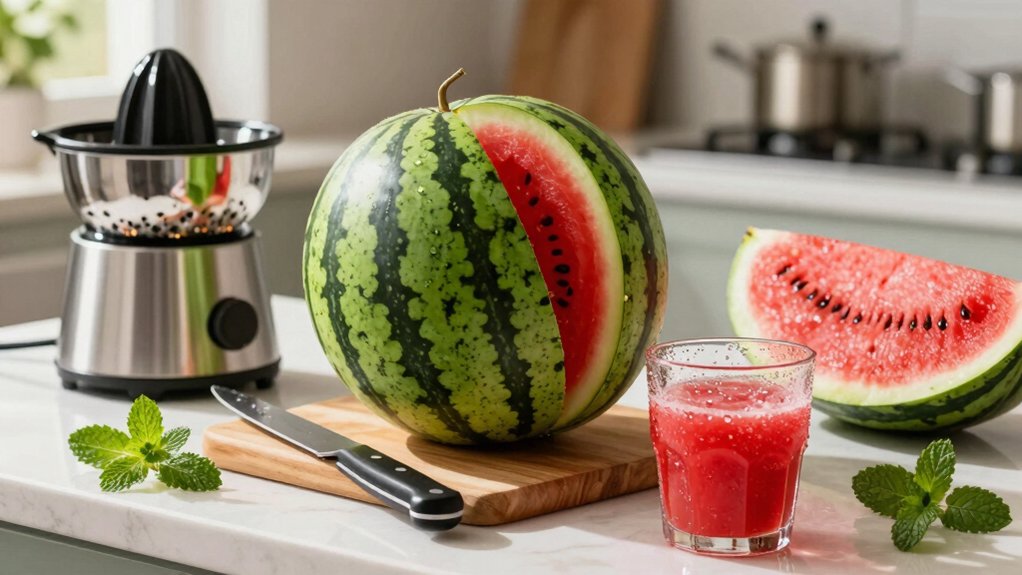
To choose ripe watermelon for juicing, start with the rind color and pattern: a deep, creamy yellow field spot indicates ripeness, while a uniform green rind can suggest underripeness.
You should apply a light tap to assess sound; a hollow, resonant thud correlates with higher juice potential.
Inspect the blossom end for a slight give and absence of mold or soft spots, which signal deterioration.
Weigh nearby melons for density; a heavier fruit generally contains more juice.
Check for uniform shape, free-from cracks, and a solid rind without squishy areas.
Prioritize fruit with firm stalk scar and vibrant fragrance near the stem.
When selecting juicy melons, favor those with evenly distributed rind hue and robust heft, ensuring optimal Watermelon ripeness for juicing and reliable yield.
Basic Watermelon Juice: Make It in 3 Ingredients
Now that you’ve identified ripe watermelon for juicing, you can make a simple, three-ingredient juice that highlights its natural sweetness.
Begin with the fruit, remove seeds, and cut into chunks for even processing. Watermelon seed removal isn’t optional if you want a smooth texture; it prevents gritty mouthfeel and reduces bitter notes.
For the base, blend the watermelon flesh until roughly uniform, using a high-speed setting to minimize pulp pockets. A single pinch of salt helps balance sweetness and enhances citrus-like brightness detectable in tests of juice blending techniques.
Strain only if you prefer ultra-smooth juice; otherwise, serve fresh. This approach emphasizes efficiency and accuracy, delivering a clean, hydrating result without added sugars or flavors.
Flavor Tweaks: Citrus, Mint, and Ginger Variations
Citrus, mint, and ginger bring bright, contrasting notes that can elevate watermelon juice without overpowering its natural sweetness. You can balance flavors by starting with a 1:1 base of watermelon juice and citrus to brighten acidity. Then add mint for aromatic lift and ginger for a clean bite.
Use fresh-squeezed lemon or lime to avoid artificial sweetness, and limit ginger to a small piece to prevent masking watermelon’s flavor. Watermelon varieties matter: some offer higher juice yield and milder profiles, affecting overall balance.
Juicing equipment influences clarity; a fine-mesh strainer helps remove pulp while preserving aroma. Taste progressively, noting how each tweak shifts sweetness and acidity.
Store juice cold and consume within 24 hours for best intensity and stability.
Watermelon Juice Recipes for Summer and Beyond
Watermelon juice makes a versatile base for revitalizing summer drinks and beyond. You’ll mix crisp watermelon with lime, cucumber, or mint to amplify hydration without added sugar. When planning recipes, consider Watermelon health benefits as a rationale for regular use: high water content supports hydration, and certain compounds may aid antioxidant intake.
Juicing equipment choices matter for texture; a wide-mouth blender or dedicated juicer can yield smooth juice, while a manual press works for coarser results. To maximize flavor, strain lightly or blend with ice for a rejuvenating slush.
For longevity in warm months, pair juice with sparkling water or a pinch of salt to balance sweetness. Always prioritize fresh fruit and clean equipment to maintain quality and safety.
Storage, Nutrition, and Freshness Tips
To maximize freshness and nutritional value, store watermelon juice in a tightly sealed container in the refrigerator and consume within 3–5 days. You’ll preserve flavor and reduce spoilage when you chill promptly and avoid exposure to air and light.
Watermelon storage should occur at or below 4°C (39°F) to minimize microbial growth and texture changes. Use clean containers, label with date, and discard juice if you detect off-smells, murkiness, or separated pulp.
For best nutritional benefits, drink soon after opening; nutrients like vitamin C and lycopene decline gradually but noticeably after day 3.
Freeze excess juice in portions if you won’t drink it within 5 days. Store frozen and thaw in the fridge before use.
Frequently Asked Questions
Can Watermelon Juice Be Frozen for Later Use?
Watermelon juice can be frozen, but it separates upon thawing and loses texture. For best results, freeze as puréed juice in ice cube trays, then store; this supports Watermelon preservation and Freezing techniques with minimal quality loss.
How Does Watermelon Juice Affect Blood Sugar Levels?
Watermelon juice spikes vary; you’ll still see a modest blood sugar impact with a quick insulin response, especially if you drink it alone. You’ll notice juice raises glucose briefly, so pair with fiber or fat for steadier levels.
Are There Any Watermelon Juicing Safety Considerations for Pets?
Watermelon juice can be risky for pets; yes, there are safety precautions. Monitor intake, avoid added sugar or seeds, and consult a vet if diarrhea or vomiting occurs. Prioritize pet health by following veterinary guidance and safe portions.
What Are the Best Fruits to Pair With Watermelon Juice?
You should try cucumber, strawberry, mint, and lime with watermelon juice, as these fruit pairings create bright, balanced flavor combinations, enhancing sweetness without overpowering it, while keeping acidity and hydration in mind for invigorating, evidence-based results.
Can Juice Blends Include Non-Watermelon Ingredients?
Yes, juice blends can include non-watermelon ingredients. You experiment with flavor combinations while tracking nutritional benefits, noting how celery, citrus, or berries alter taste and micronutrients, ensuring your blend remains balanced and evidence-based for overall health.
Conclusion
Watermelon juice isn’t just refreshment—it’s a nutrient-dense oasis. For peak flavor, choose a ripe, heavy-for-its-size melon with a yellow field spot; it’s more likely to be sweet and high in lycopene. In fact, watermelon juice can boost hydration by about 92% after 30 minutes of activity, thanks to its natural electrolytes. You’ll enjoy crisp sweetness, plus vitamins A and C, with minimal prep. So blend, sip, and revisit your hydration routine this season.