

Like a steady compass, your blood sugar can point you toward steadier energy—if you juice with purpose. You’ll blend nutrient-dense veggies, moderate fruit, and fiber to slow glucose absorption, pairing with protein or healthy fats for lasting fullness. Practical choices and prep routines matter, and small tweaks—ginger for sensitivity, cinnamon for insulin response—can add up. Curious how to structure reliable breakfast, lunch, and snack juices that prevent spikes and curb cravings? Let’s map out simple, evidence-based patterns that fit your day.
What Balanced Blood Sugar Looks Like When Juicing
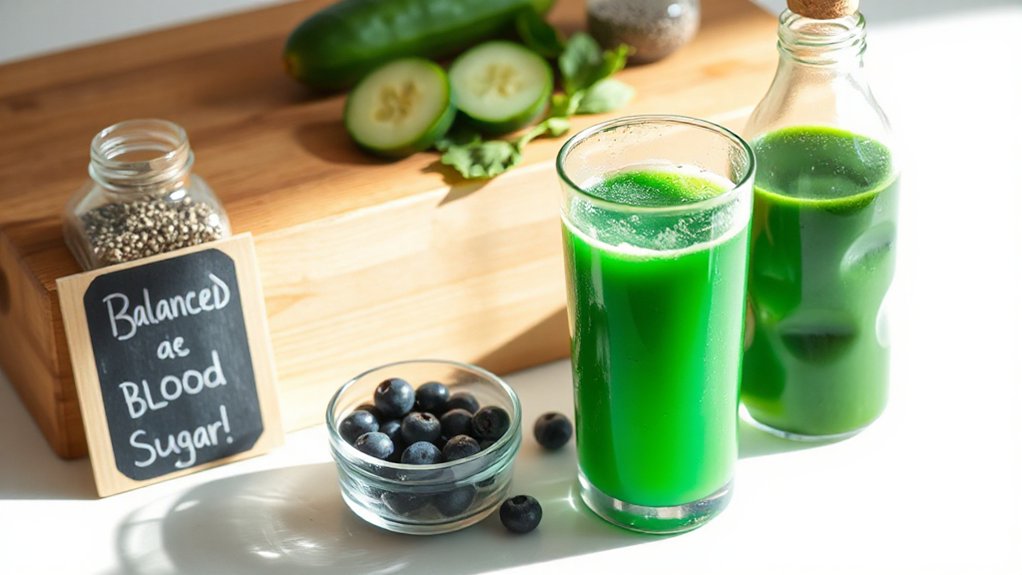
When you juice for balanced blood sugar, aim for combinations that stabilize glucose rather than spike it. You’ll notice balanced blood sugar looks steadier throughout the day, with fewer sharp rises after juice and milder dips between meals.
In practical terms, this means steady energy, fewer cravings, and less post-meal fatigue. Your insulin response becomes more predictable when you pair modest amounts of fruit with vegetables, fiber, and a pinch of healthy fat or protein.
Look for juices that minimize rapid sugar loads and maximize soluble fiber and micronutrients. Track how you feel and your energy curves over several days to confirm patterns.
Consistency matters: small, deliberate choices reduce blood sugar fluctuations and support a calmer, more connected relationship with your body.
Core Glucose-Balancing Ingredients to Use First
To balance glucose from juicy options, start with ingredients that slow sugar entry and boost fiber. Core ingredients build steady energy: leafy greens for volume and micronutrients, citrus for flavor without spikes, and high-fiber fruits in small portions.
Include cucumbers, celery, and herbs to add bulk without excess sugar, supporting fiber-linked satiety. Choose berries sparingly to benefit from polyphenols while maintaining lower glycemic load.
Add cinnamon or ginger to enhance insulin sensitivity subtly. Emphasize whole-food forms over juices when possible to support Fruit detox and sugar detox goals, keeping portions mindful.
Prepare blends that pair protein or healthy fats (nut butter, seeds) to blunt rise after consumption. These choices encourage consistent blood sugar, practical for everyday routines and a sense of belonging to a health-supportive community.
Breakfast-Ready Juices for Blood Sugar Balance
Starting your morning with a balanced juice can set the tone for steady blood sugar if you choose ingredients that blend fiber, protein, and healthy fats. Breakfast-ready blends help you sustain energy and avoid spikes, using combos like leafy greens with cucumber, a small portion of berries, and a protein-rich add-in such as yogurt or a scoop of nut butter.
Include a starch or seed for continued fullness, and keep portions moderate to reinforce fruit preservation without overdoing natural sugars. Plan juice storage in small, airtight bottles for quick mornings, and prep ingredients the night before to minimize friction.
Evidence suggests that consistent, portion-controlled juices support satiety and metabolic balance when paired with whole foods throughout the day.
Lunch Juices to Tame Cravings
You’ll discover fiber-filled lunch juices that keep you fuller longer, helping you curb mid-day cravings with steady blood sugar.
Pair these juices with crave-control combinations that balance protein, fiber, and healthy fats for practical, evidence-based results.
This discussion starts with actionable options you can mix and match to support steady energy and fewer sugar spikes.
Fiber-Filled Lunch Juices
Choose Nutritious combinations like spinach, cucumber, apple, and chia seeds, which provide bulk without heaviness. Add a splash of lemon or ginger to support digestion and flavor without spikes.
Practical tweaks include preparing ingredients in advance and portioning for grab-and-go lunches, so you stay consistent throughout busy days.
Emphasize Flavor enhancements with herbs or citrus twists to sustain interest without adding sugar. This approach supports belonging—sharing simple, reliable routines that reinforce confidence in your ability to balance meals.
Craving-Control Juice Pairings
Pairing juices with cravings in mind builds on the fiber-focused lunch blends by targeting appetite signals directly. You’ll notice that craving-control blends pair protein-rich or fiber-rich bases with crave-curbing spices and aromatic herbs, creating steady energy without spikes.
Practical combos include cucumber-ginger-lemon with a touch of parsley for brightness, or spinach-apple-lemon with chia for fullness. Keep portions moderate and favor textures that require chewing between sips to extend satisfaction.
Sweetness moderation matters; choose green-tles or citrus-forward bases over overly sweet fruits to reduce sugar-driven urges. Flavor harmony comes from balancing bitter greens, bright citrus, and subtly warming spices like cinnamon or mint.
This approach supports belonging by inviting shared, ritual juice moments that respect your body’s signals and your goals.
Fiber-Rich Add-Ins to Boost Satiety
Fiber-rich add-ins can help you feel fuller longer without extra calories, making it easier to manage portions and maintain steady blood sugar.
- Choose soluble fibers like oats, chia, and psyllium to slow digestion and support steady energy.
- Add fruits and vegetables with skin or pulp for nutrient absorption and gut-friendly digestion support.
- Mix seeds and legumes into smoothies or juices to boost fullness without excess sugar.
- Try telltale portions and timing to align fiber intake with meals, promoting consistent satiety.
This approach is evidence-based: fiber moderates glucose release and supports gut health, helping you feel satisfied after your juice.
Track responses, adjust gradually, and prioritize varied plant sources to sustain belonging and confidence in your plans.
Tasty Juice Pairings That Support Glucose Control
Now that you’ve got fiber-rich add-ins in your toolkit, it’s time to pair juices with foods and flavors that help keep glucose in check. Tasty juice pairings can extend satiety and steady energy when you combine ingredients thoughtfully.
Favor flavor combinations that balance naturally sweet notes with savory or acidic hints, which can blunt glucose spikes by slowing digestion. Practical pairings include citrus with leafy greens, cucumber with herbs, or berries with a small handful of nuts.
When in doubt, opt for ingredient substitutions that reduce added sugars and boost fiber, protein, or healthy fats. These adjustments support steady post-meal glucose.
Trust your palate, stay consistent, and monitor how each combination affects your numbers.
Quick Juicing Techniques for Stable Blood Sugar
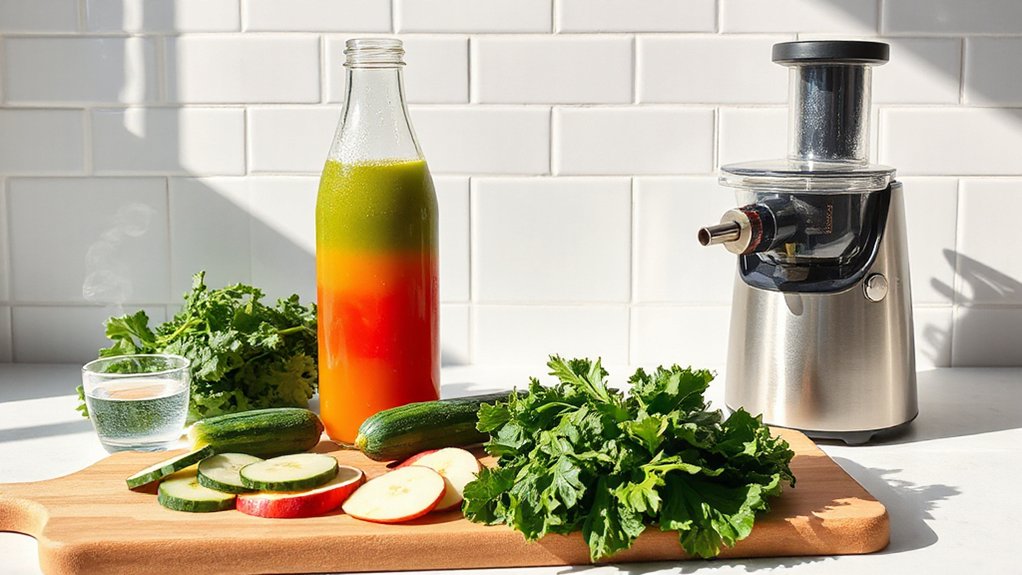
Quick juicing techniques can help you stabilize blood sugar without sacrificing flavor or convenience. You’ll notice that small, purposeful tweaks yield steady energy and fewer spikes, backed by practical habits you can trust.
- Prioritize juice preservation by making small, fresh batches and refrigerating promptly.
- Source fresh produce from reputable vendors, prioritizing locally grown, pesticide-free options.
- Pair high-sugar greens with fiber-rich veggies to slow absorption and balance sweetness.
- Clean equipment thoroughly between uses to maintain quality and safety.
Applied tips include using leafy greens as a base, adding cucumber or celery for volume, and including a splash of lemon for preservation of nutrients.
With these habits, you support balanced glucose while enjoying vibrant flavors and reliable routines.
Sample 3-Day Juice Plan for Glucose Control
Designing a practical 3-day juice plan can help steady glucose by pairing vegetables with modest fruit, fiber, and hydration. You’ll focus on balanced combinations, aiming for 1–2 servings of fruit per day and 3–4 cups of vegetables per juice.
Each morning, start with a veggie-forward juice: kale, cucumber, celery, and lemon, plus a small apple or pear for sweetness.
Include a mid-day juice rich in fiber-davor: carrot, beet, ginger, and a handful of leafy greens.
Evening options can emphasize hydration and fullness: cucumber, melon, mint, and a splash of lime.
This approach supports Juice detox goals and may aid weight loss by reducing cravings.
Grounded in practical nutrition, you’ll feel supported, part of a community, and empowered to sustain glucose-friendly habits.
Frequently Asked Questions
Can Juicing Replace Fiber-Rich Whole Fruits and Vegetables?
Juicing can’t fully replace fiber-rich fruits and veggies, so you’ll still want whole produce for fiber and fullness. Some fiber is lost in juice concentrates, so balance juice with whole foods to support balanced blood sugar. Keep variety.
Do Juice Recipes Affect Insulin Differently Than Whole Foods?
Juice recipes can trigger a faster insulin response than whole foods, due to rapid juice absorption. You’ll likely experience sharper blood sugar swings, so monitor portions and pair with fiber to moderate insulin response and support steady energy.
Which Sugars in Juice Most Impact Blood Glucose Spikes?
Do you wonder which sugars spike you most? In juice, fructose and glucose drive blood glucose quickly; glycemic index matters, while slower sugar absorption helps. You’ll choose lower-GI combos to regulate spikes and feel connected.
How Soon After Juicing Should One Monitor Blood Sugar?
You should monitor blood sugar about 1 to 2 hours after juicing. Track consistently, using evidence-based notes. For practicality, consider juice shelf life and Juicing equipment maintenance to sustain accurate readings and safe, shared health routines.
Are There Risks of Juicing With Certain Medications?
Yes—watch for medication interactions, especially with blood thinners or diabetes drugs, and ask your clinician before juicing. Juicing safety hinges on timing and ingredients; you could trigger surprises. You belong in safe, evidence-based choices. Stay vigilant.
Conclusion
You can trust that steady blood sugar comes from real, whole foods in smart combos. Juicing with fiber-rich veggies and modest fruit, plus healthy fats or protein, keeps energy steady and cravings in check. One striking stat: a small, daily increase in soluble fiber can reduce post-meal glucose spikes by up to 20%. Stay practical—prep ingredients once, pair juices with balanced meals, and tailor flavors to your routine. Consistency beats quick fixes for lasting glucose control.