
Table of Contents
Ever wondered while considering buying a juicer or blender, is juicing cheaper than buying juice, in the long run?
Juicing at home typically costs less per serving than store-bought juice, especially if you juice a lot and plan batches well. Your fixed costs (juicer, containers) get spread over more servings, while variable costs (produce, energy) stay tied to how much you make. Yields vary by produce, but with efficient planning you can lower per‑glass costs and cut waste. If you keep up smart storage and seasonal buys, the savings add up—and you’ll see how in a bit.
Juicing at Home vs Store-Bought: Quick Cost Verdict
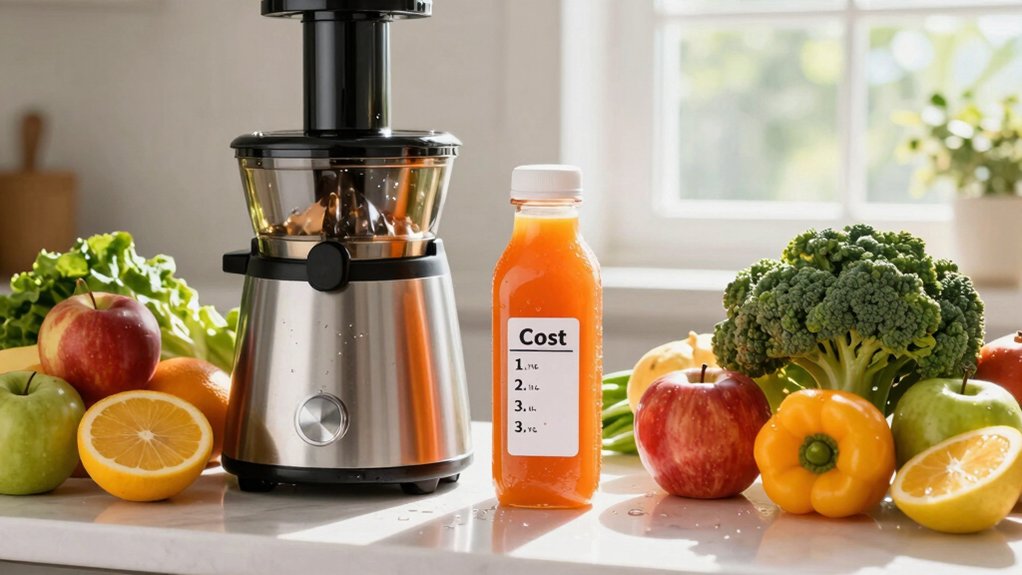
When you’re weighing juicing at home versus buying juice, the quick cost verdict hinges on per-serving price, equipment lifespan, and waste. You’ll compare store prices per bottle to homemade batches, accounting for pulp and fiber yield that affects volume.
Begin with upfront costs: juicer cost amortized over its lifespan, plus electricity. Then tally ongoing inputs: produce, clean water, and replacement parts. Your per-serving break-even often improves with higher-use frequencies, while low-volume households may still favor store-bought for convenience.
Consider juice preservation methods—proper refrigeration or freezing can extend shelf life with minimal quality loss, reducing waste. Flavor enhancement matters, too: fresh-made juice tends to taste brighter, encouraging shorter storage times.
How Juicing Really Makes and Costs Money (Fixed vs Variable Costs)
You’ll see how fixed costs like equipment and storage shape your upfront investment. Then compare them to variable costs that rise and fall with your juicing volume.
This section breaks down what stays constant versus what scales with use, so you can map every dollar to a resource—time, energy, and produce.
Expect a data-driven read that keeps the focus tight on Fixed Cost Focus and Variable Cost Breakdown.
Fixed Cost Focus
Fixed costs matter in juicing because they set the baseline price you’ll pay whether you juice daily or skip a week. You’ll see how fixed costs appear as startup equipment, containers, and monthly utilities, not as per‑glass charges. This frame helps you compare options consistently: if you own a juicer, your upfront investments average out over time, lowering per‑drink cost with higher usage; if you don’t, you’ll rent or rely on store juice, raising effective fixed implications.
Your decision should hinge on volume, not just price per sip. Consider ingredient quality and storage solutions; premium produce can raise fixed costs initially, but efficient storage reduces spoilage, stabilizing overall budgeting. Track baseline expenses first to forecast long‑term profitability of home juicing versus buying.


Variable Cost Breakdown
Variable costs are the part of juicing you pay per unit: each glass carries the cost of produce, supplements, energy, cleaning, and packaging.
In this breakdown, you quantify per-serve inputs and compare them to fixed costs to reveal true unit economics.
Produce prices swing with seasonality and market trends, so track weekly averages to forecast margins.
Supplements and boosters add variability based on brand, dosage, and utilization, making sensitivity analysis essential.
Energy use scales with batch size and equipment efficiency; high-output juicers reduce per-glass energy, while frequent cleaning times add labor considerations.
Packaging, especially disposable bottles, varies by supplier and region, impacting residual value and waste costs.
Health benefits claims should be weighed against cost cycles, ensuring pricing aligns with value delivered per serving.


Juicing Yields and Batch Sizes: How Much Juice Per Batch?
When you’re planning juicing batches, actual yields depend on the produce you choose and the juicer you use, but you can expect a practical range that helps with portioning and storage. Typical yields fall between 0.5 and 1.5 cups of juice per pound of produce, with greens often toward the lower end and citrus higher.
For batch planning, estimate 1–2 pounds per cup of juice for mixed fruit and veg, adjusting for density. Consider headroom for foam and pulp, and record your average yield per batch to calibrate future runs.
This data supports fruit preservation decisions and informs juice storage plans, reducing waste. Use measured batches to compare cost-per-ounce across ingredients and optimize your juicing cadence.
Hidden Costs of Juicing: Time, Electricity, and Cleanup
Hidden costs in juicing extend beyond the produce and equipment price tags. You’ll factor in time, electricity, and cleanup, which can tilt cost comparisons.
Time adds opportunity costs: washing, chopping, assembling, and cleaning disrupt routine meals and weeks.
Electricity varies by juicer type, but high-output machines draw noticeably more during peak use, especially when you juice large batches.
Cleanup time compounds daily if you juice often, requiring scrubbing, disassembly, and drying.
Data shows energy and maintenance expenses accumulate over a month, narrowing savings.
Consider ingredient sourcing: sourcing fresh produce may increase trips or bulk-buy planning, affecting time and fuel.
Packaging waste matters too, especially if you discard juice containers or wrappers, influencing overall environmental costs alongside financial ones.
Comparing Homemade and Store-Bought Juices by Type
Store-bought and homemade juices differ in composition and cost by type, so comparing them requires clarity about ingredients, additives, and processing. You’ll see that juice from a single fruit, like orange, usually has fewer additives than blended grocery mixes or cold-pressed bottles with added stabilizers.
Store-bought variants often rely on pasteurization and shelf stabilization, which can affect flavor and nutrient retention, while homemade versions vary by fruit quality, juicer type, and freshness window.
To compare fairly, track price per liter, yield per fruit, and storage techniques for each type. Consider fruit pairings that maximize flavor and nutrient balance, then test shelf-life confidence with small batches.
Use airtight containers, label dates, and refrigerate promptly to preserve quality.
When Juicing Saves Money: And When It Does Not
Juicing can save money, but the math isn’t always straightforward. You’ll often see cost-per-ounce lower with fresh produce, yet savings depend on your produce choice, yields, and waste. When produce is cheap and high-yield, you’ll exceed bought juice on a per-serving basis.
Conversely, expensive or low-yield items erase the advantage. Efficiency matters: mechanical losses, pulp disposal, and spoilage cut into potential margins. Compare grocery prices, not just juice bottle prices, and track your actual portions.
Practical math favors simple, repeatable routines: buy in-season fruit, use leafy greens for bulk nutrients, and plan meals around juice. For value, optimize Fruit pairings and flavor combinations that maximize satiety and reuse ingredients across recipes, reducing waste and boosting overall savings.
Calculate Your Personal Break-Even Point
To calculate your personal break-even point, start by listing your monthly juice-related costs and your typical juice yields. Track fixed expenses (equipment amortization, electricity, replaceable parts) and variable costs (produce, filters, jars) to establish a monthly outlay.
Next, quantify your juice output: average cups per day, weekly gallons, or liters, and translate that into a monetary value based on store-bought alternatives. Compare your total monthly juice cost to the cost of equivalent store-bought juice, using a straightforward per-unit price comparison.
Factor in fruit pairing options that influence yield and taste without inflating cost. Include storage techniques to maintain quality and minimize waste, ensuring your yield remains consistent.
Your break-even point emerges where your juicing cost equals the price of comparable juice.
Practical Tips to Lower Your Juicing Costs
Buying in bulk can lower the per-unit cost, while seasonal produce saves you money and boosts freshness. Use efficient juicers upfront to reduce waste and speed up processing, so you get more juice per paycheck.
This discussion weighs each point—bulk buys, seasonal savings, and an efficient machine—as practical levers to lower your juicing costs.
Buy In Bulk
One smart way to cut juicing costs is buying in bulk, which lowers per-unit prices and reduces trips to the store. When you buy large quantities of compatible produce, you spread fixed costs over more juice, improving cost-per-ounce figures. Before purchasing, compare unit prices across sizes and check for bulk discounts or flash deals.
Practical savings come from planning: schedule uses to prevent waste and track shelf life. For fruit preservation, freeze suitable fruits in portions to maintain flavor and nutrients, and label bags with dates to optimize rotation.
For juice storage, refrigerate pints or freeze in ice-cave molds for rapid thawing. Use airtight containers to minimize oxidation, and thaw slowly to preserve quality, avoiding spoiled batches. This approach minimizes waste and stabilizes costs.
Seasonal Produce Savings
Seasonal produce often costs less and tastes better, so align your juicing plan with what’s freshest and most abundant. You’ll maximize value by tracking seasonal calendars and replacing out-of-season items with locally grown options when possible.
Compare unit prices of in-season produce at farmers’ markets, cooperatives, or bulk grocers to identify seasonal discounts that boost your yield for the same budget. Prioritize produce quality by inspecting color, firmness, and aroma; reject items with spoilage or bruising that reduce juicing efficiency.
Plan weekly menus around peak harvests, and batch-freeze juice concentrate when you encounter price dips. By timing purchases to harvest cycles, you reduce waste, elongate shelf life, and lower per-ounce costs without sacrificing flavor or nutrition.
Efficient Juicers Upfront
To start saving on juicing costs, select an efficient, durable juicer that matches your yield goals and cleaning routine. Prioritize centrifugal vs masticating based on your fruit mix; for greens, a masticating model often yields higher juice recovery and better nutrient retention.
Compare wattage, pulp ejection, and noise levels to estimate real efficiency in daily use. Look for easy disassembly and dishwasher-safe parts to minimize downtime and maintenance costs. Budget for a reliable warranty and readily available replacement parts, since downtime erodes savings.
Plan storage around juice output: single-serve portions stored in dark, airtight containers retain freshness longer, reducing waste. Consider Juicing machines with built-in pulp recycling to maximize yield per batch, and allocate space for proper juice storage to sustain value.
Frequently Asked Questions
Are There Hidden Costs of Store-Bought Juice Not Considered?
Yes, hidden costs exist: you’ll face preservation methods costs and more packaging waste from store-bought juice, which add up. You should compare shelf life, processing, and waste, then decide if juicing saves money based on your intake.
Does Juicing Waste Produce Cost More Than Buying Juice?
Juicing waste costs can outweigh savings, depending on volume. You’ll face pulp disposal expenses and equipment maintenance, plus energy, cleaning, and spoilage risks; data shows that when you juice often, costs rise faster than buying.
How Does Seasonal Fruit Price Affect Juicing Costs?
Seasonal pricing can hike or slash costs, and you’ll notice fruit affordability varies; on average, you save 5–15% when peak-season varieties dominate your juicing. You’ll plan around seasonal pricing and optimize fruit affordability for budgets.
Is There a Breakeven Point for a Juicer’s Cost?
A breakeven point exists if your yearly juice volume surpasses the cost comparison of an upfront initial investment plus operating costs. You’ll recoup faster when you juice daily, not occasionally, and you factor maintenance into total costs.
Do Coupons and Bulk Buys Reliably Lower Juicing Costs?
“Money talks.” Yes, coupons and bulk buys reliably lower juicing costs. You can use cost saving strategies and note discount opportunities, data show savings pile up when you compare unit prices, track promos, and buy in season.
Conclusion
When you crunch the numbers, juicing wins on freshness but not blindly on price. Think of your budget like a highway: ingredients are the fuel (cheap produce helps), equipment is the toll (startup costs), and your time is the fuel‑effort gauge. If you juice fast and use leftovers, you’ll break even or save a bit. If you keep buying clever store blends, you’ll pay more. Track batches, prune waste, and compare per‑glass costs to decide.