
Table of Contents
Boiling beets before juicing softens fibers and mellow flavors, but raw juice preserves more water-soluble nutrients. If you want a smoother, milder juice and easier digestion, a quick boil or steam can help. If maximizing nutrient retention and vibrant color matters most, juice raw beets and skip heating. Your choice depends on texture and nutrient priorities. Curious about how to tailor texture, color, and nutrient preservation to your setup? You’ll find practical guidance ahead.
Boil or Juice Raw Beets: A Clear Decision Guide
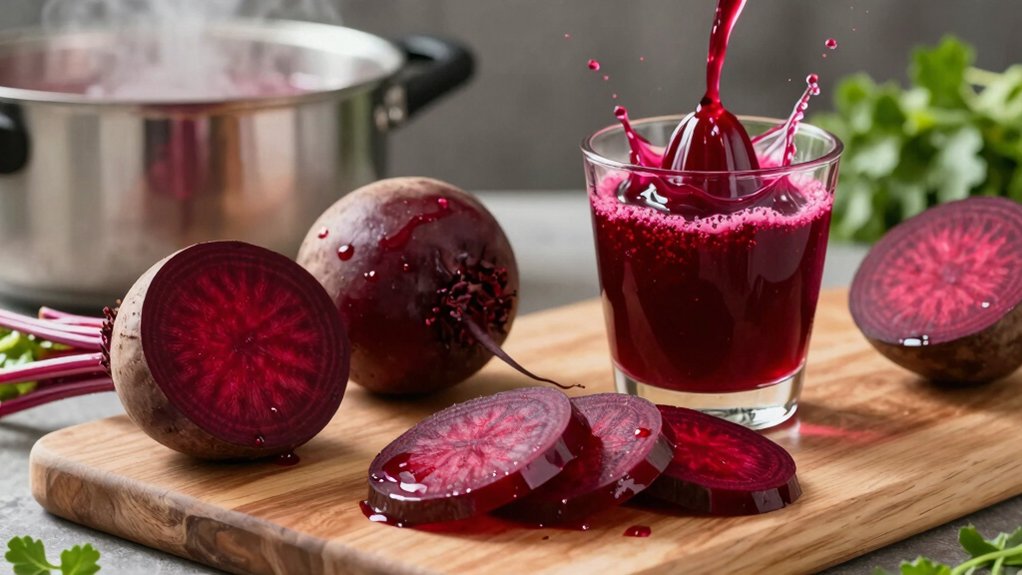
Choosing between boiling and juicing raw beets comes down to your goals and practicality. You’ll decide based on cooking methods and flavor profiles rather than assumptions.
Boiling softens beet roots, reduces fiber, and can mellow earthy notes, making a smooth base for savory dishes or blended drinks.
Juicing preserves color and nutrients in a concentrated form, offering a bright, clean intake without pulp.
If time is tight, juicing wins for efficiency; if you want a cooked texture or integrated flavor in recipes, boiling is preferable.
Consider texture tolerance, storage needs, and subsequent uses.
Both approaches align with evidence-based nutrition when balanced with other vegetables.
In short, choose according to desired texture, mouthfeel, and how you’ll use the resulting liquid or puree.
How Raw Beets Affect Flavor, Texture, and Nutrition
Raw beets bring a distinct earthy sweetness and mineral-rich profile that shifts with preparation. When you slice and crush raw beets, you’ll notice a crisp, crunchy beet texture that quickly softens when you blend or juice, altering mouthfeel.
Flavor often follows moisture content and surface contact; juicing concentrates sweetness while exposing you to higher earthy tones, which can lead to flavor alteration depending on exposure to air and heat during processing.
Nutritionally, raw beet juice preserves vitamin C and certain antioxidants but loses some water-soluble compounds if held long.
For texture, minimal processing yields a bright, slurry-like consistency, whereas grating or grinding creates grit unless strained.
Which Nutrients Survive: Beet Juice vs. Boiled Beets
Beet juice commits many nutrients that raw beets hold, but heat from boiling changes which ones you actually receive. When you juice, you maximize water-soluble compounds and beet antioxidants that stay relatively stable in quick processing, yet some vitamins degrade with heat exposure.
Boiled beets retain minerals like potassium and folate, but water-soluble nutrients may leach into cooking water, reducing what ends up in the juice. In contrast, juice can concentrate certain phytonutrients, yet longer exposure to heat during boiling can diminish nutrient stability.
If your goal is nutrient density, juicing raw beets often preserves more of the fleeting antioxidants, while some minerals remain robust after boiling. Overall, choose method based on which nutrients you prioritize.
When Boiling Makes Sense for Taste and Digestion
Boiling can improve beet flavor and digestion when you’re after a gentler texture and easier chewing, especially for those with sensitive tummies or when you want a milder, sweeter juice.
In practice, boiling reduces fibrous bite, smoothing mouthfeel, which supports easier swallowing and broader acceptability. Flavor considerations show that heat can mellow earthy notes and enhance perceived sweetness, though some volatile compounds may fade, slightly dulling aroma.
For digestion, softer beet tissues may speed gastric processing and lower chewing effort, benefiting folks with dental or gag reflex concerns. Use brief, controlled boiling times to preserve nutrients while achieving the desired texture.
If you prefer more robust flavor, reserve a portion of raw juice for balance. Texture modifications help tailor juicing to personal tolerance and taste.


Prep Methods for Beet Juice: Boiling, Steaming, and Quick Options
You’ve seen how boiling can soften texture and mellow flavor; now, printable prep options help you tailor juice quality. For beet juice, you have three practical routes: boil, steam, or quick raw prep.
Boiling loosens fibers but can dilute color and nutrients if overdone; steam preserves more nutrients and keeps color more intact while still softening.
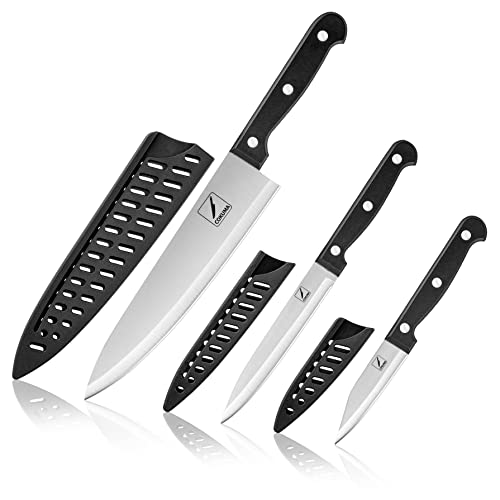
Quick options skip heat entirely, using a sharp knife to quarter the beet crop and feed into juicing equipment with minimal oxidation.
When choosing, consider your juicing equipment and desired texture—softness for smoother blends, or a bit more bite for pulpy finishes.
Time and temperature control matters: shorter boil times, shallow steam, and immediate processing reduce nutrient loss and bitterness.
Quick Test: Which Method Fits Your Juicer or Blender
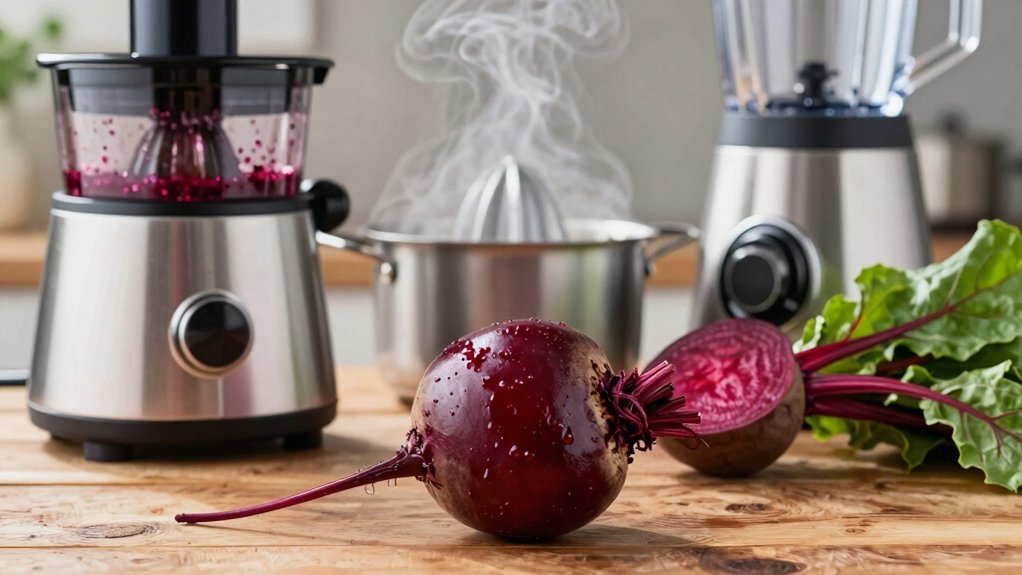
To find the right approach, test how your juicer or blender handles boiled beet prep on a small batch first. Start with a quick try, noting texture, pulp, and any motor strain. Then compare results across methods.
This hands-on check helps you choose the method that reliably fits your machine and yield goals.
Quick Test Fit
A quick fit test helps you decide whether to juice beets with a blender or a juicer. This quick check focuses on texture, fiber tolerance, and end results, so you choose purposefully. You’ll compare pulp yield, ease of cleanup, and how beet skin or peel removal affects taste and nutrition. Use simple trials with small batches to gather evidence from your own setup.
- Assess texture after blending versus extracting to see which aligns with your preferred juice consistency.
- Note cleanup time and equipment ease to gauge practicality.
- Observe how beet skin presence influences color, flavor, and foam.
- Record whether peel removal improves smoothness or is unnecessary for your method.
Evidence-based tip: tailor your approach to your juicer or blender’s capabilities for best results.
Juicer Or Blender Try
A quick test helps you decide whether to juice beets with a blender or a juicer, based on practical results from your own setup. You’ll compare yield, texture, and fiber presence, noting how beet fiber affects volume and thickness.
Run a small batch through both machines with similar beet pieces, using minimal added water for a fair comparison. A blender may produce a smoother pulp, but a juicer often delivers clearer juice and less sediment; this difference matters for color retention in your final beverage.
Track juice yield, color intensity, and ease of cleanup. If you prefer higher fiber in the drink, blend; if you seek lighter, more juice-like consistency, use the juicer.
Your choice should reflect your priorities and equipment realities.
Flavor Tweaks and Color Preservation for Beet Juice
Beet juice gets its vibrant color and distinct earthy aroma from betalains and other pigments, so small tweaks can preserve hue without sacrificing flavor. You’ll want to optimize extraction while avoiding dulling. Practical tweaks below support stable juice color and recognizable Beet flavor.
1) Use fresh beets, slice evenly, and juice promptly to limit pigment loss.
2) Keep pH moderate by a tiny lemon stream; extreme acidity dulls color.
3) Chill juice lightly before serving to minimize separation and aroma drift.
4) Pair with citrus or apples to boost brightness without masking beet notes.
These steps emphasize juice color and Beet flavor, balancing pigment stability with taste. Short, sequential tweaks yield clearer, more vibrant juice while preserving the beet character you expect.
Safety, Storage, and Freshness: Preserving Nutrients After Prep
If you want to preserve nutrients after prep, start with clean storage and prompt chilling, since heat, light, and air accelerate nutrient loss. After juicing or cooking, refrigerate promptly in airtight containers to minimize oxidation.
Store beet juice in opaque or covered jars to reduce light exposure, and label with date to track freshness. For short-term use, consume within 2–3 days; for longer storage, freeze in portioned units to preserve nutrient retention.
Avoid repeated warming and prolonged exposure to air; decant only what you’ll use. When thawing, do so in the fridge rather than at room temperature to protect nutrient retention.
Consistent cold handling and proper sealing are simple, effective storage tips that help maintain nutrient retention without sacrificing flavor.
A Practical Decision Guide: Choose the Best Beet Prep for Your Goals
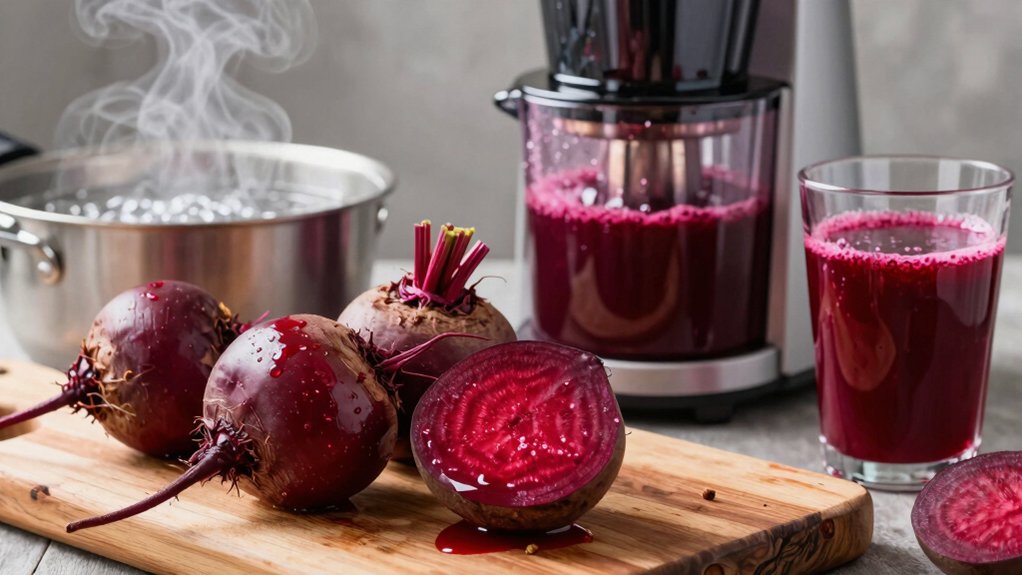
Try to pick a beet prep based on your goals: flavor, nutrient retention, or convenience. Your choice affects beet color, beet texture, and how you’ll enjoy juicing it.
- Flavor-first: supports natural sweetness and vibrant color, with milder beet texture after gentle cooking.
- Nutrient-focus: preserves polyphenols and betalains when you minimize heat time, keeping beet color more intense.
- Convenience: raw prep saves steps, but may yield rougher texture in juice and variable color.
- Balance: a quick boil or steam briefly to optimize texture while retaining key nutrients for smoother juice.
Assess your schedule and taste priorities, then tailor prep to get consistent results.
Frequently Asked Questions
Does Boiling Beet Juice Reduce Nitrate Levels?
Boiling beet juice can slightly reduce nitrates, but not entirely; beet texture changes and some nutrients degrade. You’ll see improved boiling efficiency if you simmer gently, then strain. For nitrate reduction, consider light steaming or cold-press juicing instead.
Can Boiling Beets Cause Nutrient Loss Beyond Vitamin C?
Boiling beets can cause nutrient loss beyond vitamin C, but moderate heat minimizes losses. To maximize nutrient preservation, boil briefly and cool quickly; note flavor can be enhanced. For practical results, monitor texture and taste for nutrient preservation and flavor enhancement.
Is Boiled Beet Juice Safer for Fermentation or Storage?
Boiled beet juice isn’t inherently safer for fermentation or storage, but it can reduce enzyme activity, aiding shelf stability. You’ll improve juicing efficiency if you strain for smoother Beet texture and monitor fermentation conditions accordingly.
How Does Boiling Affect Beet Juice pH and Acidity?
Boiling beet juice slightly raises pH, reducing acidity; this pH alteration lowers perceived sharpness. You’ll note an acidity impact as heat softens pigments and minerals, but overall acidity remains substantial, guiding adjustments in blends and fermentation likelihood.
Are There Flavor-Neutral Boiling Methods for Juicers?
Yes, there aren’t truly flavor-neutral boiling methods for juicers; opt for quick steaming or cold-press prep instead. For flavor preservation, use gentle Cooking methods, minimize water exposure, and juice promptly to retain nutrients and taste.
Conclusion
Boiling beets before juicing isn’t always necessary; raw juiced beets preserve more heat-sensitive nutrients, and steaming can strike a balance between flavor and nutrition. If you’re after faster prep and brighter color, juice raw; if you want milder flavor and easier digestion, lightly boil or steam first. Objection: boiling loses nutrients. Reality: short boiling or steaming minimizes loss and can improve texture, making beet juice smoother and more enjoyable for daily use. Choose based on your goals and juicer.