
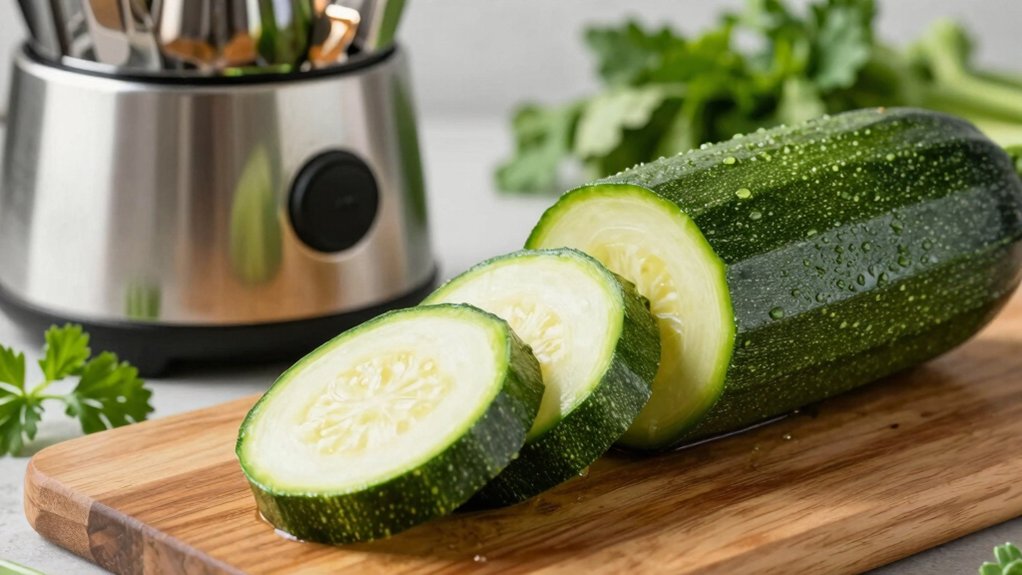
Yes, you can juice zucchini. It creates a light, hydrating base with subtle vegetal notes that pairs well with citrus, cucumber, or herbs. Use thin-skinned varieties and trim the ends to reduce bitterness. Juicing yields a clearer juice with less pulp, though it has less fiber than the whole fruit. For best flavor, combine with lemon or lime and a touch of apple or cucumber. If you keep going, you’ll discover more tips and recipes.
How Juicing Zucchini Affects Your Juice

Juicing zucchini lightens and brightens your juice without adding strong flavors. When you juice it, you introduce high water content and subtle vegetal notes that can dilute stronger fruits or greens.
You’ll notice a mild sweetness and a clean, invigorating finish, especially if you pair zucchini with citrus or cucumber. The fiber is reduced in juice, so you get quick absorption of vitamins and minerals, but you’ll lose some fullness from pulp.
Consider varieties like zucchini varieties for different textures and flavors, though most home juicers handle standard green zukes well. Seasonal availability affects sweetness and moisture; peak season typically yields juicier, more balanced runoff.
Use zucchini judiciously to preserve desired intensity in your blends.
Prep Your Zucchini for Juicing: Step-by-Step
Start by washing the zucchini thoroughly to remove dirt and pesticides.
Next, trim and core the edges to prevent bitterness, then shred to maximize juice extraction.
Finally, extract and collect the juice efficiently, using steady, even pressure for consistent yield.
Wash Thoroughly First
Before juicing, rinse zucchini under cool running water to remove dirt and surface residues. You’ll want a quick scrub with a soft brush to dislodge soil and any debris, especially near stems where garden pests can hide. Pat dry with a clean towel to prevent extra moisture from diluting juice.
If you notice waxy coatings or residue, a mild soap-free wash is acceptable, then rinse thoroughly. Inspect for bruises or cuts; discard questionable portions to avoid off-flavors. Keep zucchini refrigerated until juicing to preserve flavor and nutrients, and follow storage tips for freshness.
Don’t soak slices long, which can waterlog flesh and weaken juice quality. Proper cleaning reduces contamination risk and supports consistent extraction, yielding smoother juice and better overall results.
Trim and Core Edges
To prep the zucchini for extraction, trim off the ends and remove any rough or discolored edges. You’ll want clean surfaces to reduce bitterness and pith in the juice. Core edges lightly if they feel fibrous or tough, but avoid removing too much flesh, which can reduce yield. Use a sharp knife or a dedicated peeler to minimize waste, following peeling techniques that expose uniform flesh.
Rinse again if needed after trimming, then pat dry to prevent water dilution during juicing. Store trimmed pieces properly; wrap loosely and refrigerate if juices won’t be made immediately. For long storage, consider freezing peeled and cut pieces in a single layer, then transferring to a bag.
Storage tips: label date and use within 3–5 days.
Shred and Extract Juice
Once your zucchini are trimmed and prepped, shred them into uniform pieces and press gently to break down fibrous strands. You’ll then extract juice by passing the shreds through a fine mesh or juicer, using a steady, moderate rate to minimize pulp carryover.
Collect the liquid separately from the pulp to assess clarity; a second pass with a cheesecloth can improve output if desired. Note that zucchini juice is mainly water with trace nutrients, so don’t expect sweetness or strong flavor.
For storage, refrigerate juice in a sealed container and use within 24 hours to preserve nutrients and minimize oxidation.
Consider zucchini cultivation practices when planning harvest timing to maintain consistent yield. Proper zucchini storage and handling support cleaner juice and better results.
Blender vs. Juicer for Zucchini: Which Method Wins?
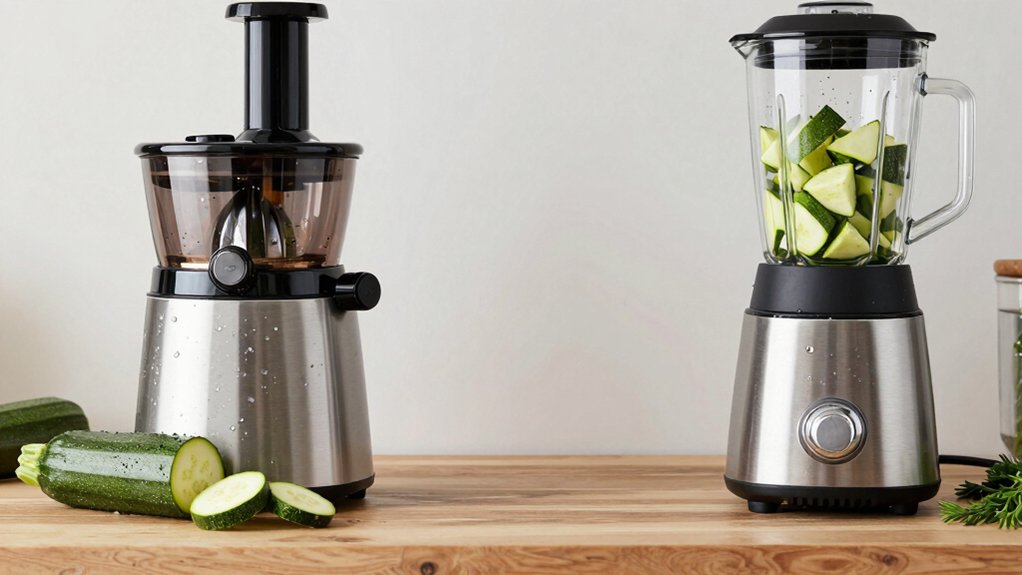
Blender or juicer? When you’re deciding between methods for zucchini, consider texture, yield, and nutrient retention. A blender creates a thicker pulp, requiring straining for juice, but you gain more control over fiber and can add water or ice for dilution.
A dedicated juicer extracts clearer juice with less pulp, often delivering faster results and easier cleanup. Evidence suggests juicers preserve many nutrients, yet blenders preserve phytochemicals in the whole slurry if you don’t strain.
If you’re aiming for a smooth juice with minimal prep time, a juicer wins; for a versatile, fiber-rich drink, blend and strain. Remember zucchini varieties and seasonal availability influence sweetness and water content, subtly shifting results.
Choose based on your texture preference and how you plan to use the juice.
Best Flavor Pairings to Elevate Zucchini Juice
You’ll notice that herbs boost zucchini juice with bright, aroma-driven notes while keeping flavor balanced and fresh.
Pairing in citrus—like lemon or lime—adds brightness without overpowering the zucchini’s sweetness, helping to maintain a clean finish.
Consider how light textures and a touch of sweetness—think apple or pear—support mouthfeel and round out the juice.
Flavor-Boosting Herbs
Herbs can quickly lift zucchini juice with bright, complementary notes; start with basil, mint, or cilantro to add freshness without overpowering the vegetable base. You’ll notice that delicate herbs work best when balanced with a neutral base like cucumber or plain zucchini juice.
Opt for mild varieties to avoid bitterness, and add herbs in small increments, tasting as you go. The strongest flavor tends to come from longer steep times only if you use crushed leaves, not whole sprigs.
For efficient flavor enhancements, combine herb combinations such as basil with mint for brightness, or cilantro with a touch of parsley for freshness. Aim for a clean, subtle finish that supports the zucchini rather than masks it, preserving the juice’s natural sweetness and significance.
Complementary Citrus Notes
Citrus notes can brighten zucchini juice without overpowering its natural sweetness, offering a clean, invigorating contrast. You’ll get the best results by choosing balanced citrus accents rather than sharp acids. Lemon and lime provide brightness without masking zucchini’s grassy undertones, while yuzu adds a subtle floral depth if used sparingly.
Pair fresh citrus zest with a splash of juice to avoid overpowering the juice’s body. Rotate citrus choices to suit your palate and the zucchini variety you’re using. Zucchini varieties with lighter, mild profiles respond well to citrus without becoming sour.
For storage tips, juice promptly or refrigerate briefly in airtight containers to preserve aroma. Use Stored tip-offs: avoid prolonged exposure to air, and label batches.
Texture and Sweetness Balance
Texture and sweetness balance is key for a vibrant zucchini juice; pairing the right mouthfeel with gentle sweetness prevents the drink from feeling thin or cloying. You can achieve this by selecting textures that complement zucchini’s mild base, then layering subtle sugars from natural ingredients. Focus on mouthfeel and flavor harmony for reliable results, especially when seasonal availability varies.
1) Choose thickening elements like cucumber or pear to add body without overpowering zucchini varieties.
2) Add a touch of citrus or berries in moderation to brighten sweetness while keeping the juice invigorating.
3) Balance sweetness with bitterness from greens or herbs to enhance depth, preserving the character across seasonal availability.
Zucchini Juice Nutrition: What You Gain

Zucchini juice offers a light, nutrient-packed way to boost hydration and daily vegetable intake. You gain mainly vitamin C, potassium, and antioxidants, with modest calories. This juice provides hydration that supports circulation and kidney function, especially when you keep water intake up.
You’ll also ingest enzymes and anti-inflammatory compounds found in fresh squash, which may aid digestion and skin health. While micronutrients vary with variety and ripeness, you won’t rely on zucchini juice for fiber; eat whole produce for that benefit.
For storage, plan to consume juice soon after pressing, or refrigerate briefly in a sealed container. If you’re incorporating it into meals, consider zucchini cooking tips that preserve nutrients, avoid overheating, and balance flavors with lemon or cucumber.
Common Juicing Mistakes With Zucchini: and How to Fix Them
Even small mistakes can derail zucchini juice, but most are easy to fix with simple tweaks. You’ll notice two common errors: using overripe zucchini and neglecting seed removal. Both undermine texture and taste, and they’re quick to correct with consistent prep and technique.
1) Watch ripeness: choose firm, fresh zucchinis to minimize watery juice and off-flavors.
2) Do seed removal when needed: if seeds are large or tough, scoop them out to improve smoothness and mouthfeel.
3) Blend and strain properly: a brief blend, followed by a light strain, prevents grit and maximizes yield.
5 Quick Zucchini Juice Recipes to Try Today
Ready to put those tweaks into practice, here are fast zucchini juice options you can whip up today. Start with a simple cucumber-zucchini pair for hydration, then add lemon for brightness and ginger for a subtle kick. Use 1 medium zucchini plus 1/2 cucumber, 1 small lemon, and a knob of ginger.
Balance with a splash of water and ice. If you want extra fiber, include a handful of spinach. Choose zucchini varieties with thin skins for smoother juice.
Juicing equipment matters: a high-speed blender with a fine mesh or a dedicated juicer yields smoother results; a blender may require straining.
Store leftovers in the fridge for up to 24 hours, but juice fresh when possible to maximize nutrients and flavor.
Frequently Asked Questions
Is Zucchini Juice Safe for Diabetics and How to Monitor Sugar?
Zucchini juice is safe for diabetics in moderation; monitor carbohydrate intake and blood sugar after drinking. It’s low in calories with fiber and hydration. Nutritional benefits include vitamins; flavor profile is mild, so pair with greens or citrus.
Can You Juice Zucchini Peels or Should You Peel It First?
Yes, you can juice zucchini peels, but wash thoroughly; peeling isn’t required. If you notice zucchini bitterness, discard imperfect pieces. Peels add fiber and nutrients, yet bitterness or pesticide residues may warrant peeling for smoother flavor and safety.
Does Zucchini Juice Have a Strong Taste or Bitter Notes?
Zucchini juice usually has a mild flavor with low bitterness; the flavor profile is gentle, not sharp. Bitterness level is typically minimal, especially when using young, fresh zucchini and avoiding over-processing. Evidence suggests minimal off-notes.
How Long Does Zucchini Juice Stay Fresh in the Fridge?
Juice preservation is brief: refrigerate zucchini juice for about 24 to 48 hours. You’ll preserve flavor profile best by sealing tightly and storing cold, then shake before serving. Think of the juice as a careful traveler, not a promise.
Can You Juice Zucchini Stems or Blossoms Safely?
Yes, you can juice zucchini stems and blossoms, but trim tough stems and use blossoms promptly. Zucchini stem benefits include nutrients; zucchini blossom safety requires washing, removing stamens, and avoiding pesticides to minimize contamination.
Conclusion
Sure—here’s a concise, evidence-based ending in second person with a rhetorical question:
Zucchini juice is mild but versatile, so pair it with greens, cucumber, lemon, or herbs to boost flavor and nutrition. Both juicers and blenders work; just remember to strain or blend smoothly for texture you like. You’ll gain hydration, vitamins, and a light, adaptable base. Are you ready to expand your veggie intake with a quick, tasty sip that supports your daily goals? Enjoy experimenting and refine as you go.