
Table of Contents
If you’ve watched a juicer spit out what looks like mountains of perfectly good vegetable pulp while extracting a relatively modest glass of juice, you’ve probably found yourself wondering is juicing wasteful—and honestly, it’s a fair question.
Juicing isn’t wasteful if you manage pulp wisely, store juice properly, and upcycle byproducts into meals, stocks, or fiber supplements. Pulp yields vary (10–40% of produce) and depends on produce type and juicer. To cut waste, batch juice in small portions, refrigerate promptly, and use airtight, lightproof containers. Reuse pulp in baking, soups, or veggie burgers, or freeze for later. If you keep optimizing your process, you’ll see waste drop and value rise as you explore more ideas.
What Juicing Is and What It Delivers
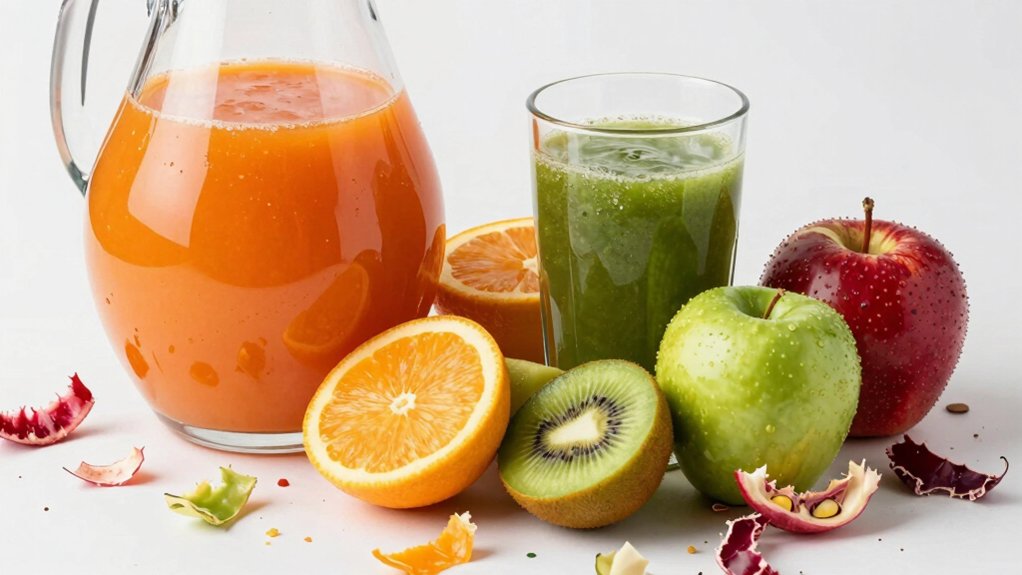
Juicing is the process of extracting liquid from fruits and vegetables, leaving behind pulp and fiber. You’ll typically get a nutrient-dense liquid that concentrates vitamins, minerals, and plant compounds faster than whole-fruit eating.
Practically, you can tailor batches to your needs, using a wide range of produce to diversify antioxidants and micronutrients. Juicing sustainability hinges on selecting ripe, seasonal produce and using the pulp thoughtfully or composting it to close the loop.
If you’re mindful, you can minimize waste by batching portions, storing promptly, and washing produce before processing. Kitchen waste becomes a metric for improvement rather than a failure; the key is balancing juicing with whole-food intake and a plan to repurpose or recycle pulp.
This approach supports evidence-based, practical nutrition.


How Much Waste Juicing Typically Produces
While juicing does concentrate certain nutrients, it also produces a substantial amount of pulp that varies by produce and juicer type. In practical terms, expect roughly 10–40% of the weight of produce to end up as pulp, with higher yields from leafy greens and citrus peels, and lower yields from juicy fruits.
The juicer design matters: masticating models tend to produce drier pulp, while centrifugal ones leave wetter leftovers.
Measuring waste requires considering produce prep, filters, and whether you recycle pulp into recipes. Juicing waste isn’t inherently wasteful if you repurpose pulp for baking, smoothies, or soups; this is pulp preservation in action.
Track your inputs and outputs for a clearer efficiency picture, and compare waste percentages across setups to choose what minimizes juicing waste for your needs.
Do Juices Lose Nutrients? What Survives
You’ll want to know which nutrients hold up during juicing and which don’t, so we can compare factors like nutrient degradation, air exposure, and how fresh juice stacks up against processed options.
Evidence shows some vitamins are sensitive to oxidation and light, while minerals and fiber stay more stable, but storage time and exposure can still trim counts.
Start by considering how the juicing method and timing influence what actually survives, so you can make practical choices about freshness and consumption.
Nutrients Degradation Factors
Nutrition degrades during processing, but several factors determine how much survives juicing. You examine integrity of vitamins, antioxidants, and minerals as you pull juice from produce. Temperature, light exposure, and processing speed matter: heat accelerates degradation, while rapid chilling helps preserve nutrients. Oxidation begins the moment you cut, so immediate handling and minimal air contact reduce loss, especially for vitamin C and polyphenols.
Fiber retention isn’t just waste; pulp can protect nutrients when used, yet too much separation increases exposure of delicate compounds. Juicing technology influences outcomes: hydraulic press vs. centrifugal systems differ in heat generation and shear, affecting nutrient retention.
If you rely on pulp composting, you recycle nutrients back into soil, supporting sustainability while preserving overall juice value.

Juicing Air Exposure Effects
Exposure to air starts immediately after juicing, and it matters for nutrient fate. When you expose juice to air, air oxidation begins, accelerating vitamin and phytochemical loss. Immediate refrigeration slows this process, but timing still matters for practical intake.
You can minimize damage by transferring juice to airtight bottles and leaving minimal headspace to reduce oxygen exposure. Use lightproof containers or opaque bottles, since light combined with air can amplify degradation.
Fresh pulp preservation helps retain fiber and some antioxidants if you drink the pulp or store it properly, but avoid introducing contaminants that hasten spoilage.
Consider consuming juice within 24 hours for best nutrient retention, especially for sensitive compounds like vitamin C. Prioritize cold storage, quick consumption, and airtight sealing to maximize nutrient preservation.
Fresh vs Processed Losses
Fresh juice loses some nutrients after pressing, but the extent depends on the juice’s composition and how it’s handled. In practical terms, you’ll see small declines for vitamins like C and some polyphenols when exposed to air, light, and heat. Yet many minerals and enzymes stay intact.
Processed juice can differ: pasteurization reduces heat-sensitive compounds, while high-pressure processing preserves more nutrients but may alter flavor.
Juicing efficiency matters: quick-start processing minimizes dwell time, and cold handling helps preserve labile compounds.
Fresh juice often delivers higher bioavailability for certain antioxidants, yet some nutrient losses are inherent to juicing versus whole fruits.
Pulp sustainability matters too; using the pulp in recipes or composting can reduce waste and maximize overall yield.
Juicing vs. Whole Produce: When It Makes Sense
When deciding between juicing and eating whole produce, consider both nutrients and practicality. You’ll get quicker, higher-concentration vitamins from juice, but you lose fiber that supports gut health and satiety.
Juicing can fit busy days or certain dietary goals, yet it often requires more produce input for the same calorie intake. Practical use hinges on purpose: use juice to augment hydration or boost micronutrient intake, and keep whole fruit for fiber, fullness, and starch-containing meals.
Juicing sustainability matters: consider equipment efficiency, energy use, and waste management. Don’t overlook pulp: pulp nutritional value varies by type, but it can be repurposed into baking or smoothies, reducing waste.
Balance and timing matter; pair juice with whole produce to maximize nutrient diversity and minimize gaps.


The Real Cost: Juicing Compared to Buying Produce
Juicing costs matter once you compare the math to simply buying produce. When you price ingredients, equipment, and waste, juicing often isn’t cheaper per serving than fresh juice from a store or farmers market.
But you can optimize value by batching produce, choosing seasonal items, and reusing leftovers. The key is practical efficiency, not hype.
- Assess true cost per cup, including electricity and machine wear
- Highlight juice storage needs to minimize spoilage
- Choose pulp composting to recover nutrients and reduce waste
For accuracy, track yields, shelf life, and spoilage. Juicing can be cost-effective if you prioritize whole-fruit blends, plan purchases, and reuse every part you can.
When done thoughtfully, you balance convenience with real savings and less waste.
Measuring the Environmental Footprint and How to Upcycle Pulp
You’ll start by grounding your assessment in measurable inputs like water use, energy, and waste produced by juicing.
Then, you’ll explore practical upcycling ideas for pulp, from composting to simple recipes, to close the loop.
This evidence-based view helps you compare footprints and spot practical, low-wuss waste options.
Measuring Footprint Basics
Measuring the environmental footprint starts with clear, practical boundaries: what inputs we count, how we track energy and water use, and which emissions matter most for juicing. You’ll set scopes, define system boundaries, and choose transparent metrics to compare options. Use consistent data sources, document assumptions, and update as new evidence emerges.
- Track energy, water, and material inputs at the juicing stage, including electricity for equipment and wash water.
- Define emissions meaningful to juicing, prioritizing those from processing, packaging, and distribution.
- Tie footprints to practical actions, like choosing sustainable packaging and improving water conservation.
Evidence supports simple, repeatable methods. By standardizing steps, you can monitor progress, compare juicing options, and drive measurable reductions in impact.
Upcycling Pulp Ideas
Upcycling pulp isn’t just a clever afterthought; it’s a practical way to shrink the environmental footprint of juicing by turning waste into value. When you repurpose pulp, you cut landfill volume and save energy tied to disposal.
Start with measurable goals: target waste reduction by a specific percentage and track outputs from reuse projects. Pulp reuse works across a spectrum of applications—from baking and baking mixes to plant-based stock, crackers, and fiber supplements.
Each option reduces demand for virgin materials and lowers overall emissions. Choose processing methods that suit your scale, whether dehydrating for longer shelf life or drying and grinding for texture.
Pair ideas with consumer education to boost adoption, and document results to strengthen decisions about waste reduction.
Smart Pulp Uses: Recipes and Reuses
Smart pulp from juicing isn’t waste when you repurpose it; it can become quick, practical ingredients for your kitchen. You’ll find evidence-based uses that minimize waste while maintaining juice clarity and flavor. Pulp preservation matters: store it airtight, freeze in portions, and label with date to prevent spoilage.
Use for texture, moisture, and fiber in meals, not as a stand-alone ingredient. Below are practical ideas you can start today.
- Add to soups and veggies for body and milder sweetness
- Bake muffins, pancakes, or crackers to boost fiber and moisture
- Mix into burger patties or meatloaf for binding and nutrition
Practical Guidelines and Common Juicing Myths Debunked
While juicing can be waste-conscious, many myths distort what’s practical. You can separate myth from method with clear guidelines that balance efficiency and nutrition.
Prioritize juice preservation by consuming soon after pressing or refrigerating promptly, and consider small, frequent batches to minimize nutrient loss.
If you need longer storage, freeze portions in airtight containers, labeling dates to track freshness.
Don’t overlook pulp composting as a practical waste-reduction step; use the leftover fiber in smoothies, baked goods, or soil amendment to close the loop.
Focus on realistic portions, sensible equipment care, and safe handling to prevent spoilage.
Question sensational claims, seek evidence, and tailor practices to your kitchen, schedule, and goals.
Frequently Asked Questions
How Can Juicing Impact Household Waste Beyond Pulp?
Juicing can reduce household waste beyond pulp by using compostable or reusable packaging and minimizing juice packaging waste; you save energy consumption when you batch juice, store properly, and choose efficient appliances, which lowers overall energy use and waste.
Are There Low-Waste Juicing Methods or Tools?
Juicing just judiciously reduces waste; try practical, proven methods: use compact, compatible juicer parts, minimize pulp, rinse promptly, and recycle juicer parts. Opt for reusable juice containers to curb clutter and capitalize on recycling juicer parts.
Does Juicing Affect Water Usage in Households?
Juicing can increase water use through washing and equipment cleanup, but efficient practices help. You’ll boost fruit preservation and optimize juice shelf life by rinsing small batches, using reusable tools, and storing properly to minimize waste and water impact.
Can Juicing Reduce Overall Grocery Waste?
Juicing can reduce overall grocery waste when you plan, store, and use pulp wisely. You’ll improve food preservation by using pulp for meals, and you’ll boost ingredient efficiency through creative recipes, trimming waste and stretching ingredients. Satirical rhythm, evidence-based practicality.
What Are Best Practices for Composting Juice Pulp?
Yes, you compost juice pulp properly. For best practice, separate fruit peels and seeds, grind or chop tough scraps, and mix with dry carbon sources. You’ll improve decomposition and reduce odors by balancing moisture and seed disposal.
Conclusion About Is Juicing Wasteful
Juicing isn’t inherently wasteful, but it can be if you trash the pulp. You’ll typically waste some fiber, seeds, and zest, yet you can upcycle pulp into muffins, crackers, or veggie burgers. When you compare costs and energy, juicing beats buying pre-made juices but may not beat whole produce for nutrition per bite. Think of pulp as the “leftover gold”—save it, reuse it, and you’ll maximize health and resources rather than squander them.