
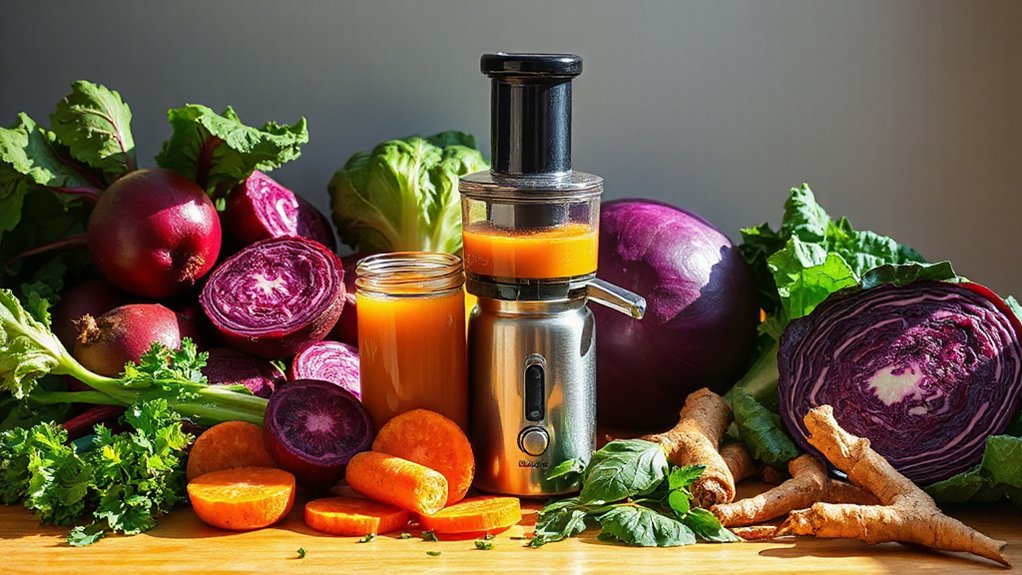
Did you know that leafy greens can deliver more vitamin K per cup than most people get in a day? You’ll want a balanced mix of greens, hydrators like cucumber and celery, and carrot or beet roots to keep flavors—yet nutrients—well-rounded. As you explore which ingredients boost antioxidant intake and absorption, you’ll see how small tweaks change your juice’s profile and benefits. Curious what combination best fits your goals? Keep going to uncover practical formulas and tips.
Why Nutrient-Dense Ingredients Matter for Juicing

Nutrient-dense ingredients maximize the health benefits of juicing by delivering more vitamins, minerals, and phytonutrients per sip. You’ll appreciate how historical context informs today’s choices, linking traditional produce use to modern extraction methods.
Juicing trends emerged from a desire to optimize nutrient intake without fiber heaviness, shaping ingredient selection toward high-density options. In practice, choosing vibrant, varied produce supports broad micronutrient coverage and bioactive compounds that may influence inflammation and immunity.
Evidence shows that incorporating a spectrum of colors and plant classes enhances phytonutrient variability, not just quantity. You’re not chasing miracle claims; you’re pursuing consistency, credibility, and outcomes you can track.
Leafy Greens That Power Your Juice
Leafy greens are the backbone of nutrient-dense juicing, delivering a concentrated mix of vitamins, minerals, and phytonutrients with relatively few calories. You’ll notice that greens like spinach, kale, and arugula boost vitamin A, C, and K levels without overwhelming sweetness.
When you juice, rotate varieties to maximize a broad nutrient profile and minimize taste fatigue. Pair greens with cucumber or celery to improve mouthfeel and hydration, then add a squeeze of lemon for vitamin C–driven iron absorption.
Focus on fresh leaves, thoroughly washed, with stems intact for fiber balance. Juicing tips include mixing tender and sturdy greens to maintain juice yield and flavor.
This approach supports consistent, belonging‑oriented routines that sustain long‑term health goals. Leafy greens, juicing tips.
Mineral-Rich, Low-Sugar Vegetables for Balance
When you optimize your juice blends with mineral-rich, low-sugar vegetables, you get steady micronutrient support without spiking sweetness. These produce choices offer reliable calcium, potassium, magnesium, and trace minerals in modest sugar amounts, helping you balance flavors while preserving stability.
Think of cruciferous options like bok choy and cabbage, and then add high-iron, low-sugar picks such as kale, spinach, and Swiss chard in measured portions. These mineral-rich vegetables contribute alkalinity, supporting hydration and electrolyte balance without overwhelming taste.
Pair them with a modest citrus note to enhance absorption, not sweetness. For sustained energy and clarity, prioritize variety within low-sugar vegetables, rotate daily, and monitor personal tolerance.
Your juice becomes more balanced, nourishing, and approachable for every member of your community.
Root Veggies for Sweetness, Fiber, and Stability
Root vegetables contribute natural sweetness and added fiber that can support juice texture and fullness without oversweetening. You’ll notice how varieties like carrots and beets pair with others to stabilize extraction, improving yield and mouthfeel.
Sweetness and Fiber Boost
What root veggies bring sweetness, fiber, and stability to a juice blend, and why does that matter for both flavor and digestion? You’ll notice natural sugars from carrots, beets, and parsnips lift palates while okay amounts of soluble fiber support gut health and slower sugar absorption. This balance enhances mouthfeel, reduces aftertaste, and steadies energy delivery.
- Carrot and beet pairings create warm, sunlit sweetness without overpowering acidity.
- Parsnip adds creamy texture that improves juicing yield and stability.
- Ginger or citrus accents sharpen flavor while aiding digestion.
- Light leafy greens contribute contrast and nutrition without dulling sweetness.
- Gentle spice blends expand flavor combinations and highlight juicing techniques.
This approach builds belonging through practical, evidence-based choices.
Stability for Juicing
Stability in juicing hinges on selecting root veggies that not only taste sweet but also contribute structure and soluble fiber to moderate texture and digestion. When you choose carrots, parsnips, and sweet potatoes, you add natural binding that helps juice hold together without separation.
The fiber oils the system, supporting a smoother mouthfeel and more consistent extraction across batches. To maintain stability, peel and chop evenly, feed steadily, and avoid overprocessing softer roots that can seem watery.
Juicing equipment matters: use a masticating or slow juicer for gentler, steadier pressings that preserve enzymes and reduce heat.
After juicing, practice proper storage techniques—refrigerate promptly in airtight containers and consume within 24 to 48 hours to preserve color and nutrients.
Belonging grows from reliable routines you can trust.
Superfood Add-Ins to Boost Antioxidants
You can boost antioxidant intake by adding small amounts of nutrient-dense superfoods to your juicer. Foods like berries, leafy greens, and flaxseed provide measurable antioxidant compounds that support cellular health.
We’ll examine how these add-ins contribute to your overall antioxidant power and nutrient density.
Antioxidant Power Boost
Antioxidant power is boosted when you add nutrient-dense superfoods like blueberries, spinach, and acai to your juices, delivering a concentrated punch of polyphenols, vitamins, and minerals. You’ll maximize benefits by pairing flavors thoughtfully and preserving nutrients through gentle handling and proper storage.
- Flavor combinations that enhance antioxidant profiles without overpowering natural tastes
- Timing your juice consumption to retain heat-sensitive polyphenols
- Pairings with citrus or ginger to improve absorption and balance
- Minimal processing to protect delicate antioxidants during extraction
- Storage strategies that minimize degradation and maintain freshness
When you choose these add-ins, you join a mindful community focused on vitality. Juice preservation matters, and evidence supports mindful mixing, quick consumption, and proper refrigeration for lasting impact.
Nutrient Dense Boosters
Choose boosters with clear, evidence-backed benefits and compatibility with your base juice. Practically, start with ¼ to ½ teaspoon of most powders, or a tablespoon of seeds, then adjust for texture and sweetness.
Flavor combinations matter: pair bitter greens with citrus or berries to balance tartness, or blend mild greens with apple for smoothness.
For presentation, glowingly vibrant hues signal nutrient richness, inviting continued exploration. Your juice becomes a confident, shareable ritual, reinforcing a sense of belonging to a health-forward community.
Fresh Herbs and Citrus to Elevate Flavor and Nutrition
Fresh herbs and citrus brighten juice with bright, low-calorie flavor while boosting nutrition. You’ll notice how herb varieties and citrus benefits complement sweetness with aromatics, polyphenols, and vitamin C, supporting daily well-being. Use them to fine-tune acidity, balance bitterness, and enrich mouthfeel without added sugar.
- Herb varieties offer targeted phytochemicals that may reduce oxidative stress
- Citrus benefits include vitamin C and flavonoids that aid iron absorption
- Fresh zest amplifies aroma and perception of sweetness with minimal calories
- Pair cilantro, basil, or mint for unique metabolic and digestive cues
- Ginger, lemon, or lime juice can enhance transparency of other nutrients
Incorporate these components thoughtfully to build flavors and belong to a mindful, nutrient‑dense routine.
Build a Nutritious, Great-Tasting Juice: Step-by-Step Formulas
Craft a step-by-step approach to building nutritious, great-tasting juice by outlining core formulas you can customize with what’s on hand.
Begin with a base formula: 60% vegetables, 40% fruit for balance, then add a protein or healthy fat option (nuts, seeds, avocado) to improve satiety.
Build a flavor ladder by pairing greens with citrus, then introduce herbs or ginger for brightness.
Use the “60/30/10” guideline to maintain texture and nutrition: 60% produce, 30% liquid, 10% extras.
Consider flavor combinations that emphasize natural sweetness without excess sugar, and adjust via juicing equipment settings to maximize juice yield.
Document outcomes to refine future batches, enhancing belonging through shared, evidence-based results you can trust.
Quick Shopping and Prep Tips to Maximize Nutrient Retention
When you shop, choose produce that’s firm, vibrant, and free of bruises, and prioritize fresh leafy greens, berries, and citrus with intact peels or skins. To maximize nutrient retention, prep efficiently and store properly, aligning with meal prep strategies and practical juicing equipment tips. Keep produce cold, wash briefly, and trim only what you’ll immediately juice. Use airtight containers for prepped items and juice promptly for peak vitamins. Balance fiber-rich ingredients with hydrating produce to support digestion and satiety.
- Plan batch juicing windows to minimize time between prep and consumption
- Opt for a reliable juicing setup with easy cleanup and minimal oxidation
- Slice produce uniformly to ensure consistent extraction
- Prep greens separately from high-sugar fruits to control flavor
- Label containers with date and main ingredients for freshness tracking
Frequently Asked Questions
How Often Should I Rotate Ingredients for Maximum Nutrients?
You should rotate ingredients every 2–3 days to maximize nutrient stability and achieve ingredient variety, supporting sustained energy and taste. This practice strengthens nutrient stability, encourages ingredient variety, and helps you feel confident and connected with your choices.
Can Juicing Remove Fiber Entirely From These Ingredients?
Juicing doesn’t remove all fiber; it reduces insoluble fiber while retaining some soluble fiber, so you still get fiber retention overall. Expect some nutrient loss from exposure, but you preserve many micronutrients if you juice fresh and quickly.
Do Organic Options Significantly Outperform Conventional for Juicing?
Organic benefits show modest advantages in some nutrients and pesticide exposure, but conventional differences often depend on farming practices and freshness. You’ll want to choose produce wisely, weighing organic benefits against cost and availability for your juicing routine.
Will Blending Instead of Juicing Preserve More Nutrients?
Quite frankly, blending preserves more nutrients than juicing, you’ll retain fiber and phytochemicals, and you’ll feel included in the science crowd; nutrient retention improves, blending benefits outweigh juicing when you value fullness and consistency.
Are There Safety Concerns With High-Nutrient Greens in Juice?
Yes, there are safety concerns with high-nutrient greens in juice: watch for green toxicity and pesticide residue, especially if you don’t source organic. You should wash thoroughly, rotate greens, and test for contaminants to belong safely.
Conclusion
Immerse yourself with greens, roots, and berries, and your juice becomes a well-balanced, nutrient-dense daily ritual. As you sip, think of ancient gardens and modern labs—nature’s vitamins meeting tested methods, fueling you with clarity and stamina. You’ll taste hydration, sweetness, and brightness in every glass, evidence of careful pairing and fresh prep. Keep it simple, rotate produce, and trust your juicer to preserve nutrients while you savor the science-backed benefits.