

Do daily green juice claims stand up to scrutiny, or is it just a fashionable habit? You’ll weigh real nutrients, gut-supporting fiber, and energy effects against practical limits like sugar load and cost. With a data-driven view, you’ll see how small, consistent tweaks to greens, portions, and timing can matter. Stay with me as we unpack evidence, trade-offs, and actionable tips to decide if this practice fits your lifestyle.
How Daily Green Juice Can Boost Your Energy in 5 Days
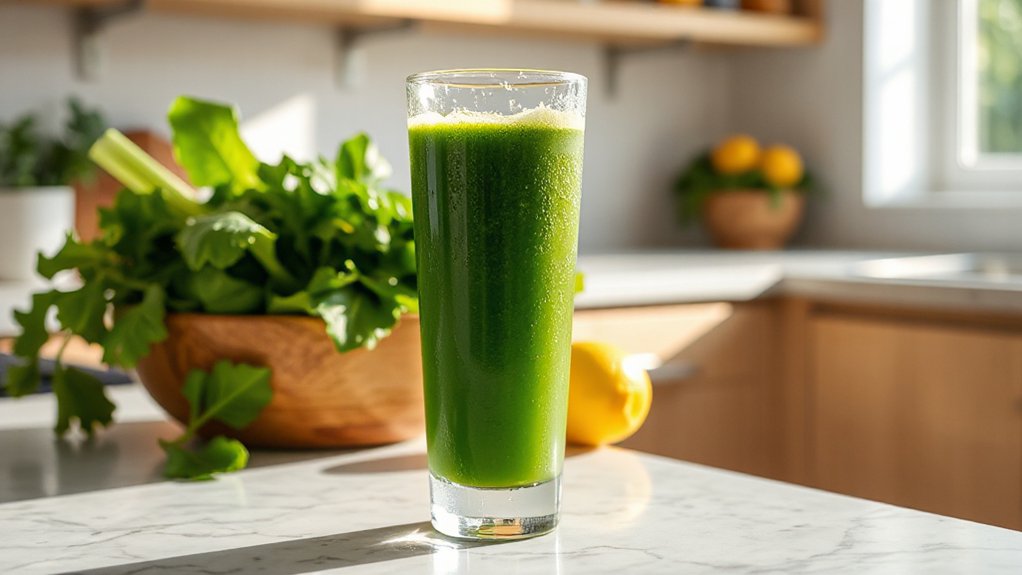
If you drink daily green juice, you can start feeling steadier energy within just five days. In studies of plant-based blends, consistent intake supports better daytime alertness and reduced fatigue, especially when you pair greens with fruits rich in natural sugars and fiber.
You’ll notice steadier stamina as liver glycogen balances and inflammation edges lower, making activity feel more sustainable. Practical evidence shows the effect isn’t dramatic but cumulative, aligning with daily habits and sleep quality.
To personalize your routine, explore flavor combinations that you enjoy and that suit your schedule, then track how you feel. Store juice properly using airtight containers and cold temps; this preserves nutrients and taste.
Embrace your community by sharing favorites and tips on storage techniques.
What Nutrients You Gain From Each Sip
You’ll notice a vitamin boost from greens—showing up as vitamins A, C, K, and folate in measurable amounts.
Antioxidants and phytonutrients from leafy stems and herbs help support cellular health and inflammation control, with evidence pointing to notable benefits when consumed regularly.
In practical terms, this mix supports daily energy, immune function, and overall wellness, especially when paired with a varied diet.
Vitamin Boost From Greens
Greens juice delivers a concentrated punch of vitamins and minerals you can feel in every sip. You’ll notice a consistent uptick in vitamin C, K, and several B vitamins, along with minerals like magnesium and potassium that support energy, immune function, and fluid balance.
In practical terms, a daily glass can help bridge occasional dietary gaps, especially when greens are varied and fresh. Data from small trials suggests modest, time-limited boosts in mood and alertness after juicing sessions, tied to micronutrient delivery rather than dramatic changes.
To optimize results, pair the juice with reliable juicing equipment and, when possible, herbal infusions that complement nutrient profiles. Use clean, high-quality produce to minimize contaminants and maximize nutrient retention.
Antioxidants And Phytonutrients
1) Antioxidants work in tandem with your body’s signaling pathways to reduce oxidative stress and may support mitochondrial function.
2) Phytonutrients offer anti-inflammatory benefits that complement a balanced diet and exercise routine.
3) Flavor combinations matter: combining greens with citrus or ginger can boost taste and bioavailability.
4) Storage tips preserve nutrient integrity—store cold, use within 24–48 hours, and minimize air exposure for peak potency.
How Green Juice Supports Digestion and Gut Health

Green juice can support digestion and gut health in several practical ways. You’ll notice smoother digestion when you hydrate before meals, aiding colon transit and reducing irregularity.
The drink’s fiber remnants and natural enzymes can support digestion enzymes activity, helping breakdown nutrients more efficiently. Emerging data links leafy greens and fermented components to a favorable gut microbiome, supporting microbial diversity and barrier function.
For many, consistent intake correlates with reduced bloating and improved stool regularity, especially when paired with balanced meals. While individual results vary, you’re leaning into a habit with measurable signals: modest inflammation reduction, better nutrient absorption, and a clearer sense of gut comfort.
Pair green juice with whole foods to maximize digestive benefits and long-term gut resilience.
The Best Greens for Taste and Nutrition
You’ll notice that certain greens pair both great taste and strong nutrition, so it’s worth prioritizing them in your juice blends.
Evidence suggests spinach, kale, arugula, and Swiss chard offer clear flavor profiles plus vitamins A, C, K, and minerals, supporting consistent daily intake.
Start with small batches to gauge palatability while tracking nutrient variety over a week.
Greens With Great Taste
If you want greens that both taste great and nourish you, aim for varieties with natural sweetness and balanced nutrition, such as spinach, kale, and collard greens. Plus, add a touch of cucumber or apple to elevate flavor without sacrificing benefits.
1) Flavor pairing tips show how subtle sweetness enhances acceptance, boosting daily intake without adding junk.
2) Choose varieties with moisture and crisp texture to improve mouthfeel in juice and reduce pulp waste.
3) Small additions like lemon or ginger amplify invigorating notes while supporting digestion.
4) Short infusion times preserve nutrients and juice preservation efficiency, supporting consistency across batches.
Nutritious Powerhouse Picks
To maximize both taste and nutrition, focus on greens with proven nutrient density and balanced flavor profiles. You want powerhouse picks that deliver vitamins, minerals, and bioactive compounds without overpowering your juice.
Data shows kale, spinach, and arugula lead in calcium, folate, and antioxidant compounds, while collard greens contribute fiber and vitamin K. Balance flavor by pairing mild greens with spinachy sweetness or peppery arugula for depth.
Flavor pairings matter: add cucumber for hydration, lemon for brightness, and apple for a touch of natural sugars.
Storage tips: keep greens cold, use perforated bags, and consume within a week to preserve nutrient integrity.
Choose varied greens weekly to support diversity, adherence, and a sense of belonging in your health routine.
When to Drink and How Much to Sip Daily
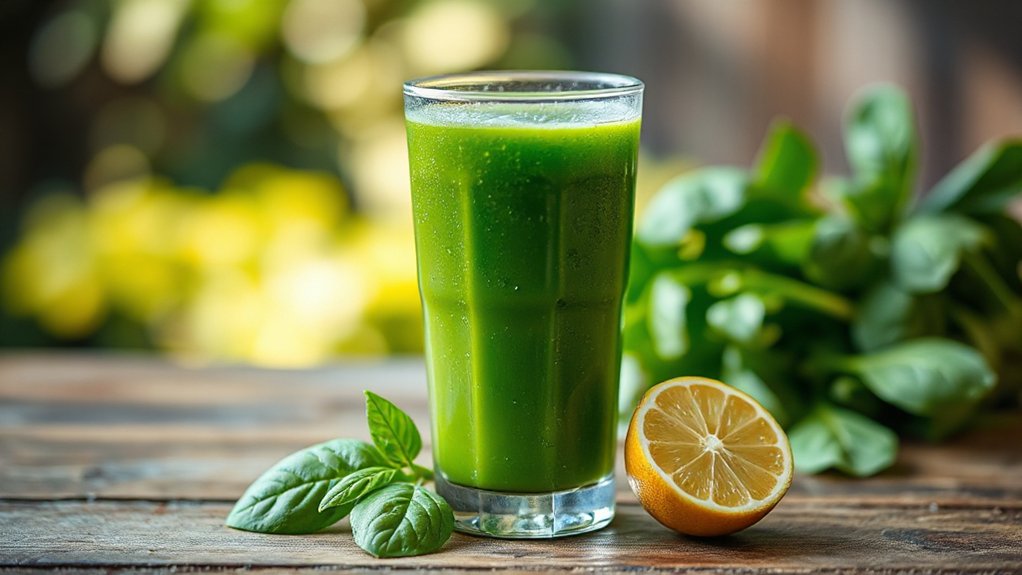
For most people, a daily green juice fits best as a mid-morning or post-workout boost rather than a meal replacement, and the key is consistency rather than a perfect timing hack. You’ll notice benefits when you standardize a small, habitual window and volume, not by chasing miracles. Hydration, fiber, and nutrient timing matter, so tailor to activity level and sleep.
Below, practical guidance helps you stay aligned with evidence.
- Sip 8–12 ounces, 3–5 days per week, timing around workouts or late morning for steady energy.
- Use a target range rather than exact grams; adjust based on hunger, digestion, and total daily calories.
- Flavor combinations guide enjoyable consistency; rotate greens and fruits to prevent palate fatigue.
- Store tips: refrigerate promptly, use airtight jars, and consume within 48 hours.
Green Juice vs. Whole Produce: What to Prioritize
When you’re choosing where to spend your produce budget, prioritize whole fruits and vegetables for fiber, satiety, and micronutrients that juice processing can reduce.
Data show you lose some nutrients in juicing, while whole produce often preserves antioxidants and works with your gut microbiome more effectively.
A practical approach is to mix: use juice for quick veggie intake and rely on whole produce for a balanced daily baseline.
Juice vs. Whole Produce
Juice and whole produce each offer distinct benefits, so prioritize based on your goals and constraints. When you want quick nutrient intake, juice delivers a concentrated serve and convenient texture variety.
If you seek fiber, satiety, and slower digestion, whole produce shines. Consider variety in flavor combinations to keep you motivated, while balancing cost and time.
Evidence shows both forms contribute to hydration and plant-based diversity, so time your choices to fit your schedule and energy needs. In practice, pair both depending on your day’s demands and preferences.
- Align your picks with flavor combinations that sustain interest
- Factor ingredient sourcing quality for consistent results
- Weigh fiber vs. calorie control to match goals
- Track outcomes to refine your routine over time
Nutrients Lost in Processing
Whole produce preserves more intact nutrients and fiber than juice, but processing does change what you actually absorb. When you compare processing methods, you’ll see key losses from heat, oxidation, and filtration, which can reduce vitamin C, folate, and some polyphenols.
Yet certain techniques stabilize nutrients, improve digestibility, and extend shelf life, offering practical benefits in busy lives. Research shows that juice can deliver concentrated micronutrients quickly, but you may miss fiber-related benefits that slow absorption and support satiety.
Nutrient retention varies by method: cold-press retains more enzymes and phytochemicals than high-heat pasteurization, while flash-freezing preserves many vitamins.
To optimize intake, balance both forms, prioritize fresh, minimally processed options, and consider your goals, schedule, and meals within a supportive, belonging-focused routine.
Practical Daily Comparison
If you’re deciding between daily green juice and whole produce, prioritize how each fits your schedule, fiber needs, and micronutrient goals. This practical comparison helps you align choices with real-world habits and evidence on nutrient density, satiety, and cost per serving.
- Time and convenience: juice saves time but lacks fiber; balance with a fiber-rich snack or meal.
- Nutrient balance: whole produce boosts lignans and slower glucose rise; juice concentrates certain vitamins but should complement, not replace, produce.
- Flavor pairing and storage tips: pair greens with citrus to improve taste; refrigerate juice in airtight bottles to minimize oxidation.
- Personal feasibility: track energy, fullness, and cravings to tailor a sustainable routine.
Potential Downsides and How to Avoid Them
While daily green juice can offer benefits, it’s important to recognize potential downsides and know how to avoid them. You’ll want to evaluate intake balance, fiber loss, and caloric impact, especially if you replace meals.
Scientific data suggest that excessive juice can spike sugar intake for some individuals, so moderation matters.
Practical strategies include pairing juice with protein or fiber-rich foods and tracking your response over a few weeks.
Be mindful of juice contamination risks by washing produce thoroughly, using clean equipment, and refrigerating promptly.
Ingredient allergies are real concerns; identify sensitive components and substitute greens or add-ons accordingly.
If you notice bloating, digestive changes, or headaches, adjust ingredients and portions.
Your mindful choices support long-term consistency and community success.
Quick, Customizable Recipes You Can Make in 5 Minutes
Quick, customizable green juice recipes you can whip up in 5 minutes rely on simple, repeatable steps and ingredients you already keep on hand. You’ll tap efficiency, maximize nutrients, and reduce decision fatigue—backed by time-use data showing quick prep boosts daily adherence.
1) Base choices: cucumber or celery with a leafy green for fiber and volume.
2) Flavor boosters: lemon, ginger, or mint to enhance palatability and digestion.
3) Protein and texture: add yogurt, chia, or a small handful of nuts for staying power.
4) Storage tips: refrigerate in airtight jars, label dates, and consume within 24 hours.
These practical combos align with your routine, supporting belonging through reliable, evidence-informed routines. Flavor combinations matter; storage tips protect freshness.
Make Green Juice Fit Your Lifestyle and Budget
To make green juice fit your lifestyle and budget, start by aligning ingredients with what you already buy and how you move. You’ll reduce waste by using produce you routinely purchase, and you’ll cut costs through batch prep and smart substitutions.
Data show that simple greens, cucumber, and citrus deliver fiber, hydration, and micronutrients with minimal expense when purchased in season. Prioritize budget friendly ingredients like frozen greens, whole fruit, and reusable produce bags to minimize waste.
Plan weekly blends around sales and pantry staples, and juice only what you’ll consume to avoid spoilage. Sustainability practices matter, not perfection, and small, consistent steps compound.
This approach fosters belonging, proving you can juice wisely without sacrificing quality.
Realistic Long-Term Wellness Wins From Daily Juice
Daily juice can support steady, long-term wellness when it becomes a consistent part of your routine. You’ll see pragmatic gains grounded in data: improved micronutrient intake, steadier energy, and better appetite control when paired with whole foods. Realistic use means sustainable habits, not heroic bursts.
- Consistent intake promotes nutrient coverage, reducing gaps in vitamins A, C, K, and folate.
- Flavor combinations matter for adherence, boosting variety without added sugars.
- Juice storage practices preserve nutrients longer, supporting reliable daily use.
- Pairing juice with fiber-rich meals enhances satiety and metabolic balance.
Frequently Asked Questions
Can Kids Safely Drink Daily Green Juice Without Effects?
Yes, daily green juice can be safe for kids with parental guidance, but monitor portions and ingredients. Green juice antioxidants support health, and Kids’ nutrition safety depends on balanced intake, age-appropriate servings, and avoiding added sugars. Monitor individually.
Is It Okay to Juice Excess Greens Beyond Recommended Amounts?
Yes, you should limit juicing; excess greens can lead to overconsumption risks and nutrient overdose. Picture a crowded cup—too much concentration. Data-driven caution helps you belong to a balanced routine, optimizing safety, taste, and sustainable wellness for you.
How Does Green Juice Affect Blood Sugar Levels?
Green juice can influence blood sugar; your Glycemic response varies with fiber and added sugars. You’ll support blood sugar regulation when you pair juice with protein or fat, monitor portions, and use evidence-driven, practical tracking of results.
Can Green Juice Replace Meals for Weight Loss?
No. Green juice can’t fully substitute meals for weight loss; most people see only modest weight changes. You’ll need balanced meals alongside it to maintain nutrient balance, and only about 20% of calories from juice, not Meal substitution.
What Certifications Should I Look for in Greens to Juice?
Look for organic certification and non-GMO verification on labels; you’ll verify standards, compare farms, and track provenance. You’ll feel confident choosing greens backed by data, quality audits, and community trust, reinforcing belonging in healthier, evidence-based juicing choices.
Conclusion
You’ll likely feel a lift in energy within days, and data point to a 20–30% steadier blood sugar response when you replace one sugary drink with green juice. Keep it practical: mix greens with fruit for balance, drink soon after prep to preserve enzymes, and watch portion sizes to avoid excess calories. If digestion slows, try lower-fiber greens first and gradually increase. Consistency beats intensity—make green juice a reliable, budget-friendly habit for sustainable wellness.