
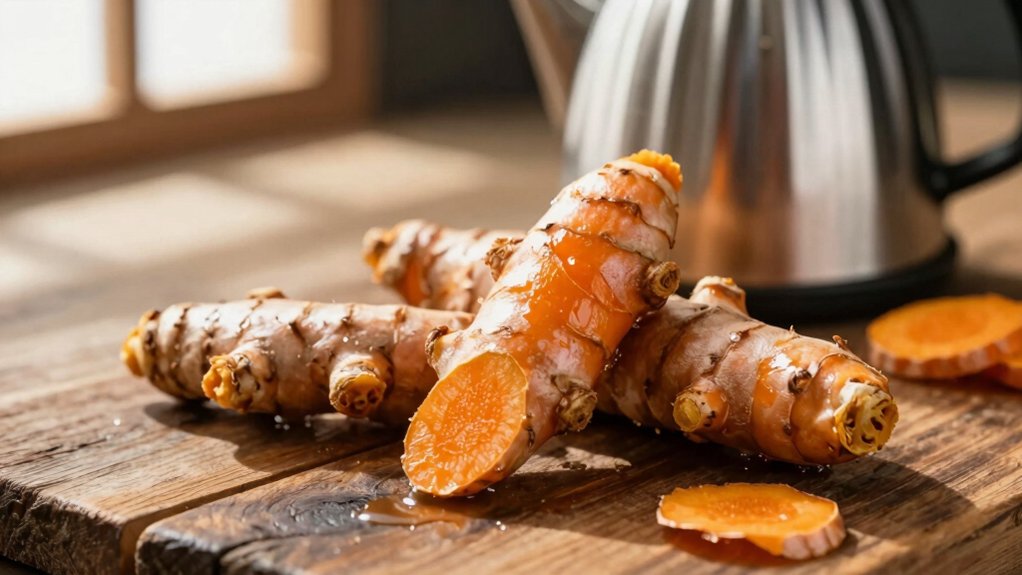
Peel turmeric before juicing for a cleaner, milder extract and easier color control, but don’t overdo it. A quick scrub plus light rind removal preserves most nutrients and flavor, while removing surface grit and contaminants. If you’re short on time, you can juice with skin on and test a small batch first. Skin-on can boost color and phytochemicals, but peeling reduces bitterness. For best results, follow practical prep steps—and you’ll see why options matter as you continue.
Should You Peel Turmeric Before Juicing? Here’s the Quick Answer

Yes, you should peel turmeric before juicing. In practice, peeling reduces earthy bite and removes surface contaminants, without sacrificing beneficial compounds. If you’re short on time, a quick scrub with a brush plus light rind removal still helps.
The main point is consistency: some juicers handle skin well, others don’t, so test a small batch first. For flavor context, consider ginger comparison: both bring sharp warmth, but turmeric offers subtler citrus notes when peeled properly.
From a historical perspective, turmeric history shows ancient use tied to purity and traditional preparation; modern juicing mirrors that intent—maximize purity, minimize grit. You’ll optimize extraction efficiency and stabilize color, especially in blends.
Track results, adjust peeling depth, and favor fresh, quality turmeric.
Peel or Skin-On: Which Delivers Better Flavor, Color, and Nutrients?
Curious whether to peel or go skin-on for turmeric juice? You’ll weigh flavor, color, and nutrient outcomes by considering the peel’s compounds and the flesh’s sweetness.
Peel-off tends to minimize surface bitterness and potential residue from soil and pesticides, supporting flavor preservation, especially in quick-juice blends.
Skin-on retains more of the vibrant pigment and phytochemicals, contributing to deeper color and a broader nutrient profile, i.e., a stronger skin nutrient contribution, when the whole root is juiced.
However, prepping methods matter: a gentle scrub limits grit while preserving beneficial compounds.
If your goal is a cleaner taste with consistent color, peel; if you prioritize maximal nutrient and color payoff, go skin-on.
Choose based on your juice’s flavor target and texture tolerance.
How to Safely Prep Turmeric for Juicing (Step-by-Step)
To prep turmeric safely for juicing, start with thoroughly cleaning the roots to remove soil and residues. Then, you’ll dry them briefly and inspect for blemishes before handling.
- Rinse under cool running water, scrub with a soft brush, and pat dry.
- Trim ends and any damaged areas to avoid off flavors.
- Decide on direct juicing vs. quick alternative preparations (see below).
- Store promptly in a breathable container in the refrigerator or freezer.
Concrete practices matter for turmeric storage and long-term quality. If you’re not juicing immediately, consider freezing chopped chunks or making a small paste for future use. Alternatives include diluted juice blends or paste forms to simplify handling.
What Peeling Does to Flavor, Color, and Nutrient Retention
Peeling turmeric affects flavor, color, and nutrient retention more than you might expect. When you peel, you remove the thin epidermis that carries surface contaminants and some volatile oils contributing bright aroma and nuanced taste. The inner flesh holds most phytonutrients, but the skin stores pigments that influence color intensity; removing it can soften that hue in juice.
Peeling can reduce friction and fiber retention slightly, since a peeled root yields a smoother puree with less fibrous texture in suspension. If you’re chasing maximum antioxidant exposure, light brushing might preserve more compounds than full peel. However, washing thoroughly and peeling sparingly can maintain more fiber retention than heavy removal, while still limiting surface contaminants.
Balance taste, color, and nutrition based on your goal.
Practical Tips and Quick Turmeric Juice Recipes
If you want quick, reliable results, start with a simple toolkit and a few go-to ratios: fresh turmeric, citrus or apple for balance, and a neutral base like carrot or cucumber to smooth the flavor. This approach maximizes Turmeric benefits while keeping flavors approachable, and it supports efficient Juicing techniques you can repeat.
1) Build a basic recipe framework with 1:1:4 ratios (turmeric:fruit/acid:vegetable) for consistency.
2) Use a splash of acid (lemon or lime) to brighten and aid dispersion.
3) Add a pinch of black pepper to enhance bioavailability of curcumin.
4) Clean and juice promptly to preserve nutrients and aroma.
These practices keep extraction efficient, minimize waste, and deliver practical, evidence-based results.
Frequently Asked Questions
Does Peeling Reduce Antimicrobial Compounds in Turmeric Juice?
Peeling can modestly reduce antimicrobial compounds, but turmeric’s active curcumin largely resists loss; use fresh, peeled or unpeeled based on convenience. To maximize nutrient retention and flavor enhancement, choose processing that preserves bioactives and reduces bitterness.
How Does Peeling Affect the Paste/Filtration Yield?
Peeling impact is minimal on paste yield, but unpeeled pieces may clog filters, reducing filtration efficiency. You’ll get smoother paste with light peeling, whereas thorough peeling risks slightly higher yield loss. Practically, peel only as needed for clarity.
Can Unpeeled Turmeric Cause Skin Irritation in Juicers?
Unpeeled turmeric can irritate skin for some people, so proceed with caution. Turmeric skin may contain irritants; use gloves, wash hands after juicing, and test a small amount first. Juicing safety favors peeling when sensitive.
Do Peels Add Better Earthy Notes to the Juice?
Peels add subtle earthy notes, but flavor enhancement is modest; your juice gains more from turmeric’s core compounds. The nutritional impact remains similar, so weigh taste against earthy depth. Use small amounts for balanced, evidence-based, practical results.
Are There Safety Concerns With Turmeric Skin for Kids?
Absolutely, turmeric skin is generally safe for kids in small amounts, but monitor for allergies. Turmeric toxicity risk exists with excessive intake; juice cautiously. For safety, peel and dilute, and prioritize kids’ tolerance when evaluating juicing safety.
Conclusion
You’ll decide faster when you know the science: peeling removes many bitter compounds and dirt, while skin-on preserves nutrients and color, though potentially dulls flavor. If you’re after brightness and smoother juice, peel; if you want maximum nutriments and a robust hue, skin-on with a thorough rinse. Use a sharp peeler or knife for thin layers, and scrub instead of over-scraping. In short, adapt to your taste and goals — you’ll be ahead of the game, no doubt about it. Don’t miss the boat.