
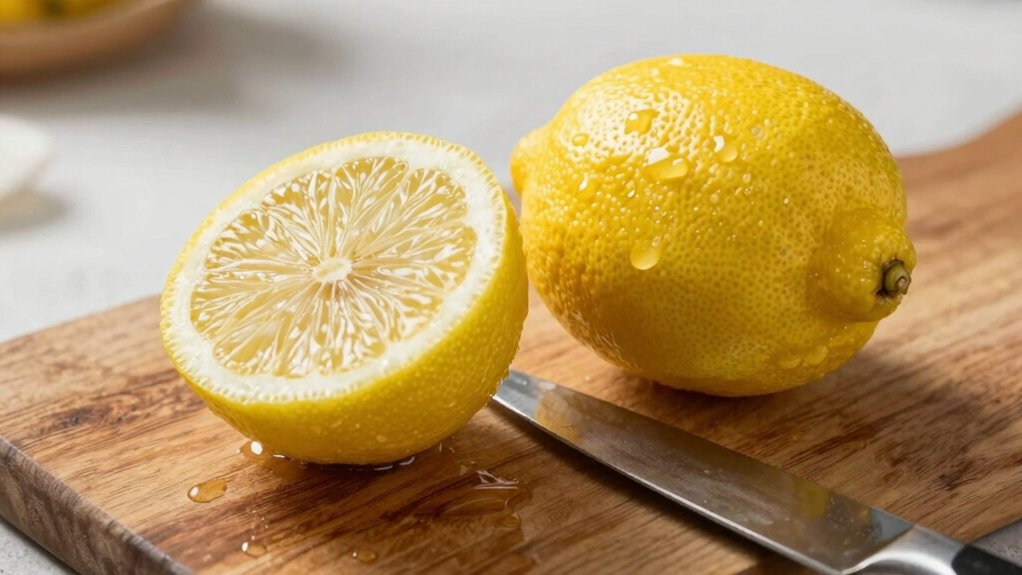
Should you peel lemons before juicing? It depends on your goal. If you want cleaner, brighter juice with less bitterness and a stronger aroma, peel lightly or use very thin zest, then juice. Leaving the rind can add aroma and a citrus-forward depth but may introduce bitterness and dull the juice’s acidity. For a smooth, versatile juice, peel or remove most rind; for garnishable, aromatic drinks, keep a hint of zest. More tips follow if you want to optimize flavor.
Peel or Not? When to Use Rind for Lemon Juice

Using lemon rind in juice is best reserved for specific flavor goals. You decide when to include peel texture based on desired intensity. If you want bright, citrus-forward notes, a small amount of zest can elevate aroma without bitterness.
For balanced juice, skip thick white pith and rind; peel only the outer yellow layer to minimize bitter compounds. When you do add zest, grate finely to avoid chunks that feel odd in a drinking juice.
Rind-derived oils deliver floral, sharp citrus, but can overpower if overused. In standard juicing, you’ll omit it and rely on lemon juice itself for clean acidity.
If a culinary objective requires complexity, introduce zest sparingly and test in small amounts. Maintain consistent technique for reproducible results.
How the Peel Changes Flavor and Aroma in Lemon Juice
Peel introduces distinct aroma compounds and bitter notes that shape lemon juice’s flavor profile. When you include the peel, you add terpenes and limonene that boost citrus brightness, while bitter oils from the zest can temper sweetness with a crisp edge.
You’ll notice aroma preservation is higher if you grind or finely grate the zest and blend it promptly, locking in volatile compounds before they dissipate. Conversely, peeling away the rind minimizes bitter notes and can dull nuanced fragrances, shifting balance toward sour acidity.
For flavor enhancement, a light zest infusion can raise perceived freshness without overpowering acidity. Use caution with extraction time to avoid over-extraction, which risks bitterness and off-flavors.
Informed handling yields more precise, evidence-based lemon juice.
Recipe-Driven Rules: Citrus Juice With Rind vs. Peeled for Desserts, Drinks, and Savory Dishes
When deciding whether to juice with rind or peeled, you should match the approach to the dish and the desired balance of brightness, bitterness, and texture.
For desserts, citrus-forward drinks, and glazes, keeping rind adds aromatic oils and lemon zest brightness, enriching complexity without overpowering sweetness.
In savory preparations, a controlled rind infusion can lift sauces and dressings, but peel removal may be preferable to avoid bitter notes.
Consider acidity and mouthfeel: rind contributes tannins and subtle bitterness, while peeled juice yields clean, bright acidity.
Use lemon zest in recipes that benefit from intensified aroma, then remove or minimize rind exposure when texture matters.
Always tailor rind inclusion to flavor goals, rather than habit, and monitor aftertaste to avoid muddiness.
Practical Techniques: How to Peel and Juice Efficiently Without Waste
To peel and juice efficiently, start with a reliable peel strategy that minimizes waste and preserves zest where you want it. Use a sharp knife or peeler to remove the rind in large, even strips, then segment or juice promptly to reduce pulp losses.
We’ll compare practical techniques and evidence on yielding consistent juice and maximizing usable material.
Peel Strategy Snapshot
Efficient peeling starts with a simple, repeatable method that minimizes waste and preserves juice quality. You’ll adopt a thin-slice approach: score the rind, peel gently to remove only the zest layer, then segment to access juice without pith.
Use a small, sharp peeler or knife to avoid damaging the fruit’s flesh. With practice, you’ll reduce waste and preserve aroma compounds that flavor the juice. For consistency, peel on a flat surface and rotate the fruit to maintain control.
Consider seasonal fruit intensity, which can influence peel thickness. In Citrus cultivation terms, select lemons with intact rind and minimal blemishes to optimize both yield and flavor. When selecting, think of a lemon tree’s health and how it translates to better juice.
Efficient Juicing Techniques
Mastering efficient juicing starts with a repeatable workflow that minimizes waste and preserves aroma. You can streamline extraction by prepping lemons in batches: wash, dry, and roll firmly to loosen juice, then grate the zest only if needed for aroma rather than mass.
Use a sharp juicer and a stable grip to avoid pulp waste and minimize oxidization. Favor a two-step press: a light squeeze to release juice, followed by a brief regrind of the pulp for any remaining liquid.
To maximize yield, choose ripe lemons and consider peel alternatives like zest sparingly or using gentle poling rather than full peeling in recipes.
For lemon preservation, refrigerate juice in airtight containers; freeze excess juice in ice-cube trays to reduce waste.
Bitterness and Balancing It: Tips to Avoid Bitter Notes
Even when you’re peeling lemons for juicing, bitterness can sneak in if you ignore the rind’s oils; you can curb this by selective trimming and mindful extraction. You’ll minimize bitterness by avoiding pith and selecting thin, even peels that preserve essential oils.
Use a sharp knife or peeler to remove zest in long, uniform ribbons, then juice promptly to reduce oxidization that heightens harsh notes. Balance comes from controlling Juicing acidity through proportional dilution with water or combing with sweeter citrus; a small amount of sugar or honey can also temper sharp acidity without masking brightness.
Incorporate Lemon zest to reap aromatic oils without adding bitterness. Test and adjust gradually, tasting frequently to maintain clarity, then tailor technique to your fruit’s ripeness for consistent, clean citrus profiles.
Quick Decision Guide: Should You Peel Lemons Before Juicing?
If you’re juicing lemons, deciding whether to peel hinges on your goal and the fruit’s condition; in most cases, a light peel adds aroma but avoid the bitter pith.
In a quick decision, consider if you want more zest-like brightness or a smoother juice texture. For zest-forward flavor, peel thinly with a vegetable peeler, then juice; this supports fruit preservation by leveraging natural essential oils without excessive bitter compounds.
If you seek milder juice for beverages or recipes, skip peeling or remove only the outer rind. Use peeling tools that minimize pith contact to reduce bitterness.
Maintain clean, sharp tools to prevent contamination. Overall, weigh aroma against mouthfeel and intended use, aligning technique with evidence-based benefits.
Frequently Asked Questions
Do Lemon Seeds Affect Juicing With Peel in Flavor?
Seeds can dim flavor slightly, but juicing with the peel adds brightness; remove seeds and keep peel for texture. You’ll notice seeds mildly alter flavor, while peel texture enhances aroma and citrus complexity in your juice.
How Does Organic vs. Conventional Affect Peel Use?
Do you wonder about organic impact on peel use? You should consider safety: organic lemons reduce pesticide residue, but peel safety still matters; wash thoroughly and balance flavor with bitterness when deciding how much peel to include.
Can Peels Be Used in Non-Cresh Juice Applications?
Yes, peels can be used in non-juice applications. You’ll preserve fruit preservation benefits, and peel nutrition stays intact when grated, zested, or dried. Use caution with pesticides; wash thoroughly before incorporating into sauces, baked goods, or infusions.
Is There a Best Lemon Variety for Rind Use?
Yes—the best lemon variety for rind use tends to be Eureka or Lisabon, offering thicker zest and better rind quality. You’ll maximize aroma and essential oils, maintaining rind integrity in zest-forward preparations and non-juice applications.
Will Peeling Change Juice Yield or Sweetness Noticeably?
Peeling changes juice yield and sweetness only modestly; think of it like removing a bitter rind tag. You’ll improve juicing efficiency by removing zest, though peel texture influences flavor, not volume, in most lemon varieties.
Conclusion
Peeling isn’t a universal must; it depends on what you’re after. If you crave bright, aromatic juice for cocktails or desserts, a light zest adds zing—but go easy to avoid bitterness. For savory dishes or mellow drinks, peeled lemon juice keeps things clean and tart. Use a microplane to capture just the zest, or skip it entirely for smoother results. If you’re undecided, peel selectively and taste as you go—your next batch will reveal the right move. The answer hinges on your goal.