
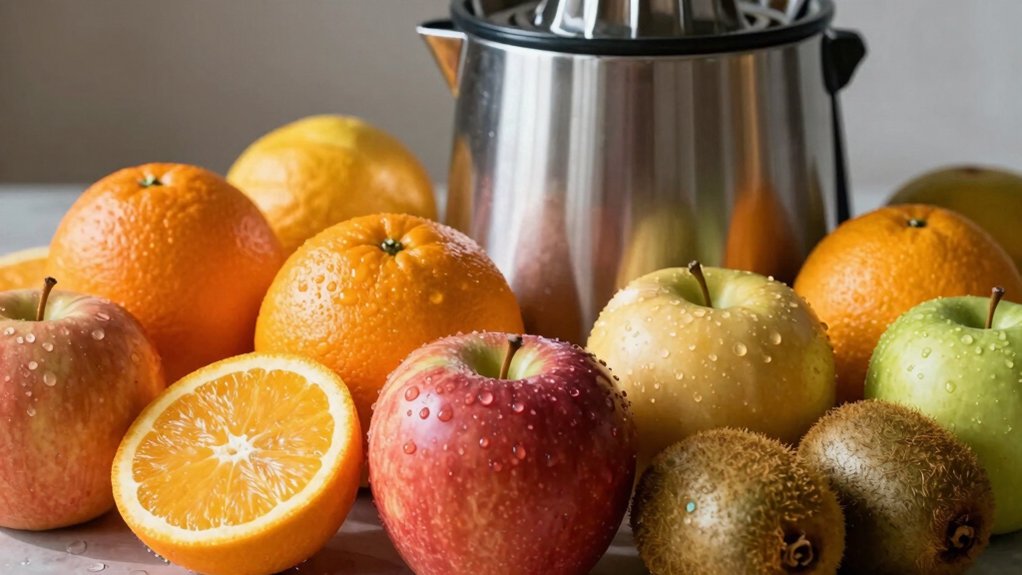
Peeling isn’t a blanket rule—you should weigh nutrient loss, texture, and flavor. If you want more fiber, antioxidants, and a brighter aroma, keep the skin on when safe and well-washed; this preserves nutrients but can add bitterness and thicker texture. For smoother juice or reduced tannins, light or selective peeling helps. Consider fruit type and ripeness: citrus zest adds brightness, apples/pears vary in skin thickness. For balance and safety, equal parts knowledge and taste; there’s more you can optimize beyond this.
Should I Peel or Not? The Core Trade-Off for Juicing
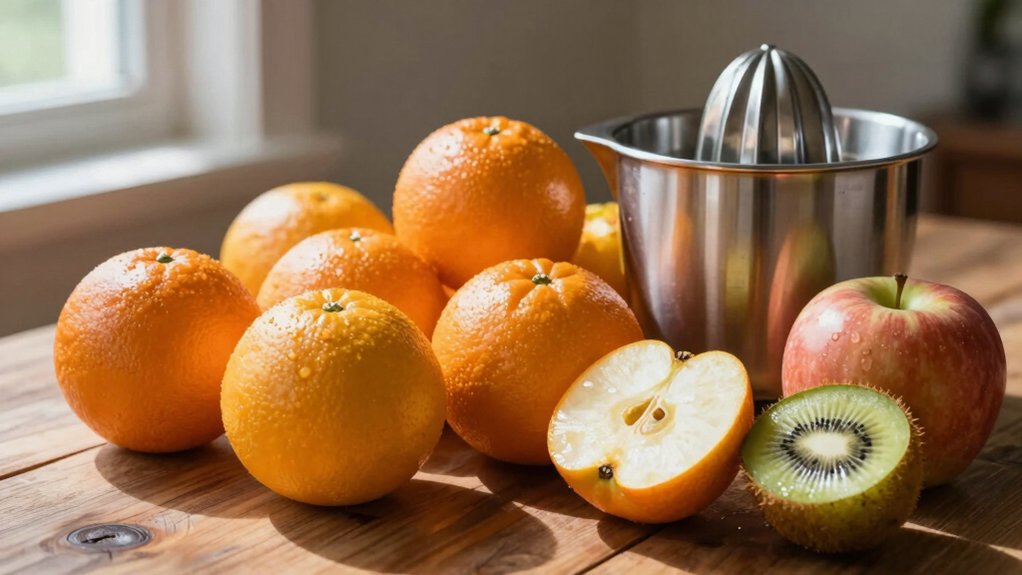
The decision to peel or not hinges on a trade-off between nutrients and flavor, plus the practicalities of texture and safety. You weigh peel removal against potential nutrient loss, since many vitamins and fiber reside near the skin. Evidence shows modest nutrient reductions when peeling fruits like apples or pears, but you may gain smoother juice texture and fewer bitterness compounds.
Consider consumption goals: if you prioritize flavor preservation without sacrificing safety, partial peeling or light scrubbing can help. Data suggest skins often boost polyphenols and antioxidants, yet certain fruit skins concentrate pesticide residues, demanding proper washing.
In practice, you’ll optimize by selecting varieties with thin, edible skins and peeling only where needed. Decision hinges on balancing peel removal with flavor preservation and controlled risk.
How Peeling Changes Taste, Texture, and Aroma
Peeling alters the juice’s flavor, texture, and aroma in predictable ways: removing skin reduces bitter compounds and tannins, softens astringency, and can yield a smoother mouthfeel. However, it also trims key aromatic esters and polyphenols that characterize fruit.
In practice, you’ll notice a measurable shift in peel aroma as citrus-derived terpenes and some esters decline with skin removal, while sweeter, less tannic notes may dominate.
Peel texture matters too: without skin, the juice often feels lighter and less viscous, reflecting reduced cell-wall polysaccharides and cuticle components.
Data from sensory panels align with instrumental analyses showing lower polyphenol-related bitterness and altered volatile profiles when peeling occurs.
If you prioritize bright, complex aroma, you may prefer partial peeling or selective skin removal depending on fruit type.
Nutrition and Safety: What You Lose or Keep When You Peel
If you peel, you change the fruit’s nutrient and safety profile in predictable ways: some vitamins, minerals, and phytonutrients are concentrated in or near the skin, while peeling removes or reduces these elements. Risk factors shift accordingly.
Data show that peel preservation can retain fiber, flavonoids, and certain polyphenols, enhancing antioxidant capacity but potentially elevating pesticide exposure if skins aren’t cleaned thoroughly.
Structural integrity of the fruit matters: intact skin supports mechanical stability during juicing, whereas peeled fruit can release more pulp and seeds, altering yield and texture.
Safety considerations favor washing and source verification to mitigate contaminants.
Fruit-by-Fruit Peel Guide for Juicers
Moving from the general effects of peeling, a fruit-by-fruit peel guide helps you tailor prep to each produce type. You’ll assess peel thickness and color to decide if removing, trimming, or leaving skin intact improves juice quality.
For citrus, thin peels offer brightness but can introduce bitterness if pith remains; you may prefer light removal and some zest for aroma.
Apples and pears vary: thicker skins protect juice clarity, while thin skins contribute color and polyphenols.
Berries, stone fruits, and melons differ sharply, with flexible decisions about peel color signaling ripeness and potential tannins.
Document peel thickness and color cues for your juicer’s performance, noting any pith or fibrous layers that affect texture.
This targeted approach helps optimize yield, flavor, and nutritional outcomes.
Juicing Tips: Balancing Flavor, Nutrition, and Convenience
To balance flavor, nutrition, and convenience in juicing, you’ll want an evidence-based approach that prioritizes using ripe, well‑washed produce, targeted peel decisions, and practical batch routines.
You’ll optimize taste and nutrients by distinguishing when peel preservation matters and when peel removal techniques reduce bitterness or pesticides. Data show minimal impact on fiber from peeling varies by fruit, so tailor methods to each batch.
Pairing flavors matters: citrus zest boosts brightness; apple peel adds polyphenols but may dull sweetness if overused. Maintain consistency with batch juicing, refrigerate promptly, and track yields.
Peel preservation can preserve nutrients, while selective peel removal techniques enhance palatability and safety.
- Target ripe produce
- Wash thoroughly
- Use peel preservation when beneficial
- Apply peel removal techniques selectively
- Batch routine for consistency
Frequently Asked Questions
Do Peels Affect Juice Shelf Life After Pressing?
Peels can affect juice shelf life modestly: peel flavor notes may intensify, and peel texture can influence mouthfeel and sediment. Data suggest minimal shelf deterioration when stored cold; peeling reduces enzymatic browning but may alter aroma and overall nuance.
Can Peels Introduce Allergens Into the Juice?
Peels can carry allergens, so you should avoid them if you have sensitivities. You’ll also encounter pesticide residues with peels, but they may offer flavor enhancement when carefully washed and sourced from reputable growers, backed by data.
Are There Culinary Benefits to Leaving Peels On?
Leaving peels on can offer peel texture and flavor enhancement, but it varies by fruit; data show mixed results on bitterness and texture. You’ll want to balance nutrients, risk of bitterness, and juicer efficiency when deciding.
How Do Peels Impact Juicer Blade Wear and Maintenance?
Peels can abrade blades, speed wear, and clog seals, so monitor grit and blade life. You’ll notice texture changes with peel texture and flavor extraction rates; clean prompts, and avoid overloading to protect gears and extend maintenance intervals.
Do Peels Contribute Antioxidants Beyond Pulp Content?
Peels can boost nutrient density and antioxidant intake in some fruits, though benefits vary; you’ll often see flavor enhancement from certain peels. You’ll weigh trade-offs between bitterness, fiber, and overall juice quality with evidence guiding choices.
Conclusion
Peeling is a garden gate: it guards the flavor orchard but hides some nutrients behind the wood. Think of juicing as a balance sheet—taste, texture, aroma versus vitamins, fiber, and safety. When you peel, you gain smoothness and calm sweetness; when you skip, you keep bitterness and risk of pesticides. The data points to a nuanced choice: tailor by fruit, rinse well, and weigh taste against nutrition. Your juicing story hinges on what you value more.