

You may not notice it, but your hydration habits can quietly make or break a hot day. When you build a juice base from high-water fruits like watermelon and cantaloupe and pair them with cucumber and leafy greens, you’ll replenish fluids and electrolytes more effectively. Curious how some citrus boosts flavor and vitamin C without sabotaging hydration? Keep going to see practical combos and smart tips that keep you refreshed longer.
Why Hydration Really Matters on Hot Days
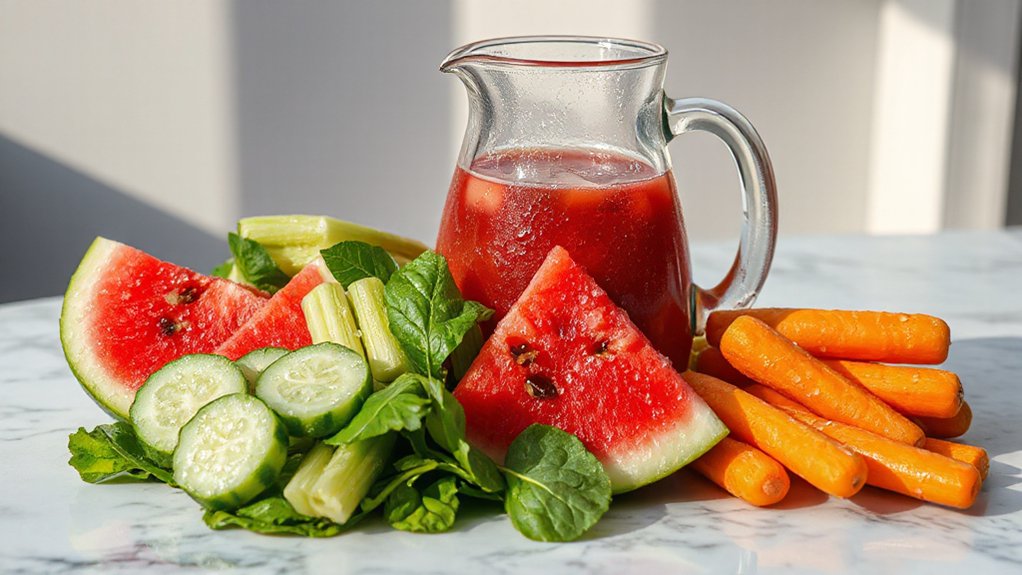
Hydration matters on hot days because your body loses water faster through汗, sweat, and breathing. You’ll feel the impact in reduced performance, cognition, and mood if intake lags. You regain function when you replace fluids and minerals promptly, supporting cardiovascular stability and thermo-regulation.
Prioritize consistent hydration rather than chasing sporadic sips. Electrolyte balance matters because salts and minerals help maintain fluid distribution, nerve signaling, and muscle function during heat stress.
Rely on evidence-based routines: sip at regular intervals, not only when thirsty, and pair fluids with meals to improve absorption. Cut through hydration myths by recognizing that plain water suffices for many, yet electrolytes can improve comfort and endurance in intense heat.
Your proactive approach strengthens belonging through shared, practical care.
Best Hydrating Juice Fruits to Build Your Base
Fruit-based hydrators provide a practical base for hot-weather fluids, since several fruits have high water content and useful electrolytes. You’ll choose hydrators with clear hydration signals, like watermelon, cantaloupe, and kiwi, to establish your base juice.
Emphasize fruit pairing techniques that enhance texture, flavor balance, and mineral profiles without adding excess sugar. Balance high-water fruits with modest citrus acidity to preserve palatability and optimize absorption.
Juice extraction methods should preserve fiber and antioxidant compounds while reducing pulp drag, so you can sip comfortably in heat. Document ratios for repeatability, then test variations to confirm your preferred base.
This approach builds community around reliable hydration routines you can share. Your base becomes a science-backed platform for approachable, invigorating hot-weather juicing.
Vegetables That Boost Hydration: Greens and Crunch
Moving from fruit-based hydrators, you’ll turn to vegetables that enhance hydration through greens and crunch. You’ll prioritize crisp textures and nutrient-dense options that support fluid balance.
Leafy greens provide hydrating water content, plus minerals that help maintain electrolyte stability during heat exposure. Include lettuce, spinach, and arugula in salads or smoothies to boost volume without heaviness.
Crunch comes from raw celery, cucumber, and bell peppers, which contribute water and polyphenols without excessive calories. Aim for variety to cover vitamins A, C, and K, along with folate and potassium.
Pair greens with high-water vegetables for meals that feel light yet satiating. This approach fosters belonging through shared, practical hydration practices that are easy to sustain in daily routines.
Hydration-Friendly Flavor Tricks That Taste Great
Ever wondered how to boost fluids without sacrificing flavor? You can elevate hydration with simple, evidence-based flavor tricks. Use small amounts of natural flavor enhancers like citrus zest, cucumber slices, or a pinch of mint to lift dull bases without adding sugar.
Balance acidity and sweetness by pairing tart options (lemon, lime) with mellow ones (apple, pear) to keep thirst-quenching appeal. Switch ingredients thoughtfully: ingredient swaps such as swapping honey for a touch of agave or using sparkling water in place of still water can preserve hydration while invigorating the palate.
Lean on temperature cues—chilled blends feel more hydrating, while room-temp blends support easy sipping. These tweaks foster belonging through shared, sensory tweaks that respect your hydration goals.
Ultra-Hydrating Juice Recipes and Smart Saving Tips
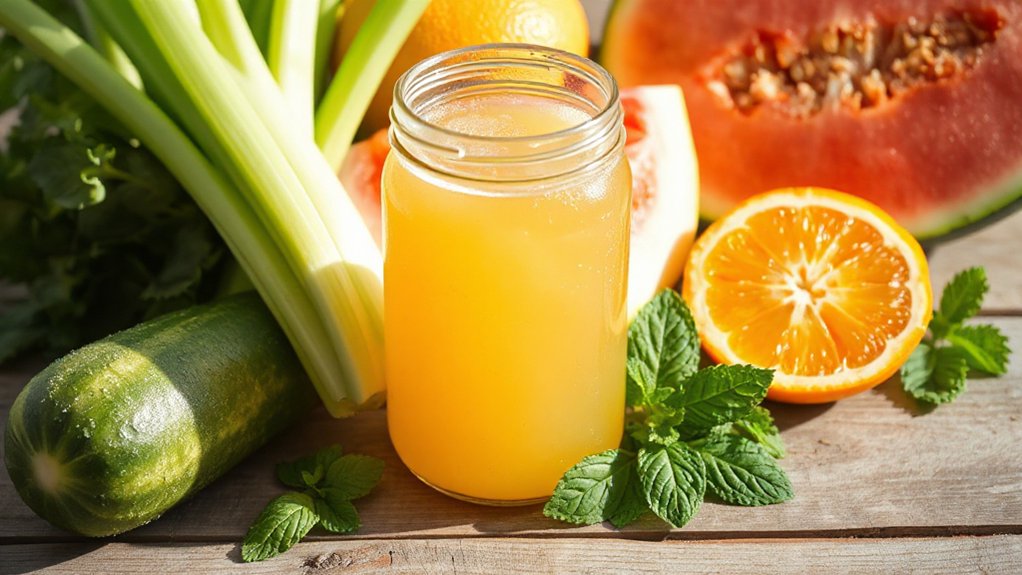
Ultra-hydrating juice blends lean on high-water-content produce and strategic pairings to maximize hydration and energy without excess sugar. You’ll find recipes centered on cucumber, watermelon, celery, and citrus to flood your cells with fluids while keeping sweetness balanced.
Aim for simple, repeatable combos that support endurance on hot days. To save, batch essential bases and freeze portions in ice-creshers or silicone molds, reducing waste and prep time.
Juice preservation matters: store chilled, airtight containers away from light, and consume within 24–48 hours for peak nutrients and flavor.
When a preferred fruit isn’t available, ingredient substitution with similarly high-water content preserves hydration and texture.
Prioritize transparency in labeling your batches so you feel connected to your healthier routine.
Frequently Asked Questions
Can Hydrating Juice Ingredients Cause Bloating or Cramps?
Yes—hydrating juice ingredients can cause bloating or cramps for some people, though likely mild. You can support electrolyte balance and digestive comfort by moderating fiber, sugar, and introducing gentle, low-FODMAP options if sensitivity arises.
Do Juice Ingredients Differ in Hydration Based on Climate?
Yes, climate matters: climate specific fruit choices and seasonal vegetable blends influence hydration, since local produce often contains ideal water content and electrolytes. You’ll feel more supported when your juice aligns with your climate and needs.
Are Store-Bought Juices as Hydrating as Homemade?
Yes, store-bought juices aren’t as hydrating as homemade because they often have added sugars and lower water content; prioritize flavor combinations and Ingredient sourcing from trusted brands to maximize hydration potential and sense of belonging in your choices.
How Do Hydration Needs Vary by Age or Activity Level?
Hydration needs vary by age and activity: age-specific hydration for kids and seniors differs from adults, while activity-based fluid needs rise with intensity and duration. You adjust intake accordingly; monitor thirst, urine color, and performance signals.
Can Hydration-Boosting Ingredients Interact With Medications?
Yes, you should consider medication interactions and ingredient safety, as some hydration-boosting ingredients can affect meds or amplify side effects. Check with a clinician, read labels, and monitor for adverse reactions to avoid potential medication interactions.
Conclusion
Picture your thirst as a stubborn fire within a village. Water-rich fruits and greens are rainclouds rolling in, quenching flames while delivering electrolytes as supplies. The base fruits water the camp; vegetables reinforce with crunch and minerals; citrus fuels the ride with vitamin C. Flavor tricks are friendly messengers, not risky trades. When you sip these ultra-hydrating juices, you’re orchestrating a precise balance—evidence-based hydration that keeps your camp cool, energized, and ready for whatever heat throws your way.