

Juicing cantaloupe starts with picking ripe fruit: look for high aroma, uniform texture, netted rind, and a sweet, fragrant scent. Chill the melon before processing, deseed completely, and cut into uniform chunks to minimize pulp. Use a cold-press or low-speed juicer for better clarity and flavor, and lightly strain to reduce foam. Store juice in airtight, opaque containers at 1–4°C, and consume within 48 hours or freeze portions. Want practical tips to optimize every step? You’ll get more after this.
Why Cantaloupe Is Perfect for Juicing
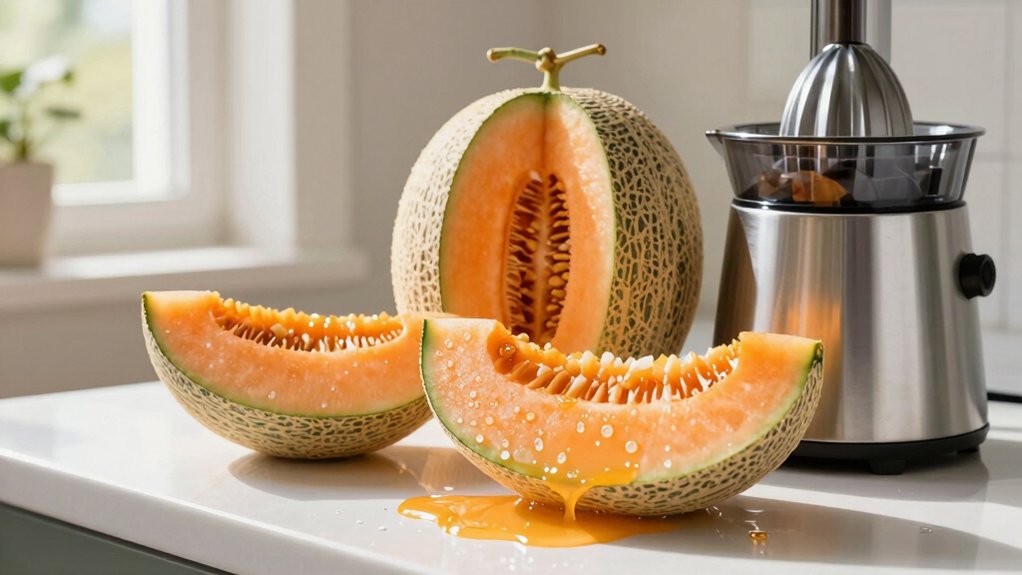
Cantaloupe is ideal for juicing because its high water content and natural sweetness deliver hydration and flavor with minimal bitterness. You’ll appreciate its balance of hydration and aroma, which helps create a clean juice base without overpowering notes.
In terms of Cantaloupe nutrition, the fruit supplies vitamins A and C, potassium, and dietary fiber in a light, easily absorbed form, supporting hydration and overall energy without heaviness. The fruit’s natural sugars offer quick-releasing energy, while its rind is typically discarded, reducing waste.
From a Cantaloupe history perspective, varieties have long been cultivated for sweetness and moisture, making them dependable for fresh-juice routines. This combination supports practical, evidence-based juicing decisions, emphasizing consistency, flavor integrity, and measurable nutritional impact.
How to Pick a Ripe Cantaloupe for Juice
Want to juice at peak flavor and nutrition? You’ll choose a ripe cantaloupe by weight, aroma, and rind texture. Look for a slightly soft feel at the stem end and a sweet, melon scent at the blossom end. The rind should be netted and undercolor, not dull. Press gently; avoid fruits with mushy spots or deep cracks.
Consider cantaloupe varieties best for juicing, selecting ones with balanced sweetness and moderate fiber. Harvesting tips suggest picking fruit when mature but not overripe; if kept on the vine, harvest just before full slip from the stem for ideal juice yield. Rotate varieties to compare flavors in blends.
Store cut portions promptly to preserve nutrients and aroma. Handle gently to minimize bruising.
- Cantaloupe varieties matter for flavor balance
- Check aroma and stem-end softness for ripeness
- Harvesting tips: pick at full maturity, not overripe
- Store promptly to preserve nutrients and aroma
Quick Prep Steps to Boost Flavor and Speed
To maximize flavor and speed in juicing, start with a quick prep routine that focuses on aroma, texture, and moisture. You’ll trim the stem end, rinse the rind, and pat dry to reduce surface moisture that dilutes juice. Lightly chill the fruit; cooler cantaloupe preserves aroma and enhances perceived sweetness.
Slice into uniform chunks, discarding seeds and fibrous cores to minimize clogging. Pre-cut portions fit juicing equipment, streamlining processing and reducing prep time. Scoop aroma-releasing pulp slightly from the rind to evaluation before juicing, ensuring ideal cantaloupe nutrition retention.
Use clean, well-maintained juicing equipment and avoid overprocessing to prevent heat buildup. This approach preserves nutrients while delivering consistent yield and flavor, aligning with evidence-based techniques for practical, repeatable results.
Best Methods to Juice Cantaloupe (and What to Skip)
Moving from quick prep tips, the best methods to juice cantaloupe center on maximizing juice yield and preserving flavor while avoiding common pitfalls. You’ll optimize texture with a clean, sharp knife, deseed fully, and chill fruit to reduce separation.
Use a breathable mesh or juicer with moderate pressure to avoid pulp overload, and consider a foam skimming step for clarity. If you skip the rind, you preserve sweetness; if you include it, you expect bitterness.
Pair techniques with quick hand-strain for smoothness and fold-in from cantaloupe smoothies to maintain brightness. For versatility, reserve juice for cantaloupe salads or ice-cold blends.
- Chill fruit before juicing for consistency
- Deseed thoroughly; avoid rind contact
- Use moderate pressure; skim foam
- Reserve juice for cantaloupe smoothies and cantaloupe salads
Flavor Pairings That Elevate Cantaloupe Juice
Try pairing cantaloupe juice with a citrus zest to create a bright harmony that enhances sweetness without adding sugar. A touch of mint can lift the drink with fresh, cooling notes.
A subtle nutty contrast—think almonds or cashews—adds depth without overpowering the fruit.
Start with small amounts of each element and adjust to taste to maintain balance and clarity of flavor.
Citrus Zest Harmony
Citrus zest adds bright, cutting notes that lift cantaloupe juice without overpowering its sweetness. Pairing options like orange, lemon, or lime zest create clean, complementary profiles. You’ll notice how citrus zest enhances aroma and guides flavor harmony, narrowing the gap between fruit sweetness and acidity for a balanced sip.
- citrus zest as a micro-boost to brightness without bitterness
- orange zest for warm, tropical citrus notes
- lemon or lime zest to sharpen acidity and contrast
- measured zest quantity to preserve cantaloupe’s core flavor
Evidence-based approach shows zest compounds elevate perceived freshness and reduce aftertaste fatigue. Practical application: start with a small pinch, adjust by taste, and record the ratio for consistency.
This technique supports repeatable flavor harmony in cantaloupe juice.
Minty Fresh Notes
Minty vitality can lift cantaloupe juice by adding a cool, aromatic contrast that highlights the fruit’s sweetness without overwhelming it. You’ll notice that small amounts of mint, basil, or other herbal infusions create a crisp edge, so start with a light hand and taste as you go.
Pairing decisions should rely on evidence-based notes: herb potency varies by harvest and storage, so adjust to the fruit’s ripeness.
Temperature control matters: serve chilled (40–45°F) to preserve volatile aromatics and balance sweetness, avoiding dilution from melted ice.
Use fresh herbs rather than concentrates to maintain flavor clarity.
Document your results, tracking leaf-to-juice ratios and target temperatures for repeatable outcomes.
This approach delivers consistent, invigorating profiles that respect the cantaloupe’s natural sweetness.
Nutty Contrast Touch
How can a nutty note elevate cantaloupe juice without masking its sweetness? You’ll lean on a subtle nutty contrast that sharpens perception of the fruit’s brightness while preserving juice clarity. Implement small amounts of nut extracts or milled seeds to introduce texture and temperature cues, not dominating sweetness.
Pairings should emphasize balance, not overpowering cantaloupe’s natural profile, ensuring flavor enhancement remains the focus. Measure precisely, tasting after each addition to avoid drifting toward heaviness.
Target breakfast-friendly complexity, not dessert heaviness, and document ratios for repeatability. Favor ingredients with clean, low-odor profiles to keep the cantaloupe’s fruit-forward notes front and center.
- Almond extract with caution for nutty contrast and bright finish
- Pistachio milk splash for subtle creaminess
- Ground pecan seed dust as a light textural element
- Toasted walnut chip garnish for aroma-driven flavor enhancement
Balancing Sweetness and Hydration Without Extra Sugar
You can balance sweetness and hydration by choosing cantaloupe varieties with natural sugar levels and high water content.
Then pair with high-water fruits or vegetables to maintain moisture without added sugar.
Use measurements and timing to preserve juice freshness, noting that natural sweetness peaks when fruit is ripe but not overripe.
This approach emphasizes hydration without extra sugar through precise fruit selection and complementary ingredients.
Hydration With Natural Sweetness
Hydration and natural sweetness go hand in hand, especially when cantaloupe is your primary source. You’ll balance hydration with intrinsic sugar by choosing ripe fruit and using water-rich processing. Focus on texture and fiber preservation to maintain fullness without added sugar.
- Cantaloupe varieties influence sweetness and juicing yield
- Juicing equipment matters for yield and pulp separation
- Chill cantaloupe before processing to maximize juice clarity
- Short, cold extraction reduces perceived sweetness bias
To optimize hydration, measure juice volume against desired intake, and prefer whole-fruit hydration alongside juice for electrolytes. Use a clean setup to avoid off-notes, and avoid adding sweeteners; the fruit’s natural profile suffices. Verify freshness by aroma and firmness, then juice promptly to minimize nutrient loss.
This approach yields balanced hydration with natural sweetness, supported by precise selection of cantaloupe varieties and proper juicing equipment.
Minimal Added Sugar Strategies
Minimizing added sugar while preserving sweetness and hydration starts with precise fruit selection and processing. You’ll choose ripe cantaloupes with high Brix levels and uniform texture, then segment and deseed efficiently to minimize flesh loss.
Use cold-press or low-speed juicers to reduce heat exposure, preserving natural sugars and hydration. If sweetness dips, rely on fruit-forward proportions rather than additives, testing small batches before scaling.
When considering sugar substitutes, prioritize gradual, evidence-based options like small amounts of stevia or erythritol only if needed for taste balance, but emphasize that whole-fruit flavors should drive the profile.
Flavor enhancers, such as a touch of lemon juice or mint, can elevate perceived sweetness without adding sugar. Finally, document sensory results to refine future batches.
How to Store Cantaloupe Juice for Maximum Freshness
To store cantaloupe juice for maximum freshness, chill it promptly after juicing and keep it in a clean, airtight container. You’ll minimize nutrient loss and microbial growth by limiting exposure to air and heat.
Refrigerate at 1–4°C (34–39°F) and use within 48 hours. If you must store longer, freeze in portioned bags or ice cube trays and thaw in the fridge before use.
Label containers with date and batch details. Confirm your juicing equipment is sanitized to prevent contamination and preserve cantaloupe nutrition.
- Use airtight, opaque containers to protect light-sensitive nutrients
- Pre-chill storage vessels to avoid temperature shocks
- Label with date and batch for traceability
- Thaw frozen portions in the fridge, not at room temperature
Common Cantaloupe-Juice Quirks and Quick Fixes
Cantaloupe juice can surprise you with a few quirks, but most are easily fixed with quick, practical tweaks. You’ll notice sweetness variance from different cantaloupe varieties; taste and adjust with a pinch of salt or a touch of lemon to balance acidity.
If pulp clogs your extractor, choose riper fruit and remove seeds, then chop into uniform pieces to improve juice extraction techniques. Foam on top? Skim it off or chill to reduce air incorporation during processing.
Some batches turn watery when over-processed—pulse briefly, or use a coarse grind first, then finalize with a gentle blend. For stability, strain lightly and refrigerate promptly. Track varieties and methods to reproduce consistent results.
Frequently Asked Questions
How Long Does Cantaloupe Juice Last in the Fridge?
Canteloupe juice lasts 3–4 days in the fridge. For best freshness preservation, store in an airtight container and keep cold. Trust this storage duration as you monitor for off-smells or separation, which signal reduced freshness preservation.
Can You Freeze Cantaloupe Juice Without Texture Changes?
Yes, you can freeze cantaloupe juice, but texture may change. Use freezing methods like flash-freezing or ice cube trays, then store in airtight containers. For texture preservation, thaw slowly in the fridge and blend briefly before serving.
Is Cantaloupe Juice Safe for Babies or Toddlers?
Cantaloupe juice can be given to babies or toddlers, but you should watch for allergies and sugar load. For baby nutrition, offer diluted juice sparingly and favor whole fruit. Prioritize juice safety, and consult pediatric guidance when in doubt.
Does Juicing Affect the Amino Acid Profile of Cantaloupe?
Juicing does affect the amino acid profile, but small losses occur; you preserve amino acids with quick processing. You’ll notice a nutrient impact overall, focusing on freshness and storage. You should monitor temperature to maximize amino acid preservation.
Can Cantaloupe Juice Beoccasionaly Caffeinated or Mixed With Tea?
Yes, you can add caffeine occasionally, but be mindful of caffeine addition limits and flavor balance. For tea mixing, blend cantaloupe juice with brewed tea in small amounts to avoid overpowering sweetness and caffeine effects.
Conclusion
You’ve got this juicing thing down. Think of cantaloupe as a sunlit core, each sip a gentle burst of hydration and clarity. With precise fruit selection, swift prep, and clean juicing, you’re maximizing flavor without fuss. Pair it wisely, balance sweetness, and keep it chilled to keep nutrients real. If texture tricks or storage quirks pop up, you’ve got quick fixes in hand. Drink with intention, and let the juice carry you toward refreshed focus.