
Table of Contents
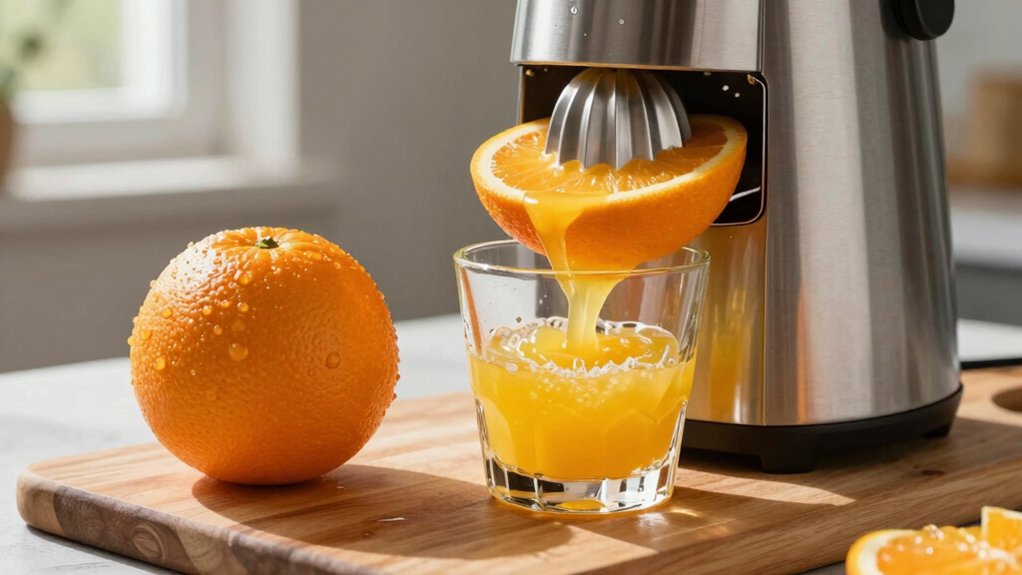
While juicing an orange might seem like the simplest kitchen task imaginable, there’s a surprising difference between getting half the juice with pulpy mess everywhere and efficiently extracting every vitamin-packed drop with minimal effort and waste. Mastering the technique of juicing an orange involves more than brute force squeezing – from choosing the right oranges and warming them to room temperature, to understanding whether manual reamers, lever presses, or electric juicers work best for your needs and how much juice you’re processing daily.
To juice an orange efficiently, start with intact, blemish-free fruit and a sharp juicer, then wash and cut with consistent geometry. Use steady pressure or torque to maximize yield, and strain to remove pulp and seeds after extraction. Chill the juice promptly to limit oxidation and bitterness. Filter fine fibers to reduce astringency, and balance with small amounts of sweetness or acid as needed. If you keep tweaking your setup, you’ll unbolt consistent brightness and aroma.
Why Fresh Orange Juice Feels Bright
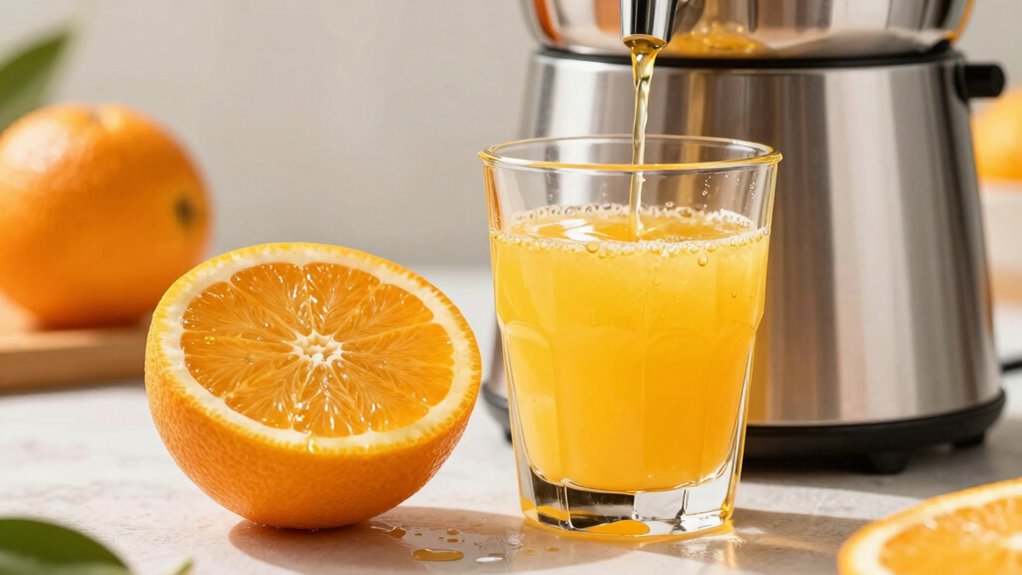
Fresh orange juice feels bright mainly due to its high concentration of natural sugars, acids, and volatile compounds that stimulate the senses. You perceive brightness from a combination of citric acidity, ascorbic acid, and layered esters that modulate aroma.
The perception is reinforced by Citrus pigmentation, which reflects and refracts light, creating vivid, eye-catching juice coloration that signals freshness. Juicing antioxidants present in the pulp and peel contribute to perceived liveliness by supporting rapid oxidation control and volatile release during extraction.
The brightness also derives from carotenoid-based pigments, which influence hue and light absorption, subtly shaping taste intensity. Direct exposure to air during pressing increases aroma volatility, enhancing the sensation of brightness without altering basic sweetness or acidity.




Tools, Oranges, and Setup for Juicing
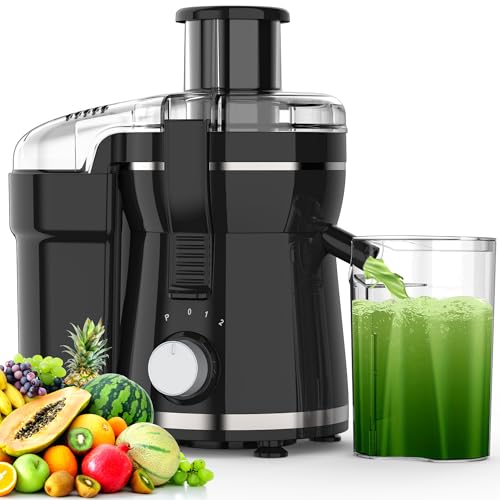
To juice efficiently, assemble a focused set of tools: a reliable citrus juicer (manual or electric), a sharp knife, a cutting board, a sturdy container for collection, and a fine-mesh strainer or cheesecloth for optional pulp removal.
You map your workflow by selecting oranges with intact peels and minimal blemishes, since surface quality affects peel removal risk and juice clarity. Maintain consistent cutting geometry to maximize extraction without crushing pith.
Use a clean, dry juicer and prompt juicer cleaning after use to prevent residue buildup. Align equipment height with your workspace to minimize hand fatigue.
Monitor pulp levels through the strainer, adjusting pressure to balance yield and clarity. Document any variability due to fruit temperature, then proceed to standardized processing in subsequent steps.
How to Juice: Step-by-Step Methods
Begin by selecting an appropriate juicing method and prepare your workflow. You’ll follow a precise sequence to maximize yield and minimize degradation.
Start with washing the orange to remove surface contaminants, then inspect for damage and cut to fit your juicer’s feed path.
If using a manual reamer, press steadily with consistent torque to normalize juice extraction without crushing the pulp.
For a powered device, align the fruit with the reaming cone and maintain a uniform pressing rate to prevent overheating.
After extraction, perform pulp removal to separate fibrous material from juice, then execute seed elimination to avoid bitterness and texture issues.
Collect juice in a clean container, and promptly measure or store at refrigeration temperature to preserve freshness and nutritional integrity.
Prevent Bitterness: Practical Fixes for Smooth Juice
Bitterness in orange juice often stems from pith exposure and under- or over-processed pulp, so apply targeted fixes to neutralize flavors without sacrificing aroma. You should minimize surface bitterness by selecting ripe fruit with thin white membranes and by promptly separating zest-adjacent tissue before juicing.
Implement controlled pulp management: filter out fine fibers that contribute astringency while preserving aroma compounds. Use brief, cold processing to limit oxidation, and apply mild enzyme clarification if turbidity accompanies bitterness, ensuring compatibility with flavor profiles.
Consider post-juicing adjustments: a calibrated small pinch of salt can aid bitterness reduction without perceptible salinity, and a touch of sweetness or acid balance may stabilize perceived flavor. Report measurable outcomes, focusing on bitterness reduction and flavor balancing to guide process optimization.
Quick Flavor Tricks to Boost Sweetness and Aroma
When you want to boost sweetness and aroma quickly, focus on targeted parameter control and rapid sensory checks. You’ll optimize sugars by adjusting juice extraction speed and temperature to minimize bitter compounds, then verify sweetness with a quick taste-panel approach.
Use brief, repeated sniff tests to gauge aroma release during pressing and settling, noting which stages correlate with scent intensity. Implement flavor pairing ideas that align citrus notes with subtle secondary aromas, such as tropical or floral profiles, to heighten perceived sweetness.
Incorporate aroma enhancers like micro-amounts of zest oils or coriander-like spice elements within safe culinary limits, ensuring clean extraction and absence of off-notes. Maintain precise records of adjustments and sensory responses to guide repeatable results.
How Much Juice Do Different Oranges Produce?
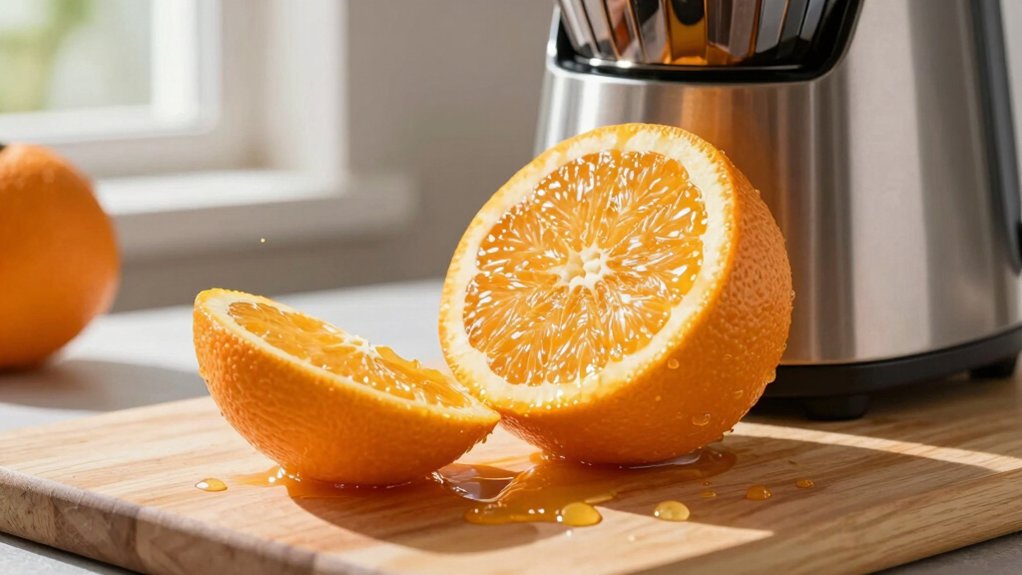
Oranges vary widely in juice yield, with factors such as cultivar, size, ripeness, and pressing method driving the range. You can expect roughly 40–70 ml per medium fruit, though thin-skinned varieties often exceed 70 ml, while small or dry specimens fall below 40 ml.
Juice volume correlates with soluble solids and segment integrity, not solely fruit weight, so measurements should be normalized to fruit diameter.
In variety comparison trials, juice yield differences of 15–25 percent are common between high- and low-yield cultivars under identical pressing conditions.
Seasonal differences also matter: late-season crops tend to contain more juice relative to dry matter, while peak-season fruits balance flavor with moderate yield.
For consistent results, standardize fruit selection, pressing force, and strain-through when measuring output.
Storing Fresh Orange Juice: Shelf Life and Freshness
Fresh orange juice begins to lose quality as soon as it’s extracted, and storage conditions largely determine its shelf life and freshness. You maximize stability by minimizing oxygen exposure, limiting light, and keeping temperatures cold.
In practice, refrigeration at 0–4°C slows enzymatic and microbial activity, preserving aroma and brightness for about 2–3 days, with quality decline visible after day two.
For longer windows, consider cold pasteurization or freezing, though flavor can shift upon thawing.
Use preservation techniques that reduce oxidation, such as airtight, opaque storage containers and promptly sealing after each use. Store juice in small, labeled portions to minimize repeated opening.
Choose containers that are BPA-free and vacuum-sealed if possible. Don’t rely on ambient room temperatures for preservation.
Creative Variations to Elevate Orange Juice
To elevate orange juice, incorporate targeted flavor and stability enhancements that preserve brightness while expanding its profile. You combine acidity balance, controlled sugar addition, and optional emulsifiers to maintain mouthfeel without sediment.
Add citrus-forward elements as core modifiers, then validate through small-batch trials, sensory panels, and shelf-stability benchmarks.
- citrus pairings for nuanced complexity
- precise citrus zest infusion timing and dosage
- small-batch emulsifiers to stabilize oil-based notes
- cold-pressed aromatic reductions to lift aroma
- garnish ideas that maintain clarity and color platform
Evidence supports that balancing pH, using pectin-safe stabilizers, and timing additions preserves brightness. You document concentrations, test replicate stability, and compare to baseline juice.
This approach enables repeatable, publishable variations with clear labeling and consistent texture.
Frequently Asked Questions
Can Freezing Orange Juice Affect Flavor or Texture?
Freezing orange juice can alter texture and flavor slightly, but freezing effects largely preserve acidity and sweetness. You’ll notice possible pulp separation and ice crystal formation; proper storage preserves flavor, while thawing may cause slight thinning and aroma loss.
Should I Peel or Pulp Before Juicing for Smoothies?
Peel removal is preferable for smoothies to reduce bitterness, while pulp inclusion boosts fiber and body. You should juice with peeled fruit, but retain some pulp for texture; results improve when you balance softness and nutrient content.
Does Juicing Remove Fiber and Impact Satiety?
Juicing reduces fiber retention compared to whole fruit, but some fiber remains; satiety effects decline due to liquid form and faster digestion. You’ll experience lower fullness per calorie, so you’ll need more volume or protein to compensate for fiber retention.
Which Varieties Yield the Best Overall Juice Quality?
You’ll find Valencia and Navel orange varieties yield the best overall juice quality, due to balanced sugar-acid profiles and high juice content, enhancing aroma and stability; note that rind oils can improve complexity but may require careful processing.
How Does Balancing Acidity With Sugar Work in Recipes?
Balancing acidity with sugar sets a pH balance and enhances sweetness adjustment; you pair acids with measured sweetness, tasting as you go, noting how pH shifts affect perceived sharpness, texture, and overall flavor stability in recipes. Yes, it’s precise.
Conclusion
In short, juicing oranges yields a bright, evidence-backed beverage when you respect temperature, freshness, and method. You’ll minimize bitterness with careful zesting and appropriate pulp management, while preserving aroma through prompt chilling and clean equipment. The data support using balanced citrus blends and measured sweetness boosters to suit taste profiles.
Practically, you’ll save time by pre-selecting ripe fruit and organizing a streamlined workflow, which quietly nudges your results toward consistent, invigorating outcomes.