
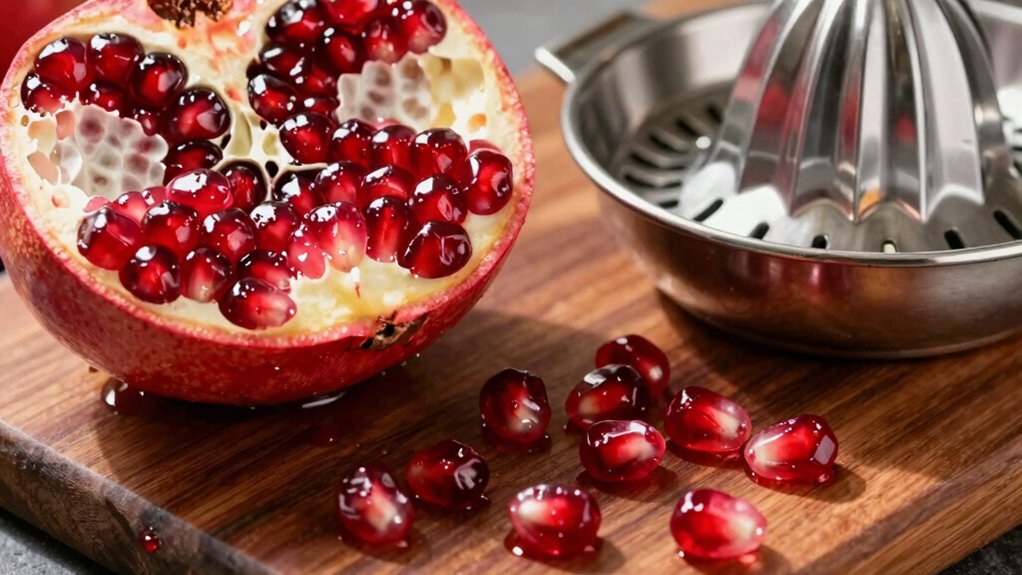
Juicing a pomegranate is fast, mess-free, and yields bright, antioxidant-rich juice you can use in drinks and dressings. Start by scoring the crown, splitting the fruit, and removing arils with a spoon over a light tray. Use a juicer or citrus press that minimizes seeds, then strain to remove solids and foam for clear juice. Chill promptly and store in airtight containers. With the right technique and timing, you’ll preserve flavor and antioxidants—and you’ll see how much more there is to explore.
Why Juice Pomegranates: Quick Benefits and Flavor

Juicing pomegranates is worth it for both health perks and flavor. You’ll notice quick benefits when you juice: a bright, tangy-sweet note that boosts beverages and recipes, plus a practical way to incorporate polyphenols.
Pomegranate antioxidants are linked to reduced oxidative stress, and you can capture them consistently with steady squeezing and fresh-straight juice. You’ll often see a favorable flavor profile across drinks, from simple juice to marinades and dressings, which supports routine use.
Juicing consistency matters for reliable taste and nutrient intake, so aim for uniform press and prompt consumption. Keep portions moderate to avoid overpowering sweetness, and pair with greens or citrus to balance pH and aroma.
This approach delivers measurable, enjoyable nutrition without waste.
Tools and Smart Prep for Mess-Free Juicing
To keep mess to a minimum, start with the right tools: a stable, non-slip cutting board, a sharp paring knife, and a dedicated juicer or citrus press suited to pomegranates. Choose food-grade gloves if you’re sensitive to juice spray, and lay a tray or sheet to catch drips.
Align your technique: score the fruit’s crown, then hold it over a bowl and apply even pressure with the press or hand squeeze. Use a juicer that minimizes seeds and rind contact to preserve flavor and reduce pulp.
Clean edges promptly to prevent staining. This setup supports juicing safety and maintains pomegranate antioxidants, ensuring you capture maximum nutrient integrity without unnecessary mess or waste.
Des-Seeding Pomegranates Without the Mess
You’ll start with easy prep steps that minimize mess, like selecting ripe arils and pre-chilling the fruit to reduce juice spray.
Use proven techniques to control splatter and keep handling clean, drawing on mess-minimizing methods and practical pomegranate handling tips.
This sets a precise foundation for efficient seeding and cleaner juicing, with clear, evidence-based actions you can apply right away.
Easy Pomegranate Prep
Desseeding pomegranates without the mess isn’t about luck—it’s about procedure. You’ll start with a firm grip on the fruit, scoring the rind lightly from crown to base, then splitting it into hemispheres to expose the arils.
Use a shallow bowl beneath and a clean knife to separate membranes, reserving arils in a single layer to minimize juice loss. Employ a gentle squeeze to loosen remaining seeds rather than brute force; discard white pith promptly to reduce bitterness.
Rinse your hands and the work surface, then transfer arils to a mesh strainer, allowing any residual juice to drain into the bowl. This method respects pomegranate symbolism and pomegranate history, delivering clean prep that supports efficient juicing and reduces mess risks.
Mess-Minimizing Techniques
Despite best efforts, mess happens during desearing; the goal is to minimize it with a disciplined workflow. You’ll tighten control by preps: set a wide cutting board, sharpen knives, and keep towels within reach.
Separate arils using a gentle, cold technique—slice top, float membranes aside, and scoop with a spoon rather than tearing. Work over a light-colored tray to track spillage and reduce staining, washing immediately after.
Freeze the juice pulp briefly to reduce splatter if you’re juicing in batches, then strain cleanly for clarity. Clean tools between steps to prevent cross-contamination and preserve pomegranate antioxidants.
Proper cleanup matters because it preserves juice shelf life, ensures consistent yield, and keeps your juices fresher, longer. Efficiency minimizes waste and maximizes flavor.
Pomegranate Handling Tips
To des-seed pomegranates without the mess, start with a cold fruit and a clean workstation to minimize juice leakage and staining. You’ll gain cleaner segmentation by scoring the rind lightly along the crown, then prying open with steady pressure. Use a sharp knife, and keep the fruit over a bowl to catch juice.
Gently detach arils by sliding the blade between the seed pockets, avoiding the white spongy tissue, which reduces bitterness and waste. Rinse arils briefly to remove remaining sap, then pat dry to preserve texture for immediate use.
For long-term benefits, integrate practices from Pomegranate cultivation insights to maximize yield on the tree and extend Seed preservation per batch. Apply these steps consistently to maintain quality and minimize waste.
Forever-Fast Juicing Method: Grab-And-Juice Steps
When you’re ready to juice a pomegranate quickly, the Forever-Fast Grab-And-Juice method centers on a clean, efficient sequence: grab the fruit, maximize the arils you expose, and press them with minimal prep to release juice.
You’ll apply steady pressure with a hand-held reamer or your thumb, directing juice toward a container while minimizing seed rupture. Focus on surface-aril exposure to reduce prep time without sacrificing yield, then collect juice promptly to preserve freshness.
This approach emphasizes repeatable motion, reduced handling, and traceable results, so you can compare batch-to-batch performance. Expect robust Pomegranate antioxidants and consistent juice flavor profiles when you maintain controlled pressure and fresh fruit.
Avoid grinding or over-squeezing, which can introduce bitterness and alter clarity.
How to Strain and Separate Juice From Seeds Cleanly
To separate juice from seeds cleanly, start by choosing a method that fits your setup and keeps the arils intact. You’ll prioritize minimal pressure to prevent seed rupture and bitterness.
Begin with Seed removal by gently loosening arils in a bowl, then tease them free with a spoon, avoiding crushes.
Next, select appropriate Juicing equipment: a manual press or sieve method works well, keeping solids separate. If using a press, spread arils on the mesh, press slowly, and collect juice in a cleaned vessel. For a sieve approach, crush lightly over a bowl, then rub through a fine mesh to remove pulp.
Chill juice briefly to improve clarity, if desired, and measure yield. This approach maximizes clarity and preserves flavor without seeds.
Storing Pomegranate Juice: Duration and Safety
Storing pomegranate juice properly extends its safety and freshness; keep it refrigerated and protected from light to slow quality loss. You’ll maximize safety by using clean containers, ideally glass, with tight seals, and freshly squeezed or pasteurized juice.
Refrigeration at or below 40°F (4°C) slows microbial growth and preserves nutrients. For longer storage, consider freezing in labeled portions; ice-cube trays offer quick thawing for smoothies or garnish.
In the fridge, expect juice shelf life of about 3–5 days; if you notice off odors, color change, or sediment, discard. Freezing can extend this to several months, with some minor texture changes upon thawing.
Throughout storage, maintain hygiene to preserve pomegranate antioxidants and overall quality.
Flavor Boosters That Complement Pomegranate Juice
Pomegranate juice shines when balanced with complementary flavors rather than overpowering it. To maximize clarity, focus on targeted flavor pairings that enhance brightness without masking acidity. Consider citrus notes (orange, lemon) to lift sweetness and add crisp tartness, while keeping portions measured to avoid bitterness.
Subtly integrate herbs like mint or basil for a fresh aroma that readies the palate without muddling the fruit’s typicity. For sweetness enhancers, lean on small amounts of honey or agave, or a touch of apple juice to broaden body, ensuring you taste before serving.
Grain notes from ginger or a pinch of cinnamon provide warmth without dominating; use sparingly. Always taste in stages, adjusting to preserve pomegranate’s core profile.
Flavor pairings and sweetness enhancers guide your final balance.
Pomegranate Juice Uses: Drinks to Dressings

Even so, pomegranate juice shines across a spectrum of drinks and dressings, offering brightness when used with intention. You leverage its tart-sweet profile to elevate cocktails, mocktails, vinaigrettes, and reductions without masking other flavors.
In beverages, balance with citrus, herbs, or a splash of sparkling water to preserve clarity and mouthfeel. In dressings, whisk with olive oil, Dijon, and a touch of honey for glossy emulsions. Use modest ratios to prevent dominance, then adjust with salt or pepper to taste.
Consider pomegranate health benefits when designing menus, noting that the juice contributes antioxidants and polyphenols without overreliance on sugar. For cultivation tips, source from reputable producers when possible and verify fresh, unpasteurized options.
Common Mistakes to Avoid for Crystal-Clear Juice
First, steer clear of rushing the juicing process; rushing leads to more solids and less clarity. You’ll avoid common flaws by staying methodical and data-driven. Focus on how small steps impact yield and purity, not flavor alone.
- Don’t pulverize seeds with excessive pressure; it crushes pulp and muddies juice.
- Skip over-passing once the juice runs clear; repeated pressing reintroduces solids.
- Stop skimming too early; some foam traps fine particles and clarity suffers.
- Don’t ignore seed extraction techniques; inefficient separation leaves tainted juice with bitters.
Awareness of pomegranate myths helps you reset expectations and optimize results. Apply precise timing, proper filtration, and clean equipment to achieve crystal-clear juice efficiently.
Troubleshooting Pomegranate Varieties for Juicing
When you’re choosing varieties for juicing, start by matching fruit traits to your process goals rather than your palate alone. In practice, focus on juice yield, seed hardness, and pulp fiber. Some pomegranate varieties deliver high juice volume but tougher seeds, increasing juicing challenges. Others taste great yet sap less juice, requiring longer pressing or blending.
Evaluate ripening patterns: late-season types can accumulate more sugars but may soften too quickly for efficient pressing. Consider acidity balance, color stability, and rind thickness, which influence extraction efficiency and filtration.
For consistency, pilot test a few cultivars under your equipment and workflow. Document results, adjust pre-press maceration, and calibrate press speed. Align variety choice with your juicing method, aiming for reliable throughput and predictable quality.
Frequently Asked Questions
Can Pomegranate Juice Be Frozen Without Losing Flavor?
Yes, you can freeze pomegranate juice without major flavor loss. For best results, use airtight containers, leave headspace, and freeze quickly. Upon thawing, stir well; this preserves nutritional preservation and storage methods while maintaining taste.
Do Pink Vs Red Pomegranates Juice Differently?
Pink and red pomegranates juice similarly; color variation doesn’t meaningfully affect flavor. You’ll notice minor hue differences during juice extraction, but the juice remains comparable in sweetness and tang. Focus on ripeness, seeds, and thorough extraction for best results.
How Much Juice Does One Fruit Yield on Average?
You’ll typically yield about 1/2 to 3/4 cup of juice per pomegranate. For consistency, pomegranate harvesting timing matters, and juicing equipment choices influence yield; use a press or centrifugal juicer to maximize extraction efficiently.
Can Juicing Affect Antioxidant Content?
Yes—you’ll see antioxidant stability decline if you expose juice to air, light, or heat, causing nutrient loss; store promptly, chill, minimize processing, and consume quickly to preserve antioxidants and maximize health benefits.
Is It Safe to Juice Arils With Membranes?
Juicing arils with membranes isn’t advised; it can affect texture and taste. For juice safety, remove membranes and press only the arils. This minimizes bitter compounds while preserving nutrients, giving you cleaner pomegranate juice safety and quality.
Conclusion
You’ll notice you and your pomegranate keep crossing paths in the kitchen—coincidence that feels like precision in action. When you juice smart, you’ll cut mess, save time, and get clean juice every time. The method lines up with what you already do: prep, grab, juice, strain. If you stay consistent, you’ll taste bright, tangy juice you can trust in drinks or dressings. The coincidence is practical: good juice, faster, with less waste, every batch.