
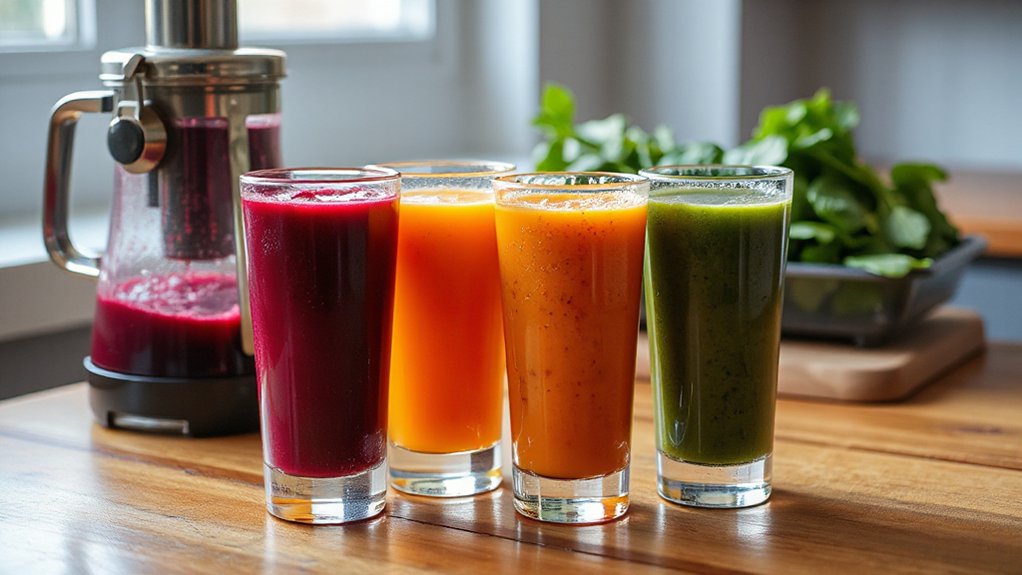
Did you know that diets rich in polyphenols and nitrates can modestly lower blood pressure and improve artery function? Juices can help when they’re built around berries, leafy greens, and citrus, with attention to sugar and fiber. You’ll get practical guidance on ingredients, daily amounts, and pairing with whole foods to balance sweetness and impact. Stay with me as we translate this evidence into an approachable routine that fits your goals and daily life.
How Heart-Healthy Juices Work: The Science You Need to Know

Juices that support heart health work by delivering a concentrated mix of micronutrients, polyphenols, and plant compounds that influence blood pressure, cholesterol, and endothelial function. You’ll see how these compounds interact with your vessels: polyphenols improve nitric oxide production, while fibers and flavonoids modulate inflammation and oxidation.
Evidence shows modest blood-pressure reductions from consistent intake and favorable shifts in LDL particles when paired with healthy habits. Juicing techniques matter: extracting juice without overprocessing helps preserve betalains, carotenoids, and anthocyanins.
Flavor combinations matter too, guiding adherence without sacrificing nutrition. Expect practical guidelines, like balancing citrus with leafy greens to reduce bitter notes and choosing produce with complementary nutrient profiles.
This data-driven approach supports belonging to a health-focused community that values evidence and practical, tasty routines.
Top Ingredients for Cardiovascular Support
Citrus pectin can help support cholesterol management and gut health.
While antioxidant-rich nitrates from vegetables and citrus contribute to improved endothelial function.
In practical terms, include sources of soluble fiber and nitrate-rich produce to align with evidence on cardiovascular markers.
This discussion will cover how these ingredients work in balance with overall diet and lifestyle recommendations.
Citrus Pectin Benefits
Citrus pectin supports cardiovascular health by helping manage cholesterol levels and improve gut-derived metabolites linked to heart risk, and the evidence base is growing as researchers refine dosing and source quality.
You’ll often hear about Citrus pectin and Heart fiber as part of practical daily strategies, not lofty promises. In studies, soluble fiber from citrus sources modestly lowers LDL-C when paired with balanced nutrition, and it may support satiety and gut microbiome diversity—factors linked to cardiovascular risk reduction.
Practical dosing varies by product, but consistency matters more than mega-doses; start with labeled servings and monitor tolerance. Pair citrus pectin with a fiber-rich diet, regular activity, and hydration to maximize benefits for heart health.
Antioxidant-Rich Nitrates
- Track how leafy greens and beetroot contribute nitrates alongside polyphenols to optimize vascular responses.
- Aim for consistent intake to maintain steady nitrate absorption and antioxidant support across meals.
- Pair nitrate-rich juices with other heart-healthy foods to enhance overall cardiovascular resilience.
Evidence shows higher nitrate-rich food patterns associate with lower blood pressure and improved endothelial function, while antioxidants help stabilize reactive species.
You’ll feel connected to a data-driven approach that emphasizes practical, shareable choices for belonging in a health-forward community.
Balance Sugar and Fiber in Heart-Friendly Juices
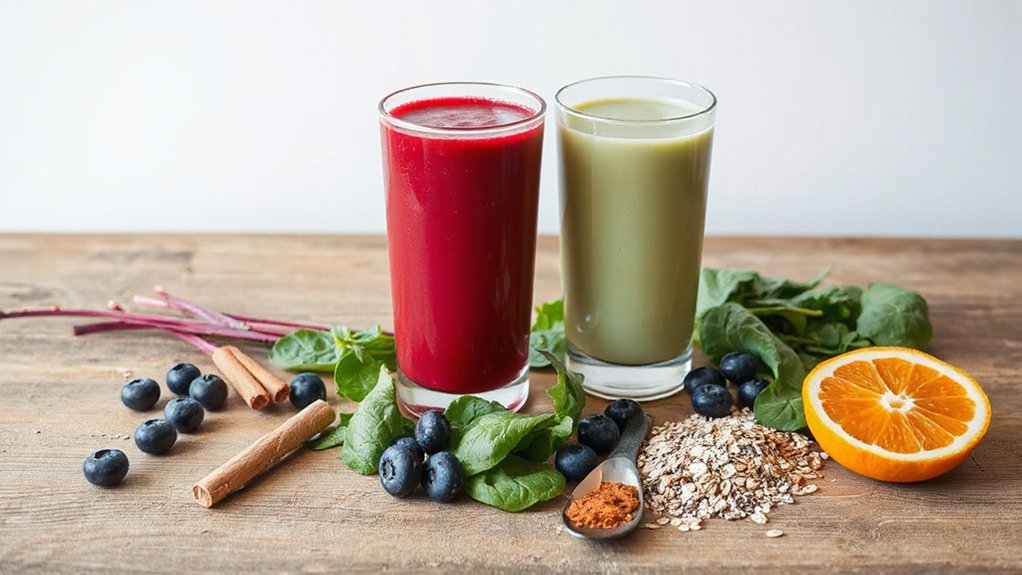
Balancing sugar and fiber in heart-friendly juices is about choosing options that deliver natural sweetness without spiking blood sugar while boosting fiber intake. You’ll favor juices that include whole fruit or minimally processed ingredients, pairing them with high-fiber add-ins like oats, flax, or chia to slow glucose absorption.
Data shows that modest sugar reduction, achieved by proportioning fruit with vegetables and legumes, supports better glycemic responses and appetite control.
Simultaneously, fiber enhancement improves satiety and gut health, contributing to cardiovascular risk reduction. Use lower-glycemic fruits (berries, apples) and pair with vegetables to maintain flavor while lowering total sugars.
Track results with simple measures: post-meal glucose, fiber grams, and daily intake patterns for sustainable heart-friendly choices.
Green Veggie Juice Blends You Can Drink Daily
A daily green power blend gives you a practical way to boost intake of leafy greens and vegetables.
You’ll see how small, consistent portions contribute to overall diet quality, with nutrition highlights showing nutrient density per serving.
This slice of data supports a simple habit: choose blends that balance volume, taste, and your daily fiber and potassium targets.
Aligning with evidence on cardiovascular markers like nitrates, fiber, and antioxidants.
Daily Green Power Blends
- Flavor combinations that balance sweetness, bitterness, and umami for easier daily adherence
- Ingredient sourcing strategies that prioritize freshness, cost, and seasonal availability
- Practical prep routines that minimize waste while preserving nutrient content
Veggie Juice Nutrition Highlights
Green veggie blends shine for daily consumption because they’re nutrient-dense, low in calories, and easy to incorporate into routines.
In this Veggie Juice Nutrition Highlights section, you’ll see that green blends deliver fiber, potassium, and antioxidants with minimal added sugars.
When you choose spinach, kale, cucumber, or celery, you’re supporting vascular health and steady energy without spikes.
Practical tips: drink soon after juicing to maximize vitamin C and folate, or store at 4°C to slow nutrient loss, a principle of juice preservation.
Embrace variety to boost phytochemicals and flavor—think parsley, mint, or lemon.
This approach aligns with fruit fermentation insights for subtle sweetness and better gut-macing impact.
You belong in a routine that prioritizes consistent, data-informed choices.
Juices That Help Manage Blood Pressure

Blood pressure–friendly juices can be a practical addition to your daily routine, but they’re not a substitute for medical care. Data suggests modest, consistent effects from certain beverages, especially when paired with overall healthy habits. You’ll notice how practical choices support long-term control without overpromising results.
- Choose herbal infusions as bases, mixing berries or citrus for potassium and polyphenols that correlate with lower systolic readings in some studies.
- Favor juice fermentation techniques for gentle, probiotic-rich blends that may improve gut-health markers linked to blood pressure regulation.
- Track portions and timing, aiming for balanced calories and sodium awareness to avoid counterproductive spikes.
These approaches fit a belonging-forward routine, where evidence guides options and you feel confident in everyday decisions.
Juices That Support Cholesterol Health
Cholesterol health benefits from juices hinge on choosing ingredients with proven lipid-related effects and using them as part of a balanced diet. You can target LDL reduction by including soluble fiber–rich fruits like apples and citrus, and by incorporating plant sterols where appropriate.
Practical evidence supports modest, sustained improvements when juices emphasize whole-food ingredients rather than added sugars. Favor combinations that optimize polyphenol delivery while minimizing caloric excess.
Remember that fruit fermentation can enhance bioactive compounds, yet juice preservation methods matter to maintain nutrient integrity. Track portions and overall dietary patterns, not single-juice miracles.
You’ll benefit from transparent labels, evidence-based servings, and mindful sourcing, reinforcing a sense of community around health-smart choices rather than quick fixes.
A Practical Daily Juice Routine: When and How Much
To build a practical daily juice routine, start with a modest, evidence-backed portion that fits your calorie goals and schedule. Then adjust based on how you feel and what your lab numbers show. You’ll aim for consistency, not perfection, and you’ll track outcomes to improve over time.
- Determine a baseline: 1 cup (8–12 oz) of juice daily, or a split across meals, balancing calories with fiber-rich foods.
- Adjust by response: monitor energy, satiety, and readings; scale up or down in small steps.
- Focus on flavor combinations and storage: rotate ingredients for variety, and store chilled juices in sealed containers to minimize nutrient loss and maximize freshness.
Flavor combinations, Juice storage.
Pairing Juices With a Heart-Healthy Diet and Lifestyle
Favor flavor combinations that emphasize vegetables and berries, with modest fruit sweetness to prevent sugar spikes. Use low-sodium, plant-forward meals alongside your daily juices to support blood pressure and cholesterol goals.
Plan juices as a supplement to meals, not a replacement for balanced nutrition.
Juice storage matters: refrigerate promptly, use airtight containers, and consume within 24 to 72 hours to preserve nutrients.
Common Pitfalls to Avoid With Juice
Even though juices can support heart health, several common pitfalls can undermine benefits if you’re not careful. To stay evidence-based, watch how your juice habits add up over a day and seasonally adjust.
1) Overly sweet options: choose whole fruits or balance with vegetables to avoid spikes in glucose and calories.
2) Artificial additives: skip extra syrups, colorants, and preservatives that can contradict heart goals.
3) Over-reliance on juice: remember fiber and protein matter; juice alone isn’t a complete meal and may hinder satiety.
If you track portions, opt for 1 small glass (4–6 oz) and pair with a fiber-rich snack.
Favor fresh, minimally processed produce and listen to how your body responds to different blends.
This approach supports consistency and belonging in a health-focused routine.
Frequently Asked Questions
Can Juice Replace Medical Treatment for Heart Disease?
No, juice cannot replace medical treatment for heart disease. You should pursue evidence-based care, discuss dietary supplements and herbal remedies with your clinician, and use data-driven plans to complement, not substitute, prescribed therapies and risk-factor management.
Which Juice Has the Strongest Evidence for Blood Pressure?
Blood pressure responds best to beet juice, offering the strongest evidence among fruit juices. You’ll gain fruit antioxidants and nutrient absorption benefits, empowering you with practical, data-driven choices that help you belong to a health-focused community.
Do Juices Interact With Common Heart Medications?
Yes, juices can interact with some heart meds; always check with your clinician. Practice safe Juice storage and Juice preparation, keep timing consistent with dosing, and monitor for unusual effects, sharing data-driven concerns to feel supported and informed.
How Quickly Can Juice Changes Affect Cholesterol Levels?
You’ll see juice timing influence cholesterol modestly within weeks, not hours, with consistent intake. The cholesterol impact depends on your overall diet and health, so track changes and adjust. Data support gradual, practical improvements you can trust for belonging.
Are There Risks From Over-Consuming Heart-Healthy Juices?
Yes, there are risks from over-consuming heart-healthy juices. Think of juice moderation like budgeting your nutrients; excessive intake can impair nutrient absorption and raise sugar load. You’ll benefit from balanced portions, evidence-based guidance, and community-supported, practical choices.
Conclusion
Juicing can be a practical cornerstone of heart health when you pick nutrient-rich ingredients and watch portions. For example, studies show that higher intake of polyphenols and nitrates from fruit and veggie juices is linked to better endothelial function and blood pressure control. Keep portions modest, pair with fiber-rich foods, and choose greens, berries, and citrus. Your daily routine matters: consistency beats occasional bursts, so integrate a balanced juice habit into a broader, evidence-based cardiovascular plan.