

You’ll notice a coincidence: fast carbs and protein pairings in post‑workout juices consistently show better recovery signals, from glycogen replenishment to muscle repair. Build a practical mix with hydration-forward vegetables, electrolyte-rich fruits, and a touch of ginger or turmeric to curb inflammation. You’ll want to balance carbs, protein, and fluids in each blend, but the specifics matter, and the best combination depends on your session. Keep reading to tailor your juice to your training goal.
How to Build a Post-Workout Recovery Juice

To build a post-workout recovery juice, start with a balance of fast-acting carbs and protein to replenish glycogen and support muscle repair. You’ll want a base of fruit or juice concentrate for immediate energy, plus a protein source like yogurt, milk, or a plant alternative to sustain amino acids for repair.
Add a modest fat or fiber element to modulate absorption without spiking the stomach. Choose ingredients with measurable nutrition: bananas for potassium, berries for antioxidants, and a whey or pea protein boost if tolerated.
Flavor combinations should stay simple and repeatable to support consistency. Storage tips: blend fresh when possible, or refrigerate in a sealed, opaque container for up to 24 hours. Label clearly to track batch variations.
Hydration Essentials for Recovery
Hydration replenishment basics show you how to restore fluids and support performance after a workout. You’ll monitor electrolyte balance and target sodium, potassium, and magnesium to reduce cramping and speed recovery.
Timing matters too, so you’ll align fluid intake with post-workout needs to optimize absorption and comfort.
Hydration Replenishment Basics
Staying properly hydrated is essential for recovery: fluids help replace what you lose in sweat, speed muscle function restoration, and support overall energy levels.
In this basic framework, you’ll prioritize steady intake across training days, using fluids that are easy to digest and appealing to you. Track your volume targets and adjust for climate, intensity, and body cues, not just a fixed rule.
Favor water as the base, then layer in light beverages or juice blends to boost palatability and mineral presence. Flavor combinations should feel natural to you, making hydration something you look forward to.
Ingredient sourcing matters: select fresh produce, quality water, and clean additives to optimize consistency and trust in your recovery ritual.
Electrolyte Balance Essentials
Electrolyte balance is essential for efficient recovery, because minerals like sodium, potassium, magnesium, and chloride support fluid shifts, nerve signaling, and muscle contraction.
You’ll optimize recovery by:
1) Electrolyte replacement strategies that fit your sweat rate and training load.
2) Timing your intake to align with activity and meals for steady absorption.
3) Choosing sources that maximize mineral absorption without unnecessary sugars.
4) Monitoring signs of imbalance to adjust intake and maintain performance.
Data-driven note: sodium and potassium drive fluid balance, while magnesium supports muscle function. Prefer balanced beverages and foods that deliver these minerals in harmony with your juice plan.
This approach builds belonging through reliable routines.
Fluid Timing Post-Workout
Post-workout fluids should begin within 30 minutes of finishing exercise to jumpstart recovery, replace sweat losses, and support muscle repair.
You’ll optimize timing by pairing hydration with recovery foods and small, frequent sips rather than gulping large amounts.
Aim for a fluid goal aligned with body weight and sweat rate, then adjust based on thirst, color, and performance cues.
Prioritize electrolytes to sustain volume and drive quicker absorption, especially after prolonged sessions.
Flavor combinations can improve adherence, so experiment with citrus, cucumber, mint, and berry twists to keep hydration enjoyable.
Store drinks in cool, covered containers and label portions to track intake, a simple storage tip that reinforces consistency.
This approach builds a shared habit that supports daily recovery rituals and group accountability.
Fruits That Speed Up Rehydration
You’ll see hydration boosted by fruits rich in natural sugars and fluids, like watermelon and citrus, which provide quick water without added fuss.
Pair these with electrolyte-rich options such as coconut water or orange juice to support mineral balance and faster rehydration.
These choices offer data-backed, practical ways to replenish fluids efficiently and sustain recovery.
Hydration-Boosting Fruits
1) Water-rich options like watermelon and cucumber boost volume without heaviness, supporting steady hydration during cooldown.
2) Citrus varieties add subtle sweetness and vitamin C, aiding palate satisfaction while you rehydrate.
3) Melons with natural minerals help maintain osmolality, stabilizing fluid balance as you recover.
4) Apples and berries contribute fiber and a gentle sweetness that enhances flavor without causing overconsumption.
Fruit pairing and flavor enhancement matter; choose combos that fit your routine, taste, and recovery goals.
Electrolyte-Rich Options
Recent evidence shows that pairing hydration-focused fruits with electrolytes can accelerate fluid absorption and restore balance faster. You’ll find electrolyte-rich options by pairing fruits with natural sodium, potassium, and magnesium sources, supporting steady rehydration after workouts.
Choose electrolyte sources like coconut water, orange slices, watermelon, and cantaloupe, which provide readily absorbed minerals alongside sugars that aid uptake. Combine these with mineral supplements sparingly if needed, ensuring you don’t exceed daily replacement goals and maintain balance with whole foods.
Practical picks include a post‑workout juice blend featuring citrusy fruits and a pinch of sea salt or a small electrolyte tablet dissolved in water alongside fruit. This approach keeps your recovery practical, inclusive, and grounded in real, measurable hydration benefits.
Quick Water Replenishers
When you reach for a quick rehydration boost, choose fruits that move fluids and minerals into your system fast. You’ll notice certain options restore volume efficiently, supporting recovery without excess calories.
For practical use, consider these quick picks and how they pair with liquids and minerals.
- Watermelon: high water content, light sweetness, ideal for flavor pairing and gentle juicing techniques.
- Orange: vitamin C boosts; add a pinch of salt for balance, enhancing electrolyte uptake.
- Pineapple: natural sugars fuel uptake; combine with coconut water for improved hydration.
- Cucumber: ultra-hydrating, mild flavor; great in celery-lean blends for consistent texture and speed.
Keep it concise, test flavors, and track hydration response to optimize juicing techniques.
Vegetables That Support Digestion and Recovery
You’ll also benefit from cruciferous greens and cucumbers, which can ease stomach sensitivity while delivering micronutrients linked to gut health. Data shows that these vegetables support digestive enzymes by offering substrates for fermentation and beneficial short-chain fatty acids, aiding mucosal integrity and transit.
Prioritize variety to optimize fiber types and polyphenols, then pair with lean protein to sustain recovery. By adopting this approach, you’ll nurture gut health, reduce post‑exercise discomfort, and feel more confident fueling future sessions.
Greens to Power Your Post‑Workout Blend
To power your post‑workout blend, prioritize greens that maximize hydration, micronutrients, and anti‑inflammatory compounds. You’ll gain clarity from spinach, kale, and arugula, plus the acidity balance of cucumber. Pair with basil, parsley, or cilantro to boost mineral content without heaviness. Keep portions moderate to maintain energy rebound without slowing digestion.
- Spinach and kale base for minerals and hydration
- Cucumber and celery for volume and electrolytes
- Fresh herbs (basil, parsley) for micronutrients and flavor
- Herbal infusions and spice combinations (see note) to tailor anti‑inflammatory effects
Notes: Herbal infusions and spice combinations enhance palatability and recovery signals without overpowering greens. This approach supports belonging through shared, data‑driven nourishment.
Immune and Inflammation Boosters to Add
Immune and inflammation boosters should be simple, targeted add-ons that complement your greens without overloading digestion. You pick ingredients with proven effects, not vague promises, so your juice supports immune health and steady recovery.
Start with antioxidant-rich berries for immune support and a subtle inflammation reduction signal through polyphenols. Add citrus or ginger to boost absorption and provide anti-inflammatory compounds without stressing your stomach.
Consider garlic, turmeric, or black pepper in small, balanced doses to avoid overpowering flavor while contributing measurable benefits. Monitor your body’s response and adjust in small steps, keeping portions sensible.
The goal is practical consistency, not extremes, so you maintain social, athletic, and wellness routines while supporting immune function and inflammation control.
Protein and Healthy Fats for Balance
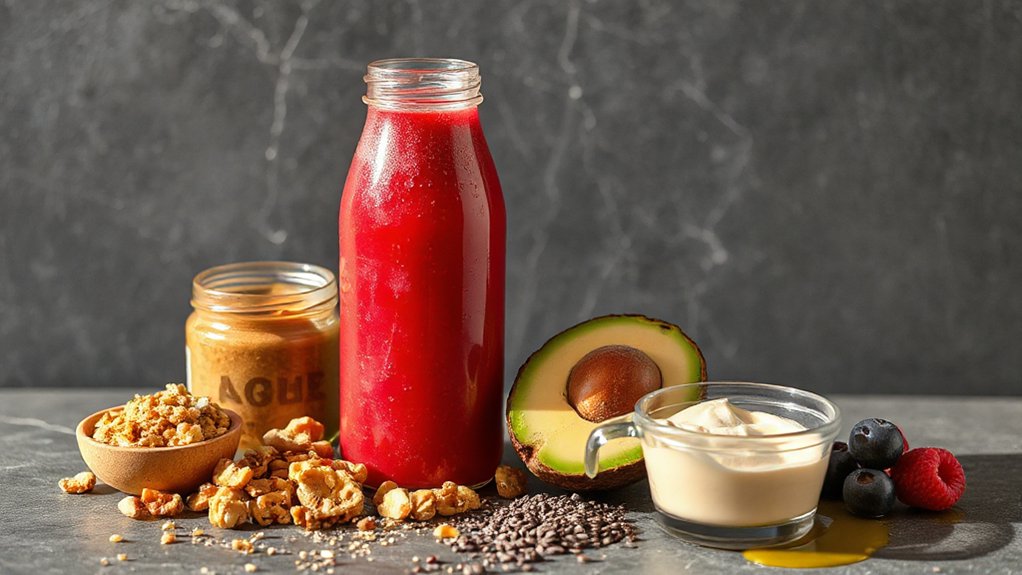
Protein and healthy fats play a balanced partner to your greens and boosters, helping steady energy and support recovery. You’ll notice how protein and healthy fats extend fueling, reduce cravings, and stabilize blood sugar after workouts.
Here’s how to optimize with practical choices:
1) Plant based proteins: include pea, soy, or hemp for complete amino acids in your blend.
2) Healthy fats: add avocado, nuts, or olive oil to support micronutrient absorption and hormones.
3) Fat–protein pairing: combine a small amount of protein with a source of healthy fats to sustain energy through the afternoon.
4) Portion focus: aim for balanced portions that fit your calorie target and personal recovery pace.
This approach fits a belonging mindset, helping you trust your post-workout routine.
Electrolyte‑Rich Ingredients You Should Include
Electrolyte-rich ingredients are essential for quick recovery, especially after sweating it out. You’ll benefit from straightforward, evidence-backed choices that replenish sodium, potassium, magnesium, and calcium without overhauling your routine.
Start with reliable Electrolyte sources like coconut water, fortified plant milks, citrus juices with a pinch of salt, and dilutions of oral rehydration solutions when needed. Pair these with low-sugar fruit and vegetables to maintain taste and energy.
Hydration strategies emphasize consistent intake across workouts and the day, not just after sessions. Track urine color and thirst signals to tailor portions, then layer in taste-friendly options to sustain adherence.
This approach supports performance, reduces cramping, and fosters belonging through shared, practical routines.
Tailor Your Juices to Your Training Goal
When you tailor juices to your training goal, you maximize both taste and effectiveness by aligning carbohydrate, electrolyte, and hydration needs with session intensity and duration. Tailored blends support specific outcomes, from endurance to strength, while still delivering recovery benefits.
- Post workout snack ideas: choose carbs and protein within 30–60 minutes post‑session to kickstart recovery.
- Juicing equipment tips: use a high‑quality juicer with easy cleanup and separate pulp for versatility.
- Adjust sweetness and texture to match effort level, keeping hydration front and center.
- Track outcomes: note perceived recovery, performance, and hunger to refine future juice choices.
Frequently Asked Questions
Do Juice Powders Outperform Fresh Ingredients Post-Workout?
Juice powders don’t consistently outperform fresh ingredients post-workout. You’ll benefit more from real produce, but powders can help when timing or convenience matters. Consider flavor combinations and nutrient timing to tailor recovery, fueling belonging and practical consistency.
How Soon After Training Should I Drink Recovery Juice?
Right after training, aim for within 30 to 60 minutes. This supports hydration strategies and muscle recovery. You’ll stay part of the group by choosing a juice that matches your flavor preferences, while staying data-driven.
Can Juice Alone Meet Protein Needs After Exercise?
No, juice alone won’t meet protein needs after exercise. You should pair it with a protein source. Focus on Nutrient absorption and Flavor combinations, using data-driven, practical choices that help you feel you belong in health-minded circles.
Are Certain Fruit Sugars Better for Rapid Recovery?
Yes—lower glycemic fruits support steadier recovery, but you’ll benefit from higher-energy options too. Track Fruit glycemic index trends and use natural sweeteners sparingly to balance rapid energy with sustained refueling for your group workout goals.
How Do I Adjust Juicing for Different Training Goals?
“First, you tailor your blends to your goal.” You adjust juicing for endurance by boosting carbs on training days, balancing carbohydrate intake, and aligning macros; you’ll feel supported, data-driven decisions guiding your routines and fueling your momentum.
Conclusion
You’ve got a blueprint for post-workout juice that’s practical and data-driven. By pairing quick carbs with protein, hydrating veggies, and electrolytes, you fuel recovery without fluff. Tailor portions to your training intensity and goals, then fine-tune with ginger or turmeric for inflammation support. Picture your muscles rebuilding as you sip—each ingredient delivering measurable benefits: faster glycogen replenishment, better digestion, steadier energy. Your recovery isn’t guesswork; it’s a precise, tasty routine you can trust.