
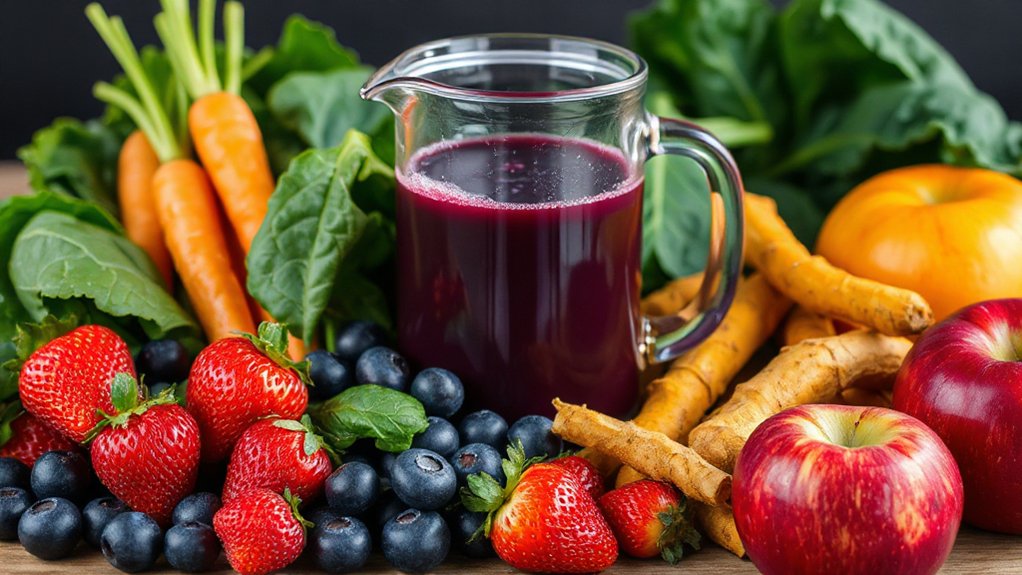
Is there real evidence that high-antioxidant juices can meaningfully boost health, or is it mostly marketing hype? You’ll want to weigh polyphenol and vitamin C content, plus how greens, crucifers, and tropical fruits contribute to overall antioxidant power. With fresh, minimally processed produce, you can maximize absorption by pairing with healthy fats or herbs. Think through practical juice plans and weekly goals to see if the approach fits your routine—and what changes you’d actually notice.
Why Antioxidants Matter in High-Impact Juices

Antioxidants help protect your body from oxidative stress caused by free radicals, which can accumulate after juicing and during processing. You’ll benefit when you understand how antioxidants work in high-impact juices: they neutralize reactive molecules, supporting your cells and immune function.
Antioxidant stability matters because potency changes with light, heat, and storage; choosing ingredients and handling methods that preserve this stability enhances results. Oxidative stress reduction isn’t a vague goal—it correlates with better energy, quicker recovery, and clearer skin for many people seeking a health-forward lifestyle.
In practical terms, prioritize ingredients with proven antioxidant activity, minimize processing time, and store juices properly. This approach helps you feel part of a science-informed community, confident in decisions that support long-term well-being.
Best Fruit Sources for Polyphenols and Vitamin C
Polyphenol powerhouses include berries, apples, and grapes, which deliver strong polyphenol profiles with practical juicing versatility.
Vitamin C-rich picks like citrus, kiwi, and guava add bright acidity and quantifiable antioxidant boosts to your blends.
Prioritize fresh, peeled, or lightly processed fruits to maximize polyphenol and vitamin C retention without sacrificing flavor.
Polyphenol Powerhouse Sources
Grapes, berries, and citrus top the list of fruit sources rich in polyphenols and vitamin C, making them practical choices for high-antioxidant juices. You’ll notice strong antioxidant synergy when you combine these, as diverse polyphenol types work together to protect cells.
In practice, mirror a rainbow approach: include dark grapes or berries for anthocyanins, pomegranates or cranberries for proanthocyanidins, and citrus for vitamin C–linked flavonoids. This blend supports stability and flavor while boosting bioavailability.
Consider gentle fruit fermentation cues—brief maceration or light fermentation can release additional polyphenol forms without sacrificing brightness.
Pairing these fruits with leafy greens or herbs can further elevate nutritional punch, texture, and consumer appeal, reinforcing a sense of shared, health-forward choice.
Vitamin C Dense Picks
Citrus and other vitamin C–dense fruits top the list when you want both polyphenols and robust vitamin C in high-antioxidant juices. Think oranges, kiwi, guava, and papaya as reliable foundations that boost brightness and antioxidant potential without extra sugar.
You’ll maximize vitamin C by juicing soon after cutting, since exposure to air slices oxidize nutrients quickly. For balance, pair these picks with polyphenol-rich greens or berries to create synergistic effects in superfood combinations.
Practical tweaks include prepping in batches and freezing portions for quick blends. Storage tips: refrigerate cut fruit in airtight containers, use within 2–3 days, and avoid moisture buildup.
This approach supports belonging to a community that relies on evidence-based, efficient, and tasty nutrition.
Fresh Fruit Boosts
Prioritize varieties with high polyphenol counts alongside vitamin C, since together they support endothelial health, immune function, and youthful skin. Pair fruits like berries with kiwi or orange for a balanced profile, then rotate to seasonal standouts to maintain variety.
Fresh fruit, consumed regularly, helps you sustain consistent antioxidant benefits while cultivating a sense of belonging to a nourishing, evidence-informed juice routine.
Greens and Crucifers for Carotenoids and Overall Antioxidant Power
Greens and crucifers are powerhouses for carotenoids and overall antioxidant power, making them smart choices for juice blends. You’ll notice leafy greens deliver lutein and beta-carotene, while cruciferous vegetables supply isothiocyanates that support detox pathways and inflammation control.
In practical blends, rotate between spinach, kale, and chard to balance taste with nutrient diversity. Include broccoli or kale stems for texture and additional carotenoids without overpowering flavor. When possible, pair these greens with herbs like parsley or cilantro to boost chlorophyll and polyphenols.
Focus on fresh, crisp produce, and rinse well to minimize bitterness. This approach fosters a habit of nourishing, community-minded choices—greens and crucifers support your goals and the group’s well-being. Leafy greens, Cruciferous vegetables.
Berry, Citrus, and Tropical Picks for Flavor and Nutrition
Berry, citrus, and tropical picks offer bright flavor and high antioxidant punch, helping juice blends taste great while supporting health. You’ll find that berries bring vibrant color and polyphenols, while citrus adds zing and vitamin C synergy for a cleaner taste.
Tropical options expand your palate with exotic flavors that still align with seasonality, so you can enjoy fresh options as they peak. Choose seasonal varieties to maximize nutrient density and reduce flavor fatigue, then pair berries with citrus for balanced sweetness and brightness.
Practical picks include frozen berries for consistency and fresh fruit when in season. Build a friendly, inclusive juice routine by rotating these ingredients, embracing variety, and celebrating your evolving taste preferences.
This approach supports consistent quality without unnecessary complexity.
How to Blend for Maximum Antioxidant Absorption
You’ll get the most antioxidant benefit when you blend complementary compounds—pair polyphenol-rich veggies with vitamin-C–rich fruits to boost overall absorption.
Use balanced ratios and include a touch of healthy fat, which helps carry fat-soluble antioxidants into your bloodstream.
Practical testing shows that a consistent, small, varied blend beats large, repetitive batches for steady antioxidant delivery.
Blend Antioxidant Synergy
Mixing antioxidant-rich ingredients isn’t just about variety—it’s about synergy. You can optimize blends by pairing polyphenols from different plant families, creating complementary absorption profiles. Start with a base of dark berries or leafy greens, then add citrus or tropical fruits to boost vitamin C, which helps regenerate other antioxidants.
Think flavor pairing: tart meets sweet to mask bitter notes while preserving polyphenol integrity. Include ingredient diversity to broaden the spectrum of antioxidants and reduce the risk of excess saturated flavors that overwhelm the palate.
Balance matters: keep a practical ratio so you actually drink the juice. Sip and notice how subtle shifts in fruit and veggie partners change perception and energy. Your blend should feel approachable, evidence-based, and inviting to share.
Maximize Absorption Techniques
To maximize antioxidant absorption in blends, pair fat-soluble compounds with sources rich in fat-compatible nutrients and optimize preparation to boost bioavailability.
You’ll improve antioxidant stability by adding a small amount of healthy fat (e.g., avocado, flaxseed, olive oil) and using fresh, minimally oxidized ingredients.
Pairing carotenoids and fat enhances cellular uptake, while gentle heating or chopping can raise bioavailability without degrading compounds.
Use a short blend cycle to preserve heat-sensitive antioxidants, and finish with a splash of citrus to aid circulation and stability.
Juicing equipment choice matters: wide-mouth, high-efficiency juicers minimize oxidation; keep blades sharp and containers cold between batches.
Track timing, consume promptly, and avoid over-processing to sustain antioxidant potency and fitting, supportive routines.
Simple Juice Plans and Weekly Caffeine-Free Antioxidant Goals
If you want simple, sustainable juice habits, start with a weekly plan that blends antioxidant-rich produce with caffeine-free goals. You’ll set realistic targets—three to five juice sessions, plus one high-fiber smoothie day—to support consistency.
Build a rotating lineup of fruits and vegetables to maximize variety and avoid monotony, validating choices with simple notes on taste, energy, and digestion. Track caffeine-free goals like herbal teas or water-rich recipes to reinforce habit formation.
Use evidence-based timing: drink soon after prep to preserve antioxidants, and batch-store vegetables properly to reduce waste. Fruit fermentation can deepen flavor without added sugar, while your Juicing equipment should suit your batch size and cleaning routine.
This approach fosters belonging through shared planning and measurable progress.
Frequently Asked Questions
How Do Processing and Storage Affect Antioxidant Levels in Juice?
You’ll see faster oxidation effects and reduced antioxidants if you heat, expose air, or store at room temperature; keep juice cold, minimize light exposure, and seal tightly to preserve nutrients and feel confident in your choice.
Which Fruits Maximize Anthocyanin Stability in Fresh Juices?
You should choose blueberries and blackberries to maximize anthocyanin stability in fresh juices. Prioritize color preservation and pH balance, avoid long exposure to light and heat, and drink soon to maintain antioxidant levels and sense of belonging.
Can Juicing Cause Nutrient Loss From Fiber-Bound Antioxidants?
“Where there’s a will, there’s a way.” Juicing can reduce fiber-bound antioxidants, but you can minimize loss with quick processing and minimal heat, preserving Fiber preservation and Antioxidant stability while you enjoy belonging to a health-conscious community.
Do Citrus Acids Enhance or Hinder Polyphenol Absorption in Juice?
Citrus acids can enhance absorption by boosting polyphenol stability, though extremely acidic pH may degrade some compounds; aim for moderate acidity. Citrus bioflavonoids support antioxidant synergy, helping you feel connected and confident in your juice routine.
Are There Guidelines for Preserving Enzymes in High-Antioxidant Blends?
Skip myths: yes, there are guidelines for preserving enzymes in high-antioxidant blends. You’ll maximize enzyme preservation and antioxidant stability by gentle processing, limited heat, quick consumption, and storing cold in airtight bottles with minimal oxygen exposure.
Conclusion
You’ve got the toolkit to juice smarter. By mixing berries, citrus, greens, and tropicals, you’re stacking polyphenols and vitamin C while boosting carotenoids. One striking stat: daily polyphenol intake links to lower cardiovascular risk, with higher patterns seen in diverse fruit juices. Keep it practical: use fresh produce, add a healthy fat for absorption, and drink soon after juicing. Aim for caffeine-free antioxidant goals weekly, and let flavor guide your daily, evidence-based routine.