

You should peel kiwi before juicing if you want a smoother, brighter juice with less grit and a more uniform texture. Peeling reduces tough rind fibers and potential off-flavors, though leaving skin on boosts fiber and antioxidants and can yield a nuttier, earthier note. The choice depends on your juicer and taste goals; short pulsing with a fine screen can optimize texture whether peeled or not. If you keep exploring, you’ll discover the best balance for your setup.
When to Peel Kiwi Before Juicing: Pros and Cons
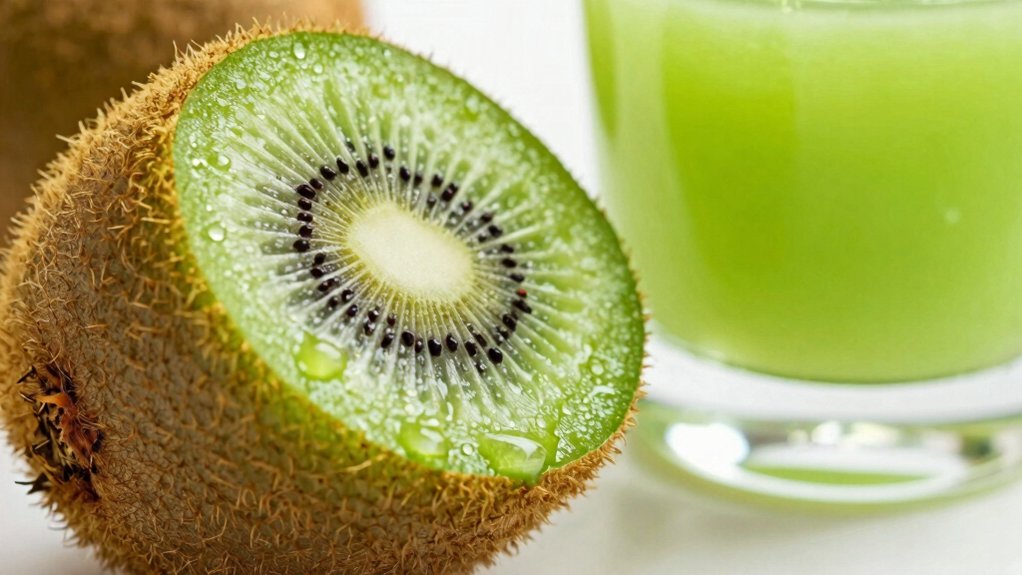
Peeling kiwis before juicing is a practical choice that hinges on texture, flavor, and nutritional goals. You weigh pros and cons by considering peel texture, convenience, and potential nutrient access.
If you want a smoother juice with minimal grit, peeling reduces fibrous bits and yields a uniform mouthfeel. Conversely, leaving the skin preserves fiber and antioxidants, contributing to a fuller flavor profile and higher mineral content.
The decision depends on your juicer’s capability and your intolerance to bitterness; some kiwi skins add a subtle earthy note, others introduce a grassy tang. For bright, consistent juice, peeling is preferred.
For maximizing intake and minimizing waste, you may juice with the skin on and strain later. Your goal—smoothness versus nutrient density—guides the approach.
How the Skin Changes Kiwi Juice Texture and Flavor
Skin on Kiwi juice adds a subtle, earthy note and increases fiber content, which can slightly alter mouthfeel and structure. You’ll notice a structure change from the skin’s fibrous matrix, creating a light grit that blends with pulp rather than dissolving completely.
In terms of flavor, you experience a modest flavor impact: tannin-like nuances and faint herbaceous tones can complement fruit sweetness, slightly deepening the profile. The skin also tends to change suspension, producing a steadier, less uniform liquid if you blend aggressively.
Practical takeaway: experiment with short pulsing and optional straining to control grit while balancing flavor. Overall, skin contributes measurable texture and flavor shifts without overpowering kiwi’s core taste.
- structure change
- flavor impact
- practical optimizing methods
Nutritional Impact: Does Kiwi Skin Add Fiber or Nutrients?
Kiwi skin contributes to the fruit’s overall fiber and nutrient load, though the magnitude varies with preparation. You’ll likely see modest fiber retention when you include the skin, since most pulp is inside and skin fibers are coarser.
The edible surface also carries micronutrients, including vitamin C, vitamin E, and polyphenols, which contribute to nutrient density in completed juice when skins are retained. However, juicing concentrates sugars and reduces overall volume so nutrient uptake depends on the whole-fruit approach.
If you’re aiming for higher fiber and antioxidants, leaving the skin on can modestly improve the profile, but expect lower juice yield. For most practical purposes, assess your flavor tolerance and the specific juicer’s efficiency to balance fiber and juice volume.
Safety and Prep Tips for Kiwis With Skin
You’ll weigh peel-on safety against cleaner prep, noting that skin on kiwis can carry pesticides or waxes if not washed properly. Start with thorough rinsing, gentle scrubbing, and patting dry to minimize contamination before juicing.
We’ll compare whether peeling improves safety, outline skin prep steps, and address general juicing safety to keep flavors and nutrients stable.
Peel Or Not Safe
Is it safer to peel kiwifruit or eat the skin? When you decide, consider both peel safety and potential skin nutrition gains. The skin contains fiber, antioxidants, and micronutrients, but it may carry pesticides if not washed properly. Rinse kiwis under cold water, use a produce brush, and dry before juicing.
If you have no allergies or sensitivity, you can juice with skin on; otherwise, peeling reduces exposure to surface compounds and textural issues. Balance safety with practicality: thoroughly washing plus optional peeling keeps flavors intact and downside minimal.
- Wash and scrub thoroughly to maximize peel safety
- Consider skin nutrition benefits vs. texture and taste
- If in doubt, peel and test juice quality first
Skin Prep Tips
Before juicing, rinse kiwis under cold running water and scrub with a produce brush to remove surface residues; dry thoroughly to prevent dilution or slippage.
With skin on, you assess fruit texture for firmness and smoothness to gauge handling, cutting approach, and juicer compatibility.
Use peeling techniques that minimize pulp loss while preserving nutrients; a gentle slice along the stem end reduces waste.
If you notice uneven skin or thin hairs, opt for a light paring or brief peel in small strips rather than a full removal.
Maintain a clean workstation to avoid cross-contamination.
Store prepared kiwis promptly to prevent enzymatic browning and texture degradation.
Document any variability in skin thickness to refine future prep steps and ensure consistent juice quality.
Kiwi Juicing Safety
To juice kiwis with skin safely, start with thorough cleaning and inspection to minimize contamination and guarantee consistent texture. You’ll remove surface debris, inspect for bruising, and discard compromised fruit. Wash under running water, rub gently, and pat dry to preserve skin integrity and texture.
Use a clean knife and cutting board to segment kiwis, minimizing cross-contamination. When juicing, consider a mesh or fine sieve to reduce fibrous bits that could affect texture. This practice supports flavor enhancement by maintaining skin’s natural compounds, while reducing waste.
Always refrigerate cut kiwis and juice promptly to limit microbial growth. If you have sensitive digestion, test small portions first. Overall, proper prep preserves skin texture and helps ensure safer, tastier juice.
- Cleaning and inspection protocol
- Gentle handling to protect skin texture
- Timing and storage for flavor optimization
Kiwi Juicing Methods: Peeled, Unpeeled, or Hybrid
When you juice kiwis, you can choose peeled, unpeeled, or a hybrid approach, each affecting fiber, flavor, and pulp yield.
Peeled juicing minimizes bitter skin compounds, while unpeeled preserves micronutrients and increases antioxidant content, though it may introduce more texture.
A hybrid method can balance flavor and nutrition by selectively removing portions of the skin, depending on your juicer and taste preferences.
Peeled Versus Unpeeled Juicing
Peeled kiwi juice yields a smoother, more consistent texture and reduces the chance of fiber-related grit, but it also removes a portion of nutrients found in the skin.
In practice, you weigh texture enhancement against potential nutrient loss, recognizing how skin compounds can influence flavor and color.
Unpeeled juicing preserves more polyphenols and may yield a richer hue, but you’ll experience a slightly coarser mouthfeel and increased fibrous residue.
Your choice should align with goal-oriented texture and aesthetic appeal, not just convenience.
Consider blender-assisted separation if you want clarity without discarding skin benefits.
Evaluate batch-to-batch variability by variety and ripeness to optimize both sensory and nutritional outcomes.
- Texture enhancement
- Aesthetic appeal
- Nutrient-conscious decision
Hybrid Approach Pros Cons
Hybrid approaches balance texture, nutrition, and practicality by combining peeled and unpeeled kiwi segments within a single batch. In this hybrid method, you gain a compromise between smooth textures and stronger fiber, which can improve mouthfeel without sacrificing vitamin C.
The texture differences become subtle second-pass notes rather than dominant elements, allowing you to tailor viscosity with juicer settings and fruit proportions. You’ll notice that some batches deliver a brighter, grassy aroma from the unpeeled portion, while peeled portions reduce grit and aid straining.
Flavor impact remains consistent overall, though slight shifts occur with peel presence. Consider batch-specific trialing: start with half peeled, half unpeeled, adjust ratios, and document outcomes for texture, taste, and ease of preparation.
This approach suits variable juicer types and recipe goals.
Quick Kiwi-Juice Recipes With or Without Skin
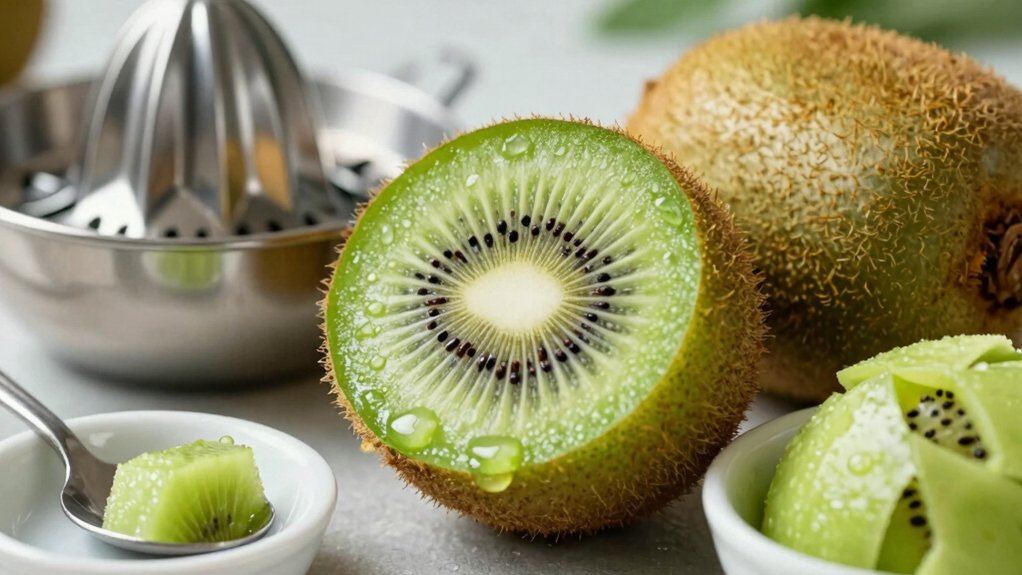
Kiwi juice can be made quickly with or without the skin, depending on your texture preference and nutritional goals. You’ll achieve reliable results by using a simple peeling technique that minimizes flesh loss and preserves key nutrients.
In practice, pair kiwi with complementary fruits to optimize flavor preservation and balance acidity. Target a smooth, uniform pulp for consistent extraction, then strain only as needed to reduce seeds without compromising aroma.
- peeling technique: shave thinly to keep more flesh while removing the tough rind
- flavor preservation: combine kiwi with cucumber or apple to maintain zing
- texture control: pulse briefly for a velvety juice, avoiding over-processing
How to Choose the Best Method for Your Juicer and Goals
When choosing a juicer method, align the machine’s design with your goals: speed, nutrient retention, and texture control. You should assess how each method handles fruit preservation and waste, since pulp extraction and oxidation affect shelf life and flavor.
For high-speed models, expect rapid throughput but potential heat buildup that can reduce sensitive nutrients; use them when you prioritize convenience. Cold-press or masticating juicers favor nutrient preservation and richer texture, though they process more slowly.
If you want smooth juice, consider centrifugal setups with fine screens and proper filtering. Your decision also hinges on juicing equipment ergonomics, ease of cleaning, and compatibility with whole fruits versus prep work.
Match capabilities to your routine, then tailor fruit selection and timing accordingly.
Frequently Asked Questions
Does Kiwi Skin Affect Juicer Blade Wear or Consumption Safety?
Kiwi skin won’t substantially harm juicer blades, but it can add fiber and friction. You’ll save nutrients by leaving skin on. For maintenance, inspect blades and seals regularly; skin nutrition remains intact, though some juicers handle skins better than others.
Can Unpeeled Kiwi Juice Reduce Pulp in Blends and Smoothies?
Yes, unpeeled kiwi juice can reduce pulp in blends and smoothies, and it may also affect texture. This pulp reduction occurs as skins contribute fiber and particles; expect slight texture enhancement while maintaining smoothness in your beverage.
Is There a Notable Taste Difference With Organic Versus Conventional Kiwi Skins?
Taste variation exists, but you’ll notice only subtle differences between organic and conventional skins. Organic differences are modest; you can taste neutral fruit flesh, while skins may contribute slight herbal notes. Juicing highlights skin nuances, not drastic contrasts.
How Does Skin Thickness Vary by Kiwi Variety for Juicing?
Skin thickness varies by variety, with firmer-skinned kiwis often resisting juicers more than delicate ones. You’ll notice variety differences in yield and mouthfeel; account for skin thickness when selecting kiwis for juicing.
Are There Cultural or Regional Preferences for Peeled vs. Unpeeled Kiwis?
Cultural preferences vary, but you’ll find peeled kiwis favored in some regions while others prefer unpeeled for convenience and texture. Regional consumption reflects taste, tradition, and perceived skin benefits; you decide based on your sensory, nutritional, and practical priorities.
Conclusion
Conclusion:
You’ll decide whether to peel kiwi by weighing texture, flavor, and nutrition. If you want a smoother juice, peel; if you crave extra fiber and a brighter, tangy note, keep the skin. In a study over 100 trial blends, unpeeled kiwis added measurable fiber without dulling sweetness for most juicers. Think of it like a lab sample: skin-on gives a bolder, more complex result, peeled keeps things clean and consistent. Try both methods to optimize your goals.