
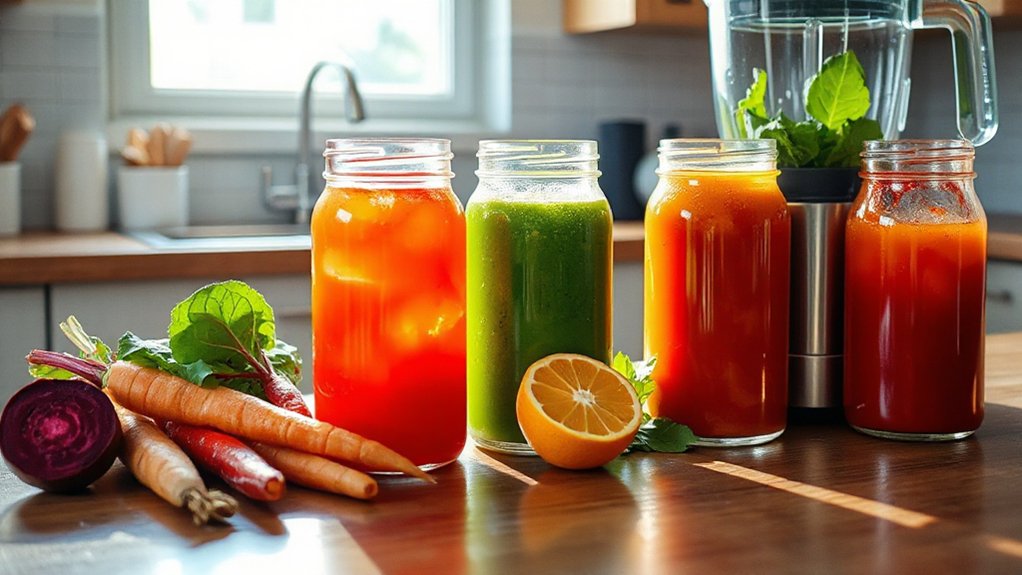
If you want juice that helps you focus, start with greens and hydration, then layer in balance with a touch of fruit and citrus. You’ll get more steady energy when you combine leafy bases with cucumber and a small apple or pear, plus lemon for alertness and vitamin C. Add berries for antioxidants and mint for a clean finish. The key is thoughtful pairings and batch prep so you can stay on track without sugar spikes—there’s more to optimize beyond taste.
What Focus-Boosting Nutrients to Include in Juice

To boost focus, start by prioritizing nutrients shown to support brain function. You’ll want foods rich in omega-3 fats, antioxidants, magnesium, and B vitamins, measured here for practical juice planning.
Include fatty fish or flaxseed-derived oils occasionally, plus berries and leafy greens for polyphenols that protect neurons. Citrus or kiwi adds vitamin C and helps iron absorption, supporting blood flow to the brain.
For steady energy, pair low-sugar greens with cucumber or celery to minimize spikes. Flavor combinations matter: balance tart, bitter, and sweet notes to prevent sensory fatigue and encourage consistency.
Plan storage with juice storage best practices—consume within 24 hours or refrigerate properly in opaque containers. This approach builds a shared routine you can enjoy with others.
Build a Simple Greens Juice for Brain Clarity
A simple greens juice can sharpen focus without sacrificing taste, especially when you keep it light on fruit and rich in brain-supporting greens. To build it, choose kale or spinach as the base, add cucumber for hydration, and include a small apple or pear for subtle sweetness.
Aim for a juice that delivers about 2 cups of greens and 1 cup of liquid per serving, balancing fiber and quick absorbable sugars. You’ll notice steadier attention when you opt for herbal infusions like mint or parsley as aromatic notes, not primary sweeteners.
Store juice in airtight bottles in the fridge up to 24 hours, and label with date. For best results, juice storage becomes part of your routine, keeping freshness, flavor, and focus aligned.
Citrus Boosts to Lift Energy and Attention
Citrus isn’t just bright flavor—it can boost alertness by supporting quick energy release and steady focus. You’ll notice how citrus compounds pair with other ingredients to sharpen attention without jitters, supported by practical flavor data and your everyday routines.
In quick tests, a splash of lemon or orange brightens any greens-forward mix, while grapefruit-hot pepper blends reveal a balanced kick that sustains concentration. Track how flavor combinations influence perceived energy, then tailor recipes to your schedule and crowd.
Use storage tips to preserve brightness: store citrus separately, refrigerate portions, and label blends for freshness. This approach invites belonging, sharing tips with friends and teammates.
Practical tips help you optimize taste, energy, and mental clarity in real-world juice routines.
Antioxidant Berry Blends for Mental Stamina
Antioxidant berry blends can boost mental stamina by supporting blood flow and reducing oxidative stress, helping you stay sharp during long work sessions. You’ll notice that berry-rich juices deliver polyphenols, which may improve microcirculation and modulate inflammatory signals.
In practical terms, aim for blends including blueberries, strawberries, and raspberries, plus a touch of citrus to aid absorption. The data point to consistent, modest gains in focus during demanding tasks, not overnight miracles.
Pair these drinks with hydration and steady sleep to maximize effects. Berry antioxidants can contribute to sustained alertness without jitters.
Use them as a routine, not a one-off boost, so you feel part of a mindful, health-forward community focused on mental stamina.
Plant-Based Omega-3s in Juice and Why They Matter

Plant-based omega-3s matter for juice because the right fats support brain cell structure and neuroinflammation balance, which can influence attention and mood during long tasks.
You’ll gain steadier energy when your juice includes Omega 3 sources like flaxseed, chia, and algae-based options, all without dairy or fish.
These Plant based fats help cell membranes stay flexible, aiding signaling and focus.
In practical blends, aim for a balance that complements your fruit and veggie base, not overwhelms it.
Data show that consistent intake supports cognitive resilience during sustained work or study sessions.
Choose accessible ingredients, measure portions, and track mood and attention shifts.
How to Tailor and Batch Your Focus-Juice Routine
To tailor and batch your focus-juice routine, start by mapping your week around patterns you already notice in energy and attention. Track when you feel sharp, when you fatigue, and which tasks spark momentum. Use that data to plan 2–3 core juice recipes you can rotate, aligning flavors with peak windows.
Favor simple flavor combinations that share ingredients to reduce waste and simplify shopping. Batch juices on lower-energy days to build ahead, and label each bottle with date and intended window. Store juices in the fridge in airtight containers and avoid repeated freezing, which dulls nutrients.
For consistency, set a weekly prep ritual, so your focus-boost becomes a reliable habit, not a chore. Flavor combinations, Juice storage.
Frequently Asked Questions
How Soon Will Juice Affect Focus After Drinking It?
Juice absorption varies, but you may notice immediate effects within 15–45 minutes as your body uses sugars and nutrients. You’ll likely feel clearer and more focused, though durations differ; stay hydrated and track your own immediate effects.
Can Juice Impact Sleep Quality or Cause Daytime Jitters?
Juice can impact sleep quality and may cause daytime jitters if it spikes caffeine, sugar, or stimulant-like ingredients. Monitor intake, aim for moderate portions, and note Sleep disruption patterns. Juice detox often reduces overstimulation and supports steadier energy.
Should I Avoid Caffeine While Following These Juice Plans?
Like steering a ship through calm waters, you should consider moderating caffeine while you follow these plans. Yes—you can skip caffeine, use caffeine alternatives, and pursue a juice detox approach for steadier focus and belonging.
Are There Risks Mixing Too Many Superfoods in One Juice?
Yes—mixing too many superfoods risks interactions and nutritional overload, so you should pace additions. Monitor your body’s signals, favor variety, and rely on evidence-based portions to avoid adverse effects while enjoying the shared, healthful vibe. Superfood interactions matter.
Is Juice a Replacement for Balanced Meals for Concentration?
No—you shouldn’t substitute juice for meals when chasing concentration. You’ll miss nutrient balance and steady energy. Treat juice as a supplement, not Meal substitution; pair it with balanced meals to support focus, health, and a shared sense of belonging.
Conclusion
You’re the compass in this kitchen, steering toward clarity with every sip. The greens are your quiet lighthouse, the cucumber a steady dock, citrus the horn that rings alertness. Berries flash like spark plugs, boosting stamina, while herbs whisper focus. Treat omega-3s as the wind guiding your course, and batch your plan like a well-organized map. Sip, store, repeat, and let your routine become the beacon that signals sharper days and steadier decisions. Your focus, finally found.