
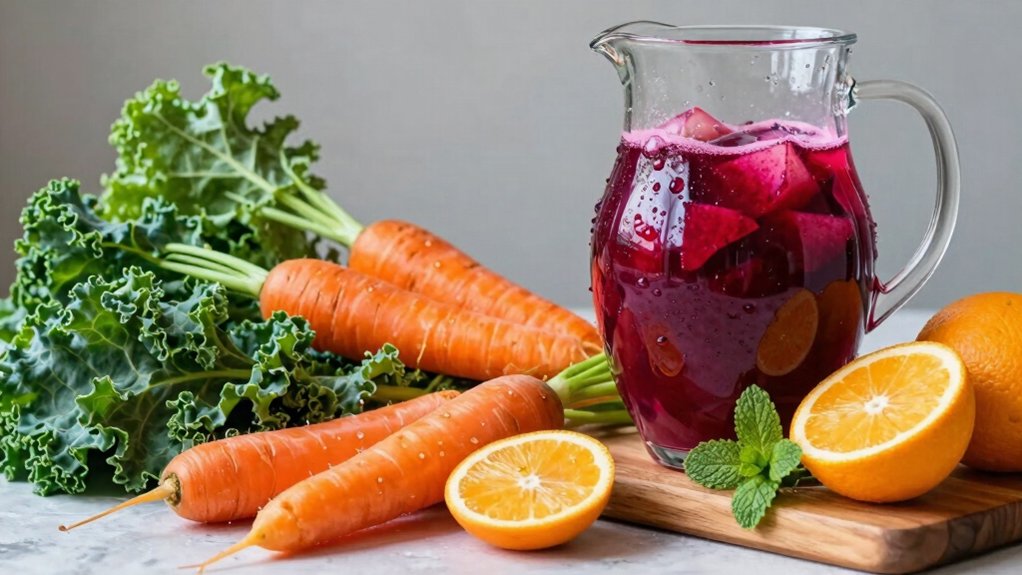
A veggie-forward juice is healthiest when you prioritize fiber, moderate sugar, and a diverse mix of micronutrients while minimizing oxidation. Aim for a blend with leafy greens (spinach or kale), cucumber, celery, and a modest fruit add-on (apple or citrus) to balance flavor. Include whole-fruit components or pulp when possible to boost antioxidants and satiety. Use airtight, opaque storage, drink soon, and keep portions modest to manage glycemic load; more details await.
Key Criteria for Healthy Juicing

When evaluating healthy juicing, focus on components that support overall health and minimize risks. You assess juice quality by nutrient density, fiber remnants, and potential contaminants, prioritizing practicality and evidence.
Consider juice fermentation as a factor that can alter bioavailability and gut health, noting fermentation-friendly ingredients and clean handling to reduce spoilage risk.
You also evaluate hydration contribution, glycemic impact, and micronutrient variety, aiming for a balanced profile rather than excessive calories.
Flavor enhancement should come from natural plant compounds, not added sugars or artificial additives.
Practical criteria include predictable yield, shelf stability, and clear labeling of ingredients.
Ground your choices in consistent measurement, reproducibility, and safety data, ensuring long-term adherence to a moderate, varied juice routine.
Balance Fiber, Sugar, and Micronutrients
You should balance fiber intake, sugar load, and micronutrients to support steady energy and gut health. Start with moderate fiber from whole fruits, vegetables, and minimally processed sources.
While limiting added sugars to keep glucose responses stable. Prioritize preserving micronutrients by choosing fresh or lightly processed ingredients and consuming them promptly.
Balance Fiber Intake
Balancing fiber intake with sugar and micronutrients supports steady energy and gut health; prioritizing soluble and insoluble fibers helps regulate blood glucose and promote satiety.
You’ll optimize fiber by pairing fruits and vegetables with contrasting textures and colors, emphasizing a balance that supports microbiota diversity and slower nutrient absorption. Include sources of soluble fiber (oats, apples, citrus) alongside insoluble fiber (broccoli stems, leafy greens) to modulate glycemic response without sacrificing flavor.
Keep portions moderate to maintain energy yield and mineral balance, and monitor how juice blends affect satiety between meals. Flavor pairing can guide ingredient selection, while choosing appropriate juicing equipment preserves fiber structure where beneficial.
Prefer gentle processing to minimize nutrient loss, and document results to refine your fiber-sugar-micronutrient equation.
Manage Sugar Load
To manage sugar load effectively, pair high-sugar fruits with fiber-rich vegetables and sources of protein or healthy fats to blunt post-juice glucose spikes and extend satiety.
In practice, aim for a balance: select fruits with lower glycemic indices when possible, and add leafy greens, cucumber, or celery to increase fiber and volume without excessive sugar.
Include a protein source such as yogurt, nut butter, or seeds, and consider a sprinkle of healthy fats like olive oil or avocado.
This approach supports steadier energy, reduces cravings, and aligns with evidence on glycemic response.
While detox benefits are sometimes claimed, emphasis should be on consistent intake and overall diet quality.
Juice cleansing concepts may be misleading; focus on balanced, fiber-forward recipes.
Preserve Micronutrients
Preserving micronutrients in juice hinges on thoughtful ingredient selection and minimal nutrient loss during processing. You optimize micronutrient retention by choosing fresh, locally sourced produce and avoiding over-slicing exposure that accelerates oxidation.
Balance fiber and sugar by including pulp and whole-fruit components where possible, rather than stripping everything to juice. Keep portions modest to prevent excessive total sugar while preserving antioxidant levels.
Processing matters: juice pasteurization can reduce heat-sensitive micronutrients, so opt for lower heat or shorter duration when safe. Store juice cold and consume soon to limit degradation.
Consider minimal air exposure and light protection to maintain micronutrient integrity. Pair with a varied intake to support overall antioxidant levels without compromising palatability.
Understanding Glycemic Load in Juices
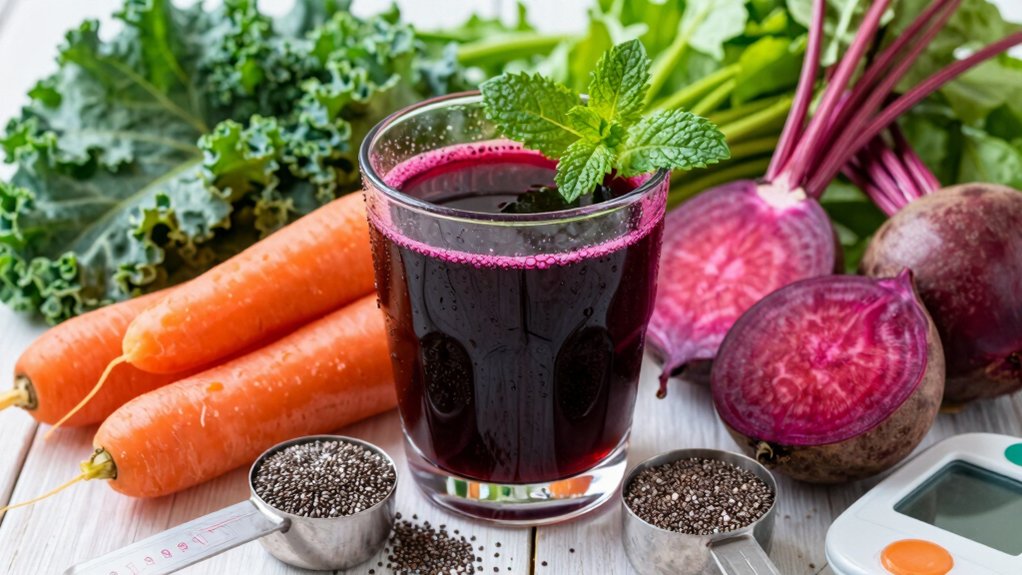
Glycemic load (GL) provides a practical measure of how a juice’s carbohydrate content can impact blood sugar, accounting for both quality and quantity of carbs. You assess GL by combining serving size, carbohydrate amount, and how rapidly those carbs elevate glucose, linking it to glycemic index and portion control.
Lower GL options typically support steadier energy and may reflect higher antioxidant capacity across certain fruit and vegetable blends. You’ll notice that juices with fiber, protein, or fat can reduce GL’s impact by slowing absorption.
Practical planning means selecting ingredients with moderate GL and monitoring portions to align with your metabolic goals.
- Focus on moderate-carbohydrate blends to balance GL and energy
- Consider glycemic index as a supplemental gauge
- Prioritize ingredients with measurable antioxidant capacity
- Control portion sizes to maintain stable blood sugar
Juicing vs. Whole Produce: When to Choose Which
Juicing offers convenient, concentrated intake of vitamins and phytochemicals, but whole produce provides fiber, slower carbohydrate digestion, and greater fullness, making it the better default for long-term dietary quality.
When to choose juicing versus whole produce hinges on goals, time, and satiety. Juicing efficiency shines for rapid nutrient intake or when you need a portable option, yet it reduces fiber and may elevate peak sugars without fiber buffering.
Whole produce supports sustained energy, enhanced fullness, and gut health due to intact fiber. Use juicing strategically for micronutrient density or during limited eating windows, but rely on whole produce for most daily intake.
Consider produce preservation practices to extend fresh availability without compromising nutrient integrity. Balance maximizes nutritional benefits and long-term adherence.
Top Veggie-Forward Juices for Hydration and Energy
Hydration and energy can be maximized with veggie-forward juices that emphasize high-water content and readily metabolizable micronutrients. You’ll benefit from blends that prioritize cucumbers, celery, spinach, and herbs for rapid fluid uptake and sustained alertness, while keeping sugar load modest.
- Cucumber- celery-spinach with parsley for invigorating hydration and micronutrient density
- Carrot-kale-ginger with lemon to support antioxidant intake and subtle sweetness
- Beetroot-celery-spinach for vascular support and sustained energy
- Zucchini-alfalfa-green-apple (small amount) to reduce bitterness and improve palatability
Flavor combinations guide your choices, and your juicing equipment should be easy to clean, with a reliable press or high-speed blender. Balance texture, yield, and nutrient stability to optimize daily hydration and performance.
Fruit-Inclusive Blends That Don’t Spike Sugar
Fruit-inclusive blends can be healthy when you emphasize low-sugar fruits and pair them with high-fiber, protein, or citrus components to blunt glucose responses.
You can design blends that minimize rapid sugar absorption by balancing glycemic load with soluble fiber and pectin-rich fruits, then adding a protein source or yogurt. Use citrus elements to slow digestion and enhance satiety, rather than relying on high-sugar additions.
Focus on whole-food juice extraction methods that preserve fiber where possible, and avoid excessive processing that inflates sugar concentration.
Choose fruit antioxidants strategically, selecting berries and citrus to maximize protective phytochemicals without spiking insulin.
This approach supports metabolic stability while delivering palatable flavors, practical for daily use and consistent with evidence-based juice planning guidelines.
Practical Serving Sizes and Timing
Consider sensible serving sizes and timing to optimize nutrient intake and satiety, such as standard 4–8 ounce portions for most adults and timing around workouts or meals.
Freshness and speed matter: consume juice promptly after extraction or purchase, and limit exposure to light and heat to preserve vitamins.
Store properly and plan for minimal decay by refrigerating promptly and using within a few days, or freeze for longer storage.
Serving Size Timing
When selecting serving sizes and timing for juice, practical guidance centers on modest portions and strategic intake around meals or workouts to optimize nutrient absorption and minimize excess sugar.
- Target 4–8 ounces (120–240 ml) per serving to support nutrient absorption without overstimulation.
- Consume juice shortly before or with meals to aid flavor enhancement and satiety.
- Time post-exercise intake within 30–60 minutes to replenish glycogen while controlling total sugar load.
- Pair juice with fiber-rich foods to blunt glycemic response and stabilize energy.
These practices emphasize measurable portions, evidence-based timing, and practical application to everyday routines.
Freshness And Speed
Freshness and speed influence how you’ll actually use juice in everyday routines. You optimize serving size and timing to preserve nutrients and maintain palatability. Consume juice promptly after preparation to minimize nutrient loss and oxidative change; rapid consumption supports consistent intake across the day.
Portion modest, typically 120 to 240 ml per sitting, aligning with energy needs and appetite cues. For practical juice preservation, store prepped produce in cold, airtight conditions and minimize exposure to light. If you must delay, seal juice in opaque containers and refrigerate briefly, avoiding prolonged warming.
Flavor enhancement relies on clean processing, avoiding excessive heat or storage duration. Balance timing with meals or snacks to improve satiety and nutrient uptake, rather than drinking in isolation, ensuring predictable, evidence-based benefits.
Storage And Decay
Storage and decay influence how long juice remains safe, palatable, and nutrient-dense after preparation. Controlling containers, temperature, and exposure minimizes spoilage and nutrient loss.
You weigh key factors: container integrity, light exposure, and rapid cooling, all shaping juice preservation outcomes. In practice, you store chilled, opaque vessels, seal tightly, and label portions to track time since extraction.
Consistent refrigeration at or below 4°C slows microbial growth and enzyme activity, reducing spoilage risk. Avoid prolonged room temperature exposure, which accelerates nutrient depletion and flavor degradation.
When in doubt, discard after 72 hours or when sensory cues decline, prioritizing food safety over convenience. Prioritize portioning for single-use servings to minimize repeated opening, which heightens contamination risk and spoilage.
- Use opaque, airtight containers and segment portions
- Refrigerate immediately after preparation and keep at ≤4°C
- Label with date and time to monitor freshness
- Discard any juice showing off-odor, haze, or separation, to prevent spoilage
Troubleshooting Common Juicing Pitfalls and Fixes
If your juice isn’t turning out as expected, start by identifying common pitfalls like oxidization, variable pulp texture, or bitter notes, then apply targeted fixes. Oxidation accelerates taste drift and nutrient loss; minimize exposure to air, store promptly, and use airtight containers.
For pulp texture, adjust your juicing technique: pulp control via sifting or selecting a compatible juice extraction technique, and consider brief pre-soak or pulping settings.
Bitter notes often indicate overripe produce or high-phenolic content; balance with complementary fruits, root vegetables, or gentle blending rather than over-processing.
Maintain consistency by calibrating blade speed and pressure, and test small batches before scaling.
Evidence suggests fermentation benefits in controlled, secondary fermentation, but prioritize fresh juice.
Rely on precise juice extraction techniques and document results to refine your process.
Frequently Asked Questions
Can Juice Be a Complete Replacement for Meals?
No, juice can’t be a complete meal replacement. It lacks protein and fiber, affecting satiety and calorie content accuracy. For meal replacement, combine with protein, fats, and fiber; monitor micronutrients and consult a clinician for personalized guidance.
Which Juice Offers the Most Protein per Serving?
You’ll notice the tallest protein content in soy or pea–protein fortified juices, giving plant based proteins a reliable boost. As you assess options, compare labels and choose blends that maximize protein content per serving.
How Does Juicing Affect Mineral Absorption?
Juicing can reduce mineral absorption due to fiber removal and rapid transit, but your mineral bioavailability improves when you pair juice with protein or calcium-rich foods, and avoid excessive mineral nutrient competition from high-dose supplements.
Are Cold-Pressed and Centrifugal Juices Nutritionally Different?
“Time is money.” Cold-pressed juicers preserve more enzymes and nutrients than centrifugal ones; differences hinge on juice preservation and exposure to air. You’ll notice subtler flavor profiles in cold-pressed juice, with steadier nutrient retention and evaluated practicality.
What’s the Best Juice to Support Digestion?
You should choose low-fiber, mild options like ginger-lemon carrot juice to support digestion, as fermentation benefits and gentle enzymes promote gut motility; combine with mindful juice detoxes, but balance with whole foods for sustained digestive health.
Conclusion
In the rhythm of your day, choose juices that pair leafy greens with low-sugar produce, balancing fiber, micronutrients, and hydration. Imagine a glass shaped by spinach, cucumber, and a splash of citrus—refreshing, not overwhelming. Evidence favors veggie-forward blends for steady energy and glycemic control, reserving fruit for occasional, portion-controlled boosts. Serve in modest sizes, mindful of timing around meals, and favor whole produce when you can. With clinical care, juicing supports health without sacrificing balance.