
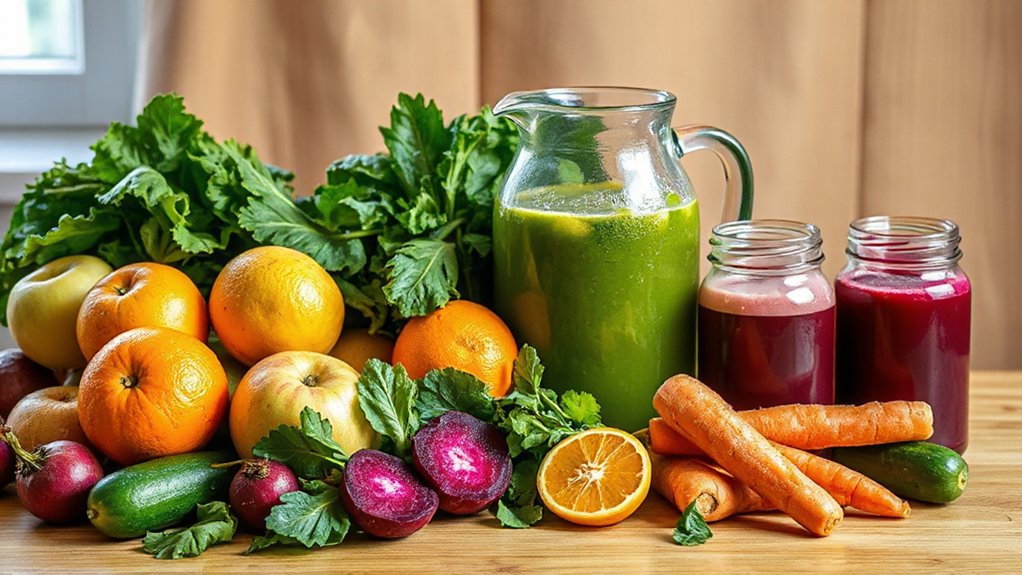
You can support heart health with simple blends from everyday produce—greens, citrus, berries, and cucumber work together for fiber, antioxidants, and essential nutrients. Keep portions balanced, and favor slow juicing or blending with a light strain to preserve fiber and flavor. Practical prep, like pre-washing and portioning, makes it easier to stick with it. Ready to explore blends that fit your taste and routine, and see how small changes add up over the week? Let’s begin.
What Makes Everyday Produce Heart Healthy
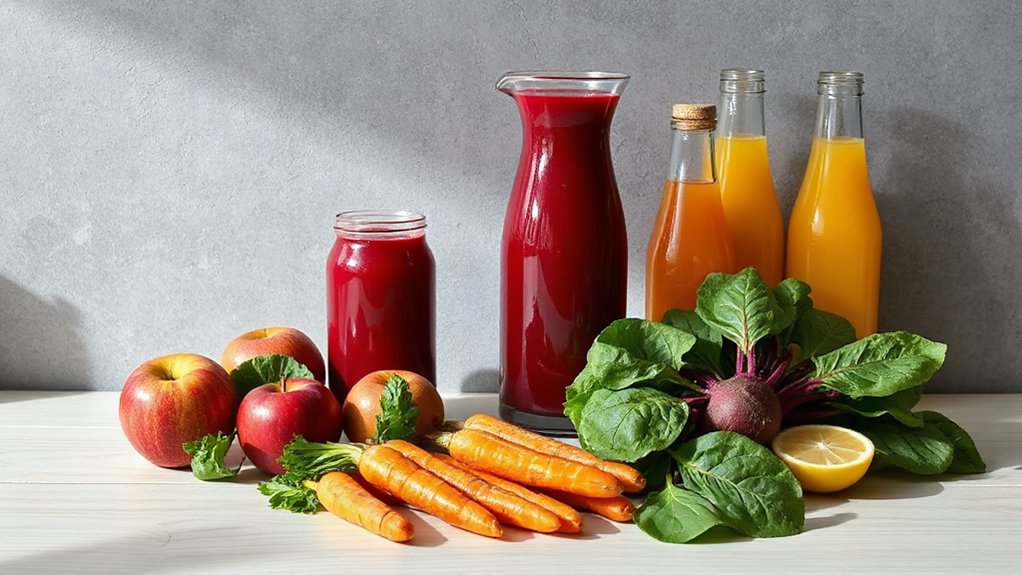
Fruits and vegetables are heart heroes because they’re rich in fiber, potassium, vitamins, minerals, and plant compounds that support blood pressure, cholesterol, and overall vessel health.
You’ll notice two core ideas here: antioxidant impact and fiber benefits. Antioxidants help neutralize free radicals that can damage arteries, reducing inflammation that contributes to plaque.
Fiber, especially soluble types, lowers LDL cholesterol and helps you feel full, aiding weight control.
Everyday produce brings variety, so you can mix colors and flavors for consistent adherence. Choose whole fruits and vegetables over juices when possible to maximize fiber and antioxidant content.
A practical approach is to aim for colorful meals and snacks, pairing produce with lean proteins and healthy fats to reinforce heart-friendly habits and foster a sense of belonging in your healthy routine.
Build Balanced, Heart-Healthy Juice Blends
Wondering how to blend flavors and nutrients for a heart-smart juice? You’ll build blends that prioritize fiber, antioxidants, and low added sugar, while tasting great. Start with a short, sweet base and add leafy greens for volume. Use fruit pairing to balance acidity and sweetness, boosting flavor without excess calories. Target ingredients shown to support heart health, like beets, citrus, berries, and cruciferous greens.
- Combine citrus with leafy greens for brightness and mineral support.
- Pair beets with apples and carrots to enhance sweetness and polyphenols.
- Add berries to improve flavor without spiking sugar.
- Include a handful of greens to increase fiber and micronutrients.
- Emphasize hydration by choosing high-water veggies.
Flavor enhancement comes from mindful ratios, not gimmicks.
6 Heart-Healthy Juice Recipes With Everyday Produce
Even with everyday produce, you can craft heart-healthy juices that boost fiber, polyphenols, and hydration without piling on sugar. Start simple: pair leafy greens with citrus for vitamin C and an invigorating zing. Use fruits for flavor to lift sweetness without excess calories, and you’ll notice steadier energy after mornings.
Add cucumbers or celery to boost hydration and volume without heaviness. You don’t need fancy equipment; a basic blender-and-strainer approach works, or a slow juicer for smoother texture.
Herbs for aroma, like mint or basil, can brighten blends and enhance enjoyment, encouraging consistency. Aim for a glass that’s mostly produce, with a splash of water if needed.
Sip mindfully, savoring the sense of community your healthier habit nurtures.
Troubleshoot Common Juicing Hurdles
If your juicing routine hits a snag, start by evaluating the basics: equipment readiness, produce quality, and your recipe balance. Then, troubleshoot with a practical mindset grounded in evidence: identify where texture, flavor, or yield falters, and apply targeted fixes.
- Check blade sharpness and cleanliness to prevent uneven extraction
- Inspect produce for bruises or overripe spots that dull juice quality
- Balance greens, citrus, and fruit to manage nutrient interactions and flavor
- Adjust pulp feel by changing juice-to-pulp ratio or running through the machine again
- Purge and rinse between produce to minimize cross-flavor carryover
With these steps, you’ll preserve flavor balancing and nutrient integrity, keeping your routine inclusive and doable.
Quick Prep Tips for Busy Days
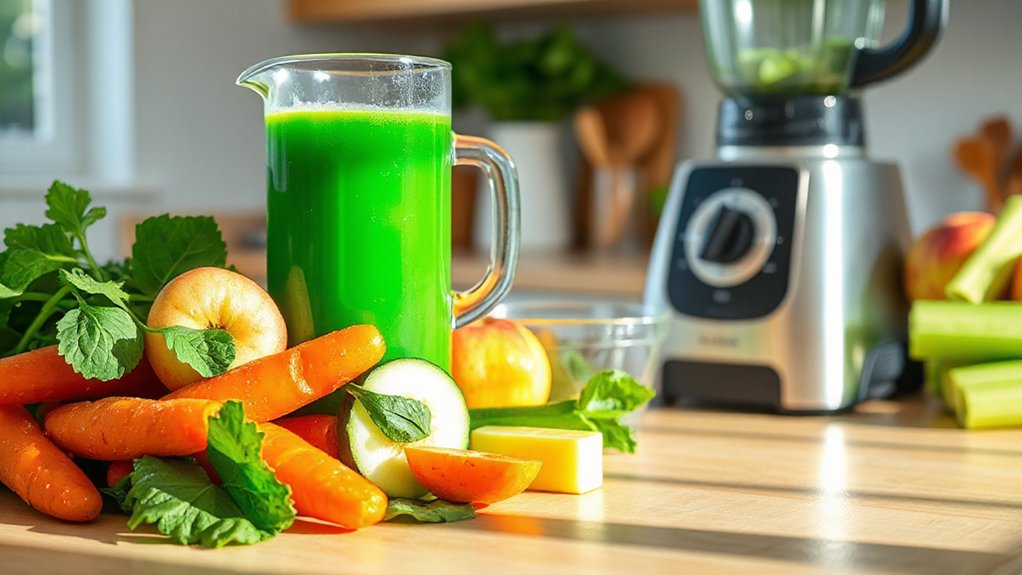
When you’re pressed for time, quick prep can keep your juicing routine on track without sacrificing quality. Start with a simple plan: wash and chop produce in one go, bagging portions for the week. Pre-portion greens and fruit, then freeze in batches for smoothies or fresh-juice days.
Keep a small toolkit handy—sharp knife, peeler, and a resealable container to streamline cleanup.
Choose flavor combinations that feel comforting and familiar to you, balancing sweetness with greens for energy.
Batch-watching your juicer’s memory saves minutes, too.
For storage tips, label jars with date and contents, refrigerate within two hours of juicing, and store in glass to minimize exposure.
A consistent routine supports healthy choices and community around shared, quick, nourishing sips.
Tailor Juices for Blood Pressure and Cholesterol
You can tailor your juices to support heart health by selecting ingredients known to help manage blood pressure and cholesterol. By focusing on flavor combinations that pair blood-pressure-friendly produce with cholesterol-lowering options, you create a cohesive drink that’s enjoyable and practical. Use juicing equipment you trust, and choose fresh, whole ingredients for maximum benefit.
- Pick leafy greens (spinach or kale) with citrus to boost potassium balance and flavor.
- Add berries or apples for fiber and polyphenols without adding excess sugar.
- Include oats or chia for soluble fiber when possible.
- Integrate beets or carrot for nitrates that support blood pressure.
- Finish with herbs like parsley or mint to enhance aroma and satisfaction.
Frequently Asked Questions
How Much Juice per Day Is Heart-Healthy?
You should aim for about one cup of juice daily, staying mindful of overall fiber and sugar. Store fresh juice in the fridge and consume soon; avoid long storage. Practice portion control and prioritize water and whole produce.
Can Juicing Replace Whole Fruits and Vegetables?
Juicing can supplement, not replace, whole fruits and vegetables. You get better nutrient retention and fiber from whole produce, while juicing offers quick servings. Juicing versus eating matters; balance, variety, and mindful portions support your health goals today.
Which Produce Lowers LDL Cholesterol the Most?
You’ll see the biggest LDL drop from oats, barley, and fiber-rich greens alongside fruits; these Cholesterol reduction foods pair with heart healthy ingredients, and you’ll feel inspired, supported, and included while adopting practical, evidence-based juicing habits.
Do Store-Bought Juices Count as Heart-Healthy?
Store-bought juices aren’t reliably heart-healthy; they often rely on juice preservatives or added sugars. They may offer some nutrients, but you’ll typically get fewer benefits than fresh juice. Choose labels with no preservatives for best store bought benefits.
How to Reduce Sugar Without Losing Nutrients?
Yes—you can reduce sugar without losing nutrients by leaning on natural sweeteners and maximizing fiber retention. Choose low-sugar produce, use whole fruits when possible, and blend with vegetables; you’ll still enjoy flavor, texture, and evidence-based health benefits.
Conclusion
You’ve got a simple, evidence-based path to heart-friendly sipping. Use everyday produce, aim for fiber-rich greens, citrus, berries, and cucumber, and blend or slow-juice for freshness. Pre-wash, portion, and stash for quick weeknights. If you’re chasing blood pressure or cholesterol targets, tailor flavors with mint, basil, and oats-like textures, then track how you feel. Like a well-tue recipe card, it’s practical, repeatable, and doable—consistency compounds benefits, turning tiny sips into heart-health habits.