

Juicing with pineapple gives you quick energy, hydration, and digestive support from bromelain, vitamin C, and antioxidants. Choose ripe fruit—aroma, heft, and fresh crown matter—prep by removing core, peel, and eyes, then cut into uniform chunks. For smooth juice, chill fruit and equipment, use sharp blades, and manage heat with a gentle press. Pair pineapple with greens and a citrus or herb for brightness, and adjust acidity to around pH 3.5–4.0. Continue for more practical tips and optimization.
Pineapple Juicing 101: Why It Powers Your Day
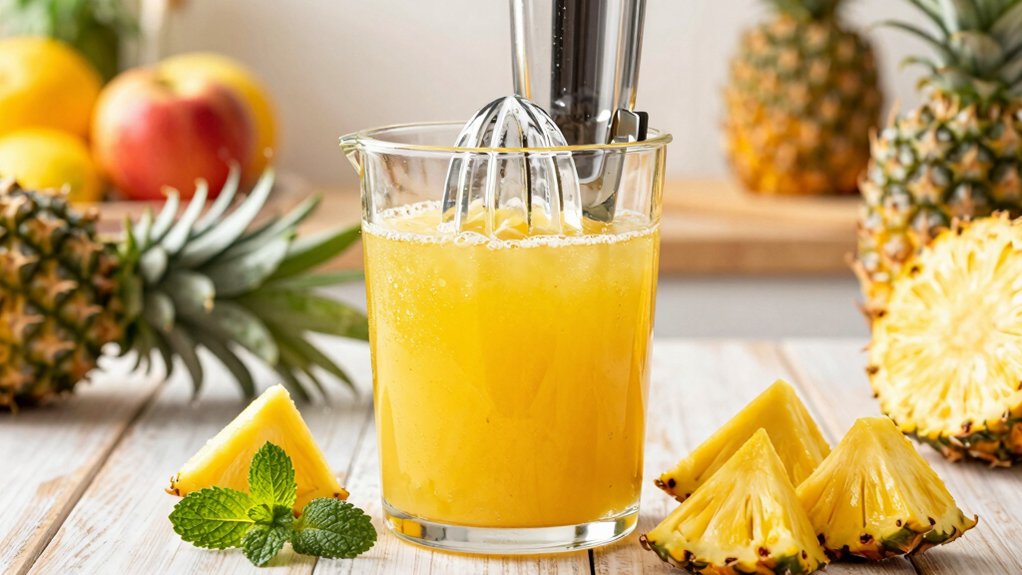
Pineapple juice delivers a quick-energy boost thanks to natural sugars and a favorable micronutrient profile, making it an effective addition to a morning or pre-workout routine. You’ll learn how composition supports performance: simple carbohydrates provide rapid glycogen replenishment, while bromelain may assist digestion and inflammation management, though evidence varies.
Choose pineapple varieties for sugar balance and flavor, then pair with a reliable juicing equipment setup to optimize juice yield and nutrient retention. For best results, use fresh fruit, minimize exposure to air, and juice promptly to preserve vitamin C.
Be mindful of fiber removal; if you tolerate it, blend instead to preserve polyphenols. Track serving size to prevent excessive calories, and consider combining with protein or fats for sustained energy.
Pineapple Juice Benefits You’ll Feel Right Away
You’ll notice an immediate energy lift as pineapple juice supplies natural sugars and B vitamins that support quick brain and muscle function.
It can ease digestive discomfort for some by aiding hydration and enzymes like bromelain, which may reduce bloating after meals.
Plus, you may feel a subtle boost to immune support thanks to vitamin C and other antioxidants, though effects vary by individual.
Immediate Energy Boost
Considering how quickly pineapple juice can impact energy, small, practical choices matter: its natural sugars provide a rapid glucose source, while the drink’s micronutrients support metabolic processes that convert that sugar into usable energy.
You’ll notice a prompt lift in alertness and sustained activity when you consume juice rather than whole fruit alone, due to faster gastric emptying and immediate bloodstream glucose availability. This effect is moderated by total carbohydrate content and timing relative to activity.
Practical use includes pairing with protein or fat to stabilize energy release and selecting freshly prepared juice to minimize degradation of bioactive compounds.
Key considerations include Pineapple cultivation awareness for sourcing quality fruit and Juice storage techniques that preserve sugar integrity and nutrient activity.
Digestive Comfort Effects
Digestive comfort is a notable, immediate benefit you may notice from pineapple juice. The enzyme profile, particularly bromelain, supports protein digestion and may reduce bloating when consumed with meals. In practical terms, you might experience smoother gastric transit and less postprandial heaviness, though responses vary by individual and intake amount.
Mechanistically, bromelain can modulate local inflammation and edema in the gut lining, potentially aiding comfort without sedative effects.
Fermentation benefits are observed when pineapple juice interacts with gut microbiota, supporting short‑chain fatty acid production and microbial balance in some individuals.
While you may link pineapple consumption to skin health improvements through systemic anti‑inflammatory pathways, effects are indirect and depend on overall diet.
Use moderate portions; monitor personal tolerance.
Immune Support Boost
Pineapple juice can provide immediate immune-related signals due to its vitamin C content, bromelain activity, and antioxidant compounds, which may support transient enhancements in mucosal defenses and inflammatory modulation. You’ll notice this effect through practical, evidence-informed changes rather than dramatic swings.
In the short term, regular intake supports baseline antioxidant capacity and may assist with local immune surveillance in the oropharyngeal and nasal regions. Bromelain’s anti-inflammatory actions could help dampen excessive responses after minor insults, contributing to perceived resilience.
This topic aligns with pineapple nutrition principles and historical use, recognizing that real-world benefits depend on overall diet, timing, and individual physiology. For robust results, combine juice with diverse fruits, vegetables, and consistent hydration.
Pineapple history underscores long-standing dietary roles in supporting immune function.
How to Pick Fresh Pineapple for Juicing
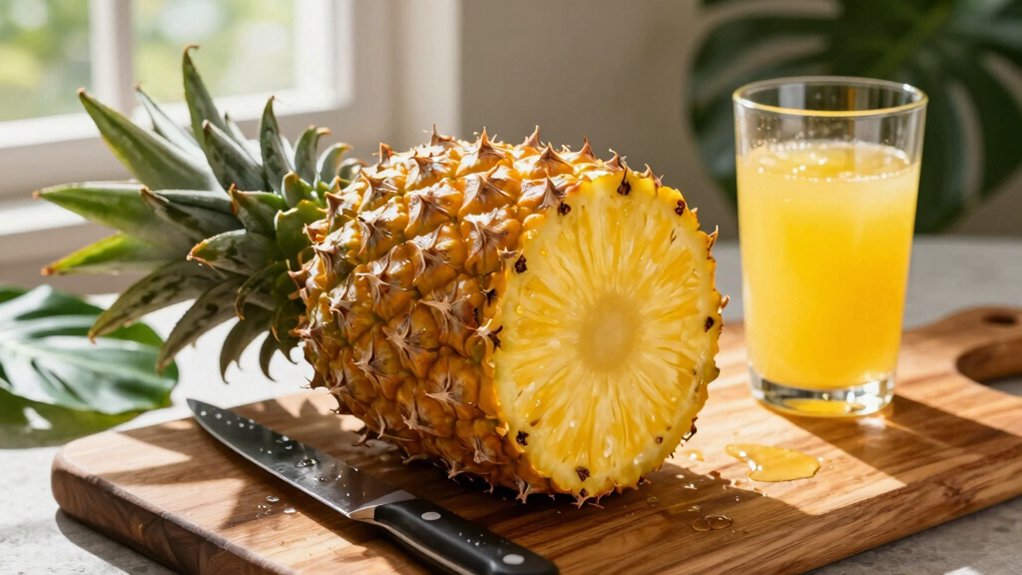
A fresh pineapple for juicing should be fragrant, heavy for its size, and have a bright, slightly springy weight when you lift it.
When selecting pineapple ripeness, assess the aroma at the crown and base—ripe fruit emits a subtle, sweet scent without fermentation. Check the skin: vibrant, evenly colored rind with minimal soft spots indicates uniform ripeness. Squeeze gently; it should yield slightly under firm pressure, not feel mushy.
Rotate the fruit to evaluate firmness around the core; inconsistent softness suggests uneven ripening. Inspect the leaves: fresh, green, and plump leaves signal internal vitality, though they may be difficult to pull.
Consider fruit heft relative to size; heavier fruit generally contains more juice. For fruit selection, avoid dull or shriveled surfaces and proceed promptly to harvesting or purchasing.
Build a Simple Pineapple Juice Base (With Greens)
You’ll start with a simple pineapple juice base and integrate greens to improve nutrient balance and fiber content. Keep the greens portions modest to preserve flavor and add trace minerals that complement pineapple’s acidity.
Follow a practical, evidence-based ratio and adjust in small steps to maintain a smooth, drinkable texture.
Pineapple Greens Balance
To build a simple pineapple juice base with greens, start by balancing sweetness and chlorophyll content: pineapple provides acidity and aroma, while leafy greens add minerals and fiber without overpowering flavor. You measure acidity with a pH target near 3.5–4.0 and adjust with mild greens to maintain balance.
Select greens with high micronutrient density but gentle taste, such as spinach or kale, to minimize bitter notes. Use a 2:1 to 3:1 pineapple-to-greens ratio as a starting point, evaluating mouthfeel and aftertaste.
Emphasize juice freshness to preserve pineapple antioxidants and nutrient integrity. Document observations on aroma changes, textural mouthfeel, and color shift, then refine blends accordingly.
This approach supports green synergy while delivering a clean, practical base for further processing.
Simple Juice Base Steps
To build a simple pineapple juice base with greens, start with a practical 2:1 to 3:1 pineapple-to-greens ratio and adjust by mouthfeel, aiming for a smooth, mildly acidic juice around pH 3.5–4.0.
You blend pineapple varieties to balance sweetness and acidity, selecting firmer fruit for steadier juicing and higher juice yield.
Use juicing equipment capable of efficient extraction, such as a cold-press or high-quality centrifugal juicer, and include a greens mix that won’t clog or overpower flavor.
Test texture and pH after initial run; if needed, adjust with small amounts of water or cucumber juice to improve body.
Record observations on yield, clarity, and taste for reproducibility, then proceed to add complementary ingredients only after confirming base stability.
Flavor Pairings That Brighten Your Greens
Pineapple’s bright acidity complements greens by balancing their earthiness and enhances vitamin C uptake when paired with citrus- and herb-forward ingredients. You’ll notice that pairing choices affect pH perception, nutrient bioavailability, and overall brightness in a blended juice.
- Citrus pairings (orange, lime, lemon) to boost Tropical flavor without masking greens’ bitterness.
- Fresh herbs (basil, cilantro) to provide a dynamic citrus complement and aromatic lift.
- Mild greens (spinach, baby kale) with pineapple to sustain high hydration and mouthfeel.
- Ginger or mint accents to sharpen acidity and improve perceived sweetness.
These combinations support texture, aroma, and nutrient synergy, making juice panels more balanced and scientifically consistent.
How to Juice Pineapple: Techniques for Fresh, Smooth Juice
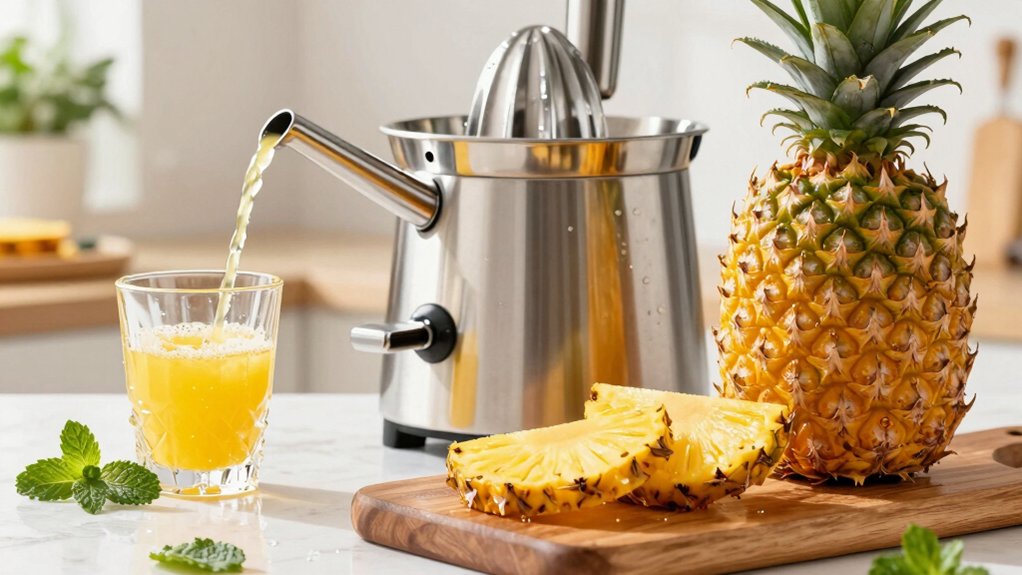
Fresh pineapple juice hinges on selecting ripe fruit, proper preparation, and controlled extraction to maximize juice yield and minimize fibrous texture. You’ll optimize flavor and mouthfeel by choosing fruit with vibrant aroma, weight, and a slightly soft stem end.
Use a sharp knife to remove the core, peel, and eyes efficiently, then cut into uniform chunks to ensure even processing. For best results, chill fruit and, if possible, pre-cool your Juicing equipment to reduce temperature rise during extraction.
When using a centrifugal juicer, run chunks promptly to avoid oxidation and foam; with a cold-press, allow gradual pressure to preserve enzymes. Pineapple storage should be short-term and refrigerated, protected from light.
Juicing equipment should be cleaned immediately after use to prevent residue buildup and flavor transfer.
Common Pineapple Juicing Mistakes and Quick Fixes
Common pineapple juicing mistakes undermine yield and texture, but most can be fixed quickly with simple tweaks. You’ll optimize output by diagnosing handling, equipment, and fruit quality, using evidence-based steps.
1) Overripe fruit handling: peel and core appropriately; choose firm fruit to reduce excessive fibrous pulp.
2) Inadequate juicing equipment setup: ensure sharp blades, clean filters, and proper auger alignment to maximize juice extraction.
3) Incorrect processing speed or pressure: adjust pace to minimize heat, foam, and oxidation; avoid crushing too hard.
4) Inconsistent pineapple farming inputs: source uniform fruit, as uneven ripeness reduces yield and consistency.
Quick fixes: trim waste, calibrate device, and batch-test gradually. These practices support reliable juice texture and yield, linking pineapple farming quality to juicing equipment performance.
Pineapple Juicing FAQs and Quick Troubleshooting
You’ve learned the common mistakes that sap yield and texture; now you’ll benefit from practical, question-driven guidance to troubleshoot pineapple juicing on the fly. Here you’ll find concise FAQs and evidence-based fixes for immediate results.
What yields the best juice? Use fresh, ripe fruit, and chill it briefly to reduce enzymatic browning that thickens pulp.
If clarity is poor, double-pass the juice or strain lightly to remove fibrous specks without stripping nutrients.
Why is foam forming? It’s from agitation; blend briefly, then rest before pressing.
Which Juicing equipment matters? A sharp blade, appropriate auger, and a fine-mine strainer improve yield and consistency.
For Pineapple trivia, note that acidity varies by cultivar; adjust pulp-contact time accordingly to balance sweetness and tartness.
Frequently Asked Questions
Can Pineapple Juice Stain the Countertops?
Yes, pineapple juice can stain countertops. For countertop stains, act quickly with a mild cleaner and water, then dry thoroughly. Evidence-based juice cleanup tips include blotting, avoiding abrasive scrubs, and testing cleaners first to prevent damage.
Is Fresh Pineapple Juice Suitable for Babies?
Fresh pineapple juice isn’t ideal for babies under 12 months due to citrus acidity and potential pineapple allergy risk. You should wait until they’re older; watch for reactions, and consider strained, diluted options for Baby digestion. Anecdote: one caregiver used small tastes.
How Long Does Pineapple Juice Stay Fresh in the Fridge?
Pineapple juice stays fresh in the fridge about 2 to 3 days when stored properly. For best results, keep it in a tightly sealed container, maintain 34–40°F, and follow clear refrigeration tips to optimize storage duration.
Can I Juice Pineapple With Dairy or Yogurt?
You can blend pineapple with dairy, but beware incompatibilities: dairy compatibility is limited, and dairy can curdle if mixed too early. Yogurt pairing yields smoother texture, but mix slowly, and monitor acidity to avoid separation or off-flavors.
Does Pineapple Juice Interact With Medications?
Pineapple juice can affect certain medications; discuss potential medication interactions with your clinician. You should recognize that pineapple enzyme effects may alter absorption or metabolism for specific drugs, and monitor symptoms or lab values accordingly. Stay informed and cautious.
Conclusion
You juice, you trust. Pineapple shines as a sunlit compass, guiding your day from fatigue to focus, its {acidic spark} signaling a sharp spike in alertness. Like a steady compass needle, the fruit’s enzymes and vitamin C point you toward clearer thinking and steady energy. When you balance greens, you harvest resilience—each sip a measured step toward habit, not hype. In every glass, you’re charting progress, proof that simple technique, backed by evidence, can power your routine.