

Juicing with carrots gives you quick energy from natural sugars and B vitamins, with a smooth energy curve and low calories when juice-only. Use a quiet, wide-chute juicer and prep with a sharp knife, cutting carrots to uniform sizes for steady extraction. Pair carrots with apples, ginger, citrus, or herbs to boost sweetness and aroma, while keeping pulp minimal with a fine sieve. Log blends and freshness, and store in sealed glass at 34–40°F; more tips await.
Carrot Juice: Energizing Health Benefits
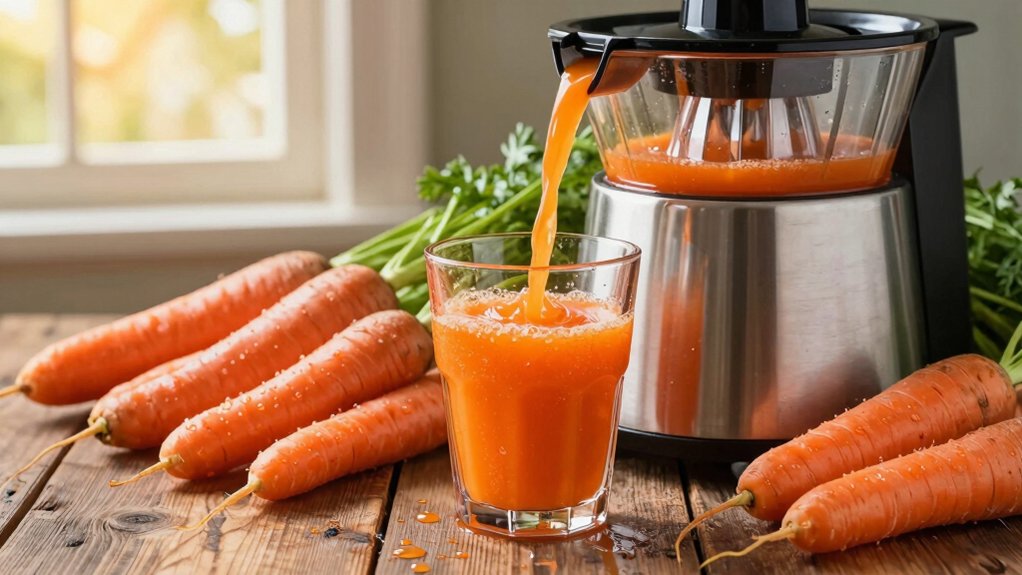
Carrot juice delivers a quick energy boost thanks to natural sugars and a rich supply of B vitamins, making it a practical pre-workout or mid-afternoon pick-me-up. You’ll notice measurable effects: sustained alertness without spikes, and a smooth energy curve rather than crashes.
Carrot benefits include heightened antioxidant capacity from beta-carotene, which supports immune function and eye health over time. In daily intake, you gain fiber only when you use whole-juice blends; otherwise, the juice supplies concentrated nutrients with low calories.
For consistent results, assess juicing equipment performance—efficient extraction, minimal oxidation, and easy cleaning support repeatable quality. Track nutrient delivery using simple logs, and adjust serving size to align with activity level and dietary goals.
Maintain fresh storage to preserve bioactive compounds.
Essential Tools for Beginner Carrot Juicers
Getting started with carrot juicing means selecting a few essential tools that maximize efficiency and minimize waste; with the right setup, you’ll notice quicker prep times and cleaner juice.
You’ll want a quiet, purpose-built juicer with a wide chute to reduce slicing. A robust pusher, a sturdy cutting board, and sharp knives cut prep time and improve yield.
Use a microfiber cloth or fine mesh sieve to reduce pulp, and keep a separate brush for durable Gadget maintenance.
For measurement and consistency, include a reusable glass jar and a measurement cup.
Maintain Juicing etiquette by cleaning parts promptly and drying completely after use. Label cords and store accessories together to minimize search time and ensure consistent results.
These choices support reliability, hygiene, and repeatable outcomes.
Choosing the Best Carrots for Juicing
To optimize juice quality and yield, pick carrots that consistently deliver sweet, clean-tinished flavor and minimal waste. You’ll prioritize carrot variety and uniform root size to ensure predictable juicing results, reduced prep, and steady throughput.
Compare varieties by sweetness, fiber, and storage traits, noting which store well and juice smoothly.
- carrot variety with consistent sweetness and smooth texture
- uniform root size for even press and minimal waste
- firm, dense roots free of cracks or soft spots
- bright color indicating high beta-carotene content
- storage compatibility for batch prep and timely use
Flavor Pairings That Elevate Carrot Juice
Pairing vegetables and flavors with carrot juice boosts both aroma and balance: even small additions can shift sweetness, acidity, and mouthfeel without masking carrot flavor. You’ll optimize profile by selecting complementary notes that enhance perceived freshness and body.
Sweet spice components—think cinnamon, nutmeg, or clove—inject warmth without overpowering base carrot juice, improving perceived sweetness and complexity.
Herbal fusion elements—defs like parsley, dill, or basil—add green brightness and crisp finish, increasing aromatic length on the palate.
For measured outcomes, quantify impact with a quick taste test after each addition, tracking changes in sweetness, acidity, and mouthfeel. Favor combinations that maintain carrot-forward clarity while delivering improved balance.
Avoid overpowering textures; aim for a cohesive, nuanced juice that remains approachable and practical for daily use.
Step-By-Step Juicing With Apples, Ginger, or Citrus
You’ll start by noting how apples, ginger, or citrus influence harvest flavors and how to measure freshness for each, so you can predict juice quality before you run the press.
Next, apply quick techniques to preserve freshness—pre-chill, keep enzymes in check, and minimize oxidation with small batches to maintain aroma and nutrients.
Finally, follow concise steps for efficient juicing, balancing yield and taste while using evidence-driven tips on timing, temperature, and quick cleanup.
Harvested Flavor Profiles
With carrots as the base, harvested flavor profiles emerge clearly when you add apples, ginger, or citrus, each combination delivering a distinct aroma and balance. You quantify aroma and flavor intensity by measuring sweetness, acidity, and spice notes after extraction, then compare results across blends.
Data show apples boost sweetness with moderate carrot aroma, while ginger elevates spice and peak flavor intensity. Citrus tightens acidity, brightening aroma without overpowering carrot character. Practical selection depends on target profile: smooth, crisp, or zesty.
Track consistency by juicer type and batch size to ensure repeatable results. Use control runs to isolate variables and validate taste scores over time. Systematically log ratios to guide future adjustments.
- Baseline carrot aroma and sweetness
- Apple blend: higher aroma, moderate flavor intensity
- Ginger blend: pronounced spice, elevated intensity
- Citrus blend: bright acidity, preserved carrot character
- Repeatability and logging guidance
Freshness Preservation Tips
Freshness matters for peak juice quality, so apply rapid handling and minimal oxidation steps after prep. You’ll protect taste and nutrients by limiting air exposure during grinding, pressing, and transferring. Use sealed containers, preferably glass, and refrigerate promptly at or below 40°F (4°C).
For apples, ginger, or citrus, prepare and juice in short, controlled sessions to minimize enzyme-driven spoilage.
Vitamin preservation hinges on minimizing heat, light, and time between juicing and storage; keep juice cold and consume within 48 hours for ideal nutrient retention. Label batches with date and source fruit mix to track degradation patterns.
Employ small, removable ice packs if serving later, avoiding dilution. Spoilage prevention relies on clean equipment, sanitized surfaces, and prompt chilling, avoiding prolonged standing at room temperature.
Document results to refine your freshness protocol.
Quick Juicing Techniques
After prepping, set up a quick, repeatable juicing routine using apples, ginger, or citrus to minimize handling time and oxidation. You’ll optimize throughput with a minimal prep workflow, track yields, and compare juice quality across produce types. Focus on core steps: recycle pulp for fiber notes, rinse produce, and segment citrus to reduce bitterness.
Prioritize consistent blade speed and container pre-chill to limit heat exposure. Monitor carotenoid retention and enzyme activity through short processing times. Use standardized portions to improve reproducibility, and log results to quantify Juicing antioxidants improvements.
Regularly calibrate the juicer to maintain consistent pressure and extraction efficiency. Document the exact blends for future reference and repeatability. Carrot fiber and Juicing antioxidants are the targeted outcomes of these quick techniques.
- Standardize prep and flow
- Pre-chill containers
- Segment citrus as needed
- Maintain consistent blade speed
- Log yields and blends
Common Juicing Mistakes and How to Fix Them
Common juicing mistakes often come from assuming more effort equals better results. You’ll improve outcomes by charting concrete data: yield, pulp texture, and juice clarity.
First, avoid overmixing pulp; excessive blending chops fibers into fines that clog filters and dull flavor. Stop when you reach a smooth consistency, then separate juice from settled pulp to maximize clarity.
Second, consider incorrect peeling; carrots don’t require heavy trimming, but removing blemishes and green tops helps reduce off-flavors without wasting nutrients. Use uniform sizes to prevent uneven extraction, and run a pre-test batch to calibrate your process.
Finally, don’t ignore sanitation; clean blades and cups between batches to prevent cross-contamination. Apply these fixes consistently for reliable, repeatable results.
Storing and Serving Carrot Juice for Maximum Freshness
To maximize freshness, you’ll prioritize a clear freshness timeline and choose storage methods that minimize exposure to air and heat.
Start with refrigerating juice in airtight containers and consuming within 24–72 hours, noting that signs of quality decline guide serving times.
We’ll compare storage options and practical serving tips to keep nutrients and flavor intact.
Freshness Timeline Tips
When you juice carrots, freshness hinges on rapid cooling and timely consumption: refrigerate juice at or below 40°F (4°C) within two hours of pressing, and use it within 3 days for best flavor and nutritional integrity.
Real-time quality hinges on juice clarity and minimal oxidation; the shorter the interval from press to sip, the higher the carotenoid stability and nutrient accuracy you’ll observe.
- Carton or glass storage minimizes light exposure and preserves juice clarity longer
- Shake gently before serving to re-suspend settled particles without aerating
- Keep portions small to reduce oxidation surface area
- Label with press date to track freshness timeline
- Add a splash of citrus to maintain color and perceived freshness
Carrot fiber integrity correlates with fiber-rich pulp inclusion when appropriate.
Storage Methods For Juice
Storing carrot juice for maximum freshness hinges on temperature control, light exposure, and minimized air contact. You’ll refrigerate immediately after juicing and keep at 34–40°F (1–4°C) to slow microbial growth and enzymatic activity.
Use opaque, airtight containers to reduce light-induced degradation and oxygen exposure; fill to minimize headspace. For short-term use, consume within 24–48 hours; for longer storage, freeze in portions and thaw slowly in the fridge.
Label containers with production date to track juice shelf life accurately. Before serving, shake or stir to recombine separated pigments and nutrients.
Note that carrot varieties influence flavor stability, but storage methods remain consistent across varieties. Consistent temperature control and proper sealing maximize freshness and preserve juice shelf life.
Creative Carrot Juice Recipes to Try This Week
If you’re looking to mix up your routine, these creative carrot juice recipes offer vibrant flavor and measurable nutrition in each glass. You’ll balance sweetness with acidity, testing ratios to optimize vitamin A yield and shelf stability. Data points show blends with citrus, ginger, and beet maintain color and polyphenol content, while using cold-press methods preserves enzymes.
Track carbs and fiber per serving to tailor options for different goals. Pay attention to carrot symbolism in cultural contexts, and how subtle spice accents influence perceived sweetness. Consider carrot cultivation practices that affect nutrient density; locally sourced roots often provide higher fresh sugars and minerals.
Start with small batches, then scale based on taste tests and nutrition logs.
- Citrus-Ginger Carrot Glow
- Beet-Carrot Power Shot
- Turmeric-Apple Carrot Cleanse
- Pineapple-Carrot Zest
- Celery-Carrot Herb Cooler
Frequently Asked Questions
How Does Carrot Juicing Affect Blood Sugar Spikes Long-Term?
Carrot juicing causes moderate, not dramatic, blood sugar impact long-term if consumed with fiber-rich foods; your insulin response stays steadier when paired with protein or fats. Monitor portions, track blood glucose, and adjust intake based on data.
Can Children Safely Drink Carrot Juice Daily?
Yes, you can, but monitor intake. For child nutrition, limit carrot juice to small portions; follow juice consumption guidelines, offering whole fruits/veg. Use evidence-based portions, track sugar impact, and consult a clinician for persistent concerns.
Is It Better to Juice or Blend Carrots for Nutrition?
Blending preserves fiber and nutrients, while juicing concentrates sugars and reduces fiber retention; overall, blending is better for sustained nutrition and nutrient bioavailability, especially when you aim for steady energy and a micronutrient-rich intake.
Do Organic Carrots Juice More Nutrients Than Conventional Ones?
Yes, organic carrots generally have lower pesticide residue, but nutrient differences are small and vary. You’ll notice modest gains if soil health and organic farming practices are strong; washing and proper storage matter for preserving nutrients.
What Are Signs of Spoiled Carrot Juice After Opening?
Spoiled juice usually smells sour, like vinegar, and shows mold growth or cloudy separation. If you notice a spoiled smell, discard it. Check for mold growth around the lid and discard promptly; don’t taste test. Keep refrigerated.
Conclusion
As you juice, the kitchen brightens with sunlit shards of carrot, and your pulse keeps steady, like a clockwork garden. Think of the data: nutrient boosts, clearer skin, steady energy, all mapped to each glass you pour. You’ll notice the texture, aroma, and balance—ginger zing or citrus pop—resonating with your routine. Keep temps cool, pulp practical, portions precise. With every trial, your palate and plan align, turning simple carrots into reliable daily fuel.