

Juicing canned beets is quick, reliable, and budget-friendly thanks to their shelf-stable texture and skin-rich aroma. Rinse the beets lightly, blend with the can liquid or measured water, and blend whole chunks to preserve emulsions and minerals. Expect a smoother juice with brine-backed flavor; if it tastes too sweet, dilute or mix with citrus. Skins boost color and nutrients, so include them when possible. Curious how to optimize texture and storage further?
Why Canned Beets Work for Juicing (Pros and Cons)

Canned beets offer practical advantages for juicing: they’re convenient, shelf-stable, and consistently available year-round, which makes it easier to maintain a regular juicing routine. You’ll find that convenience reduces planning friction and waste.
Pros include predictable texture, reduced prep time, and extended supply. Cons center on potential flavor shifts and nutrient variance due to processing. When you evaluate Canning methods, you must consider heat pasteurization, syrup concentration, and brine quality, as these factors influence both safety and flavor profile.
Flavor retention is a key trade-off; careful rinsing and choosing low-sodium options can help mitigate off-notes. For consistent results, align your approach with evidence from processing guidelines and verify the product’s label for added sugars or preservatives.
Fresh vs. Canned Beets: How Flavor and Texture Compare
Fresh beets deliver a distinct, earthy sweetness and a firmer bite that many juicers associate with a clean beet-forward profile. Canned beets, by contrast, tend to be softer and milder due to processing.
- You’ll notice beet color differences: fresh varieties stay vibrant, while canned tones can dull slightly.
- Texture shifts matter: fresh yields a crisp bite, canned offers a subtler, uniform chew that affects mouthfeel.
- Flavor intensity favors fresh: natural sweetness stays pronounced, whereas canned flavors are mellowed by brine and heat.
- Juicing implications: choose based on desired body, with canned texture contributing smoother emulsions in blends.
In practical terms, select by your target juice’s brightness and structure; both are usable, but they deliver different profiles.
Canned Beet Juice Nutrition at a Glance
You’ll get the nutritional breakdown of canned beet juice at a glance, with the key macros, micronutrients, and potassium highlighted for quick assessment.
This section flags the primary benefits—whether for blood pressure support, exercise recovery, or antioxidant intake—so you can see the value at a glance. The focus stays evidence-based and concise, guiding your intuition toward practical use and next steps.
Nutritional Breakdown At-a-Glance
What does a quick look at canned beet juice’s nutrition reveal about its key nutrients and energy content? You’ll notice modest calories, with a straightforward mix of sugars and micronutrients that support everyday activity.
The nutritional content centers on nitrates, potassium, and folate, plus small amounts of fiber and vitamin C. In practical terms, you get rapid energy from natural sugars and hydration from high water content, while nitrates may support blood flow during workouts.
The data support concise health benefits without overstating effects. Consider it a low- to moderate-calorie option that can contribute to your daily vegetable intake.
- Moderate calories and sugars
- Potassium and folate presence
- Nitrates for vascular support
- Vitamin C and fiber in small amounts
Key Benefits Of Beet Juice
Beet juice from a can delivers a concise set of benefits rooted in its nutrient profile and hydration. You’ll gain hydration from its water content, plus minerals like potassium that support blood pressure regulation and fluid balance.
Nitrates in beet juice may enhance exercise performance by improving oxygen delivery, though effects vary by individual and activity type. You get dietary nitrates, antioxidants, and betalains that support anti-inflammatory responses and oxidative balance.
Since you’re considering beet varieties, choosing product labels with minimal added sugars helps maximize natural benefits. Juicing equipment matters: a clean, efficient juicer preserves nutrients, and a wide-mouth setup reduces oxidation.
Flavor and Blending: Pairing Canned Beet Juice With Pantry Flavors
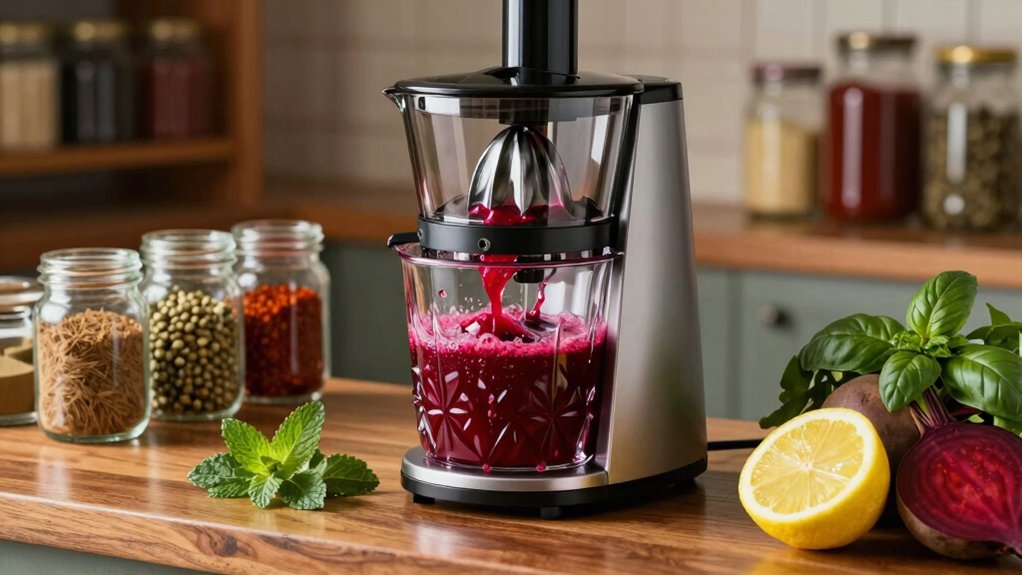
Canned beet juice pairs best with pantry staples that balance its earthy sweetness and mineral bite, so start with bright, acid, or savory accents to shape a cohesive flavor profile.
You blend by pairing cheeses and herbal infusions to modulate body, aroma, and tang, then confirm texture compatibility with light, crisp accompaniments.
- Bright citrus tang (lemon, lime) to lift sweetness
- Aged cheeses with mild sharpness for contrast
- Herbal infusions (tarragon, dill) to echo earthy notes
- Savory add-ins (onion powder, smoked salt) for depth
This approach yields a balanced, evidence-based flavor map you can apply across beverages and light soups.
Focus on proportionality, not overpowering flavors, and test small batches to refine pairing cheeses and herbal infusions.
Five Easy Canned Beet Juice Recipes
If you want quick, reliable beet juice options, these five recipes keep canned beet juice at the center while boosting flavor with simple pantry add-ins. You’ll start with a solid base, then layer in ingredients that complement beet varieties without masking their earthiness.
Each recipe uses common juicing equipment to maximize yield and minimize pulp, keeping texture smooth and approachable. Begin with citrus for brightness, then add a pinch of ginger or mint for depth, and finish with a fragrant herb or apple for balance.
Use water or ice to adjust body, never overpowering the beet’s mineral notes. These methods emphasize precise ratios and repeatable steps, so you can reproduce consistent results every time.
Trust these tested approaches for dependable, flavorful juice.
Troubleshooting Common Juice Issues (Muddy Texture, Too Sweet)
When your juice comes out muddy or overly sweet, start with a quick assessment of prep and ratios, then adjust in small, repeatable steps.
- Check beet color and texture after opening; verify you used a balanced ratio of beets to water or additional produce.
- Rinse and trim canned beets to remove excess brine, minimizing muddy debris.
- Adjust juicing equipment settings: run at steady pressure, pulp via tamper, and avoid over-processing.
- Taste as you go and dilute with a splash of water or juice from the can to correct sweetness without compromising nutrients.
These steps keep results consistent, backed by careful observation of beet color and equipment performance.
No-Peel Tips to Maximize Flavor and Reduce Waste
You can maximize beet flavor by juicing without peeling, since much of the aroma and color comes from the skin’s compounds. This approach also cuts waste, because you’re using the whole can and reducing prep time.
Use quick, evidence-based tweaks to balance sweetness and acidity for a brighter, more polished juice.
No-Peel Flavor Boost
To maximize flavor and minimize waste, skip peeling and use the beet skin and inner membranes to its fullest. You’ll preserve nutrients and enhance aroma, while keeping juice color vibrant and authentic. No peeling means you rely on the skin’s subtle earthiness to deepen flavor without muddying juice clarity.
Use quick, even rotations when juicing to minimize breakdown and maximize extraction. The beet’s natural sugars release cleanly, contributing to a bright, balanced profile without bitterness.
- Retain skin micro-tissues for boosted aroma and color
- Briefly pulse with minimal water to preserve juice clarity
- Combine with a splash of citrus for contrast
- Taste and adjust acidity before serving
beet color and juice clarity stay pronounced with precise technique.
Waste-Reducing Techniques
Waste-reducing techniques start with skin-on juicing, since the beet skin and inner membranes carry flavor and nutrients that would otherwise go to waste. You’ll preserve fiber and beet antioxidant benefits by including the skin in your blend, which also enhances body and color without extra processing.
Use canned beet sourcing that emphasizes minimal salt and shelf stability to avoid unnecessary additives, and integrate the liquid for consistent texture and nutrient transfer. When technique matters, blend whole chunks with a measured water fraction to maintain emulsion and reduce aeration waste.
Store unused juice in airtight containers, labeling dates to prevent spoilage. Taste tests show robust mineral notes and sweeter tones when you retain skins, with no compromise to safety or flavor integrity.
Safety and Storage: Keeping Canned Beet Juice Fresh
Canned beet juice stays freshest when you refrigerate it promptly after opening and seal the container tightly to limit air exposure. You’ll preserve flavor and nutrients by proper handling, so follow these storage tips and reduce spoilage risk.
- Refrigerate immediately after opening and store at 34–40°F (1–4°C).
- Use within 3–4 days; discard if off-smell or unusual brightness appears.
- Keep the container sealed and upright to minimize contamination.
- Label date opened to track spoilage prevention and plan usage.
Avoid freezing in a glass jar that isn’t freezer-safe; transfer to a labeled, airtight plastic or silicone container.
Check for signs of spoilage before use, and trust your senses rather than taste-testing questionable juice. Proper storage tips preserve quality and safety.
Quick-Start Guide: Choosing, Prepping, and Blending on a Budget
If you’re stocking up on beet juice without breaking the bank, start by picking uncomplicated, versatile options and prepping them with speed and efficiency. This quick-start guide helps you maximize value through practical choices, not gimmicks.
Prioritize beet growing varieties known for consistent sweetness and year-round availability, then source in bulk to reduce cost per liter.
When prepping, wash, trim, and chunk beets before blending to minimize waste; use leftover pulp in soups or bakery items to boost fiber.
For blending, choose a reliable juicing equipment that handles dense roots without clogging, and test small batches to refine texture and flavor.
Track cost per batch, adjust proportions, and log results to sustain budget-conscious results over time.
Frequently Asked Questions
Can I Juice Canned Beets With Other Juices at Once?
Yes, you can; just mix canned beet juice with other juices, focusing on flavor combinations that balance sweetness and acidity. Use precise juicing techniques: strain if needed, blend promptly, and taste as you go to adjust proportions.
Do Canned Beets Need Rinsing Before Juicing?
Yes, you should rinse canned beets before juicing. Rinse to remove leftover canning process residue and beet pulp, then drain well. This reduces off-flavors and improves extraction, stability, and taste when you combine with other juices.
Is Canned Beet Juice Okay for Babies or Kids?
Yes, canned beet juice can be given to kids in moderation, but you should prioritize beverage safety and watch for added sugar or salt; monitor sodium levels, and note limited nutritional value compared to fresh juice.
How Long Does Canned Beet Juice Stay Fresh After Opening?
Storage duration for opened canned beet juice is about 3–5 days in the fridge. Watch spoilage indicators like off smells, unusual fizz, or mold. Toss if you notice any changes; when in doubt, discard to stay safe.
Does Heating Canned Beet Juice Affect Flavor or Nutrition?
Heating canned beet juice may nudge flavor slightly but preserves most flavor and nutritional stability if kept gentle and short; you’ll notice minor changes, yet flavor preservation and nutritional stability largely hold when you don’t boil.
Conclusion
Canned beet juice can be a reliable pantry option, delivering consistent color, quick prep, and budget-friendly nutrition. You’ll blend flavors efficiently, avoid waste, and adjust sweetness with pantry staples. Trust the evidence: beet juice supports performance and antioxidant intake, especially when paired with citrus, ginger, or herbs. Don’t overthink the texture—strain or dilute as needed. Remember an old adage: slow and steady wins the race; in juicing, steady prep beats spur-of-the-moment chaos.