
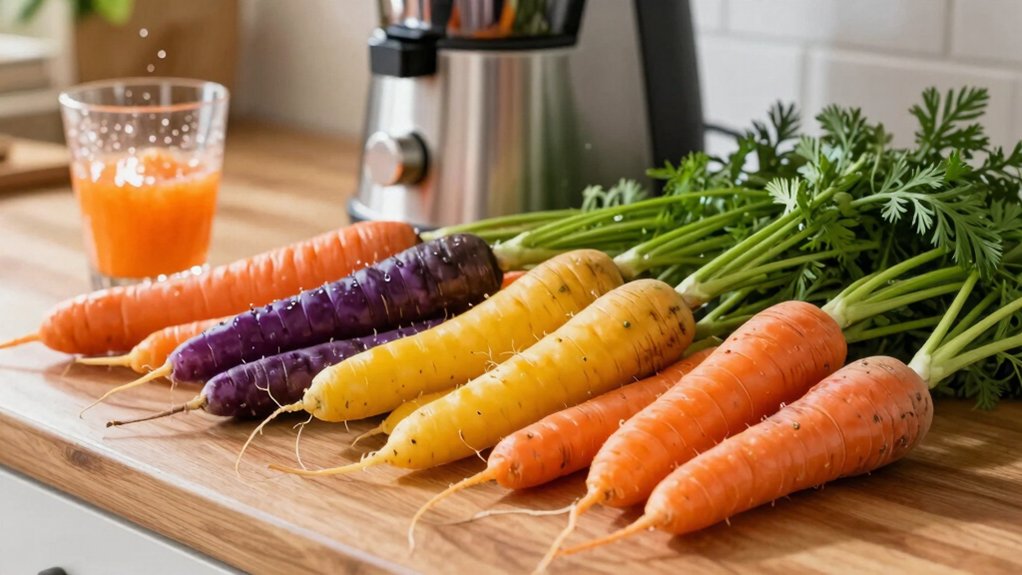
Yes, juicing carrots isn’t exactly the same each time. Varieties differ in sweetness, beta-carotene, and moisture, while soil minerals and harvest timing subtly shift nutrient levels and flavor. Your juice yield and color depend on the cultivar, freshness, and prep—steady pressing minimizes foam and maximizes extraction. Processing, storage, and acidity also affect brightness and stability. If you keep track of batch differences, you’ll optimize taste and nutrients, and you’ll see how small tweaks matter for your routine.
Why Carrot Juice Delivers for Your Daily Wellness
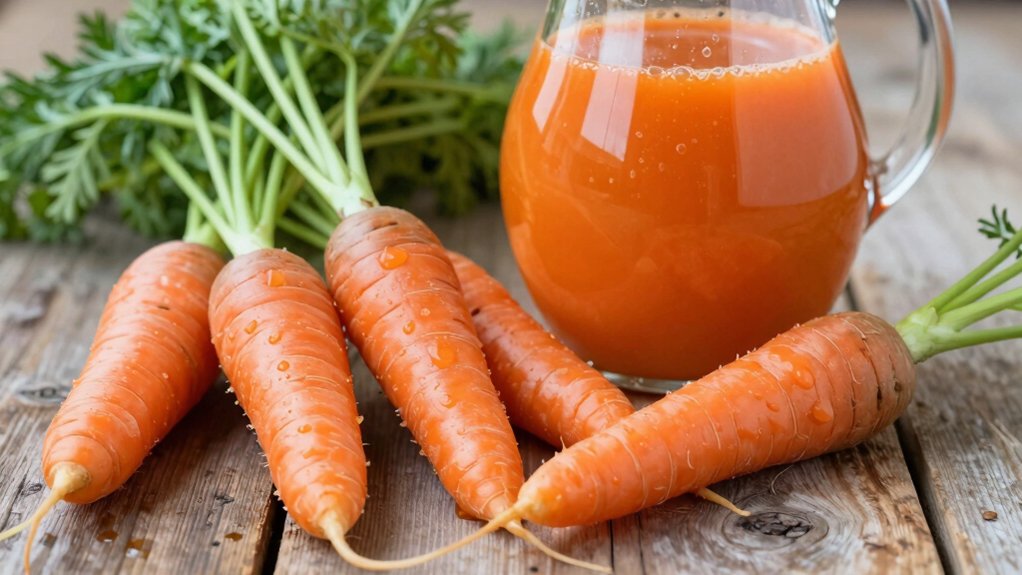
Carrot juice delivers a practical daily wellness boost because it’s concentrated with nutrients that support overall health. You’ll note a strong link between intake and measurable markers, such as antioxidant status and eye health support from beta-carotene.
In practice, consistent consumption aligns with improved micronutrient intake without excessive calories. Carrot cultivation methods influence nutrient density and flavor consistency, making sourcing decisions meaningful for daily use.
You’ll also see data showing favorable contributions from vitamins A, C, and K, plus trace minerals that support metabolism and immune function. Carrot nutritional value varies by cultivar, soil, and harvest timing, yet the overall pattern remains: regular juice can complement a balanced diet.
Use varied sources to maintain accuracy and track individual responses responsibly.
Carrot Juice vs Other Juiced Veggies: A Quick Comparison
When comparing carrot juice to other juiced veggies, you’ll notice differences in nutrient density, sugar content, and antioxidant profiles that matter for daily goals. You assess here with a data-driven lens: carrots often deliver beta-carotene and vitamin A precursors at solid levels, but greens like spinach boost chlorophyll and folate per serving.
Sugar content varies by produce and juice extraction techniques; slower, cooler presses tend to preserve polyphenols and minimize heat-related degradation. Carrot variety influences pigment and beta-carotene totals, affecting color and perceived sweetness.
For practical choices, prioritize a mix of produce to balance micronutrients. Consider juice extraction techniques that maximize juice yield while limiting browning and nutrient loss. Use diverse carrot variety alongside complementary veggies for steady, evidence-based results.
Carrot Juice Flavor: Balancing Sweetness and Brightness
You’ll see that balancing sweetness and brightness hinges on measurable cues: adjust sweetness with carrot variety and optional additions, while brightening with targeted acids like lemon or lime to enhance perceived freshness.
Evidence shows small, controlled tweaks—1–2 teaspoons of citrus per quart—can shift flavor without overpowering carrot notes.
Start with a baseline taste test and track changes in sweetness indices and brightness scores to guide practical adjustments.
Sweetness Balance Tips
Achieving the right sweetness balance in carrot juice hinges on measurable factors like carrot variety, ripeness, and juice yield. You’ll notice sweeter profiles from orange Nantes and heirloom types, while mature roots deliver higher soluble sugars. Quick processing preserves sugars; slow juicing can lose some brightness.
To optimize carrot sweetness, measure input weights and juice volume to estimate yield efficiency, then compare sugar readings using a refractometer or known correlations with Brix levels. Flavor balancing depends on intake consistency: use uniform carrot batches, avoid overripe or desiccated roots, and trim greens to reduce bitterness.
Add texture with light citrus zest or a pinch of salt only if data shows improved acceptability. Document results, repeat tests, and aim for reproducible sweetness that aligns with your target profile.
Brightness Through Acids
Brightening carrot juice with acids relies on measurable factors like acidity level, acid type, and the interaction with sugars. You’ll assess pH ranges and acid strengths to predict brightness changes, since stronger acids can suppress perceived sweetness while boosting acidity-related brightness.
Citric, malic, and ascorbic acids offer distinct profiles: citric adds crisp citrus notes; malic emphasizes green-tert brightness; ascorbic contributes a clean, fresh snap alongside antioxidant benefits.
Use small test batches to quantify flavor shifts, logging sensory scores and sugar-fructose interactions. Balance is key: too much acid dulls sweetness; too little leaves juice flat.
Focus on acidic brightness as an achievable target for flavor enhancement without masking carrot character. Document results, then translate findings into practical adjustments for consistent viscosity and palatability.
When to Reach for Carrot Juice in Your Day

When to reach for carrot juice during your day depends on your goals and timing, but certain moments tend to maximize its benefits. You’ll notice the strongest impact when you align juice intake with energy needs, workouts, or recovery windows, supported by timing considerations and daily routines data.
In practice, small, strategic servings can support sustained focus and nutrient timing without excess calories. Monitor how your body responds to different timings, and adjust accordingly.
- Align with post-workout or mid-morning energy dips
- Pair with a protein-rich snack to enhance satiety
- Use before long meetings to sustain focus
- Schedule consistent daily timing for reliable benefits
Build a Balanced Carrot Juice Blend
A balanced carrot juice blend starts with a base of fresh carrots and water or ice, then adds complementary produce to boost nutrition, flavor, and satiety. You should choose ingredients that balance sweetness with acidity and texture, aiming for 3–4 parts carrot to 1 part greens or fruit.
Include leafy greens (spinach or kale) for vitamin K and minerals, citrus for vitamin C and brightness, and a small fruit portion to modulate sweetness without overpowering the carrot.
Consider fiber-rich add-ins like celery or cucumber to improve mouthfeel, while keeping juice clarity in mind. Add small amounts of ginger or turmeric for anti-inflammatory benefits, ensuring flavors remain harmonious.
Measure portions to maintain consistent fiber intake, and assess texture and viscosity to optimize sip-ability. carrot fiber supports fullness; juice clarity guides strain choices.
Easy, Home-Friendly Tips for Juicing Carrots
If you want quick, reliable results at home, start with fresh, well-washed carrots and a clean juicer, then keep the process simple and repeatable.
Here are practical tips supported by evidence from home-juicing tests and equipment reviews:
- Choose a carrot variety with high juice yield and steady sweetness to improve consistency.
- Use appropriate juicing equipment, ensuring blades are sharp and pulp is easy to dispose of for efficiency.
- Pre-cut large carrots to fit your device, reducing manual effort and grind time.
- Rinse and sanitize components between batches to minimize microbial risk and flavor carryover.
Common Carrot-Juice Mistakes and Fixes
Common carrot-juice mistakes can derail your results, from choosing poor carrots to over-processing. Evidence shows that starting with fresh, moisture-rich carrots and juicing promptly improves yield and nutrient retention.
Skipping tap water and using the right filter reduces pulp and bitterness. If you run into foam, oxidation, or inconsistent texture, simple fixes like trimming dry ends, blending briefly before pressing, and adjusting batch size keep your juice smooth and flavorful.
Juicing Carrots Basics
Juicing carrots is simple in theory, but beginners often stumble on a few key mistakes that sabotage color, flavor, and nutrients. You’ll optimize yields by selecting a compatible carrot variety and matching juicing equipment to your setup.
In practice, consistency and efficiency come from preprocessing, speed, and filter choice, backed by data on pulp content and nutrient retention.
- Carrot variety impacts sweetness and pigment, so test a few to tailor flavor.
- Juicing equipment matters: high-torque motors and appropriate screens reduce foam and maximize juice.
- Scrape, not grind, the roots to minimize starch release and cloudiness.
- Use fresh produce and rinse promptly to limit microbial risk and preserve color.
These points support reproducible results and clearer nutrition dashboards for your juice routine.
Common Carrot Mistakes
Even small missteps can derail carrot juice quality, from sour notes to excessive foam, but most fixes are straightforward. You’ll see common mistakes show up in measurements, prep, and handling.
Data from multiple juicers indicate that over-processing creates bitterness and heat buildup, while under-processing leaves pulp tang and uneven yields. Practical tip: trim greens, avoid thick carrot peelings, and rinse thoroughly to reduce surface sugars that ferment.
Consistency matters: standardize blade speed and pulsing to minimize foam without sacrificing juice yield. Storage mistakes affect aroma and color; juice oxidizes quickly, so consume within 24 hours and chill promptly.
When you prep, plan portions to reduce carrot peelings waste and ensure you can monitor juicing storage conditions, preserving nutrients and flavor.
Fixes For Juicing
To fix common carrot-juice mistakes, start with concrete, measurable tweaks that directly affect taste, texture, and stability. You’ll see improvements when you optimize processes with data-backed steps and practical checks, not guesswork.
Focus on carrot storage and juicing equipment to minimize degradation and pulp loss, then evaluate results with repeatable tests.
- Use cold storage for carrots and juices to maintain aroma and color
- Calibrate juicing equipment to minimize oxidation and foam
- Pre-cut sizes that balance extraction efficiency with pulp separation
- Track yield and pH to adjust for sweetness and stability
Document your findings, compare batches, and apply the best-performing setup consistently. Evidence shows precise handling and proper tools consistently improve juice clarity, flavor, and shelf life.
Frequently Asked Questions
Do Juicing Carrots Affect Blood Sugar Differently Than Whole Carrots?
Juicing carrots can slightly raise your carbohydrate absorption rate, modestly shifting glycemic response compared with whole carrots. You’ll likely notice a faster spike, then a quicker decline, though overall blood sugar effect remains moderate when consumed with fiber.
Can Carrot Juice Cause Orange-Tinted Skin With Daily Use?
Juxtaposition: daily carrot juice can cause orange-tinted skin in some people, but not everyone. Carrot pigment accumulates with high intake, yet evidence links only mild skin discoloration. Monitor intake and consult a clinician if persists. Skin discoloration manageable.
Is It Better to Juice Organic Carrots or Conventional Ones?
Yes, organic carrots are preferable for juicing you, since organic farming generally reduces pesticide residues, while conventional carrots may contain higher pesticide residues. Data show modest differences in residue levels, affecting taste, safety, and long-term exposure considerations for you.
How Long Does Fresh Carrot Juice Stay Good in the Fridge?
Fresh carrot juice lasts about 3–4 days in the fridge. For best Carrot storage, keep it airtight, chilled, and away from light; juice preservation improves with minimal air exposure and quick consumption. Refrigerate promptly after juicing.
Should Carrot Juice Be Stored in Glass or Plastic Containers?
Glass is better than plastic for juice storage. You should use glass containers for container safety, and follow storage best practices: keep cold, minimize exposure to air, and seal tightly to preserve nutrient quality and flavor.
Conclusion
You’ll find carrot juice fuels your day with a bright, evidence-backed punch—think antioxidant vitamins, steady energy, and hydration all in one glass. Compared to other veg juices, it often balances sweetness and carotenoids, supporting eye health and immunity. Use data-backed blends to avoid sugar spikes, and pair with fiber-rich add-ins for fullness. Consistent, practical sipping beats gimmicks: measure portions, note your body’s signals, and tweak ingredients. In short, carrot juice delivers—if you juice wisely.