

Peel beetroot for a smoother, more consistent juice and less surface bitterness, especially if you want a clean texture. Leaving the skin boosts fiber, antioxidants, and earthy flavor, but can add grit and a stronger musty note. Peeling reduces waste and simplifies prep, while unpeeled juice preserves nutrients but may require finer straining. Your choice depends on whether you prioritize mouthfeel or nutrient density. If you want a practical path, keep exploring options and tips for sweet spots in taste and nutrition.
Why Peel Beetroot Before Juicing: Pros and Cons
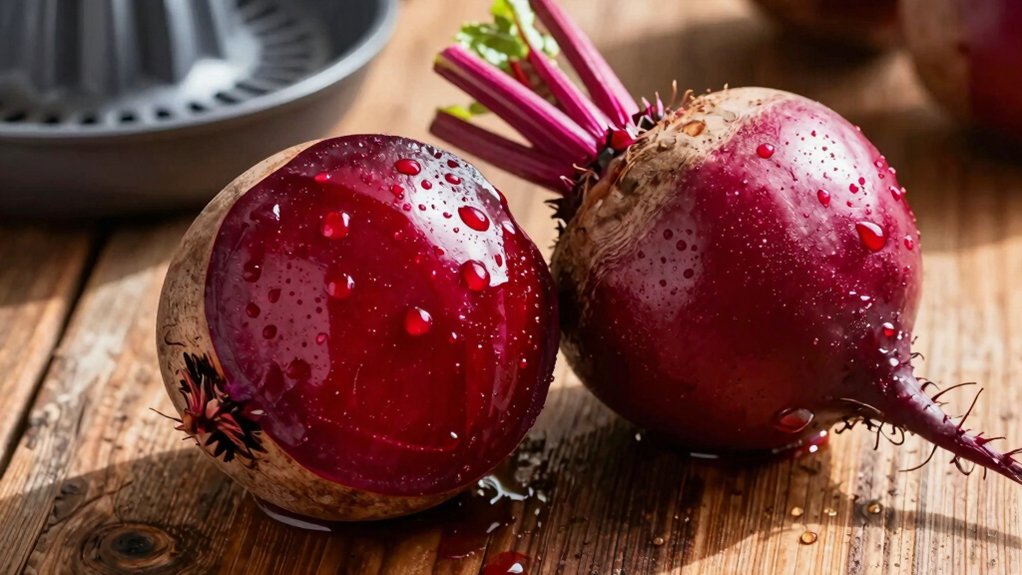
Peeling beetroot before juicing isn’t strictly necessary, but it can matter for texture, flavor, and nutrient exposure. When you peel, you reduce surface fibers and potential bitterness, which can yield smoother juice and more predictable mouthfeel.
On the flip side, the skin contains polyphenols and vitamins, adding minor but measurable nutrient boosts if left intact. Evidence suggests the difference in nutrient content is modest for most home juicers, yet you may notice subtle flavor and color changes.
From a skin health perspective, consuming beetroot skin won’t harm most people and can contribute antioxidants. Environmentally, peeling creates more waste, increasing compost load or disposal needs.
If you prioritize minimal waste and slight nutrient gains, skip peeling; if you chase consistency and texture, peel. Choose based on your goals and setup.
How Unpeeled Beetroot Impacts Flavor, Texture, and Nutrition
You’ll notice that unpeeled beetroot can retain more of its natural pigments and minerals, influencing flavor and nutrition profiles you taste and measure.
However, the skin can add bitterness and a different texture, affecting mouthfeel and juicing efficiency.
In practice, weigh the tradeoffs between flavor retention and texture when deciding whether to juice with or without the peel.
Flavor Retention With Peel
Unpeeled beetroot preserves compounds that can influence flavor, texture, and nutrition, so the choice matters for your juice. When you don’t peel, you retain pigments and polyphenols linked to stronger, earthier notes, which can shift flavor toward richer sweetness and mineral bite.
Data from sensory studies show modest, aroma-driven differences between peeled and unpeeled juice, with peel contributing grassy, slightly nutty nuances that some tasters describe as cleaner or more complex. Practical takeaway: if your goal is subtle, neutral flavor, peel removal may help; if you want intensity and color, leaving the skin supports flavor preservation.
Consider juice processing time and oven-drying tests to quantify flavor changes, then align peel strategy with your preferred taste profile.
Texture And Nutrition Tradeoffs
Texture and nutrition tradeoffs arise when you decide whether to juice with the beetroot skin on. You’ll notice changes in texture, flavor, and nutrient delivery, driven by fiber and polyphenols in the skin. Evidence shows unpeeled beet juice can retain more fiber and micronutrients but may introduce grit and astringent notes if not peeled thinly. Practical choices balance mouthfeel with nutrition goals.
- Fiber preservation boosts density and digestion support
- Skin bitterness can alter initial taste perception
- Thicker pulp improves viscosity and satiety
- Fine grating or gentle blending minimizes grit
- Shorter juicing time reduces oxalate concentration impact
Data suggests modest tradeoffs: preserve some skin for fiber, but remove portions to control texture and flavor, depending on your goals.
Beetroot Prep in Practice: Peel vs Leave Skin
Peeling beetroot versus leaving the skin on changes both texture and nutrient profile, and practical evidence suggests that the choice depends on your juicing goals.
In practice, your approach should reflect beet variety stages and handling. For smooth juice, peel using peeling techniques that minimize waste and conserve micronutrients. For richer fiber, leave skin on and filter post-juice if needed.
Data show that skins contribute antioxidants and a distinct earthy note, while peeling can reduce bitterness and improve mouthfeel. When selecting beet varieties, consider whether you want sweeter juice with less grit or more robust color and texture from the skin.
Implement consistent prep: rinse, trim roots, and apply uniform peeling depth per batch to compare outcomes reliably.
When to Peel: Choosing Based on Your Juice Goal

Choosing whether to peel depends on your juice goal. If you want maximum nutrients with minimal prep, you’ll peel selectively and reserve skin for fiber.
If you prioritize lighter flavor and smoother texture, peel to reduce bitterness and beet color impact, then juice promptly.
- You’ll compare nutrients versus texture to decide peeling depth
- You’ll note that beet color shifts with skin presence and exposure
- You’ll apply peeling techniques that minimize waste and oxidation
- You’ll weigh flavor clarity against antioxidant intake
- You’ll track results for different juice goals, adjusting as needed
Troubleshooting for Smoother Beet Juice (With or Without Skin)
If your beet juice isn’t as smooth as you want, start by identifying whether the issue comes from the skin, pulp, or processing speed, then apply targeted fixes. You’ll improve texture by adjusting pulp size, using a slower press, or adding a small amount of liquid to aid flow.
For skin-related grit, try a light peel or run the pulp through a finer strainer; both can reduce fibrous chunks without sacrificing nutrients. Data shows smoother juice correlates with consistent particle size and steady shear during processing.
Skin health considerations matter: removing skin can lower tannins and bitterness, while leaving skin boosts polyphenols in many studies. Environmental impact matters too: minimal waste pulp can be composted.
Fine-tune to balance texture, nutrition, and sustainability.
Time-Saving Beetroot Prep Tricks
When you’re aiming to save time without sacrificing juice quality, start with beet prep hacks that cut steps and boost consistency. Evidence shows pre-washing, trim-off greens, and slicing roots uniformity speed juicing and improve yield.
Use a quick scrub under running water to maintain skin safety, then slice into even wedges to reduce processing time. Store prepped beets in airtight containers to extend storage longevity, minimizing spoilage before juicing.
- Quick scrub and dry routine for skin safety
- Uniform wedges vs. uneven chops for consistency
- Pre-portioning into juice-ready sizes
- Airtight containers to extend storage longevity
- Labeling and refrigerating batches for rapid use
A Practical Framework: Peel or Not for Your Blend and Diet
Peeling beetroot isn’t a universal requirement; a practical framework helps you decide based on safety, texture, and nutrition. Start by evaluating security: wash thoroughly, trim damaged spots, and consider whether your blender handles skins.
Texture matters: if you prefer smoother juice, peeling can reduce grit; if you want fiber, leaving skins works well. Nutrition varies modestly by skin; some antioxidants reside in the rind, but certain varieties have bitter notes that peeling mitigates.
Practical steps: store beetroot properly to maintain freshness (beetroot storage tips help you decide when to prep). Choose peeling tools suited to your routine and budget, such as a y-peeler or small knife.
Use data from lab and kitchen tests to balance speed, safety, and fiber in your blend.
Frequently Asked Questions
Can Peeling Beetroot Remove Beneficial Nutrients?
Peeling beetroot slightly reduces nutrient retention, but most nutrients stay intact; you still get fiber and minerals. If you want more skin benefits, juice with skins when possible, or blend. Data supports balanced intake for nutrient retention and skin benefits.
Does Peeling Affect Beetroot Juice Frothiness?
Peeling slightly reduces beet texture complexity and foam, but the peeling process isn’t essential. You’ll notice modest froth differences; a quick blend with minimal air keeps juice smoother, similar to one anecdote: farmers who hulls produce report steadier pours.
Is Unpeeled Beet Juice Safer for Kids?
Unpeeled beet juice can be safer for kids if you guarantee thorough washing and organic sourcing. Beet skin benefits include nutrients; however, continue to monitor texture. Focus on peeling process safety, pulp separation, and kids’ tolerance.
How Does Peeling Influence Beetroot Color in Juice?
Peeling slightly dulls beet color intensity, while leaving skin boosts pigment retention, subtly changing juice appearance. You’ll notice brighter, deeper red when unpeeled, and a lighter hue when peeled, with measurable color differences tied to pigment extraction.
Should I Peel Beets With Organic or Conventional Farming?
Organic farming typically avoids synthetic pesticides, so you should peel beets more cautiously, but conventional farming’s residues aren’t guaranteed; rely on thorough washing, and consider peeling if you’re sensitive or uncertain about contaminants. Evidence suggests washing matters most.
Conclusion
Peel or skip, pick your path with practical precision. Data say peeling trims earthy risk and intensifies sweetness, while unpeeled beet juice boosts fiber and nutrients, boosting overall nutrition. Practical prep proves peachy with consistent texture once you trim the tops and rinse thoroughly. If you crave clarity and cleaner color, peel; if you chase bite, body, and speed, skip. Pair your process with your purpose, policy, and palate, and proceed with purposeful, proven prep.