
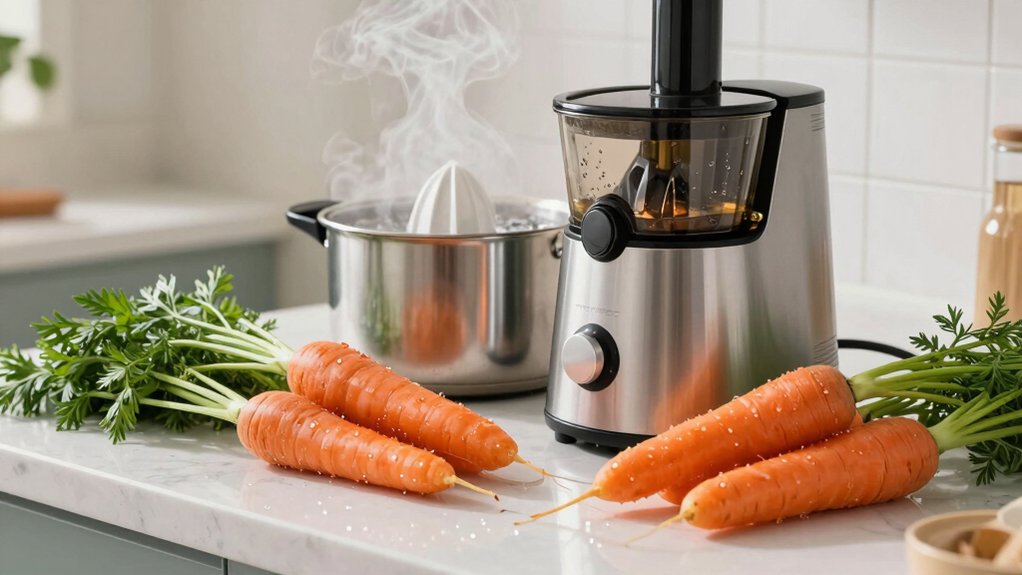
Should you boil carrots before juicing? It isn’t strictly necessary, but a brief blanch or light boil can boost aroma and juice yield while preserving most nutrients. Blanching keeps brightness and volatile aromas, while longer boiling softens tissue for higher yield but can dull aroma and reduce some antioxidants. The best choice depends on your goal and juicer type. If you want quick prep and fresher notes, skip or brief blanch; otherwise, a short boil can help—more tips await.
Should You Boil Carrots for Juicing? Nutrient Impact Explained

Boiling carrots before juicing can change both flavor and nutrient levels, so it’s worth weighing the trade-offs. When you boil carrots, water-soluble vitamins decline moderately, but carotenoids become more bioavailable due to heat-assisted release.
You’ll notice safer texture for high-yield juicers, though some sweetness may dull as sugars diffuse. If you aim for maximum carrot sweetness in juice, quick, light heating can boost aroma without sacrificing too many micronutrients.
For juicing efficiency, chopped, evenly sized pieces reduce overall cooking time and improve uniform nutrient extraction. Cool promptly to minimize further nutrient loss, then juice with a high-quality press to preserve volatile flavors.
In practice, weigh your priorities: want brighter flavor or higher nutrient density? Choose a brief boil or skip it accordingly.
Blanching vs Boiling: Which Boosts Flavor in Carrot Juice
Blanching and boiling both modify carrot flavor, but they do so in different ways that matter for juice. Blanching tends to preserve brightness and crispness, lightly reducing bitterness and keeping more aromatic volatiles intact for a fresher finish.
Boiling leaches more compounds, dulling some brightness yet intensifying body and sweetness as pectins soften. If you want cleaner juice with pronounced carrot sweetness, blanch briefly and immediately cool to stop cooking.
For fuller body and potentially higher juicing efficiency, a longer boil can loosen tissue, easing extraction, but you risk losing delicate aromas and increasing the first-pass solids.
Practical takeaway: test small batches to match your preferred flavor profile, balancing sweetness, aroma, and yield. Choose blanching for brightness, boiling for extraction, then adjust for your juicer and goal.
When to Boil, Blanch, or Skip Prep (By Juicer Type and Goal)
When choosing prep steps, consider your juicer type and your goal: if you’re using a high-shear or masticating juicer and want maximum extraction with smoother texture, a short blanch can boost aroma while preserving brightness.
If you’re aiming for richer body and slightly higher yield, a brief boil helps loosen tissue, though you’ll trade some fresh aroma.
For centrifugal juicers, skip long prep and favor quick blanch only if you need softer pulp for easier processing; the goal should be efficiency without compromising juice clarity.
Remember: Carrot sweetness can be amplified by gentle heat, while juicing efficiency hinges on minimizing tissue resistance.
Base choice on your equipment, then test micro-adjustments to balance aroma, body, and yield.
Record results to inform future batches.
Prep Tips by Juicer Type: Masticating, Centrifugal, and Cold-Press
Different juicer types affect carrot texture and prep steps, so you’ll tailor your approach: masticating models handle firmer carrots with slower, steady grinding. Centrifugal juicers benefit from even sizing, and cold-press setups preserve more natural texture.
Start by matching your carrot slice thickness and moisture level to your machine’s feed and horsepower, then adjust fineness or pulsing to reduce clogging.
This evidence-based framing sets the stage for practical tweaks you can test across your juicer type.
Juicer Type Prep
Choosing the right prep steps for your juicer type can boost yield and juice quality; each machine handles carrot prep a bit differently.
For masticating juicers, trim greens and scrub carrots thoroughly, then cut into lengths to fit the auger without forcing. Use firm Carrot variety to maintain consistent texture, and feed slowly to maximize nutrient extraction.
Centrifugal juicers benefit from uniform sizing and pre-cut segments; avoid overly wet prep to minimize foam and clogging with Juicing equipment.
Cold-press units tolerate larger pieces but still prefer uniform chunks for even pressing.
In all cases, skip peeling if you want more nutrients and fiber, unless skin is blemished.
Always rinse equipment, and crush twigs or seeds separately to prevent flavor transfer.
Tailor prep to your juicer’s feed chute and your preferred yield.
Carrot Texture Tips
Texture matters for juice quality, and the prep you choose should match your juicer type to optimize mouthfeel and filtration.
For masticating juicers, use firmer cuts and a light press to preserve carrot flavor; minimal shredding reduces pulp while preserving nutrients.
Centrifugal machines benefit from uniform chunks and gentle feeding to prevent clogging, which keeps the juice clear and smooth.
Cold-press setups favor careful slicing and consistent diameter to avoid overheating and maximize extraction.
Regardless of device, peeling techniques matter: remove only the skin where waxes or blemishes exist, since most peel contributes little texture change.
For all types, avoid over-processing; too-fine grinding creates gritty texture.
Practically test small batches to balance viscosity and filtration while keeping flavor bright.
Taste, Texture, and Nutrient Trade-Offs at a Glance
You’ll notice taste differences between boiled and raw carrots when juicing, with boiled carrots often tasting sweeter and smoother.
Texture changes can affect extraction efficiency and mouthfeel, sometimes trading a softer juice for a milder bite.
These trade-offs matter for nutrient retention and overall flavor balance, so you can fine-tune boiling time to fit your juice goals.
Taste Differences Noted
Boiling carrots before juicing noticeably changes flavor and mouthfeel: the heat brightens sweetness, softens sharp edges, and can mellow earthy notes, which you’ll likely notice as a smoother, more rounded juice.
In practical terms, you’ll perceive higher Carrot sweetness when juicing after boiling, especially if you’re combining with milder produce. The texture becomes more forgiving at the press, reducing fibrous bite and enabling steadier extraction.
Juicing efficiency improves because heat loosens cell walls, letting more juice release with less effort. However, you may lose some delicate, fresh-green aroma you’d detect in raw juice.
If your goal is a consistent, tasty blend, a brief boil can deliver repeatable results without sacrificing essential nutrients.
Texture and Nutrient Trade-offs
Even so, the trade-offs between texture and nutrients matter when you decide how to prepare carrots for juicing. Juicing raw preserves enzymes and carotenoids but can yield stronger fiber texture and a brighter flavor.
Light cooking softens fibers and may lower certain antioxidants but boosts carrot sweetness in the juice. Color preservation can suffer with prolonged heating unless you cool quickly and process promptly.
1) Opt for brief blanching if you want easier mouthfeel without drastic nutrient loss.
2) Use quick, cool-down steps to maintain vibrant color as you juice.
3) Compare raw versus lightly warmed juice to gauge which texture you prefer for taste and aroma.
Quick Bulk-Prep Ideas and Troubleshooting
When you’re prepping carrots in bulk for juicing, the key is speed and consistency: blanching them briefly ahead of time softens fibers and preserves color, while cooling quickly stops the cooking process.
For quick bulk prep, slice into uniform coins or sticks so all pieces blanch evenly, then shock in cold water to halt heat transfer. Remove peels in advance to minimize bitterness and speed downstream processing; peel removal is optional if you’re confident in washing well, but it reduces grit.
Dry thoroughly before juicing to prevent dilution. If you notice cloudiness, shorten blanch time and boost cold-water shocking.
Keep a labeled sheet with batch times and temperatures to troubleshoot consistently across juicers, ensuring reliable carrot sweetness and repeatable yields.
Maintain clean equipment to prevent off-flavors.
Frequently Asked Questions
Do Boiled Carrots Lose Sweetness in Juice?
Boiling carrots can dull sweetness, but juicing with them still tastes good. Carrot texture becomes softer, which some prefer. For nutrient retention, light steaming or quick blanching preserves more vitamins than prolonged boiling. Aim minimal heat exposure for best results.
How Long Should I Boil Carrots for Juicing?
Boil carrots for 3–5 minutes to soften with minimal nutrient loss. This preserves carrot texture for juicing, but avoid overboiling. Use gentle boiling methods, drain promptly, and cool slightly to keep flavors vivid and juice smooth.
Is Boiling Required for Carrot Juice Safety?
Boiling isn’t required for carrot juice safety. You can juice raw carrots and still be safe; focus on cleanliness and freshness. If you prefer softer carrot texture, the boiling process can help, but it isn’t necessary.
Can You Mix Boiled and Raw Carrots in Juice?
Yes, you can mix boiled and raw carrots in juice. Carrot flavor stays balanced, and juicing techniques handle both textures smoothly; start with gentle blends, then adjust with more raw carrot for brightness and body.
Do Boiled Carrots Affect Juice Shelf Life?
Boiled carrots blunt shelf life: briefly, yes, they slightly shorten it due to moisture and enzyme changes. You’ll notice carrot texture softening, but nutrient retention stays reasonable if you refrigerate promptly and drink soon after juicing.
Conclusion
Think about your goal: juicing for quick sweetness or max nutrition. Boiling briefly softens carrots, boosting juice yield, but it dulls some heat-sensitive nutrients and flavor nuances. Blanching can protect nutrients while improving aroma, and skipping prep keeps vitamins intact if your juicer handles raw produce well. For masticating or cold-press juicers, light blanching or none often wins on nutrition; centrifugal juicers may benefit from a quick steam or blanch for speed. In short: tailor prep to your juicer and priorities. Remember: consistency compounds results.