

To juice with carrots, start by washing and trimming uniform pieces, then load in add-ins like apples or lemon to balance sweetness and brightness. Run a small test batch, adjusting feed rate for smooth extraction. Collect juice in an airtight container and strain if you want a smoother texture. Refrigerate promptly and consume within 24 hours to preserve nutrients. Reuse pulp in soups or baking to cut waste, and you’ll uncover tasty, nutrient-dense mornings—you’ll find more practical tips below.
Gather Your Carrots and Add-Ins
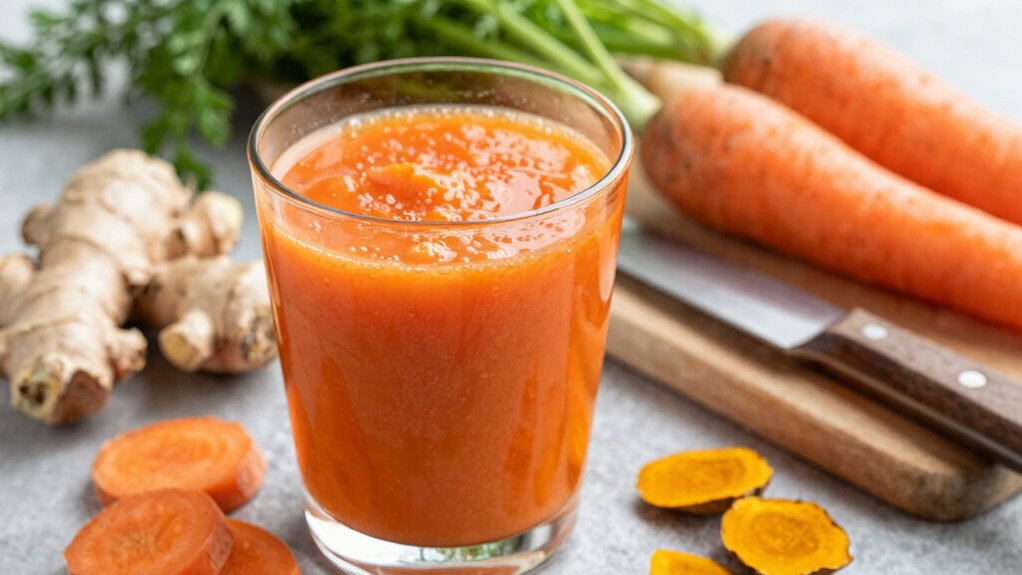
Gather your carrots and add-ins before you start. You’ll pick carrot varieties with uniform size and bright color to guarantee even juicing and flavor. Prioritize fresh, seasonal produce for peak nutrients and taste. Wash and trim roots, removing greens if they’re bitter or fibrous.
Consider add-ins that complement sweetness, like apples for balance or lemon for brightness, but keep portions proportional to your juicer’s capacity. Keep storage in mind: plan for a clean workflow by pre-cutting vegetables and refrigerating too-quick-to-spoil ingredients. Measure portions so you don’t overwhelm the machine or dilute potency.
Document sources or harvest dates to track freshness and quality over time. This approach emphasizes practicality, evidence-based choices, and reproducible results for consistent results.
Juicing It: Step-by-Step Method
Begin by prepping your juicer and ingredients: set up a clean workstation, make certain the machine is assembled correctly, and have your carrot batches, add-ins, and measuring tools ready.
- Rinse carrots thoroughly and trim ends to remove debris, then cut into uniform pieces compatible with your juicing equipment.
- Load softer add-ins first to protect blades and improve juice extraction efficiency.
- Run a small test batch to confirm consistency and adjust feed rate as needed.
- Collect juice in a clean container, then strain if a smoother texture is desired.
Choose carrot varieties with even color and size for consistent yield, and maintain steady pressure without forcing pulp.
Document results for repeatable results in future batches.
Why Carrot Juice Powers Your Morning
Carrot juice can power your morning by delivering a quick, nutrient-dense energy boost. You’ll experience a practical lift thanks to natural sugars, water content, and carotenoids that support steady alertness.
Regarding health benefits, you’ll likely notice improved hydration and a gentle metabolism nudge without crashes after caffeine. The nutritional content is compact: vitamins A and C, potassium, and some B vitamins contribute to daytime stamina and immune support.
Because you’re consuming juice, you get a concentrated dose of micronutrients with minimal fiber, which can be ideal for a fast-absorbing start. Pairing carrot juice with a balanced breakfast helps sustain focus longer and reduces afternoon energy slumps.
Keep portions moderate to manage sugar intake while reaping these benefits.
Balance Flavor: Sweet, Tart, and Fresh
Balancing flavors in carrot juice means pairing sweet, tart, and fresh notes so each sip feels clean and satisfying. You’ll achieve harmony by selecting ingredients that complement carrot sweetness while adding brightness and acidity. Focus on precise flavor pairing: adjust tartness with citrus or green apple, enhance freshness with cucumber or celery, and support body with a touch of ginger.
This approach preserves nutrition, as you keep whole foods rather than concentrated syrups. Expect clearer taste and more consistent texture when components are balanced, not overwhelmed. Nutritional benefits remain intact through varied produce, supporting vitamins, minerals, and hydration.
Flavor pairing guides your intuition, helping you craft a juice that stays flavorful and nourishing.
- Balanced sweet-tart-fresh framework
- Citrus, greens, and subtle aromatics
- Texture and mouthfeel considerations
- Nutritional benefits preserved
Store, Reuse, and Make It a Daily Habit
Storing, reusing, and making carrot juice a daily habit hinges on practical steps that keep flavor bright and nutrients intact. Start with Carrot storage basics: refrigerate juice promptly in airtight containers, and consume within 24 hours for maximal vitamin C and carotenoid retention. Store juice in small portions to minimize air exposure, and chill at once.
For longer-term use, freeze in portions labeled with date, then thaw in the fridge before drinking. Reusing pulp adds value: incorporate it into soups, veggie burgers, or baking to boost fiber and minerals without waste. When juicing daily, plan portions to reduce leftover pulp.
Rinse equipment immediately after use, and clean blades thoroughly to prevent flavor carryover. Consistency and mindful portioning turn juicing into a sustainable habit.
Frequently Asked Questions
Can I Juice Carrot Greens, or Should I Discard Them?
Yes, you can juice carrot greens. They’re edible and nutritious, offering carrot green nutrition benefits. Use them fresh, wash thoroughly, and assess safety; avoid yellowing or mold. Safety of carrot greens remains favorable when handled properly and consumed promptly.
How Much Carrot Juice Constitutes a Serving Size?
Ironically, a serving is about 4 to 8 ounces of carrot juice. You’ll get carrot nutrition and perks, but not all at once. Use practical juicing tips: measure portions, watch sugar, and balance with fiber.
Is It Okay to Mix Carrot Juice With Dairy Products?
Yes, you can mix carrot juice with dairy, but proceed cautiously. Dairy pairing may cause separation or curdling if cold, and fiber remains. For best juice flavor combinations, opt for small portions and balanced, evidence-based practice.
Can Carrot Juice Help With Certain Health Conditions?
Sure thing: Carrot juice can support antioxidant benefits and digestive health, but it isn’t a cure. You’ll likely notice modest improvements; pair it with balanced meals, fiber, and medical advice for specific conditions.
Do I Need a Juicer or Can Blender Juice Work?
Yes, you can use a blender, but juicers extract more liquid and nutrients. Consider juicing equipment for smooth juice; blending alternatives with a fine mesh or nut milk bag help separate pulp for better texture and consistency.
Conclusion
You’re told carrot juice is a miracle start to your day, and yes, it probably is—if you actually drink it. The evidence points to real nutrients, but the punchline’s on you if you skip the prep. Gather, juice, sip, repeat—ironically, it’s the simplest habit that actually matters. So go ahead: mix, measure, and enjoy. If you’re hoping for instant energy, this isn’t magic; it’s a practical daily ritual with enduring, measurable benefits.