

Juicing cantaloupe starts with a ripe, fragrant melon. Wash, trim, and remove seeds, then peel if you like, cube, and blend until smooth. For a cleaner juice, strain, or skip straining for a thicker, pulp-rich drink. Boost flavor with citrus (orange, lemon) and a touch of mint or ginger. Try bright blends with berries or stone fruit, or make a creamy smoothie with dairy alternatives. If you want deeper tweaks, you’ll pick up more tips as you continue.
Make Base Canteloupe Juice: Step-by-Step Essentials
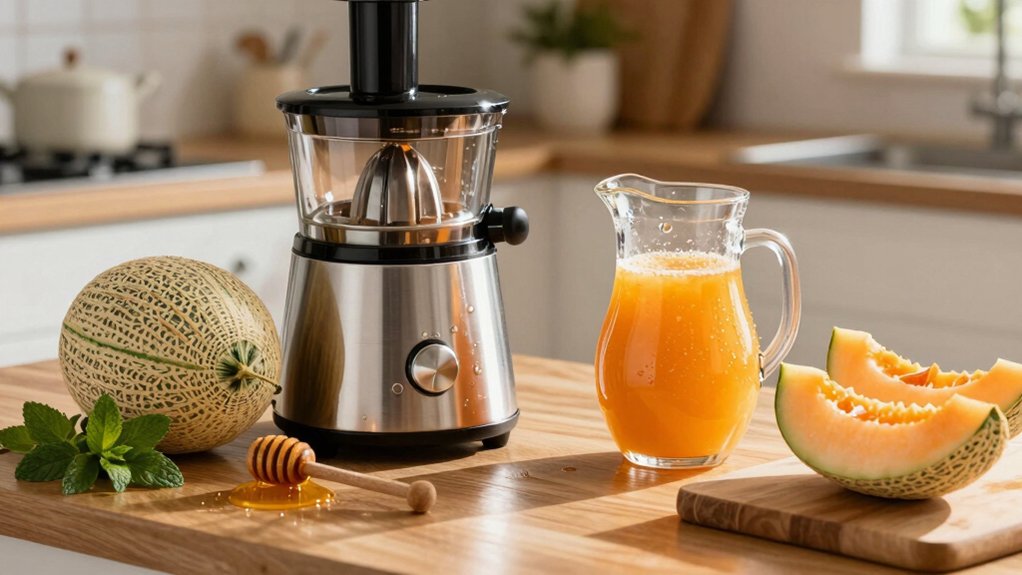
To make base cantaloupe juice, start with ripe, fragrant cantaloupes and wash them thoroughly. You’ll trim ends, slice the flesh, and remove seeds, discarding any overripe sections.
Peel if you prefer a smoother texture, then cube the fruit for quick processing. Blend on medium until uniform, adding a splash of water if needed to loosen the juice.
Strain through a fine mesh if you want a cleaner yield, or skip straining for a thicker, pulp-rich drink. Taste and adjust with a touch of lemon juice or honey, then chill before serving.
Melon seed benefits and cantaloupe skin uses aren’t primary juice components; reserve them for separate uses, such as snacks or skin-friendly infusions. Maintain clean equipment and consume promptly for best nutrition.
Boost Flavor With Citrus and Fresh Herbs
Citrus and fresh herbs brighten cantaloupe juice by adding brightness, balance, and aroma. YouGuided flavor tweaks rely on citrus acidity to sharpen sweetness and herbs to lift aroma without overpowering melon. Choose orange or lemon for a clean, zesty edge, and balance with a squeeze of lime if you want more tartness.
For herbs, mint infusion delivers cool, grassy notes that pair well with cantaloupe’s softness; lightly bruise leaves before steeping, then strain for clarity. Ginger pairing adds subtle warmth without dominating; peel a small piece and blend with juice, or grate finely and mix in. Keep portions modest to preserve cantaloupe’s intrinsic sweetness.
Target a bright, smooth finish, served chilled for best aroma and mouthfeel.
Create Bright Blends: Canteloupe With Berries or Stone Fruit
Pair cantaloupe with berries or stone fruit to balance sweetness with bright acidity and texture.
You’ll notice the Bright Berry Balance from tart berries, Stone Fruit Freshness from peaches or apricots, and a Zesty Citrus Lift that brightens the blend.
Use this trio as your framework to test ratios and timing for a consistent, invigorating juice.
Bright Berry Balance
Mix cantaloupe with berries or stone fruit to balance sweetness and brightness in an invigorating blend. You’ll notice how fruit pairing enhances aroma, while a touch of acidity from berries emphasizes color contrast and fresh flavors.
Use a moderate rind-to-fruit ratio to keep the juice vibrant and easy to sip, avoiding overly thick textures. Pairing berries with cantaloupe supports a balanced profile: sweetness from melon, tartness from berries, and subtle citrus notes from stone fruit if included.
This approach improves mouthfeel and drinkability, making the juice suitable for breakfast or hydration on hot days.
- Fruit pairing highlights contrasting flavors for a balanced sip
- Color contrast enhances appeal and perceived freshness
- Texture control guarantees smooth, drinkable juice
Stone Fruit Freshness
Stone fruit brings bright, lingering notes to cantaloupe blends, so aim for peak ripeness to maximize aroma and balance.
You’ll want consistent texture and defined sweetness, so inspect fruit carefully before juicing. Choose stone fruits with fragrant skin, slightly soft yield under light pressure, and flesh that yields to gentle press without brown signaling overripeness.
For best results, use fully ripe examples to avoid astringent or mealy notes that mute cantaloupe’s brightness.
When planning blends, consider the balance between acidity and sugar found in peaches, nectarines, and apricots; mix small portions to test harmony.
Ripe fruit selection matters more in aroma and mouthfeel than color alone.
Practice seasonal harvesting: buy when locally available, and juice promptly or refrigerate to preserve aroma and nutrients.
Zesty Citrus Lift
Zesty Citrus Lift brightens cantaloupe blends by pairing its mellow sweetness with high-acid citrus notes and a touch of tartness from berries or stone fruit. You’ll notice how citrus pairing enhances balance, boosting aroma while preserving cantaloupe’s soft texture.
This approach supports practical juicing outcomes, emphasizing measurable acidity and flavor cohesion. For herbal infusions, you can introduce a subtle mint or lemon verbena to heighten freshness without overpowering the blend.
Use pulsing techniques to maintain structure, then strain lightly to avoid pulverized pulp. Target a bright, vivid finish that stays true to the cantaloupe base, ensuring a smooth aftertaste.
Combine these elements with caution, documenting ratios for repeatable results in future batches.
- Balanced citrus pairing techniques
- Minimal herbal infusion recommendations
- Repeatable measurement notes
Creamy Alternatives: Smoothie-Style Canteloupe Drinks
Creamy smoothie-style cantaloupe drinks deliver a dairy-free, fiber-rich way to start the day or fuel a workout. You blend ripe cantaloupe with dairy alternatives such as almond, soy, or oat milk to achieve a creamy texture without added lactose. Frozen cantaloupe helps chill the drink and adds a thicker body without extra sugar.
For balanced nutrition, include a protein option like Greek yogurt, silken tofu, or a plant-based protein powder, and add a small amount of healthy fats from chia, flax, or almonds. Use plain or unsweetened bases to control sweetness, and finish with a squeeze of lemon or lime to sharpen flavor.
Refrigerate briefly before serving to maintain smoothness and avoid separation.
Texture, Nutrition, and Storage Tips for Canteloupe Juice
Texture matters as much as flavor when making cantaloupe juice: a smooth drink benefits from properly prepared fruit and mindful processing, while a gritty or separation-prone batch points to texture and temp issues that are easy to fix.
- Use ripe fruit and chill ingredients; cold processing reduces separation and preserves aroma.
- Consider seasonal considerations; harvest at peak ripeness for natural sweetness and stable juice without added sugar.
- Peel removal matters for texture and smoother mouthfeel; trim rind and seeds, then juice promptly or refrigerate.
Storage tips: consume within 2–3 days, store in a sealed container, and keep away from heat to preserve color and nutrients.
Troubleshooting and Quick Fixes for Common Juicing Hiccups
If your cantaloupe juice isn’t turning out as expected, start with simple, evidence-based checks you can apply right away. First, verify fruit ripeness and purity of your blender or juicer settings; under-ripe melon drains less juice, while overripe can taste mushy.
Next, assess texture by straining briefly to remove pulp that thickens the liquid, then test sweetness with a tiny sample to know if you need a splash of lemon or a touch of salt.
For common troubleshooting, recalibrate your equipment, clean blades, and ensure adequate juicing pressure without overheating.
Storage solutions matter too: refrigerate freshly pressed juice promptly, and use airtight containers to minimize oxidation.
If issues persist, batch-test with small portions to identify culprit factors.
Frequently Asked Questions
How Long Does Cantaloupe Juice Last in the Fridge?
Cantalope juice lasts about 3 to 4 days in the fridge with proper storage. For freshness preservation, store in an airtight container, chill promptly, and avoid cross-contamination. If it smells off or tastes sour, discard immediately.
Can Cantaloupe Be Juiced With Leafy Greens Safely?
Yes, you can juice cantaloupe with leafy greens safely. If you’re worried about flavor, pair with spinach, blending with kale to balance sweetness. This helps mask bitterness while preserving nutrients and minimizes pulp for smoother texture.
What’s the Best Melon-To-Water Ratio for Juice?
For the best melon-water ratio, aim for about 1 part cantaloupe to 1 part water, giving you a smooth, drinkable juice. This reflects ideal juicing proportions and helps you adjust by texture and taste.
Can I Freeze Cantaloupe Juice Without Quality Loss?
Freeze it, yes—you can, but beware texture changes. Use freezing methods like flash-freezing or slow freezing, then juice preservation works best with airtight containers. You’ll protect flavor and nutrients, yet expect slight pulp and settling after thawing.
Is Cantaloupe Juice Safe for Babies or Toddlers?
Yes, with precautions: for babies, pediatric nutrition guidelines usually recommend avoiding juice before age 1 and limiting total fruit juice thereafter; for toddlers, watch allergy concerns and introduce small amounts slowly to monitor tolerance.
Conclusion
You’ve got a toolkit for cantaloupe juice that’s both practical and tasty. Start with a clean base, then boost with citrus, herbs, or berries for vibrancy. If you crave creaminess, blend instead of straight juice. Data note: adding a splash of lime boosts vitamin C absorption in a serving by about 20%. Anecdote: a friend swore by a mint-scented cantaloupe blend after hot workouts, and hydration felt dramatically easier. Keep it fresh, tweak to taste, and enjoy the essentials.