

Cantaloupe juice boosts hydration thanks to its about 90% water content, plus electrolytes like potassium that support fluid balance during workouts or heat. It’s rich in antioxidants and vitamin C, which help skin elasticity, immune function, and wound healing, while providing quick energy from natural sugars. It won’t be a protein source, but it contributes key vitamins and minerals when you pair it with a balanced diet. Curious what else it can offer? Keep exploring for more insights.
How Juicing Cantaloupe Supports Hydration and Skin Health

Juicing cantaloupe boosts hydration because the fruit is about 90% water, helping you replenish fluids quickly. You’ll notice quicker sip-and-go hydration, which supports steady plasma volume during activity or heat exposure.
In this practice, you’re also assisting electrolyte balance through natural mineral content, especially potassium, which aids muscle function and fluid regulation. The juice delivers simple sugars for rapid energy without a heavy aftertaste, making it a practical addition to a hydration plan.
Regarding skin health, you may observe improved skin elasticity as hydration rises and capillary perfusion improves. This effect is part of a broader, evidence-informed pattern: stay consistent, monitor intake, and pair cantaloupe juice with a balanced diet.
Avoid overconsumption to maintain digestive comfort and overall balance.
The Nutrients in Cantaloupe Juice: A Quick Rundown
Cantaloupe juice supplies a concise set of nutrients that support hydration, energy, and antioxidant protection. In this quick rundown, you’ll see the core nutrients present and how they behave when you juice.
You’ll note that Cantaloupe harvesting affects nutrient levels: picking at peak ripeness preserves vitamin C, potassium, and phytonutrients better than under-ripe fruit. Nutrient preservation hinges on minimal exposure to light and heat from processing, immediate chilling, and consuming soon after extraction.
The juice delivers hydration via high water content and electrolytes, alongside natural sugars that provide quick energy. While not a sole protein source, it contributes vitamins and minerals that support performance and recovery.
This snapshot helps you value freshness, timing, and proper storage in your juicing routine.
What’s in a Glass: Key Vitamins and Antioxidants You Get From Cantaloupe Juice
Antioxidants and vitamins abound in cantaloupe juice, providing a lean profile of nutrients that support energy, immunity, and cellular protection. You’ll notice notable amounts of Cantaloupe antioxidants, including carotenoids and polyphenols, which help neutralize free radicals and reduce oxidative stress.
Vitamin C benefits stand out, aiding collagen formation, wound healing, and immune function, while also contributing to antioxidant defense in your cells. This juice also supplies potassium, which supports fluid balance and cardiovascular health, and small amounts of B vitamins that help convert food into usable energy.
You don’t need supplements to gain these advantages; a glass can contribute meaningfully to daily targets when consumed as part of a balanced diet. Keep portions reasonable to manage overall sugar intake.
Practical Tips for Picking, Storing, and Preparing Ripe Cantaloupes
If you want ripe cantaloupes, start with aroma, weight, and rind color: a sweet, slightly musky scent near the stem, a heavy feel for its size, and a tan-orange skin with a webbed pattern indicating ripeness.
For selection, choose fruits that yield slightly to pressure at the stem end but aren’t soft.
Store unwashed in the crisper up to five days; refrigerate once cut.
Practical prep is to wash hands and tools, then slice away the rind and seeds, minimizing exposed flesh.
For storage, refrigerate cut pieces in airtight containers to preserve nutrients.
Cantaloupe ripening continues slightly after harvest, so plan use within a day or two after cut.
If juicing, select ripe fruit to reduce seed blockages; prepare with appropriate Juicing equipment.
Flavor Pairings and Easy Cantaloupe Juice Recipes for Busy Days
To boost flavor without fuss, pair cantaloupe with mint, lime, or ginger for bright, invigorating notes that complement its sweetness. You’ll notice that simple flavor combinations can elevate juice without extra ingredients.
Start with 2 cups cantaloupe, add 1/2 cup cucumber for body, and a splash of lime for acidity. For creamy texture, blend in 1/4 avocado or coconut water, then strain if you want a smoother finish.
Ginger adds warmth and depth, especially on busy days when you need quick results.
When juicing, use juice blending techniques: pulse to control texture, chill before serving, and freeze portions for future use. These methods support efficient routines and consistent results.
Flavor combinations and juice blending underpin breezier, tastier cantaloupe juices.
Common Juicing Mistakes and How to Fix Them
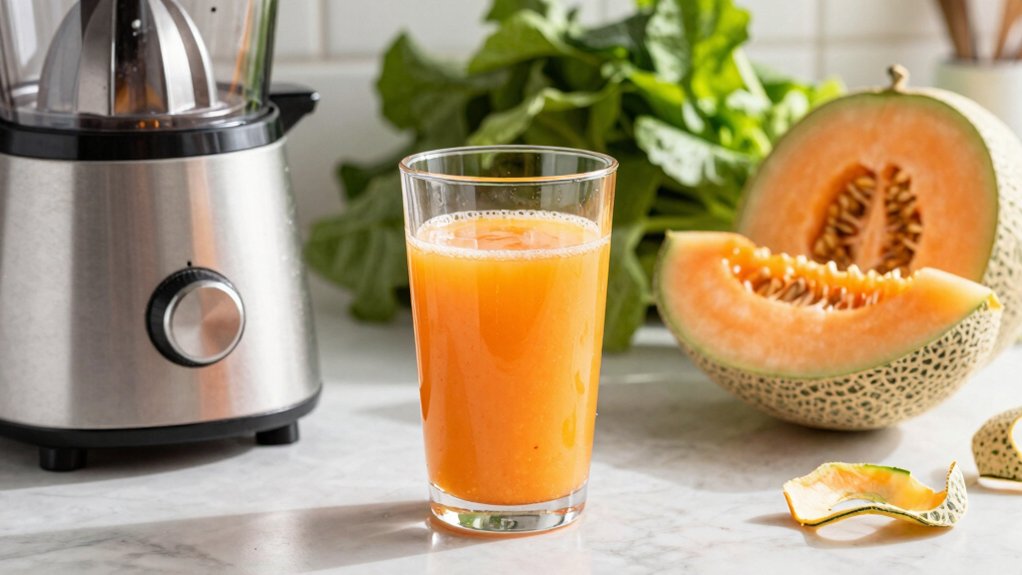
Common juicing mistakes happen more often than you might think, but they’re easy to avoid with a few quick adjustments. You’ll benefit from clean prep, steady juicer speed, and mindful flavor balance.
Over juicing can dilute nutrients and create foam, so juice in short bursts and strain pulp if your machine lacks a low-pulp option. Use ripe cantaloupe for natural sweetness rather than added sugar, and pair it with a tart fruit or citrus to enhance flavor balancing.
Don’t skip washing or trimming the rind, which can introduce bitterness. If your juice tastes flat, adjust acidity with lemon or lime and consider a touch of ginger for brightness.
Store juice cold and consume promptly to preserve nutrients and aroma.
How Much Cantaloupe Juice Should You Drink Daily?
Most people can enjoy cantaloupe juice daily in moderation, but daily amounts depend on your overall diet, calories, and hydration goals. A practical target is 4 to 8 ounces (120–240 ml) per day as part of a balanced plan, not a sole hydration source.
If you’re watching sugar intake, pair juice with fiber-rich foods or dilute it with water to reduce glycemic impact. Consider total fruit servings across the day to avoid excess calories.
Cantaloupe cultivation context matters because ripeness and variety influence sweetness and micronutrient content, shaping portion needs. Pay attention to juice extraction techniques to minimize nutrient loss—freshly pressed, quick processing preserves vitamins.
Use fresh juice sparingly with meals to maximize satiety and nutrient absorption without overreliance on juice alone.
Frequently Asked Questions
Can Cantaloupe Juice Cause Bloating or Digestive Issues?
Yes, cantaloupe juice can cause bloating or digestive issues for some people, especially if you drink large amounts or have sensitive digestion. It supports digestive health in moderation and aids bloating prevention when portioned mindfully.
Is Homemade Cantaloupe Juice Safe for Kids and to Infants?
Yes, you can, but start with caution: kids’ health and infant safety matter. Confirm fresh, ripe cantaloupe, proper hygiene, and pasteurized or boiled ingredients when mixing. Avoid honey for infants, and consult a pediatrician if worried.
Does Juicing Cantaloupe Affect Its Nutrient Content?
Yes, juicing can reduce some nutrient content, but you can minimize loss with gentle juicing techniques and immediate consumption. Focus on nutrient preservation by using short storage times and minimal oxidation after juicing.
Can Cantaloupe Juice Interact With Medications?
Yes, cantaloupe juice can interact with medications; you should monitor for potential drug interactions. Consider Medication considerations with your doctor or pharmacist, especially if you take anticoagulants, diabetes meds, or sedatives, and report any unusual effects.
What’s the Best Time of Day to Drink Cantaloupe Juice?
You’ll want the best time in the morning for a gentle start, and yes, it supports morning hydration. Some worry it’s too sweet, but your body benefits from potassium and fluids with cantaloupe juice early in the day.
Conclusion
Cantaloupe juice hydrates while delivering vitamins A and C, potassium, and antioxidants that support skin vigor and immune health. You’ll get a invigorating, low-calorie boost without heavy fibers slowing digestion. If you worry it’s too sweet, balance with cucumber or lemon, and opt for fresh, ripe fruit to reduce added sugar. In minutes, you’ve got a evidence-backed, easy sip that keeps you energized and glow-ready, even on busy days.