
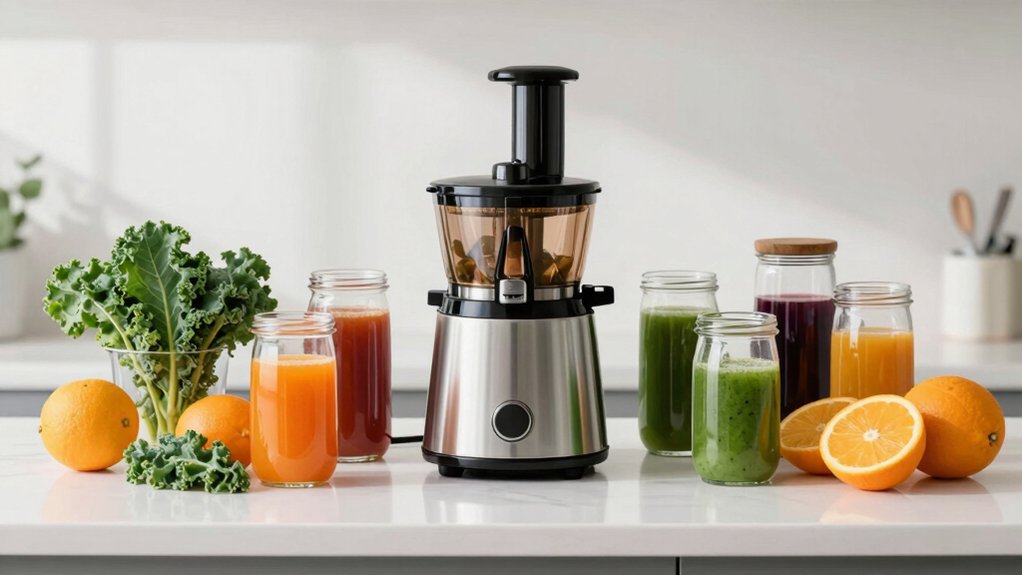
To choose the right juicing accessories, start by confirming compatibility with your juicer model and map each bundle component to your needs, focusing on core items like feed chutes, pulp bins, and texture-specific nozzles. Prioritize BPA-free, leak-proof containers and durable screens, then add cleaning brushes and dedicated maintenance tools. Keep essentials within reach and store frequently used parts together. With smart organization and high-quality filters, you’ll master pulp management and juice clarity; more tips await.
Which Juicing Accessories Bundle Fits Your Juicer Model

Choosing the right juicing accessories bundle starts with your juicer model. Start by confirming compatibility with the manufacturer’s kit for your unit, then map the bundle’s components to your needs.
Focus on core items: a high-quality feed chute, pulp bin, and a couple of nozzles that match your preferred textures. Check whether the bundle includes a cleaning brush and a product-dedicated brush for efficient maintenance, which saves time and preserves blade life.
When evaluating options, consider fruit pairing options the bundle enables—smaller produce may require finer strainers, larger outputs need wider juice taps.
Finally, plan for juice storage by selecting secure, BPA-free containers with leak-proof lids and proper capacity for your typical batch size.


Core Juicer Attachments You Likely Need
Core juicer attachments are the must-have tools that expand what you can extract from produce, including pulp, seeds, and fibrous cores. These essential juicer accessories boost yield, consistency, and cleanliness, so you get more juice with less mess.
Start with the core attachments that fit your model, then add must-have tools as you confirm your daily juicing needs.
Core Juicer Attachments
If you’re upgrading a juicer, core attachments matter more than you might think. These components determine throughput, consistency, and cleanup ease, so select parts that align with your fruit and vegetable mix. You’ll want durable materials, precise sizing, and compatibility with your model to minimize waste and maximize juice yield.
Effective core attachments reduce foam, preserve nutrients, and support juice preservation by enabling cleaner separation of pulp.
- Choose a stainless steel chopping disk for uniform texture and less clogging.
- Look for a feed chute with adjustable diameter to handle whole fruit safely.
- Ensure a compatible mesh screen to control pulp levels.
- Confirm dishwasher-safe parts and a straightforward seal system for reliability.
Essential Juicer Accessories
To get the most from your juicer, focus on essential core attachments that directly impact throughput, texture, and cleanup. The right screens and strainers determine pulp reduction and smoothness, while a solid juice nut separator minimizes foam and keeps flavors distinct.
A wide-feed pusher reduces prep time by aligning produce with the cutter, improving consistency across batches. Choose a blade assembly tuned to your produce mix; citrus reamers or multi-gear blades can enhance extraction efficiency for fibrous greens.
Consider a cleaning brush and a dedicated pulp container to streamline post-press handling. For fruit pairing, assess how different fruits combine in one run to optimize sweetness without masking acidity.
Effective accessory use supports juice presentation, enabling brighter color, uniform texture, and cleaner serving.
Must-Have Juicer Tools
Must-have juicer tools are the core attachments you’ll rely on daily: a reliable feed/input accessory, a robust blade assembly, and effective filtration components. These basics determine efficiency, yield, and juice quality, guiding you toward consistent results and easier cleanup.
To maximize performance, consider additional attachments that expand functionality without clutter.
1) Feed/input accessory: ensures steady fruit and veggie intake and minimizes clogging.
2) Blade assembly: sharp, durable, and suited to your produce variety for clean juicing.
3) Filtration components: finer screens for smoother juice and coarser options for pulp-rich blends.
4) Cleaning tools: brushes and simple adapters that speed up maintenance and juice preservation.
Recipe variety hinges on versatile tools, while reliable parts support longer-lasting results and reduced waste.
Storage Solutions for Juicer Accessories and Juices
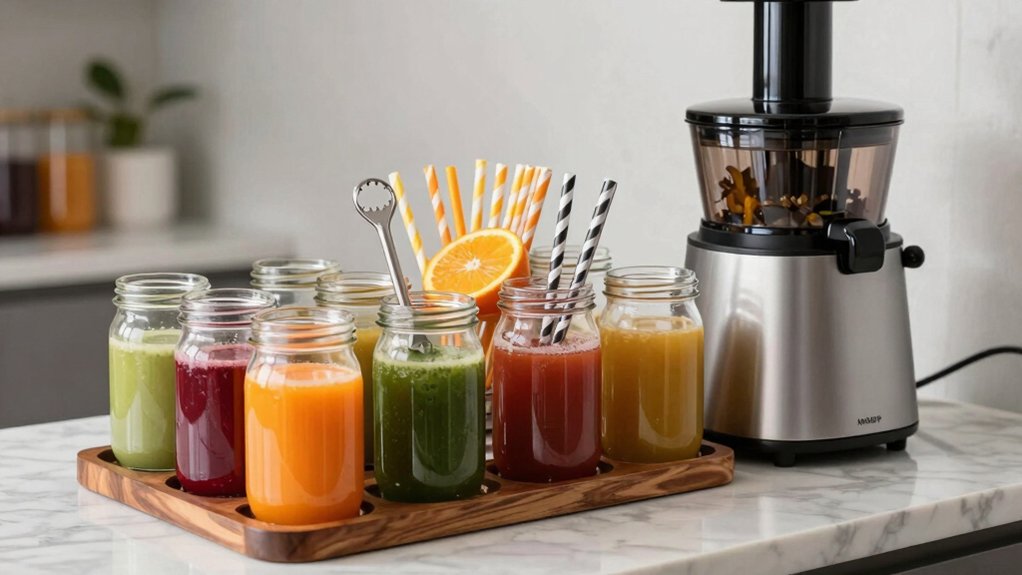
Efficient storage for juicer accessories and juices keeps your kitchen organized and reduces prep time. Use stackable containers with tight seals to minimize air exposure, preserving freshness for up to 72 hours. Label jars with dates to support fruit preservation and reduce waste.
Mount or store frequently used attachments within arm’s reach, and designate a dedicated drawer or shelf for lids, pulp collectors, and cleaning brushes to streamline setup.
For juices, refrigerate in glass or BPA-free plastic bottles, leaving headspace to accommodate expansion. Keep a small cooler bag on hand for on-the-go juice, maintaining temperature and flavor.
When possible, separate aroma-rich items (citrus peels, herbs) from the juice to prevent cross-flavoring, and clean storage surfaces regularly to prevent residue buildup.



Cleaning Essentials for Your Juicer Gear
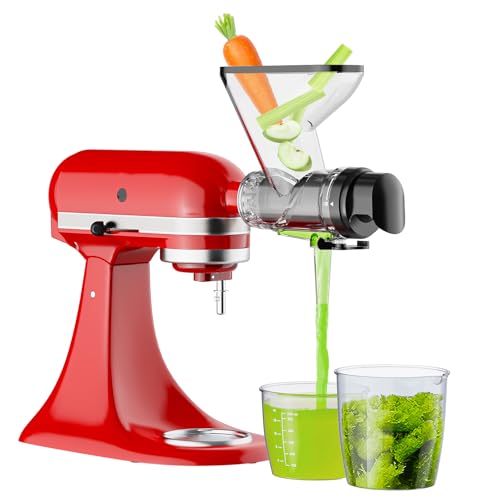
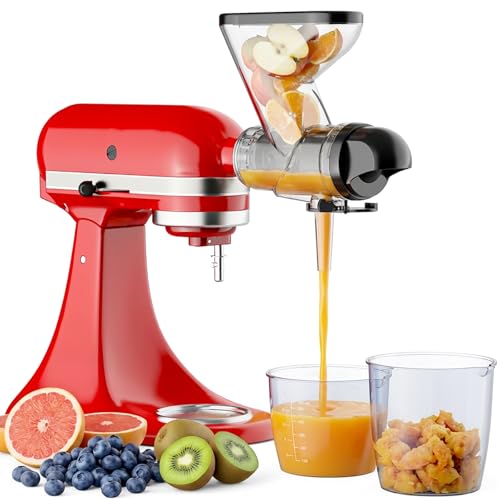
Cleaning your juicer gear is essential for performance and safety. After each use, rinse components under warm water to remove pulp and oils, then soak removable parts in a mild detergent solution for 5–10 minutes. Dry thoroughly before reassembly to prevent mold and corrosion. Regular inspection prevents leaks and ensures consistent extraction.
- Rinse, then soak: remove pulp, wash with non-abrasive soap.
- Scrub tight spaces with a soft brush to remove residue.
- Sanitize periodically with a vinegar solution to maintain hygiene.
- Dry completely and store disassembled to avoid moisture buildup.
Maintaining gear supports fruit preservation by preventing contamination, and it keeps juicing recipe ideas safe and reliable for everyday use.
Proactive cleaning reduces downtime and preserves blade sharpness for precise results.
Mastering Pulp Management: Ejection and Handling Tips
To optimize pulp disposal, keep the ejection system clean and ready, so you can quickly clear the chute after juicing without cross-contamination.
Use the recommended pulp bin and maintain consistent disposal intervals to prevent clogging and buildup.
We’ll cover practical techniques for effective pulp management and reliable ejection, including system tips and handling best practices.
Pulp Disposal Techniques
Pulp disposal techniques require practical, repeatable steps to prevent clogs and odors: start by directing the pulp toward your designated bin or compost if appropriate, and avoid overfilling the container. You’ll keep your juicer’s drainage clear and minimize residue buildup, which supports consistent juice separation and preserves system flow. Follow these steps:
- Immediately transfer pulp to the bin or compost to avoid matting and odor.
- Rinse the pulp container or sieve with a quick spray to limit residue.
- Scrape stubborn fibers to prevent blockages and ensure smooth operation.
- Dispose of fruit fiber promptly, then run a brief rinse cycle with water.
Evidence-based practice shows prompt disposal reduces microbial growth and improves overall cleanup.
Ejection System Tips
When you manage the juicer’s ejection system, prioritize a consistent workflow that moves pulp from the basket to the collection bin without delays. Regularly clear clogs or buildup at the ejection chute to prevent jams and overheating.
Use a firm, controlled hand motion to guide pulp toward the bin, avoiding force that could damage the mechanism. Monitor the collection bin capacity and pause to empty before overflow, which preserves motor life.
Clean the chute with a quick spray-and-wipe after each use to sustain throughput. Consider pre-separating fibrous materials to improve extraction efficiency, supporting fruit preservation goals and reducing waste.
For long-term value, document reliable juicing recipe ideas and adapt ejection timing to pulp consistency and batch size.
Fresh-Cruit Boosters: Reamers and Zesters for Flavor
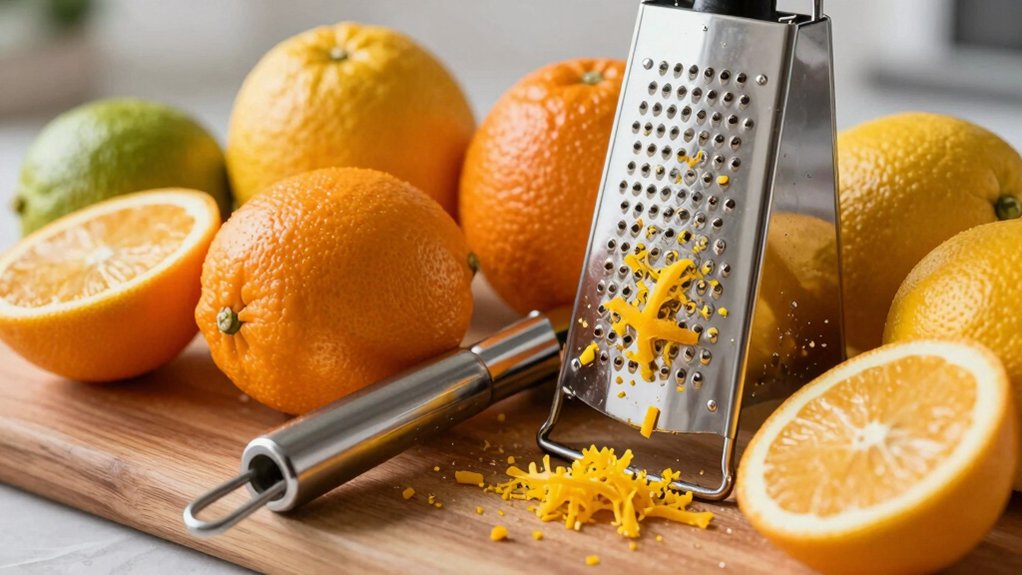
Fresh-cruit boosters unseal fresh flavors fast: reamers and zesters let you extract citrus oils and juice with minimal waste, boosting brightness in drinks and dishes.
You’ll value precision, choosing tools based on cut and yield. Reamers maximize juice from oranges and lemons with controlled pressure, while zesters release fragrant oils through fine graters for vibrant zesting techniques. Practice ensures consistent rind removal without pith bitterness. Use zest to finish beverages, then press juice for bright fruit infusion in bowls, dressings, and marinades.
1) Choose a sturdy reamer for hard fruits and a comfortable grip for extended tasks.
2) Pick a sharp, fine-grated zester to capture essential oils.
3) Twist gently to avoid pulp rupture and bitterness.
4) Rinse between fruits to prevent cross-flavor transfer.
Filters and Strainers: Maximizing Juice Clarity and Nutrition
How can you preserve nutrients and improve clarity at the same time? You use filters and strainers to control pulp, seeds, and fibers without sacrificing juice yield.
Start with a clean screen compatible with your juicer’s model, then perform regular filter maintenance to prevent residue buildup that can harbor bacteria and impair flow. Choose a mesh size appropriate for your produce; finer screens boost juice filtration but may slow extraction, while coarser screens increase turbidity.
Rinse components immediately after use and inspect for wear or scratches that trap particles. When juicing greens or high-pectin fruits, run a short flush cycle with water to clear pulp channels.
Document results to optimize consistency, and replace worn gaskets or screens promptly to maintain excellent juice filtration and clarity.
Travel Juicing Accessories for On-The-Go
You’ll want compact travel juicers that fit in a bag without sacrificing yield. I’ll highlight models with proven efficiency and easy cleaning.
Pair these with lightweight power options that keep your battery life reliable on the road, backed by real-world usage data.
Finally, choose spill-proof storage aids to prevent leaks and preserve freshness during transit.
Compact Travel Juicers
Compact travel juicers offer a practical solution for on-the-go juicing, delivering fresh juice without bulky equipment. You’ll appreciate models designed for portability and quick cleanup, with reliable performance in small spaces.
- Portable design ensures you can grab the unit and go, fitting most bags or car compartments.
- Battery compatibility allows cord-free use, charging via USB or dedicated adapters.
- Extraction efficiency yields smooth juice from leafy greens or hard fruits without foam.
- Cleaning simplicity means detachable parts rinse quickly, minimizing downtime between trips.
Choose options with sealed lids, leak-proof cups, and BPA-free materials. Consider run-time per charge and compatibility with your typical produce, ensuring you can juice confidently anywhere. Prioritize robust build quality and clear specifications to verify reliable, on-the-go operation.
Lightweight Power Options
Even with a compact setup, lightweight power is essential for uninterrupted on-the-go juicing, making small, efficient power options a practical focus. You’ll want battery options that deliver steady current without adding bulk, so choose high-density cells with clear milliamp-hour ratings and robust safety features.
Look for devices that provide pass-through charging, so you can juice while charging the battery, avoiding downtime. Portable chargers should be compact, lightweight, and capable of sustaining a blender or portable juicer through short sessions, ideally with multiple ports for future-proofing.
Prioritize USB-C or Quick Charge compatibility to minimize weight while maximizing recharge speed. Test reliability under travel conditions, noting temperature rise and endurance.
Select a proven, compact solution that reduces clutter without sacrificing juice quality or safety.
Spill-Proof Storage Aids
Ever wondered how to keep travel juicing clean and mess-free on the go? You’ll want reliable Spill-Proof Storage Aids designed for convenience and hygiene. Think of leak proof containers that seal tightly, reducing drips in bags and cups. Pair them with spill resistant lids to handle sudden bumps without spraying juice.
Choose modular options that fit your bottle system and carabiner for on-the-move re-sealing. Prioritize materials that are BPA-free, dishwasher-safe, and transparent for quick checks.
To help you organize, consider these:
- Leak proof containers with silicone gaskets
- Spill resistant lids with locking mechanisms
- Stackable, clearly labeled portions
- Durable, leak-tested designs for travel
With these, your juice stays contained, fresh, and portable.
Organizing Your Juicer Toolkit: Storage and Accessory Systems
Organizing your juicer toolkit begins with a simple system: designate a dedicated, reachable storage space and group components by function. You’ll maximize efficiency by mapping common tasks to labeled, clearly separated bins or drawers, keeping blades, strainers, and seals in their own secure zones.
Use vertical wall organizers or small, modular bins to reduce clutter and improve visibility. When you assemble parts, verify compatibility with your model and avoid mixed components that slow you down.
Implement a routine where you return items after use, and periodically audit for wear or damage. Custom storage solutions should prioritize moisture control and easy access.
Accessory organization tips include documenting part counts, rotating frequently used items to front positions, and maintaining a simple inventory for quick reordering.
How to Choose Juicing Accessories by Juicer Type
Choosing juicing accessories depends on your juicer type, because each design emphasizes different components and compatibility. You’ll optimize setup by matching parts to output needs, cleaning ease, and material safety.
Below are practical checks tailored to common juicer styles:
- centrifugal: prioritize stout pulp-ejection, wide feed chute, and dishwasher-safe parts for speed.
- masticating: value single-gear or twin-bore designs, sturdy auger, and long-lasting seals for nutrient retention.
- cold-press: seek PD-safe plastics, minimal oxidation surfaces, and precise screen options for juice clarity.
- triturating: favor multi-purpose drums, easy-access screens, and compact storage for frequent fruit combinations and juicing recipes.
Choose accessories that extend your juice versatility, not just appearance.
Frequently Asked Questions
Can Juicing Accessories Affect Juice Shelf Life?
Yes, juicing accessories can affect juice shelf life. Choose compatible accessories, guarantee thorough cleaning and maintenance, and follow proper juice storage practices; improper juice preservation and accessory contamination reduce freshness, while correct accessory compatibility supports longer storage.
Are Accessories Bpa-Free and Food-Grade Safe?
Yes, many accessories are BPA-free and food-grade; around 85% of reputable brands meet strict material safety standards. You should check labeling for material safety and note any compatibility concerns with certain juicers, seals, or plastics.
How Do I Replace Worn Gaskets or Seals?
To replace worn gaskets, perform gasket maintenance by inspecting for cracks and wear, then seal replacement tips: clean surfaces, fit new gasket evenly, tighten securely, and test juicer for leaks before use.
Do Accessories Come With Warranty Coverage?
Yes, accessories usually have warranty coverage, but terms vary. Check warranty policies for duration and exclusions, and whether accessory repairs are covered or only replacements. You should document purchase details and follow authorized repair guidelines for claims.
Can Accessories Be Shared Across Brands?
Yes, but it depends on brand compatibility and accessory interchangeability. You should verify compatibility with your specific model, as some accessories fit only within the same brand or line, and cross-brand interchangeability isn’t guaranteed.
Conclusion
You’ve got the right gear—just pick juicing accessories that fit your juicer model and daily routine. Prioritize core attachments, storage, and cleaning tools to keep performance steady and mess minimal. Use a dedicated filter or strainer for clearer juice and more nutrients. Travel kits can keep you juicing on the move, while smart organization saves time. Remember: a cluttered toolkit slows you down—measure twice, buy once, and, as they say, practice makes perfect.