

Table of Contents
Right, so you’ve decided to embrace beetroot in your juicing routine—excellent choice, even if you’re slightly terrified about what you’ve let yourself in for. The beauty of juicer recipes with beets is that you can dial the beetroot intensity up or down depending on whether you’re a hardened beet enthusiast or someone who needs to disguise that earthy flavor behind sweeter ingredients like apples and ginger. Beetroot brings an impressive arsenal of health benefits to any juice—from lowering blood pressure and boosting stamina to supporting liver function—but let’s be brutally honest: chuck too much raw beet into your juicer without balancing ingredients, and you’ll end up with something that tastes like you’re drinking a muddy field
Beet juice blends are a potent way to support cardiovascular health and athletic performance, thanks to dietary nitrates and antioxidants like betalains. For best results, choose firm, fresh beets, peeled or unpeeled, and pair them with apples, citrus, carrots, or ginger to balance earthy flavors. Use a slow, masticating juicer for maximum nutrient retention, and strain or store promptly to maintain texture. If you want practical combos and tweaks, you’ll find more tips to optimize taste and nutrition.
What Makes Beet Juices Beneficial
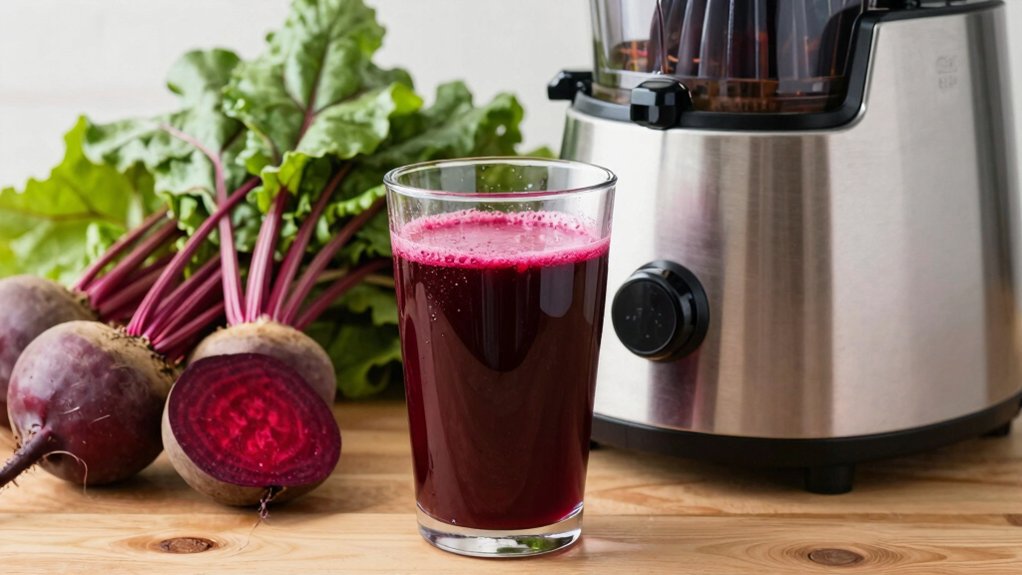
Beet juice stands out for several evidence-backed benefits. You’ll notice that nitrates help lower blood pressure and improve blood flow, supporting cardiovascular efficiency. The juice also offers antioxidants, including betalains, which fight inflammation and oxidative stress.
Vitamin C in beet juice boosts immune function and aids iron absorption, helping you stay energized during longer workouts. Folate and manganese contribute to heart health and essential metabolic processes, reinforcing your body’s baseline functions.
Regular intake is linked to enhanced athletic performance because increased nitric oxide can improve blood flow and oxygen delivery during exercise. When you consume beet juice, you’re incorporating a nutrient-dense beverage that supports cardiovascular integrity, immune resilience, and performance, without relying on artificial additives.
Essential Beet Juice Ingredients
You start with fresh beets that are firm, unblemished, and well washed to maximize flavor and nutrient retention. Then consider whether to juice red or yellow beets for their distinct profiles.
Pair beets with flavor-balance add-ins like apples, carrots, citrus, cucumber, and ginger to enhance taste and nutrition without masking the beet forwardness.
For texture and tang, you might add a touch of herbs or spices such as sumac, noting that peeling can smooth the finish if you prefer a lighter mouthfeel.


Fresh Beet Essentials
Fresh beets should be firm, smooth, and unblemished, with vibrant skin and no soft spots.
In juicing, you can use both red and yellow beets, each offering distinct color and nutrient profiles for your juice recipe.
You can juice beets raw without boiling or peeling, as thorough washing removes dirt and impurities.
To optimize juicing efficiency and prevent clogging, cut beets into smaller chunks, especially if your juicer has a smaller feed chute.
Beets contribute nutrients like folate, manganese, potassium, and vitamin C, supporting a healthy intake when included in your juicing routine.
For best results, handle and rinse raw beets carefully, then process them promptly to preserve nutrient integrity.
Flavor-Balance Add-ins
To balance beet juice, add flavor boosters that complement its earthy base. You can boost citrus to enhance natural sweetness and provide a bright, tangy note, such as lemon or orange. Ginger introduces a spicy kick and supports anti-inflammatory benefits, aligning with beet sweetness.
A splash of sumac contributes a citrusy, tangy layer and vibrant color, elevating the overall flavor profile. Green apple or pear mellow earthy tones while adding subtle tartness that stabilizes richness.
A pinch of sea salt or squeeze of lime heighten flavor complexity, highlighting natural sweetness and depth. Use these ingredients to tailor balance, ensuring each sip remains crisp, well-rounded, and evidence-based in its flavor evolution. citrus, ginger, tangy, flavor, balance.



Equipment Options for Juicing Beets
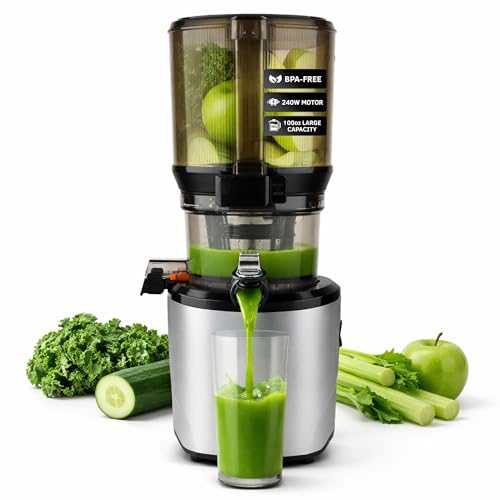
When choosing equipment for beets, consider juicer type compatibility—cold-press or masticating models like Nama J2 or Kuvings preserve nutrients and flavor better than centrifugal options.
While centrifugal juicers are affordable and fast, they may yield slightly less nutrient-dense juice and higher noise levels.
Look for machines with adjustable pulp control and wide feeding chutes to handle whole beet chunks efficiently, supporting easier prep and cleaner results.
Juicer Type Compatibility
Masticating juicers, such as Omega or Kuvings, are ideal for beets because their slow speeds preserve nutrients and yield smoother juice.
While centrifugal models like the Breville Juice Fountain can handle beets, they may reduce nutrient retention and create more froth.
Cold-press juicers are highly recommended for beets, as they gently extract juice without heat, maintaining maximum flavor, color, and nutrient content.
You’ll notice that some high-speed machines offer widespread compatibility, yet they may introduce oxidation over time, diminishing juice quality compared with slow, masticating juicers.
To maximize juice extraction, ensure a wide feed chute or be prepared to chop beets to prevent clogging.


Pitch and Noise Levels
If you’re choosing a beet juicer, consider noise and pitch as part of your decision, since masticating models run slowly with a low, steady hum around 60–70 decibels, while centrifugal juicers can be louder, often at 80–90 decibels and a high-pitched whine.
Noise level matters for early mornings or shared spaces, and quiet juicers with noise-dampening tech can reduce sound by up to 30%. The motor and build quality strongly influence operation, with premium models designed for quieter, smoother performance.
When evaluating options, note both average and peak decibel readings, and consider how the pitch changes during extraction. A lower, steady hum typically indicates steadier operation and less disruption to nearby activities.
Choose a model that suits your tolerance for sound and your kitchen workflow.
Step-by-Step: Preparing Beets for Juicing
To prep beets for juicing, start by rinsing them under cool running water to remove dirt and debris.
Next, trim off the beet greens and root tips, then peel the beets if desired, though peeling is optional to retain nutrients.
For preparing, cut the beets into small, uniform chunks or slices to ensure smooth feeding into the juicer or blender.
For easier juicing, use a sharp knife or a mandoline slicer to create consistent pieces that fit easily into the machine.
After juicing, store any leftover peeled or cut beets in an airtight container in the refrigerator to preserve freshness if not juicing immediately.
This approach supports efficient juice extraction and minimizes prep waste.
beets, preparing, peel, cut, juice.
Flavor Enhancers and Variations
Flavor enhancers can elevate beet juice by adding brightness, depth, and complementary notes without masking the beets’ earthiness. You can tune beet juice flavor with targeted additions that preserve overall balance.
Citrus enhancement with lemon or orange introduces bright acidity and boosts vitamin C, supporting an invigorating profile.
Ginger benefits include a spicy kick and potential anti-inflammatory effects, enriching flavor while contributing subtle warmth.
Herbs and spices like mint, basil, cinnamon, or cardamom add aromatic depth and variety, enabling recipe variations without overwhelming beet notes.
Sumac provides tangy brightness that pairs well with earthiness, while citrus and herbal tweaks maintain clarity of flavors.
Experiment with these options to optimize beet juice flavor and determine preferred combinations.
Tips for Storing and Reusing Pulp
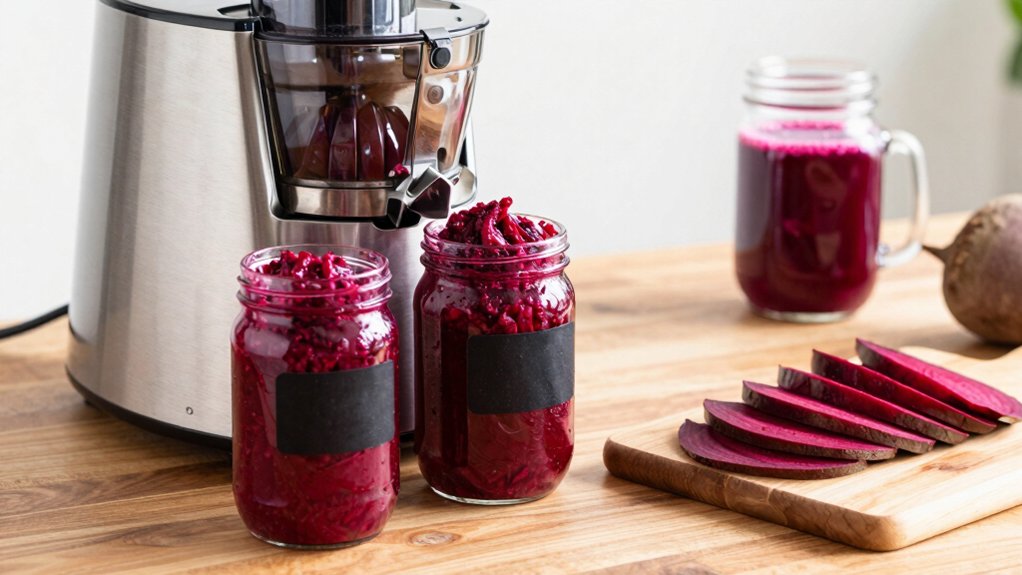
Beet pulp can be stored and reused to cut waste and boost nutrition. You should refrigerate it in an airtight container for up to 2 days to maintain freshness and prevent spoilage.
Before freezing, portion beet pulp into small servings using ice cube trays or resealable bags for convenient future use. For longer storage, freeze and then thaw as needed.
To speed incorporation into baked goods or recipes, strain the pulp through a fine mesh sieve to reduce moisture.
Drying beet pulp is another option; once dried, grind into a powder to use as natural coloring or a nutrient boost.
Reuse pulp in muffins, veggie burgers, or smoothies to add fiber and nutrients while reducing waste. Refrigeration, freezing, drying, and reuse all support sustainability.
Oh, I do sometimes buy juice too.


Serving Ideas and Pairings
Beet juice can elevate a variety of meals and occasions, offering a vibrant color and earthy-sweet profile that pairs well with protein, grains, and greens. You can pair it with spinach frittata or smoked salmon sandwiches to create balanced meals, supporting sustained energy.
Use it as a revitalizing breakfast accompaniment for egg muffins or sweet potato hash, enhancing morning flavors without added heaviness. For beverages, chill the juice and serve over ice as a standalone refreshment or a colorful mixer in cocktails and mocktails.
In salads and marinades, beet juice adds a tangy, earthy note that complements vegetables and grains, broadening serving ideas. These options fit healthy recipes and offer versatile, evidence-based pairings.
Troubleshooting Common Juicing Issues
If your beet juice isn’t turning out as expected, start with simple texture and flow checks. If the juice seems earthy or thick, try straining through a fine mesh sieve to improve texture and flavor.
Regarding clogging, consider peeling beets or not; peeling may reduce pulp buildup in some juicers. If your juicer is clogging frequently, insert ingredients more slowly or cut them into smaller pieces to prevent blockages.
A slower, masticating juicer can help extract more nutrients and reduce pulp issues and foaming compared to centrifugal models.
For foaming or separation, ensure the juice is consumed immediately or stored in airtight containers to preserve freshness and texture.
These steps minimize clogging, improve texture, and support smoother operation of your juicer.
Nutritional Snapshot of Beet Juice
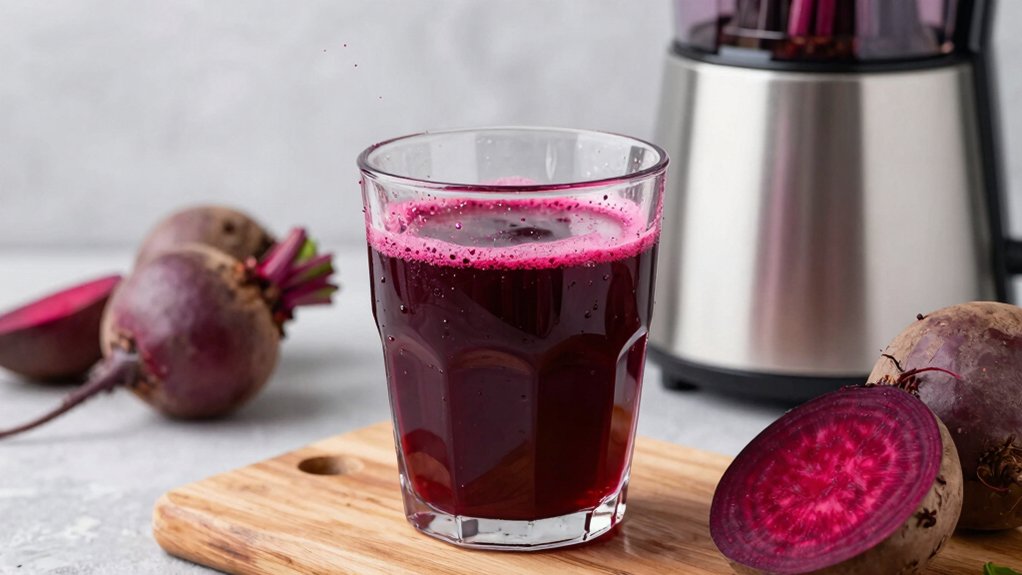
From the troubleshooting notes, you already know beet juice can lean earthy or thick depending on processing; this section highlights what it delivers nutritionally.
Beet juice supplies nitrates that may improve blood flow and lower blood pressure, supporting cardiovascular function. It delivers a significant amount of vitamin C, aiding immune health and skin importance. You also get essential minerals like potassium, manganese, and iron, contributing to metabolic processes and oxygen transport.
The beverage is low in calories yet rich in antioxidants, helping combat inflammation and oxidative stress. A typical serving provides about 66 calories, 15 grams of carbohydrates, and 8 grams of natural sugars.
Conclusion
Beet juice you’ll savor the color, confidence, and consistency it lends, while keeping portions sensible and flavors balanced for lasting, everyday energy.