

Juice fasting is like a tightrope walk between clarity and constraint. You’ll likely see short-term water weight shifts and a boost from fruits and veggies, but energy can swing and nutrients like electrolytes may dip. The evidence is mixed on sustained fat loss, and rebound eating is a risk after you resume normal meals. If you’re considering it, weigh the potential gains against the practical downsides and plan with care. Want to know how to approach it safely?
Does Juice Fasting Work for Weight Loss, and Why Results Differ?

Juice fasting can lead to short-term weight loss, but the results vary widely and depend largely on total calorie intake, fluid shifts, and the duration of the fast.
In your experience, you’ll see initial declines largely from water loss and glycogen depletion, not fat dramatically changing today. Over longer periods, energy balance matters most: if intake rebounds or you reintroduce calories too quickly, weight can rebound.
Evidence suggests modest, short-term losses on controlled plans, with little difference when compared to other low-calorie approaches over similar timeframes.
Flavor combinations and juice preservation choices can affect adherence and satisfaction, influencing total intake and consistency.
Your best bet is a evidence-informed, monitored approach that prioritizes nutrient adequacy, gradual shifts, and sustainable habits.
What to Expect for Energy and Mood on a Juice Fast
When you start a juice fast, energy and mood can fluctuate in the first few days, with initial fatigue often offset by careful planning and hydration. Data from trials and surveys suggest mixed effects: some people report clearer focus and steadier energy, others experience short-lived irritability or lethargy during adaptation.
Mood tends to improve as glucose swings stabilize and intake becomes more predictable, though sleep quality can vary initially. Consistency matters: standardized meal timing, adequate fluids, and gradual pace help manage symptoms.
Practical tips include pairing flavors thoughtfully to reduce monotony and support adherence, plus planning juice storage to preserve nutrients and safety. Flavor combinations can influence appetite and satisfaction, while proper juice storage minimizes spoilage and preserves freshness.
Key Nutrients You May Miss on a Juice Fast (And How It Shows Up)
You may see micronutrient shortfalls and gaps in calcium and vitamin D when you rely mainly on juice.
Electrolyte imbalances can signal shifts in hydration and mineral intake, which matter for muscle and nerve function.
The evidence suggests these changes vary by juice composition, duration, and individual baseline status.
Micronutrient Shortfalls
Many juice fasts fall short on micronutrients, leaving you vulnerable to gaps in essential vitamins and minerals that traditional meals typically supply. When you track intake, you’ll notice potential shortfalls in trace minerals, B vitamins, and fat-soluble nutrients, depending on fruit and vegetable variety.
Evidence suggests that mixed, plant-forward juice plans offer better micronutrient coverage than single-ingredient regimens, but_suffixes like fiber and bioavailability matter. You’ll want to monitor symptoms such as fatigue, cognitive fog, or mood shifts, which can signal gaps.
Flavor combinations influence nutrient uptake and adherence, while consideration of juice preservation—minimizing oxidation and nutrient loss—supports consistency. Balance matters: complement juice with whole foods or targeted supplements to safeguard overall micronutrient status.
Your approach should be intentional, data-informed, and community-supported.
Calcium and Vitamin D Gaps
You may notice lower calcium absorption when you skip dairy, and vitamin D synthesis can lag without sun exposure and dietary sources. Data show that short-term juice fasting can reduce intake of calcium-rich foods and vitamin D–fortified products, potentially impacting bone turnover markers in some individuals.
Yet, responses vary by age, baseline status, and sun exposure. To support balance, consider small, planned supplements or fortified beverages, and monitor levels with a clinician if you’re restricting calories long-term.
The goal is a safe, informed approach that sustains your sense of community and well-being.
Electrolyte Imbalances Signals
Electrolyte imbalances can surface quickly on a juice fast, especially when intake shifts away from dairy, fortified foods, and fatty fish. You’ll notice early cues that reflect electrolyte disruption and signal recognition, guiding you to adjust intake thoughtfully.
Data show that potassium, sodium, and magnesium changes most influence contraction, nerve signaling, and hydration status, so monitor subtle shifts in energy, cramps, or dizziness.
- Recognize signals: muscle cramps, lightheadedness, or fatigue may indicate electrolyte disruption requiring tweaks.
- Track intake: guarantee a balanced mix of greens, citrus, and mineral-rich options to stabilize sodium, potassium, and magnesium levels.
- Respond promptly: if symptoms persist, pause fasting and reintroduce targeted nutrients to restore homeostasis.
Detox Myths vs. Reality in Juice Fasting
Detox claims around juice fasting often hinge on the idea that a short fast can purge toxins faster than the body’s natural processes, yet the science doesn’t consistently support sweeping detox benefits. You’ll find that evidence largely shows limited, transient toxin changes and similar outcomes from conventional diets in short timeframes.
Real gains hinge on nutrient intake, hydration, and sustainable habits rather than rapid cleansing. When evaluating claims, consider study quality, sample size, and definitions of “toxins.”
If you pursue juice fasting, you may value community and shared purpose, so frame goals realistically and monitor well-being.
Practical details matter: Herbal infusions can diversify flavor without extra calories, and Juicing equipment should be clean and efficient to support consistency.
Start Safely: Practical Steps to Begin a Juice Fast
Starting a juice fast safely means planning around your baseline nutrition, hydration, and any medical considerations to minimize risks and maximize adherence. You’ll benefit from a structured approach that respects data, not dogma, and honors cultural traditions tied to dietary rituals.
Recognize that juice production quality matters: fresh, pasteurized, or cold-pressed options influence nutrient intake and safety.
- Establish a low-risk starter plan that aligns with your current intake and medical conditions, and consult a clinician if needed.
- Phase in fluids gradually, prioritize hydration, and track symptoms to detect red flags early.
- Track production quality and variety, choosing juices rich in vegetables and limited fruit sugar to support sustained adherence.
This approach balances evidence with belonging, guiding you through a safe, informed start.
Short-Term Benefits and What They Mean for Your Goals

Short-term outcomes can show you how your body responds to a juice fast, including a noticeable energy shift for some and small, rapid changes in scale.
The energy boost isn’t universal, and any weight changes typically reflect fluid loss rather than fat reduction.
Consider how these quick shifts align with your goals and whether they support or complicate your longer-term plan.
Short-Term Energy Boost
A quick burst of energy is a common short-term effect of juice fasting, often driven by reduced calorie intake and a temporary rise in blood glucose stability. You’ll likely notice clearer focus and steadier mood as your body taps into a consistent nutrient stream, though the effect varies by individual and juice quality.
The data suggest energy may spike early and normalize within days as intake shifts.
- You can optimize this boost by pairing flavor combinations you enjoy with balanced fiber and hydration, supporting sustained alertness.
- Juice consistency matters—thicker blends may slow digestion slightly but can stabilize energy better than overly watery mixes.
- Pay attention to timing around workouts or study sessions to align the lift with tasks that need attention and stamina.
Quick Weight Change
Juice fasting can produce quick weight changes mainly through reduced calorie intake and shifts in fluid balance, with most early losses stemming from water weight rather than fat. You’ll likely see a rapid initial drop, but it’s important to distinguish short-term results from lasting change.
Water weight fluctuations respond to sodium and carb intake, while fat loss depends on a sustained energy deficit. If your goal includes body composition or long-term adherence, monitor trends over several days rather than single-day blips.
Flavor combinations can influence satisfaction and adherence, making it easier to stay within targets. Investing in reliable juicing equipment helps maintain consistency and reduces waste.
Approach these quick changes as a datapoint, not a definitive measure of success for your broader health goals.
Common Drawbacks: Dizziness, Hunger, and Rebound Eating Risk
Dizziness, hunger, and rebound eating are common drawbacks of juice fasting, and each can affect adherence and safety. You’ll find some days are steadier than others, and research shows these symptoms can vary with intake, duration, and individual metabolism.
- Dizziness often relates to low blood sugar or dehydration; monitoring fluids and electrolytes helps maintain stability.
- Hunger tends to ebb as you adapt, though strong cravings can trigger lapses; planned, nutrient-aware juice choices support consistency.
- Rebound eating may follow a strict fast if sustainability isn’t considered; gradual reintroduction of solids reduces this risk and supports long-term behavior change.
Flavor combinations and juicing equipment influence tolerability and satisfaction, guiding you toward safer, more enjoyable practice.
How to Sustain Health: Blending Juices With Solids and Protein
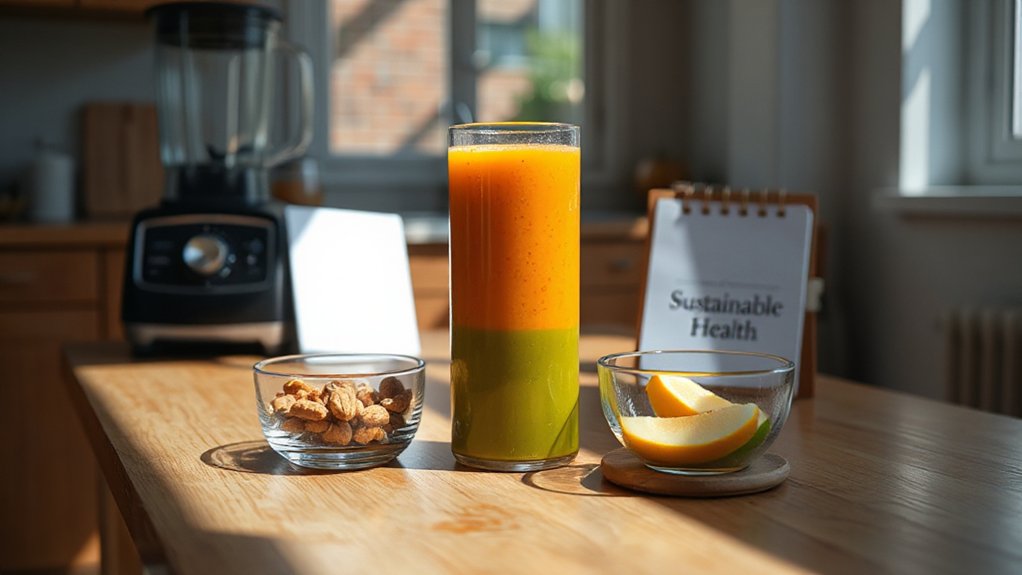
Blending juices with solids can help slow digestion and support satiety, while still delivering micronutrients from produce.
Pairing juice with protein-rich options can stabilize blood sugar and sustain energy between meals.
Practical hydration strategies, including water and electrolyte balance, support overall intake and performance.
Blends With Solid Foods
If you’re incorporating blends with solid foods, start by pairing juices with fiber- and protein-rich items to stabilize blood sugar and extend satiety. This approach remains data-driven: it supports gradual energy release and mindful intake without sacrificing variety.
Flavor combinations matter, and choosing textures helps with fullness, not just taste. Juicing equipment quality influences consistency and ease, yet results hinge on portion balance and timing.
- Pair high-fiber items (vegetables, whole grains) with fiber-rich juices to improve fullness.
- Add protein sources (yogurt, nuts, seeds) to create balanced snacks that sustain energy.
- Schedule blends with solids around workouts or meals to optimize satiety and performance.
Protein-Powered Juicing Balance
Evidence suggests that balanced macro profiles improve adherence, especially when meals feel complete. Aim for a practical ratio that fits your plan, typically a small protein portion per juice rather than replacing whole meals.
Flavor combinations matter: pair fruity notes with neutral or creamy bases to maintain juice aesthetics while masking any chalkiness. Track responses over a week to tune textures, sweetness, and satiety signals.
This approach supports belonging to a health-minded community focused on sustainable, evidence-based choices.
Practical Hydration Strategies
As you consider hydration alongside your juice plan, practical strategies include blending hydrating fluids with solids and a modest protein source to sustain performance and fullness. You’ll support fluid intake planning by pairing water-rich produce with light, steady proteins, reducing gaps between juices.
Evidence suggests balanced hydration supports energy consistency during fasting-like regimens, without overloading the gut. Hydration techniques that combine liquids and solids can improve satiety and electrolyte balance, while minimizing headaches from rapid shifts in intake.
Monitor signs of under- or over-hydration and adjust portions accordingly. The goal is steady hydration that aligns with activity and sleep, not extremes.
- Track intake patterns and adjust for activity levels.
- Pair fluids with small protein portions.
- Use water-rich ingredients to support electrolytes.
Who Should Avoid Juice Fasting and When to See a Clinician
People with certain medical conditions or specific circumstances should avoid juice fasting or seek medical guidance before starting.
If you have diabetes, glucose intolerance, kidney disease, gout, or a history of eating disorders, you’re at higher risk for electrolyte imbalances, hypoglycemia, or rebound hunger.
Pregnancy or breastfeeding also calls for clinician input.
Medications that interact with fasting or lie, like anticoagulants or diuretics, require assessment.
If you’re recovering from surgery or dealing with acute illness, pause fasting until cleared.
Monitor warning signs: dizziness, fainting, severe dehydration, or persistent fatigue.
When in doubt, consult a clinician promptly.
In your plan, consider beneficial herbs and recognize harmful additives in juices, ensuring a balanced approach supported by evidence.
Belonging comes from informed, safety-centered choices.
Practical Tips to Tailor Juice Fasting to You: Duration, Ingredients, and Monitoring
To tailor juice fasting to your needs, start by defining a realistic duration, selecting ingredients that provide steady energy and essential nutrients, and establishing monitoring cues you’ll track daily. This approach blends personalization with evidence, focusing on tolerability, nutrient density, and safety.
Track hydration, mood, and energy dips to adjust timing and portions. Consider flavor combinations that keep you engaged without spiking sugars, and plan juice storage to preserve nutrients.
- Select 2–3 flavor combinations that cover greens, citrus, and a herbal note to support palatability and variety.
- Define a daily monitoring routine (weight, hunger, sleep quality) and adjust duration or ingredients if targets aren’t met.
- Schedule juice storage steps (cool, seal, label) to minimize oxidation and maintain freshness.
Frequently Asked Questions
Are There Medical Risks I Should Consider Before Starting?
Yes, there are medical risks you should consider before starting; detox misconceptions and nutrient deficiencies can arise, especially with prolonged fasts. You’ll want evidence-based guidance, monitor hydration, electrolytes, blood sugar, and consult a clinician for personalized safety.
Can Juice Fasting Impact Medications or Chronic Conditions?
Juice fasting can cause medication interactions and affect chronic condition management. You should monitor blood pressure, glucose, and meds closely, consult your clinician, and use evidence-based plans; involve support networks to guarantee balanced, data-driven decisions about your health.
How Long Can I Safely Juice Fast Without Harming Health?
Juice detox can be safe for short periods, but your fasting duration should be individualized and not exceed 1–3 days without medical supervision. You’ll need hydration, monitoring, and balanced nutrition to avoid adverse effects.
Do Juicing Ingredients Affect Blood Sugar or Energy Spikes?
Yes, juicing ingredients can cause blood sugar and energy fluctuations, depending on fruit sugar content and fiber. You’ll notice sharper spikes with high-sugar fruits, but balanced blends and protein or fiber help smooth energy over time.
Is There Evidence Supporting Long-Term Weight Management After Juicing?
Despite mixed results, long-term weight management after juicing isn’t strongly supported; you’ll likely regain weight without sustainable habits. Still, you may notice improved Nutrient absorption and Digestive health when paired with balanced meals and regular activity.
Conclusion
Juice fasting can shift scales and energy temporarily, but the data show you may lose water and glycogen rather than fat—and you might miss key nutrients. You’ll likely feel mood swings or fatigue if electrolytes aren’t managed. Coincidences matter: a day you reach for a smoothie, not a snack, can align with your goals and a test result. Stay evidence-based, monitor symptoms, and plan adjustments to solid foods and protein to sustain health beyond a short fast.