

Table of Contents
You should replace juicer screens and filters every 6 to 12 months with regular use, and swap blades annually depending on how hard you juice. Inspect seals and gaskets monthly for wear or leaks, and replace them every 6 to 12 months. Look for cracks, dull blades, unusual noises, and reduced juice yield as signs to act sooner. Hard produce or heavy use may shorten these times. If you keep going, you’ll miss practical tips further ahead.
Signs Your Juicer Parts Need Replacement
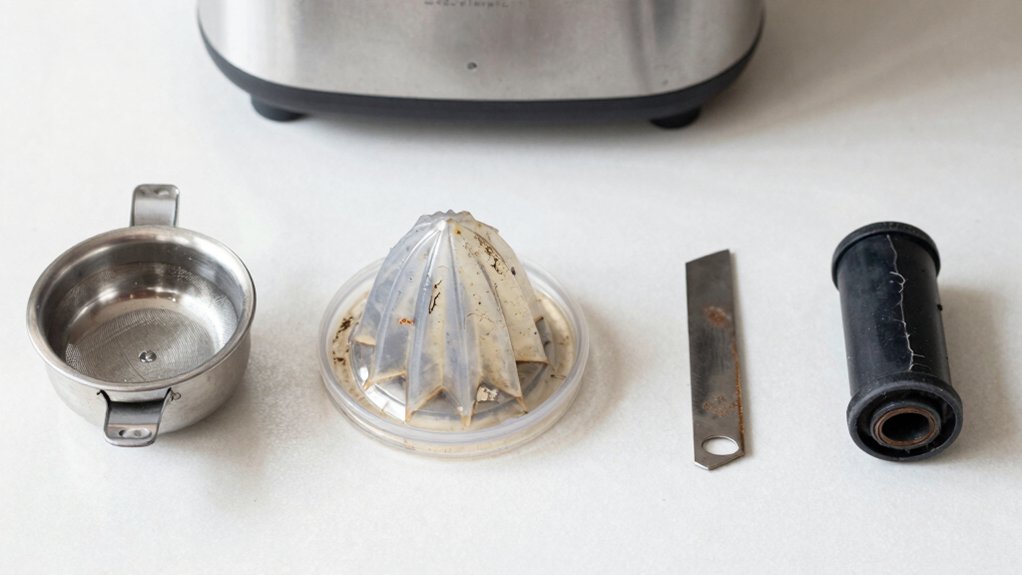
Worn or damaged juicer parts usually show up as a drop in performance. When you notice reduced juice yield or more pulp, inspect the filters and screens first.
Dull or damaged blades typically need replacing every 6 to 12 months with regular use, so plan to swap them on schedule if you’re seeing diminished efficiency.
Cracks, warping, or corrosion on seals and gaskets also degrade performance and should be replaced promptly to maintain sealing.
Unusual noises, vibrations, or motor strain are clues that parts like blades or filters are worn and require replacement.
If residue buildup won’t scrub away, consider replacing filters or screens to restore ideal flow and extraction.
Stay methodical: verify blades, filters, and seals before each major batch.


![Angel Juicer Silicon O-Ring [Pair, 2 Rings]](https://m.media-amazon.com/images/I/31CGz98tvaL._SL500_.jpg)
How Often to Replace Screens, Filters, Blades, and Seals
To keep performance steady, you should replace screens, filters, blades, and seals on a practical schedule based on use and conditions.
With regular use, plan to swap screens and filters every 6 to 12 months to sustain efficiency.
Juicer blades generally require replacement or sharpening once a year, depending on how often you juice and the hardness of ingredients.
Inspect seals and gaskets monthly, replacing as needed, but typically every 6 to 12 months to prevent leaks and maintain hygiene.
Heavy use or juicing hard produce can shorten part lifespans, prompting more frequent changes.
Always watch for wear—dull blades, torn filters, or degraded seals signal replacement is due.
Maintain a simple log to guide future timeline decisions and keep performance reliable.
Detecting Wear: Visual and Performance Cues
You can spot wear by looking for cracks, dents, or warping on screens, blades, and seals, and by listening for changes in performance. Start with a quick visual sweep: inspect screens for fractures, blades for nicks or dull edges, and seals for wear or gaps.
Note any unusual noises, vibrations, or motor strain during operation, which can signal compromised components. Compare current juice yield to past batches; a persistent drop or excess pulp points to dull or damaged parts.
Check for leaks or poor sealing, which indicate degraded gaskets. Over time, filters and blades clog and lose effectiveness, reducing performance.
If you observe multiple cues—visible wear, reduced yield, odd sounds, leaks—you should plan a component check and replacement to restore screens, performance.
Step-by-Step Guidelines for Replacing Key Components

Inspect your juicer for the parts most likely worn, then start the replacement by removing the worn screen, filter, or blade using the manufacturer’s specified tools and procedures.
Begin by inspecting components regularly, prioritizing screens and filters to replace every 6-12 months based on usage, and blades when dull or chipped.
Verify seals and gaskets are intact, replacing promptly if wear, cracking, or leakage appears.
Use genuine replacement parts to preserve performance and prevent damage from incompatible pieces.
Follow the specific model’s manual to correctly install new components, verifying proper seating and alignment before reassembly.
When reinserting, recheck seals to ensure a tight, leak-free fit.
Test by running a brief cycle to confirm smooth operation and absence of unusual noise or vibration.
This methodic sequence minimizes downtime and maximizes longevity of your juicer.
Maintenance Practices to Extend Part Longevity
Regular maintenance keeps parts from wearing out prematurely, so set a simple schedule: clean and inspect filters, blades, and seals regularly to catch wear early. You’ll prevent buildup that hurts performance and extend part life.
Use correct methods, like soaking in hydrogen peroxide solutions or vinegar, to protect integrity.
Replace worn or damaged seals and blades every 6 to 12 months to avoid leaks, inefficiency, and damage to the juicer.
Practice proper assembly and avoid overloading the machine to reduce unnecessary strain on juicer parts.
Keep replacement parts on hand and follow manufacturer guidelines for maintenance to guarantee ideal operation and longevity.
This disciplined approach supports consistent results and lowers long-term costs. Maintain focus on routine checks and timely replacements.
Conclusion
To conclude, you’ll like the truth: parts wear under use, not magic. If you inspect screens for tears, seals for hardening, and blades for dullness, you catch problems before they ruin juice or clog the machine. Replace when performance fades, clean when buildup stalls speed, and label replacements to track wear. The theory holds: proactive maintenance beats sudden failures. Stay methodical, document each check, and you’ll keep your juicer reliable, safe, and long‑lasting.