

You may not realize that juicing trims out most of the fiber, which changes how quickly your body absorbs nutrients compared to blending. If you want rapid nutrient uptake or a flavor-packed boost, juicing suits that need; if you aim for steady energy and fullness, blending keeps fiber and slows sugar spikes. The choice hinges on your goals, routine, and how you respond to fiber and satiety. Keep going to map which method aligns with your priorities.
Juicing Vs. Blending: Which Fit Your Goals?
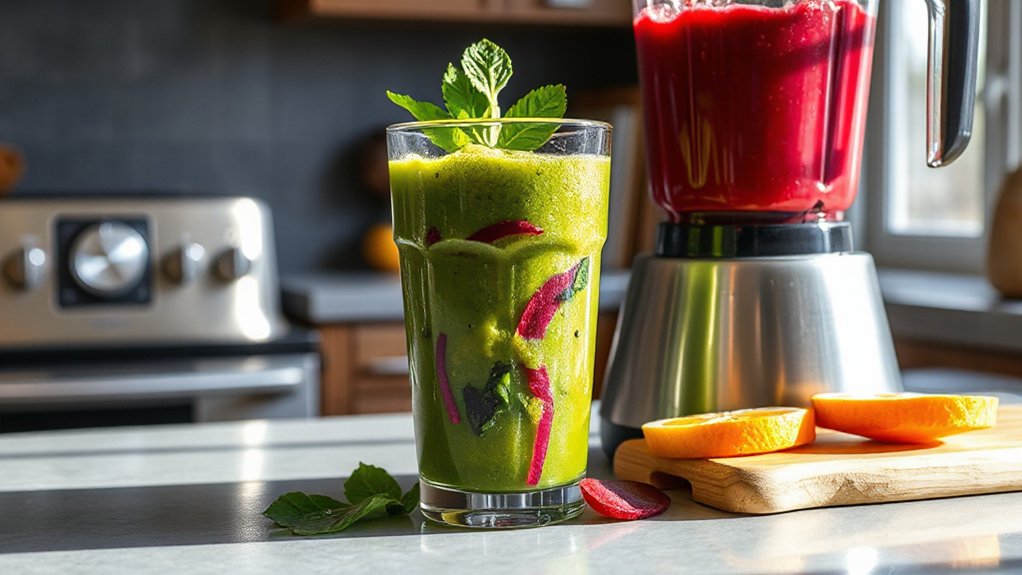
Juicing and blending both aim to boost fruit and vegetable intake, but they serve different goals. You’ll choose based on how you want to use the result and how you value nutrients, fiber, and ease.
Juicing offers a concentrated, sipable drink with quick digestion and volume control, useful for busy days or hydration goals.
Blending preserves fiber, providing a more satiating texture and slower glucose response, ideal for meals or snacks.
Consider how you plan to flavor and mix ingredients; flavor combinations matter for consistency and enjoyment.
Review your equipment maintenance routines, since cleaner blades and properly sealed juicers or blenders reduce contamination risks and maximize longevity.
Your goal alignment, routine, and taste preferences determine which method fits your lifestyle best.
Foundations: What Juicing and Blending Really Do
In blending versus juicing, the core differences lie in how processing affects structure, digestion, and intake timing. You’ll understand that blending preserves fiber and cell walls, yielding a thicker suspension with whole nutrients that slow release and support fullness.
Juicing, by contrast, removes most fiber, creating a smoother liquid that concentrates sugars and micronutrients, enabling rapid absorption.
Both methods impact Nutrient retention differently: blending maintains more of the original plant matrix, while juicing can heighten certain vitamins while reducing bulk.
Your flavor profiles shift accordingly: blends offer a cohesive taste with textual presence, whereas juices highlight distinct fruit or vegetable notes more clearly.
Choose based on your goals, routine, and sense of belonging to a community that embraces evidence-driven, practical nutrition.
Digestive Realities: How Your Gut Responds
Digestive realities hinge on how your gut processes different particle sizes and sugars. When you sip juice, smaller particles may pass quickly, while blended drinks retain more fibrous content, affecting transit time and comfort.
Your gut adapts to texture, guiding nutrient release and microbiome interactions. You’ll notice that fiber from whole ingredients supports digestive health, yet overloading with dense blends can challenge sensitivity.
In practice, balance is key for digestive comfort and sustainable routines.
- Fiber type and particle size shape tolerance and comfort
- Juices may be gentler for some, blending for others with fiber
- Hydration aids transit and nutrient access
- Personal texture preference drives consistency and belonging
Energy and Satiety: Quick Hits Vs. Lasting Fuel
Energy and satiety responses differ with juice versus blended drinks. You’ll notice quick energy spikes from juice, due to rapid sugar absorption, followed by an earlier dip as glucose winds down.
Blended drinks, in contrast, deliver slower digestion as fiber and proteins modulate absorption, supporting more prolonged satiety. Your body benefits from practical choices that match goals: if you need a fast lift before activity, a juice with balanced flavors can deliver immediate energy.
For sustained focus, a smoothie with flavorful combinations and added protein provides lasting fuel. Prioritize nutritional balance to avoid hunger swings and maintain consistency.
Flavor combinations influence appetite signals, helping you feel satisfied. Align your blend choices with your daily schedule to sustain energy without crashes.
Myths About Juicing and Blending Debunked

Despite popular beliefs, juicing and blending aren’t magic fixes; each method has distinct effects on nutrient delivery, satiety, and blood sugar stability. You’ll debunk myths by focusing on evidence: both preserve nutrients differently, and neither guarantees perfect outcomes every time. Practical use hinges on your routine, not hype.
- Nutrient preservation depends on process, not label; exposing produce to air and heat reduces specific vitamins.
- Blending isn’t inherently fiber-free; it includes intact fiber that supports fullness and glycemic response.
- Equipment maintenance matters; timely cleaning and proper blades sustain nutrient integrity and safe operation.
- Juicing concentrates sugars; pair with balanced meals to avoid spikes.
Choose Based on Your Goals: Quick Nutrient Boost, Weight Management, or Convenience
Choosing between juicing and blending should hinge on your goal: a quick nutrient boost, weight management, or convenience.
If you seek rapid micronutrient delivery, juicing concentrates vitamins and minerals, but fiber is reduced, so you may feel less fullness.
Blending preserves fiber, supporting satiety and steady glucose response, which can aid weight control.
For convenience, both methods fit busy lifestyles, yet blending often creates a smoother, more versatile base for meals and snacks.
Consider flavor combinations and how you’ll consume them—juices can be invigorating, while smoothies pair well with meals.
If you have dietary restrictions, blending lets you tailor ingredients without added sugars or filtering.
Align your choice with what sustainable habit you’ll maintain, not just immediate taste or trend.
Practical How-To: Simple, Everyday Plans and Easy Recipes
If you’ve decided between juicing and blending based on your goals, you can set up practical, everyday plans that stay simple and effective. You’ll structure routines that emphasize consistency, safety, and shared success, strengthening your sense of belonging to a healthy community.
Focus on predictable tasks, like batch prep, clean equipment, and clear meal timing, to minimize decision fatigue. Flavorful blends and simple juice ideas become repeatable habits, supported by routine maintenance of your tools and clean storage.
This pragmatic approach avoids excess, yet stays adaptable as preferences shift. Emphasize flavor combinations that please you, while tracking progress with quick notes on energy and satisfaction.
- Plan weekly, rotating flavor combinations for variety and consistency
- Schedule regular equipment maintenance and immediate cleaning after use
- Pre-portion ingredients to reduce prep time
- Document feedback to refine simple recipes over time
Quick-Start Guide: Your 7-Day Juicing/Blending Routine
A seven-day juicing or blending routine gives you a practical, evidence-based path to building consistent habits. You’ll plan simple, repeatable sessions that fit real life, tracking how you feel after each day.
Begin with a foundational mix: leafy greens, fruit for flavor, and a fiber-rich component to support fullness. Flavor combinations should emphasize balance—bright citrus with greens for energy, or berries with spinach for antioxidants—without overloading sweetness.
Each day, compare outcomes: mood, digestion, energy, and appetite.
Equipment considerations matter: choose a reliable juicer or blender, easy-clean parts, and a container you’ll actually use.
Hydration and protein at meals stabilize results.
Frequently Asked Questions
Can Juicing and Blending Affect Blood Sugar Differently?
Yes, they can affect blood sugar differently: juicing often causes faster blood sugar spikes due to liquid calories, while blending preserves fiber, moderating spikes, shaping insulin response and promoting steady energy for you.
Which Method Preserves Fiber Best for Digestion?
Blending preserves fiber better, enhancing fiber retention and digestion benefits. You’ll retain more intact fiber, supporting slower nutrient absorption, steadier digestion, and a sense of belonging to a practical, scientifically minded community focused on healthy, sustainable choices.
Do Smoothies Impair Appetite Control Versus Juices?
Smoothies can modestly blunt appetite compared with juices, because they carry fiber and protein that slow digestion, while juices don’t. You’ll notice flavor combinations and texture preferences guide satiety; choose mindfully, align with your goals, feel connected.
Can Mixing Greens With Fruit Boost Nutrient Absorption?
Yes, mixing greens with fruit can enhance nutrient absorption. This Green extraction boosts micronutrient availability, while Fruit synergy helps phytochemicals work together. You’ll optimize bioavailability, feel more satisfied, and belong to a science-minded, health-conscious community.
Are There Safety Concerns With Long-Term Juice Cleanses?
Yes, there are safety concerns with long-term juice cleanses. Juicing safety notes nutrient gaps and caloric deficits, while long term detox may stress kidneys. You should consult a clinician, monitor electrolytes, and balance with whole foods for belonging.
Conclusion
Think of your body as a garden, and your choices as watering can and mulch. Juicing is the sudden downpour—lush leaves fast, but without roots to hold it. Blending is steady rain plus rich soil—nourishes roots and keeps the garden kicking for days. You choose the storm you want: a quick nutrient burst, or lasting energy and fiber. Align with your goals, apply consistently, and your wellness garden will thrive.