

Juicing with celery gives you a hydrating, low-calorie base that boosts nutrients and smooths blends. Choose firm, crisp stalks and trim bases, then wash thoroughly to minimize pesticides. Use 500 ml of celery juice as a daily starter, adding lemon, a pinch of salt, and optional boosters like cucumber or ginger. Store in airtight, light-free containers and drink within 24 hours to preserve nutrients. Ready to optimize flavor, extraction, and routine benefits? You’ll uncover more tips next.
Why Celery Belongs in Your Juicing Routine
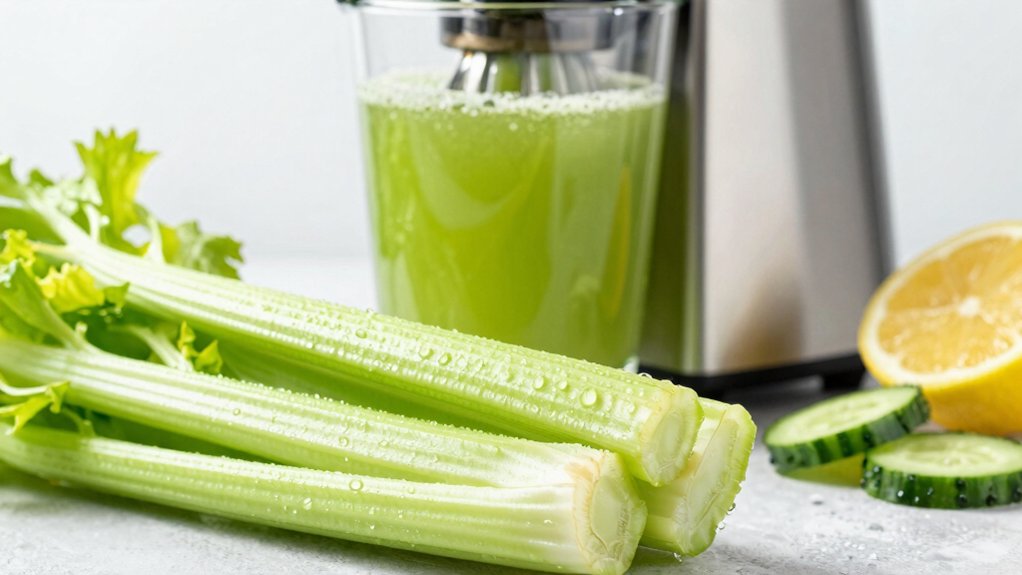
Celery deserves a place in juicing because it adds hydration, minerals, and steady, low-calorie volume without sacrificing nutrient density. You’ll appreciate its high water content and potassium-to-sodium balance, contributing to hydration without excess sugar.
In practice, celery serves as a dilute base that supports efficient extraction of other produce, improving overall yield per batch. From a farming perspective, celery farming emphasizes consistent stalk integrity, moisture control, and minimizing lignification to preserve texture for juicing equipment.
When selecting equipment, you’ll want a juicer that handles fibrous greens with uniform pulp separation and minimal waste. Pair celery with compatible produce to maximize micronutrient delivery while keeping calories in check.
Data-driven results show enhanced mouthfeel and smoother blends, supporting steady daily intake without compromising nutritional density.
How to Pick and Prep Crisp Celery for Juicing
To get the most from juicing celery, start with crisp stalks that are firm, bright, and free of dark spots or wilting. Choose stalks with uniform diameter and intact celery leaves if you’ll use them for garnish. Inspect for mold or soft, mushy bases, and avoid sniffing for odors that indicate spoilage.
For storage, use Celery storage tips: wrap in a damp cloth or store upright in a perforated bag in the refrigerator to maximize moisture and crunch. Wash thoroughly just before juicing, remove any dirty bases, and trim bottoms.
Organic vs. conventional celery differs in pesticide exposure, but texture and freshness dominate juicing yield; select based on availability, price, and personal preference. Prep by chopping into 1–2 inch pieces for smooth extraction.
Basic Celery Juice Recipes for Everyday Wellness
If you’re aiming for everyday wellness, start with simple, evidence-based celery juice routines that fit into a busy day. You’ll prioritize consistent portions and timing, using a base recipe that combines 500 ml of fresh celery juice with a splash of lemon for flavor and a small pinch of salt for electrolytes.
Track serving frequency, noting any digestive or energy shifts over two weeks to assess tolerability. For consistency, rely on juicing equipment that minimizes oxidation and preserves nutrients; rinse produce promptly and juice soon after harvest.
Consider celery cultivation notes to choose varieties with higher juice yield and smoother texture. Adjust flake-free pulp use and storage to reduce waste.
Stick to a reliable routine and monitor response.
Troubleshooting Celery Juice: Common Issues and Fixes
When you’re sticking to a simple celery juice routine, occasional issues can pop up that affect taste, texture, or tolerability. Most problems are related to preparation, storage, or sourcing.
Taste anomalies often arise from bitter celery or overpowering pulp; remedy by trimming ends, peeling celery stalks lightly, and pulsing in shorter bursts to reduce foam.
Texture issues persist when juice is overextracted or too cold; strain briefly and stir to achieve smoothness, or dilute with water if needed.
Pesticide residue concerns relate to surface contaminants; always wash thoroughly and consider organic options when available.
Storage tips: refrigerate juice promptly, consume within 24 hours, and store in an airtight container away from light to minimize degradation.
Monitor freshness indicators—odor, sediment, and separation—to decide if disposal is necessary.
Flavor and Nutrition Boosters for Celery Juice
Want to boost flavor and nutrition in celery juice without compromising its defining crispness? You can tailor boosters with evidence-backed pairings and measurable benefits.
Flavor pairings like cucumber, apple, lemon, and ginger create balanced profiles without overwhelming celery’s base. Adding small amounts of parsley or spinach can lift micronutrients while maintaining taste clarity.
In terms of nutritional benefits, include citrus for vitamin C, ginger for anti-inflammatory compounds, and kale for folate and minerals, while keeping total volume controlled to preserve texture.
Use fresh, organic produce when possible to reduce pesticide load and improve taste consistency.
Track changes by noting sweetness, aroma, and aftertaste alongside subjective balance.
Document the resulting nutritional benefits over a week to validate adjustments.
Frequently Asked Questions
Is Celery Juice Safe for Daily Long-Term Use?
Celery juice can be used long term, but long term safety varies; monitor nutrients and fiber, and note potential oxalate effects. You should assess sodium, potassium balance, and hydration; nutritional impact depends on overall diet and medical conditions.
How Does Celery Juice Affect Blood Pressure Exactly?
Does celery juice modulate your blood pressure via vasodilation and mineral content shifts? It may influence blood pressure regulation modestly, depending on potassium and nitrates; you’ll see data-driven, precise effects tied to mineral content and overall fluid balance.
Can Kids Drink Celery Juice, and in What Amounts?
Yes, kids can drink celery juice in moderation. For optimum kids health, limit to small, age-appropriate amounts and monitor for digestion. Use juice moderation principles: avoid excessive quantities, balance with whole foods, and consult a pediatrician for individualized guidance.
Does Juice Froth or Separate, and Why?
Yes, juice foams briefly, then stabilizes; foam formation occurs from trapped air and micronized cells. As you rest, separation process begins, with denser pulp settling and lighter juice rising, aided by centrifugal force or gravity depending on method.
What Are Celery Juice Equivalents for Allergies or Intolerances?
Do celery juice equivalents exist for allergies or intolerances? Yes: use celery substitutes like cucumber juice or spinach blends, and allergen alternatives such as fennel or parsley smoothies. You’ll compare nutrient profiles, proportions, and tolerances with precise, data-driven notes.
Conclusion
You’ll notice celery’s stalks as quiet sentinels, signaling small, steady gains instead of dramatic leaps. In your juicing routine, they symbolize consistency: a crisp, daily audit trail of hydration, minerals, and fiber. When numbers—pH, sugar, sodium—tally up, the juice becomes a compass, not a sprint. By trusting the data you collect, you’re anchoring wellness to routine, not hype. Keep the measurements honest, and let the celery’s simple precision guide your long-term health trajectory.