

Juicing with beets gives you cardio-friendly nitrates, folate, and antioxidants, plus natural sweetness and vibrant color. Start with a basic 3:1 beet-to-apple ratio for balanced flavor and nutrients, then prep by washing, trimming greens, and cutting into uniform pieces. Feed produce slowly, juice fresh, and store in an airtight container in the fridge for up to 24 hours. Boost flavor with citrus, ginger, or carrot for adults, or apples for kids. You’ll uncover more tips as you continue.
Why Beets Power Your Juice: Key Nutrients and Benefits
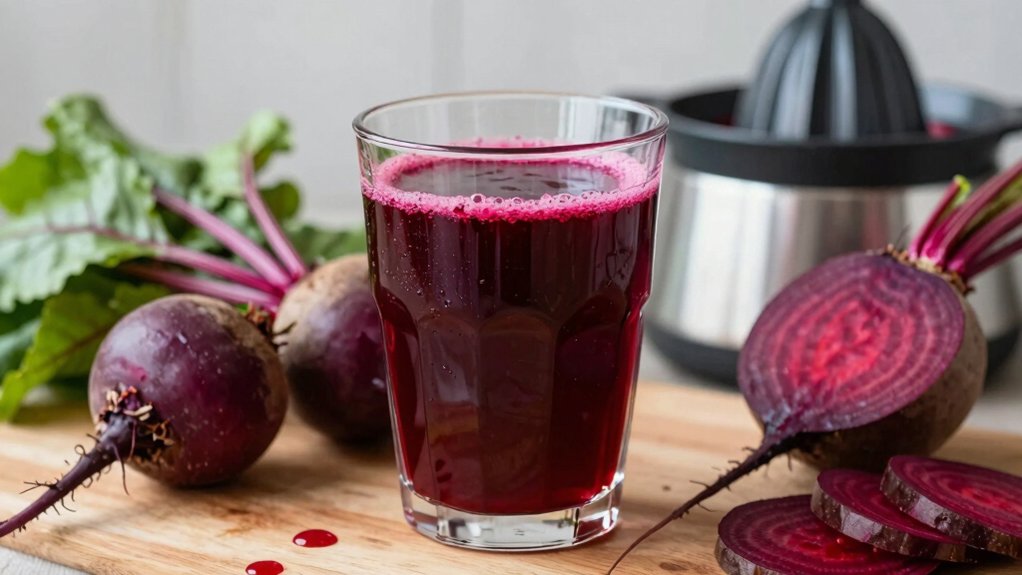
Beets pack a potent nutrient punch that supports juice quality and overall health. You’ll find a solid Nutrient profile, featuring folate, manganese, potassium, and betalains that confer antioxidant effects.
The Health benefits include improved endothelial function and blood pressure support, driven by dietary nitrates and polyphenols. You get fiber that aids digestion, while low calories help fit daily goals.
Beets contribute modestly to energy with natural sugars, but their impact is amplified when paired with other produce like citrus or leafy greens. You’ll benefit from betanin’s anti-inflammatory properties and nitric oxide precursors that support circulation.
Keep portions reasonable to maximize extractable nutrients without digestive discomfort. Overall, beets enhance juice quality through a compact, evidence-based nutrient package.
How to Pick and Prep Beets for Fresh Juice
Start with firm, smooth beets free of soft spots or cracks to guarantee fresh roots and consistent sweetness. Rinse under cold running water to remove soil.
Then trim greens if present to reduce moisture loss during juicing.
Prep by scrubbing the skins and trimming ends, then cut into uniform pieces for efficient, even extraction.
Selecting Fresh Roots
When selecting fresh beets for juicing, look for firm, smooth roots with vibrant color and unblemished skin. Avoid beets that are soft, wrinkled, or have cuts or mold. You should assess root firmness by gentle pressure; firm roots resist indentation.
Opt for medium-sized beets for consistent juice yield and sweeter flavor, as smaller roots tend to be sweeter but more variable in texture. Seasonal considerations matter: beets peak in cool months, offering deeper pigment and higher sugar concentration.
Choose greens if you plan to juice greens, ensuring they’re fresh and vibrant. Remove excess tops promptly to extend freshness, store roots in a breathable bag in the fridge.
This root selection approach supports reliable extraction and predictable nutritional quality.
Cleaning And Rinsing
After you’ve chosen firm, vibrant roots, a quick rinse removes surface grit and any soil that could clog your juicer. Begin with cold, running water and rub gently to dislodge dirt. Use a microfiber cloth for stubborn particles, avoiding harsh scrubbing that can bruise the skin.
Note beet varieties vary in surface texture; some are smoother, others exhibit fine sabre-like root hairs that benefit from light brushing. After initial rinse, trim the greens, leaving about half an inch of stem for freshness, but don’t remove all the skin if you’ll juice promptly.
Focus on cleaning techniques that minimize nutrient loss. Dry briefly to prevent dilution in the juicer, then inspect each beet for residual soil or blemishes before processing.
Prep For Juicing
Choosing beets with firm texture and vibrant color helps guarantee juice quality. Look for roots that are heavy for their size, with smooth skins and no soft spots or cracks.
In prep for juicing, trim greens close to the root to reduce moisture loss, and wash thoroughly to remove soil particles. Use a gentle scrub under cool water to minimize cell damage, then pat dry.
Peel only if your juicing equipment demands it; otherwise, leaving skin provides fiber and nutrients.
Cut beets into uniform pieces to ensure steady extraction and prevent jamming.
For beet cultivation, select fresh, locally grown roots when possible to maximize nutrient density.
Track equipment cleanliness: sanitize juicing equipment before use and inspect blades for sharpness to improve yield and reduce waste.
The Basic Beet Juice Formula: 3 Parts Beet, 1 Part Apple
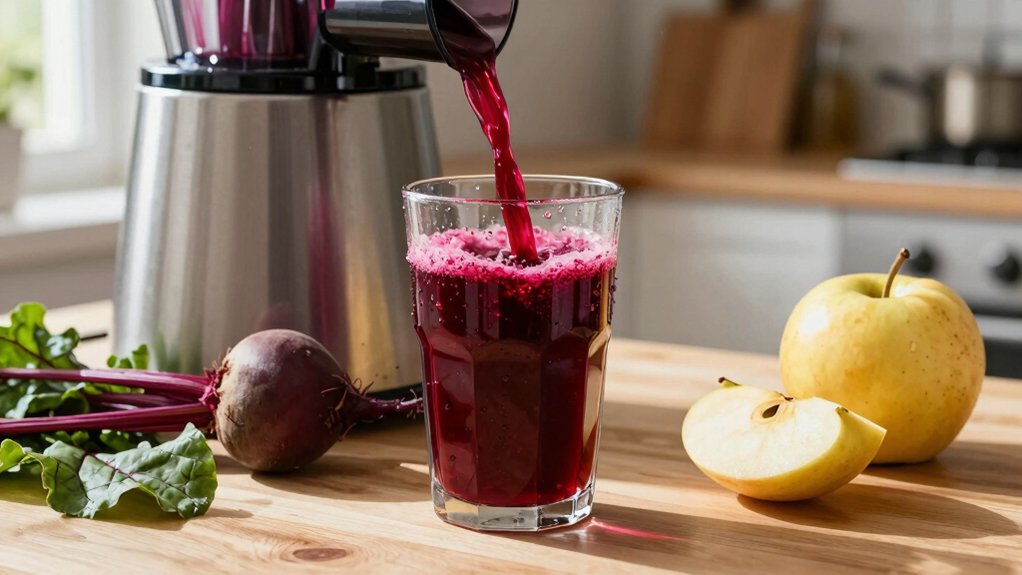
For this basic formula, you’ll use three parts beet to one part apple to balance sweetness with earthiness, affecting both flavor and nutrient delivery. The beet-to-apple ratio guides your juicing process steps—from washing and trimming to press time and yield—while aligning with favored juicing techniques.
This mix offers a clear, evidence-based flavor profile and measurable benefits, including potential infusion of vitamins and antioxidants.
Beet-To-Apple Ratio
The Beet-To-Apple Ratio is a simple, evidence-based starting point for beet juice: use three parts beet to one part apple to balance earthy flavor with natural sweetness and a smoother texture.
- You’ll notice beet flavor softened by subtle apple sweetness, creating a more approachable juice.
- The ratio supports consistent juice blending, minimizing abrupt flavor shifts between batches.
- It acts as a baseline, helping you adjust to individual tastes without overhauling technique.
- This proportional approach supports repeatable results across different beets and apples.
Using this ratio keeps your process efficient, evidence-informed, and repeatable, while delivering a balanced profile suitable for daily enjoyment.
Juicing Process Steps
With the Basic Beet Juice Formula in mind, start by preparing a clean workspace and the ingredients: three parts beet to one part apple.
Begin by washing beets and apples under running water, then trim stems and skin as needed. Chop into uniform pieces compatible with your juicing equipment to ensure steady flow and complete extraction.
Feed produce slowly to avoid clogging; use a gentle, continuous press rather than forceful bursts. Collect juice in a clean container, and place pulp in a separate bin for waste or compost.
Noting that pulped beet fibers can enrich soil if repurposed. If you monitor pressure and motor heat, you’ll maintain efficiency and equipment longevity.
For accuracy, record batch ratios and adjust based on produce variability, acknowledging beet farming influences texture.
Flavor And Benefits
Flavor and benefits of the Basic Beet Juice Formula (3 parts beet, 1 part apple) show up quickly after you start juicing. You’ll notice nutrient synergy from beets and apples that supports cardiovascular function, while the natural sugars provide quick energy without a crash.
This blend also favors flavor pairing that balances earthy beet notes with crisp apple sweetness, improving palatability.
- Bright, immediate flavor contrast highlights beet earthiness.
- Polyphenols and flavonoids from both produce antioxidant support.
- Nitrate content from beets may assist blood flow during activity.
- Hydration and fiber buffering support digestion and satiety.
Pairing guidance: consider citrus or ginger for complementary notes, and consume soon after juicing for peak nutrient delivery.
Flavor Tweaks for Sweet, Earthy, and Bright Notes
To heighten sweetness, earthy richness, or bright notes in beet juice, start with small, incremental adjustments and taste as you go. You’ll rely on evidence-based tweaks: adjust beet varietals to shift baseline flavor, then fine-tune with citrus, apples, or ginger to balance acidity and brightness.
For sweetness, modest additions of apple juice or a touch of orange can elevate perceived sweetness without masking beet character. To emphasize earthy notes, incorporate a pinch of celery or carrot and use cooler extraction temperatures to preserve mineral-forward flavors.
If you seek brightness, add a splash of lemon or lime and a brief zest of citrus oils. Track results, noting quadrant changes in flavor intensity, and apply flavor balancing guidelines to future batches.
Beet Juice Variations for Kids and Adults
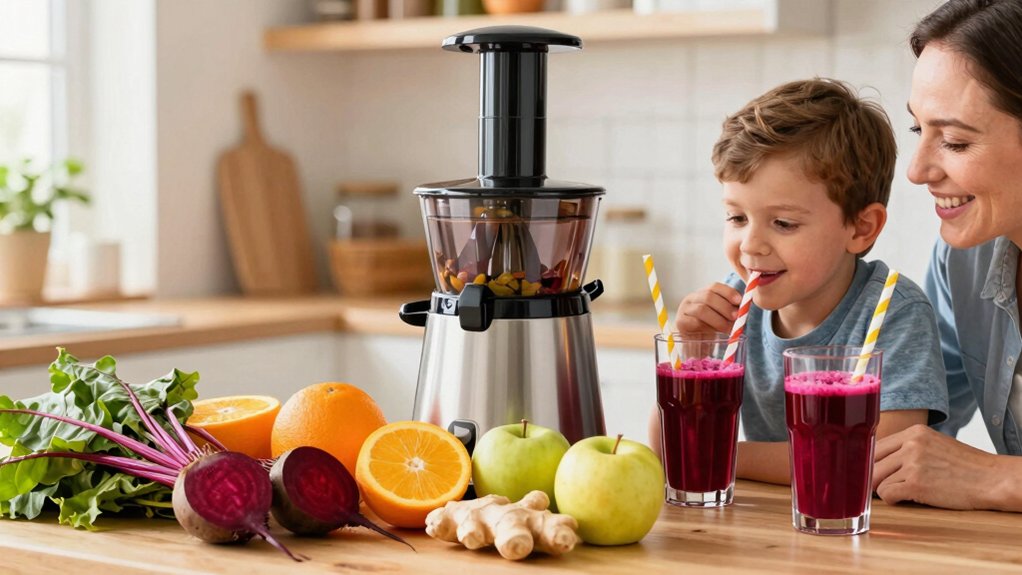
Beet juice can be tailored differently for kids and adults without changing core preparation methods. You’ll notice flavor and texture shifts with targeted additions and timing, staying rooted in evidence-based practices. Use this practical approach to showcase beet varieties and optimize juice containers for serving.
- For kids: pair beet juice with apple or carrot to soften earthiness, boost sweetness, and improve acceptability.
- For adults: introduce ginger, lemon, or herbs to enhance aroma and potential anti-inflammatory benefits.
- Portion guidance: serve smaller volumes to children, larger portions to adults, aligning with dietary needs.
- Storage mindset: consume freshly pressed juice when possible; use airtight juice containers to limit oxidation and nutrient loss.
Troubleshooting and Storage Tips for Beet Juice
If beet juice isn’t tasting or behaving as expected, start with simple checks: guarantee you’re juicing ripe beets, washing thoroughly, and using a clean juicer or blender with a sieve.
Next, assess juicing method: a slow, steady press yields more flavor and fewer solids; if bitterness appears, consider balancing with apples or carrots and removing tops promptly.
Temperature matters; refrigerate promptly and serve within 24 hours to preserve nutrients and color.
For storage tips, keep juice in airtight containers, leaving minimal headspace, and store at 34–40°F (1–4°C).
Troubleshooting methods include tasting for metallic notes, which may indicate mineral residue; rinse equipment between batches.
If separation occurs, a quick shake re-emulsifies, but fresh juice is best for nutrition and flavor.
Frequently Asked Questions
Can Beet Juice Help Lower Blood Pressure Quickly?
Beet juice can lower blood pressure within hours for some people, but effects vary. It’s not a quick fix. For Blood pressure benefits, check your overall diet, and monitor response. Beet juice dosage matters; start low and adjust thoughtfully.
Are There Any Interactions With Common Medications?
Yes, there can be medication interactions and health precautions you should consider. You feel a careful alertness as you check dark-beet juice’s effects on anticoagulants, antihypertensives, and diabetes meds, staying precise, evidence-based about possible interactions and safety.
How Long Does Beet Juice Stay Fresh in the Fridge?
Beet juice stays fresh about 3–4 days in the fridge when kept sealed and refrigerated promptly. Trust freshness indicators like smell, taste, and color changes, and use storage tips such as airtight containers to maintain quality and safety.
Can Beet Juice Stain Teeth or Countertops?
Beet juice can stain teeth and countertops. It causes teeth staining in some people and countertop stains if spilled and not wiped promptly. Use a straw, rinse quickly, and seal counters with a gentle cleaner to minimize risk.
Is It Safe to Juice Beet Greens Separately?
Yes, you can juice beet greens separately. They’re safe and nutritious; you’ll gain nutritional benefits with minimal preparation tips. Euphemistic imagery aside, you should wash, trim tough stems, and enjoy these greens for robust, evidence-based health support.
Conclusion
Beets juice your day into orbit—and you’ll feel it. The nutrients, the antioxidants, the tiny rocket fuel of natural nitrates aren’t bluffing: your blood flow, stamina, and even mood can surge in minutes. You’ll swear you discovered a miracle garden in a glass. It’s precise, evidence-backed fuel that tastes surprisingly bright, not just earthy. Stick to the 3:1 beet-to-apple ratio, stay hydrated, and savor the science-driven burst that actually fits into real life. Your body will thank you, loudly.